


England
University of Oxford
- Family / house
- University of Oxford
- Armiger / bearer
- University of Oxford
- Entity type
- institution
- Heraldic authority
- University of Oxford; Bodleian Libraries; historical College of Arms visitation tradition
- Record basis
- ancient_usage
- Issued / first recorded
- c. 1400
- Until / superseded
- present
- Historical period
- Late medieval to present
- Grant / record reference
- The arms were adopted by the University around 1400 and are also reported as recorded or confirmed in connection with the 1574 visitation of Oxford. The 1574 confirmation point should be checked against the surviving College of Arms visitation material before being treated as a primary grant reference.
- Blazon
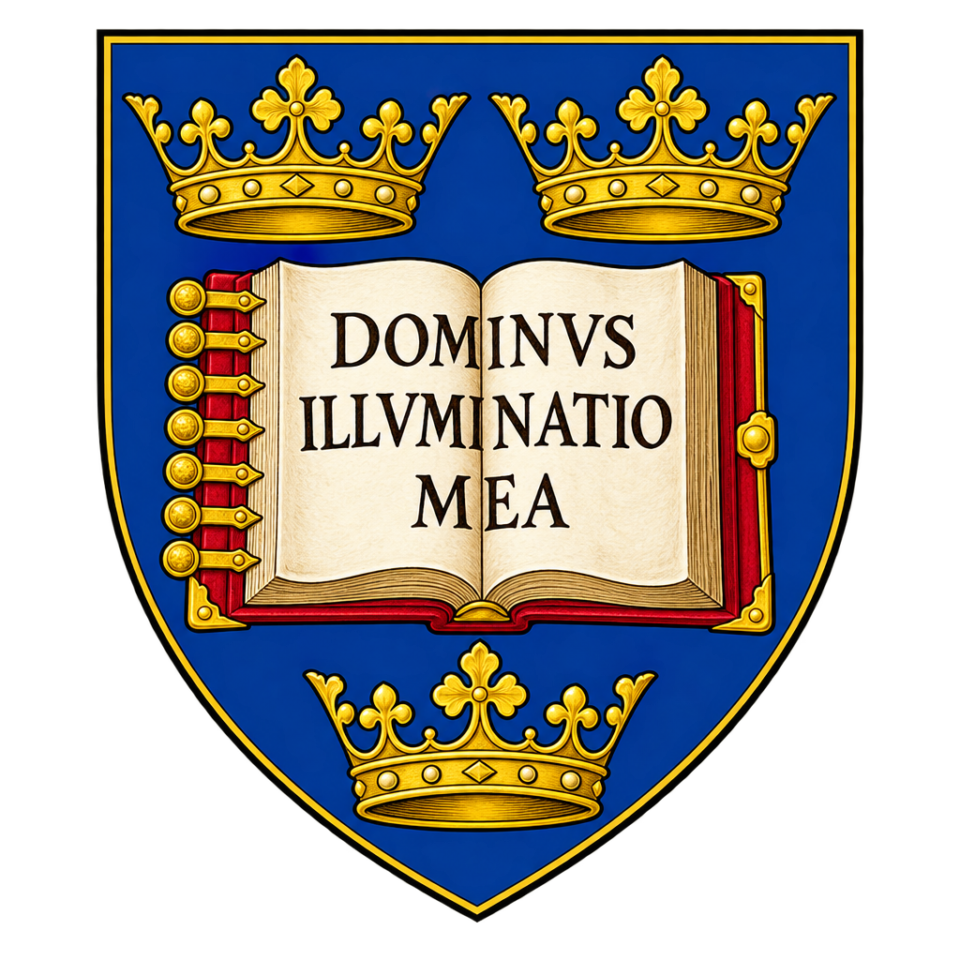
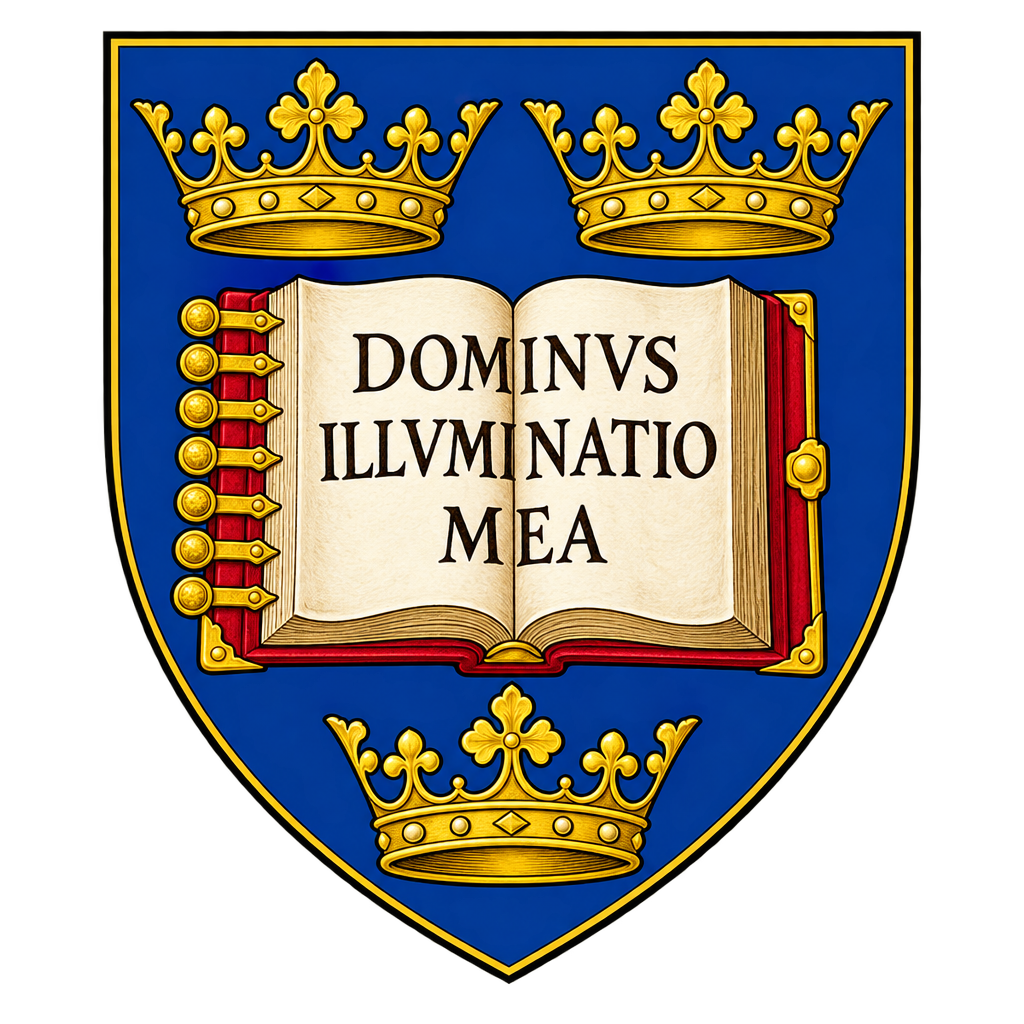
- Azure, upon a book open proper leathered Gules garnished Or having on the dexter side seven seals of the last the words DOMINVS ILLVMINATIO MEA all between three open crowns two and one Or.
- Plain-English description
- On a blue shield is an open book shown in its natural colours, bound red and ornamented gold, with seven gold clasps or seals on the dexter side and the words DOMINVS ILLVMINATIO MEA written on it. The book is set between three open gold crowns, two above and one below. The motto means “The Lord is my light.”
- Tinctures
- Azure; Gules; Or; Proper
- Charges / ordinaries
- Open book; Seven seals or clasps; Three open crowns
- Motto
- Dominus Illuminatio Mea
- Exterior ornaments
- The traditional shield is also used within the University’s modern encircling belt device, designed in 1993. The belted device is a trademarked institutional logo rather than a separate coat of arms.
- Source reference
- Bodleian Libraries, Guide to University arms
- Source
- Open source
Notes / sources
The University’s present legend was in at least occasional use by the second half of the sixteenth century. Earlier legends associated with the same armorial design include Sapientiae et Felicitatis and the paired phrases Veritas Liberabit and Bonitas Regnabit. The number of book clasps was not originally fixed; seven clasps became a conventional later form.