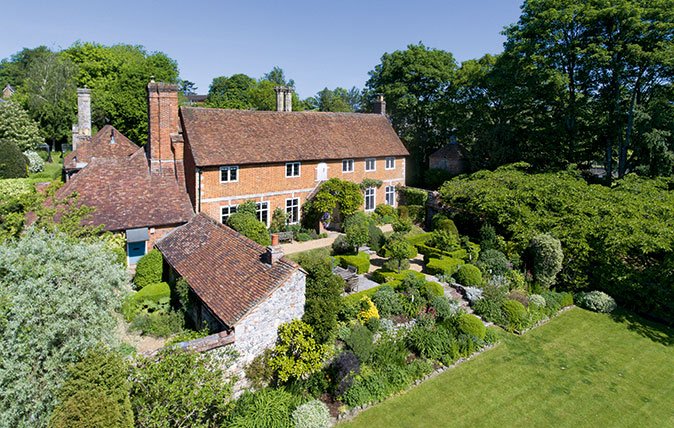



Historical names: Abbot's Barton; Hyde Barton; Colly
Location: Winchester, Hampshire
Places / associated places: Winchester, Hampshire
Location & Extent
GPS Location & Recorded Land Areas
Representative GPS point: 51.073767, -1.3103557
Identity: confirmed — The registry record, Winchester location, and historical description match Abbots Barton, also called Hyde Barton or Abbotts Barton: the former Hyde Abbey home farm or grange on the northern edge of Winchester. The surviving Abbots Barton Farmhouse is documented as occupying the site of the abbey's home farm and as belonging to the same manorial demesne estate.
Representative point: 51.073767044064, -1.3103556632996
Basis: documented_manor_house — Abbots Barton Farmhouse, Chaundler Road/Abbotts Barton, Winchester, is the surviving farmhouse on the site of Hyde Abbey's home farm or grange. The coordinate is published for the farmhouse by Hampshire Garden Trust and is consistent with the Historic England archive grid reference SU 4841 3072.
Point confidence: high
Boundary status: representative_point_only
Boundary period: Sixteenth-century manorial demesne and estate, before and around the Dissolution period
Boundary confidence: none
Boundary basis: The available evidence identifies the estate's components as the manor or manorial demesne, the grange or farmhouse, and three meadows, and states that the estate exceeded 800 acres in the sixteenth century. However, the reviewed sources do not provide a defensible mapped perimeter or sufficient explicit parcel-by-parcel boundary evidence. The modern Abbots Barton suburb and current property or administrative boundaries cannot be substituted for the historical manorial extent.
Sources:
- The National Archives Discovery: Abbots Barton Manor, record F239463: https://discovery.nationalarchives.gov.uk/details/c/F239463 — Registry record identifying Abbots Barton, also called Abbot's Barton or Hyde Barton, as the Hyde Abbey home farm or grange on the northern edge of Winchester.
- Abbotts Barton House – Hampshire Garden Trust Research: https://research.hgt.org.uk/item/abbotts-barton-house/ — Identifies the house as the former Hyde Abbey home or grange farm; states that the estate included the manor, grange and three meadows; supplies the farmhouse GPS coordinate and records the later development of the surrounding estate.
- Abbots Barton, or Hyde Barton, Farmhouse – Hampshire Field Club and Archaeological Society, volume 51: https://www.hantsfieldclub.org.uk/publications/hampshirestudies/digital/1990s/vol51/Fradgley%26others.pdf — Scholarly architectural and historical study places the farmhouse on land formerly belonging to Hyde Abbey, identifies it as the abbey's home farm or barton, documents the alternative historical names, and reports that the estate ran to over 800 acres.
- Abbot's Barton Farmhouse, Winchester – Historic England Archive, BF083089: https://historicengland.org.uk/images-books/photos/volume/BF083089 — Authoritative archive record locating the surviving farmhouse at Chaundler Road, Winchester, and documenting associated maps, reports, drawings and photographic material.
Warnings / uncertainty:
- The historical estate extent is documented by area and component descriptions but not by a recoverable perimeter in the sources reviewed.
- The reported area of more than 800 acres should not be converted into an invented polygon.
- The modern Abbotts Barton suburb, civil parish, planning areas and present property boundaries are not evidence of the historical manor boundary.
About the Manor
Abbots Barton, also called Abbot's Barton or Hyde Barton, was the home farm or grange of Hyde Abbey on the northern edge of Winchester. The estate included the manor or manorial demesne, the grange or farmhouse, and three meadows, and extended to more than 800 acres in the sixteenth century. The surviving farmhouse occupies the site of the abbey's home farm and contains a major timber-framed building phase dating from approximately 1491-1496, during the period when the estate remained associated with Hyde Abbey. The estate was leased before the Dissolution and continued as a substantial private agricultural estate after the Crown's acquisition of Hyde Abbey's possessions in 1538. The surviving farmhouse was later substantially remodelled, including an eighteenth-century brick façade. Much of the former estate was developed as the Abbotts Barton suburb in the twentieth century, while the farmhouse remained as the principal surviving historic element.
Ownership / Holder Account
The land at Abbots Barton was associated with Hyde Abbey as its home farm or grange for several centuries before the Dissolution of the Monasteries. On the eve of the Dissolution, Hyde Abbey had leased Hyde Barton, also called Colly and Abbotts Barton, to John Barnabe and Margaret his wife for a term of forty-four years. In or by 1538 the abbey's possessions passed to the Crown. Thomas Wriothesley held the former abbey estate under the Crown and by 1540 granted or assigned the Abbots Barton lease to Walter Chaundler in exchange for land at Titchfield. Walter Chaundler's 1546 will identifies the property as the manor of Hyde Barton and states that he held it of the King, confirming that his interest was a Crown leasehold rather than an outright freehold lordship. The lease or estate then continued through the Chaundler family; Walter's will provided for his wife Cecily during her life and thereafter for their son Thomas. Later secondary accounts state that the property remained with the Chaundlers for four generations until 1652, when it was sold after the family's Royalist allegiance. The named subsequent owners were Anne Mynne and her husband Sir John Lewkenor. Their son John held the estate until his death in 1706, after which it passed to Edward Knight of Chawton, later known as Jane Austen's brother. Edward Austen Knight sold the farm in 1811 to William Simmonds. The Simmonds family retained the estate until 1920. The intervening ownership between 1920 and the acquisition of the farmhouse and substantial surviving land by Winchester City Council in 1966 has not been established from the sources reviewed. The property was subsequently let and sold in 1989, but the purchaser is not securely identified in the available public sources.
Conveyance & Descent
First holder to present holder: blood proximity & distance travelled
First recorded holder: Hyde Abbey
Present holder:
Recorded title journey: 13 holder entries in this manor's saved Conveyance & Descent history.
No recorded holder currently has a usable saved direct-blood or collateral-blood relationship path from which to calculate proximity percentages.
First recorded holder → present holder
A usable saved blood relationship path between the first recorded holder and the present holder has not yet been recorded, so that first-to-present genealogical distance cannot be calculated.
Transfer: Held as the abbey's home farm or grange until the Dissolution of Hyde Abbey.
Shared holding: Religious house
Abbots Barton was the home farm or grange of Hyde Abbey and formed part of the abbey's estate north of Winchester. The precise date at which Hyde Abbey acquired the estate has not been established in the sources reviewed. The estate remained associated with the abbey until the Dissolution in 1538. This entry records the institutional lordship or ownership association, not the separate leasehold tenancy of the demesne farm.
Source: Hampshire Garden Trust, 'Abbotts Barton House', Historic Development; Hampshire Field Club and Archaeological Society, Proceedings, vol. 51 (1995), pp. 116-123, 'Abbots Barton, or Hyde Barton, Farmhouse'. — source link
John Barnabe and Margaret Barnabe, Leaseholders of Hyde Barton or Abbotts Barton
Transfer: Hyde Abbey granted a forty-four-year lease of the farm or grange called Hyde Barton, otherwise Colly and Abbotts Barton, to John Barnabe and Margaret his wife.
Holding arrangement: Joint — Joint lease for a term of forty-four years
Shared holding: Married couple; leaseholders
Previous holder: Hyde Abbey, Abbey of Hyde, Winchester
This was a leasehold interest in the manorial demesne or grange, not proof that John and Margaret Barnabe owned the underlying manor. The exact date of the lease is not given; the source places it on the eve of the Dissolution. By 1540 the lease had been granted or assigned to Walter Chaundler.
Source: Nigel Fradgley, Elaine Lewis and Edward Roberts, 'The Chamber over the Hall: Two Early, Post-Medieval Houses in Hampshire', Hampshire Field Club and Archaeological Society, Proceedings, vol. 51 (1995), pp. 116-123, citing Hampshire Record Office, 5M53/313. — source link
Transfer: Hyde Abbey was dissolved and its possessions, including the estate associated with Abbots Barton, passed to the Crown.
Shared holding: Crown estate
Previous holder: Hyde Abbey, Abbey of Hyde, Winchester
The Crown acquired the former Hyde Abbey estate at the Dissolution in 1538. The surviving evidence indicates that the Crown retained the underlying title while the demesne was dealt with through leases. This should not be confused with the later leasehold interest of Thomas Wriothesley or Walter Chaundler.
Source: Winchester City Council, 'Abbotts Barton - Planning Framework', historical analysis, citing the post-Dissolution disposal of Hyde Abbey's lands; Hampshire Garden Trust, 'Abbotts Barton House'. — source link
Thomas Wriothesley, Secretary of State, Lord Chancellor, later 1st Earl of Southampton, 1st Earl of Southampton, Lord Chancellor of England
Transfer: Held the former Hyde Abbey estate under the Crown and granted or assigned the Abbots Barton lease to Walter Chaundler in exchange for land at Titchfield.
Holding arrangement: Other
Shared holding: Crown lessee or estate administrator
Previous holder: The Crown, royal estate
The evidence does not establish Thomas Wriothesley as absolute owner of the manor. He held the former abbey estate under the Crown and had sufficient interest to grant or assign the lease of Abbots or Hyde Barton. His role is therefore recorded as a Crown lessee or estate administrator rather than as an outright manor owner.
Source: Nigel Fradgley, Elaine Lewis and Edward Roberts, 'The Chamber over the Hall: Two Early, Post-Medieval Houses in Hampshire', Hampshire Field Club and Archaeological Society, Proceedings, vol. 51 (1995), pp. 116-123, citing Hampshire Record Office, 5M53/313; Winchester City Council, 'Abbotts Barton - Planning Framework'. — source link
Walter Chaundler, Merchant in 1540, gentleman by 1546, Mayor of Winchester, 1530-1531
Transfer: Thomas Wriothesley granted or assigned the Abbots Barton lease to Walter Chaundler in exchange for land at Titchfield.
Holding arrangement: Other — Leasehold interest; held of the King
Shared holding: Crown leaseholder
Previous holder: Thomas Wriothesley; John Barnabe and Margaret Barnabe as prior leaseholders
Walter Chaundler held the manor or manorial demesne of Hyde Barton under a Crown lease. His 1546 will states that he held Hyde Barton of the King and directed that his wife and son should continue paying rent to the King. The source therefore supports a leasehold or Crown-tenancy interest rather than outright freehold ownership of the underlying manor.
Source: Walter Chaundler's will, 5 October 1546, PROB 11/31, summarized and transcribed in Nigel Fradgley, Elaine Lewis and Edward Roberts, 'The Chamber over the Hall: Two Early, Post-Medieval Houses in Hampshire', Hampshire Field Club and Archaeological Society, Proceedings, vol. 51 (1995), pp. 116-123; Hampshire Record Office, 5M53/313. — source link
Transfer: Walter Chaundler's will granted Cecily possession or use of the manor of Hyde Barton during her life, with the property then to pass to their son Thomas.
Holding arrangement: Other — Life interest or succession under Walter Chaundler's lease; underlying Crown title retained
Shared holding: Widow's life interest
Previous holder: Walter Chaundler, Merchant in 1540, gentleman by 1546, Mayor of Winchester, 1530-1531
Walter Chaundler's will provided that his wife Cecily should have the manor of Hyde Barton during her life, after which their son Thomas was to have it. This is recorded as a testamentary leasehold succession or life interest, not as an outright transfer of the Crown's underlying title.
Source: Will of Walter Chaundler, dated 5 October 1546, PROB 11/31, summarized in Nigel Fradgley, Elaine Lewis and Edward Roberts, 'The Chamber over the Hall: Two Early, Post-Medieval Houses in Hampshire', Hampshire Field Club and Archaeological Society, Proceedings, vol. 51 (1995), p. 127. — source link
Transfer: On Cecily Chaundler's death in 1552, the manor or leasehold estate passed under Walter Chaundler's will to his son Thomas Chaundler.
Holding arrangement: Other — Leasehold interest held of the King
Shared holding: Crown leaseholder; Chaundler family
Previous holder: Cecily Chaundler, Widow of Walter Chaundler
Walter Chaundler's will directed that Hyde Barton should pass to his son Thomas after Cecily's death. Thomas was documented in occupation of Abbot's Barton in 1560 and died in 1564. The evidence concerns the family leasehold or estate interest; it does not demonstrate that Thomas acquired the Crown's underlying freehold title.
Source: Edward Roberts, 'Abbot's Barton Farmhouse, Winchester: New Dating Evidence', Hampshire Field Club and Archaeological Society, Proceedings, vol. 53 (1998), p. 231; Walter Chaundler's will, PROB 11/31, summarized in Hampshire Field Club and Archaeological Society, Proceedings, vol. 51 (1995). — source link
Chaundler family, Local landed or aspiring gentry family associated with Abbotts Barton
Transfer: The estate remained with the Chaundler family for four generations after Walter Chaundler's acquisition, until the family sale in 1652.
Holding arrangement: Other — Family leasehold or estate interest; exact successive holders not securely identified
Shared holding: Family succession
Previous holder: Thomas Chaundler, Gentleman, holder of Abbot's Barton in 1560
Public sources state that Abbots Barton remained with the Chaundler family for four generations until 1652. The available evidence reviewed does not securely identify every intervening family holder or each individual conveyance, so no unsupported names have been inserted. The precise legal status of the later Chaundler interest is also not fully established, although the 1546 probate evidence shows that the original interest was held of the King.
Source: Hampshire Garden Trust, 'Abbotts Barton House', Historic Development; Winchester City Council, 'Abbotts Barton - Planning Framework'. — source link
Anne Mynne and Sir John Lewkenor, Anne Mynne of Epsom, Sir John Lewkenor of West Dean, Chichester
Transfer: The Chaundler family sold the estate in 1652 to Anne Mynne and her husband, Sir John Lewkenor.
Holding arrangement: Joint — Joint ownership or estate holding; precise legal interest not established
Shared holding: Married couple; landed owners
Previous holder: Chaundler family, Local landed or aspiring gentry family associated with Abbotts Barton
Secondary historical accounts identify Anne Mynne of Epsom and her husband, Sir John Lewkenor of West Dean, Chichester, as the next owners after the Chaundler family's sale in 1652. The sources do not provide the deed or specify whether the transaction transferred the Crown's underlying title or a superior leasehold estate, so the legal interest is left open.
Source: Hampshire Garden Trust, 'Abbotts Barton House', Historic Development; Abbotts Barton Farmhouse sale particulars, historical notes. — source link
John, son of Sir John Lewkenor and Anne Mynne, Inherited owner or estate holder of Abbots Barton
Transfer: Inherited the estate from his parents; he died in 1706, after which the estate passed to Edward Knight of Chawton.
Shared holding: Inherited estate
Previous holder: Anne Mynne and Sir John Lewkenor, Anne Mynne of Epsom, Sir John Lewkenor of West Dean, Chichester
The available account identifies the son as John and states that he inherited the estate from Anne Mynne and Sir John Lewkenor. Because the source does not independently state his surname, the holder is recorded descriptively rather than as an unsupported assertion that he was John Lewkenor. His death in 1706 is the documented endpoint of this holding.
Source: Abbotts Barton Farmhouse sale particulars, historical notes; Hampshire Garden Trust, 'Abbotts Barton House', Historic Development. — source link
Edward Knight of Chawton, Edward Austen Knight of Chawton, landed gentleman
Transfer: The estate passed to Edward Knight of Chawton after the death of John, son of Sir John Lewkenor and Anne Mynne, in 1706.
Shared holding: Landed estate owner
Previous holder: John, son of Sir John Lewkenor and Anne Mynne, Inherited owner or estate holder of Abbots Barton
Edward Knight of Chawton acquired Abbots Barton in 1706 according to the historical accounts. He was the brother of Jane Austen and had been adopted by wealthy relatives, taking the surname Knight. The source reviewed identifies him as the estate holder but does not provide the deed or specify the exact legal form of the title.
Source: Hampshire Garden Trust, 'Abbotts Barton House', Historic Development; Abbotts Barton Farmhouse sale particulars, historical notes. — source link
Transfer: William Simmonds bought the farm or estate from Edward Austen Knight in 1811.
Shared holding: Private landed estate owner
Previous holder: Edward Knight of Chawton, Edward Austen Knight of Chawton, landed gentleman
William Simmonds, a Winchester merchant or wealthy landowner, purchased Abbots Barton from Edward Austen Knight in 1811. The Simmonds family retained the estate until 1920. The sources describe the transaction as the purchase of the farm or estate; they do not provide a detailed title description for the manorial rights.
Source: Winchester City Council, 'Abbotts Barton - Planning Framework'; Hampshire Garden Trust, 'Abbotts Barton House'. — source link
Transfer: Winchester City Council bought the farmhouse and substantial surviving land associated with Abbots Barton in 1966; the property was later let and sold in 1989.
Shared holding: Local authority estate owner
There is an unresolved documentary gap between the Simmonds family's retention of the estate until 1920 and Winchester City Council's acquisition of the farmhouse and substantial land in 1966. The council's 1966 acquisition is securely linked to the surviving Abbots Barton farmhouse and estate land, but the sources reviewed do not establish whether the whole historic manor or only the surviving farm and land were acquired. The 1989 purchaser is not identified and is therefore not entered.
Source: Hampshire Garden Trust, 'Abbotts Barton House', Historic Development; Winchester City Council, 'Abbotts Barton - Planning Framework'. — source link
Corrections / Challenges
Sign in to challenge or submit evidence against a recorded assertion.
JSON API
Machine-readable published manor data, including public images, mapped land areas, notes, rights, conveyances, relationships, records, source/document-library entries and public file links.
https://manorialregistry.com/index.php?rest_route=/mhr/v1/manor/abbots-barton-manorPublic API access is currently disabled. Authorised API clients must use a private X-MHR-API-Key; currently only administrator keys are enabled.
Private source files, pending edits, moderation/admin information, user API keys and non-public import identifiers are not returned.