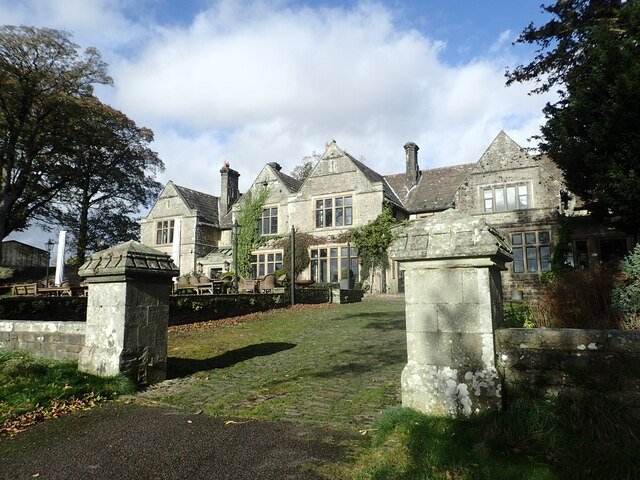



Associated title (legacy text): Manor of High Abbotside
Historical names: Fors (Manor) | High Abbotside (Manor) | Wensleydale (Manor) | Abbotside, High And Low (Manor) | Abbotside, Low (Manor)
Location: Aysgarth, Yorkshire
Places / associated places: Aysgarth, Yorkshire
Location & Extent
GPS Location & Recorded Land Areas
Representative GPS point: 54.31892, -2.199199
Identity: confirmed — The record is the post-1723 High Abbotside division of the former Manor of Wensleydale/Abbotside, the Jervaulx/Fors monastic estate north of the River Ure. The historical descriptions identify High Abbotside as including Hardraw, Cotterdale, Fossdale, Simonstone, Sedbusk, Shaw, Helbeck-Lunds, Camhouses and Litherskew, matching the supplied registry description and distinguishing it from Low Abbotside.
Representative point: 54.318920, -2.199199
Basis: documented_estate_centre — Simonstone Hall is identified in the 22 October 1913 Simonstone Estate sale particulars as the mansion house within the High and Low Abbotside estate, and is a defensible surviving centre for the High Abbotside manorial estate. The coordinate is the mapped location of Simonstone Hall.
Point confidence: medium
Boundary status: representative_point_only
Boundary period: Post-1723 manor of High Abbotside, with territorial evidence especially clear in the nineteenth-century township/manor descriptions
Boundary confidence: medium
Boundary basis: The historical evidence establishes a substantial manorial territory rather than merely a settlement: the seventeenth-century Manor of Wensleydale covered the former Fors Abbey lands north of the River Ure and was divided into High and Low Abbotside in the eighteenth century. For High Abbotside, nineteenth-century evidence records 13,229 acres, extensive moor and fell, the named hamlets, the western boundary at Hell Gill Beck against Westmorland, and a formally determined section of the boundary toward Mallerstang and Muker. The 1913 sale particulars list properties across Simonstone, Hardraw, Cotterdale, Sedbusk, Litherskew, Fossdale and associated moorland. However, no accessible source located during this research supplies a complete georeferenced perimeter of the historical High Abbotside manor itself. The modern civil-parish boundary cannot safely be substituted because it was altered, including by the later treatment of Abbotside Common.
Sources:
- The National Archives Discovery: HIGH ABBOTSIDE MANOR, F239167: https://discovery.nationalarchives.gov.uk/details/c/F239167 — Registry authority record identifying the exact manor and its historical aliases and description.
- Cattle in seventeenth century Wensleydale, Yorkshire Dales National Park: https://www.yorkshiredales.org.uk/cattle-in-seventeenth-century-wensleydale/ — States that the former Manor of Wensleydale was the Fors Abbey estate north of the River Ure and became the manors and townships of High and Low Abbotside; also documents tenants and lands within the manor.
- GENUKI: Aysgarth Parish information from Bulmers' 1890: https://www.blunham.com/big/eng/YKS/NRY/Aysgarth/Aysgarth90.html — Describes High Abbotside as an extensive township and manor of 13,229 acres; identifies the Earl of Wharncliffe as lord; records the named hamlets, Hell Gill western boundary, and the adjudicated boundary toward Mallerstang and Muker.
- Particulars and Conditions of Sale with Plan of the Simonstone Estate, High and Low Abbotside, 22 October 1913: https://historicengland.org.uk/images-books/photos/volume/SC01331 — Historic England catalogue describes the estate as including a mansion house, grouse moor, farms, village properties, advowson and two manors, and lists Simonstone Hall and properties throughout High Abbotside.
- Sales particulars: The Simonstone estate, Hawes, 12,622 acres, 22 October 1913: https://archivesunlocked.northyorks.gov.uk/CalmView/Record.aspx?id=ZTS%2F4%2F7&src=CalmView.Catalog — North Yorkshire archive catalogue entry for the 1913 sale particulars and plan.
- The garden of Simonstone Hall, Geograph: https://commons.wikimedia.org/wiki/File:The_garden_of_Simonstone_Hall_-_geograph.org.uk_-_7331044.jpg — Provides the mapped camera coordinate 54.318920, -2.199199 at Simonstone Hall, used as the representative estate-centre point.
Warnings / uncertainty:
- The returned point is suitable for locating the manor but is not asserted to be the medieval court site or a legally defined manor-house site.
- No complete historical manor boundary polygon was found in accessible sources; do not inject a polygon based solely on the modern High Abbotside civil-parish boundary.
- The 1913 Simonstone estate sale involved both High and Low Abbotside manors, so Simonstone Hall is used as a documented estate centre for the High Abbotside record rather than proof that the whole 1913 estate belonged exclusively to High Abbotside.
About the Manor
High Abbotside Manor was the northern part of the former monastic Manor of Wensleydale, also known in earlier records as Abbotside or Dale Grange. The estate originated in the lands held by the monastery founded at Fors in 1145 and transferred to the later Jervaulx Abbey. The medieval estate covered much of upper Wensleydale north of the River Ure, including land later understood as High and Low Abbotside. After the Dissolution of Jervaulx Abbey, the estate passed through Crown and private ownership. It was acquired by the Wortley family in 1723 and thereafter treated as two manors, High Abbotside and Low Abbotside. High Abbotside included Hardraw, Cotterdale, Fossdale, Simonstone, Sedbusk, Shaw, Litherskew, Helbeck-Lunds and related hamlets and moorland. The manor was still held by the Earl of Wharncliffe in the late nineteenth century. A 1913 sale catalogue records the Simonstone estate as including two manors in the township of High and Low Abbotside, while another historical account states that the Wortley estate was sold in 1912. The identity of any purchaser after that sale has not been securely established in the sources consulted.
Ownership / Holder Account
The earliest securely evidenced predecessor estate was the monastic holding established at Fors in 1145 and moved to Jervaulx in 1156. By the early fourteenth century the abbot's Wensleydale estate was known as the Manor of Wensleydale or Abbotside, with courts held at Dale Grange. Following the Dissolution of Jervaulx Abbey in 1539, the estate passed to the Crown and was granted in 1544 to Matthew Stewart, Earl of Lennox, and Margaret Douglas. The title returned to the Crown in 1603 and was granted to Ludovic Stewart, Duke of Lennox, on 6 August 1603. Lennox sold the manor in 1614 to Sir Francis Baildon, Thomas Rookwood and Edmund Rolte, apparently as joint purchasers or estate intermediaries. The manor was then divided into shares: two parts were acquired by George Cole and Thomas Cole, while the remaining third was acquired by Mary Coleby and leased to George Cole. John Coleby, Mary Coleby's son, sold his part in 1678 to Alexander Smith. By 1717 the whole manor was reported to be in the hands of Lord Lonsdale, although the intervening conveyance from the Cole and Smith interests has not been identified. Henry Lowther, Viscount Lonsdale, sold the manor in 1723 to Edward Wortley Montagu. After Wortley's death in 1755, his daughter Mary held the estates for life, after which they passed to James Archibald Stuart, her second son, and subsequently to his eldest son John Stuart. Following John's death in 1797, the estates passed to James Archibald Stuart Wortley Mackenzie, later the first Baron Wharncliffe. The manor remained associated with the Wortley-Stuart-Wharncliffe estate. In 1890 the Earl of Wharncliffe was explicitly identified as lord of the manors of High and Low Abbotside. The estate was reportedly sold in 1912, and a 1913 sale catalogue records two manors among the properties offered, but the purchaser and the precise legal disposition of the manorial rights have not been securely established.
Conveyance & Descent
First holder to present holder: blood proximity & distance travelled
First recorded holder: Abbot and convent of Fors Abbey, later Jervaulx Abbey
Present holder:
Recorded title journey: 18 holder entries in this manor's saved Conveyance & Descent history.
No recorded holder currently has a usable saved direct-blood or collateral-blood relationship path from which to calculate proximity percentages.
First recorded holder → present holder
A usable saved blood relationship path between the first recorded holder and the present holder has not yet been recorded, so that first-to-present genealogical distance cannot be calculated.
Abbot and convent of Fors Abbey, later Jervaulx Abbey, Abbot and convent of Jervaulx Abbey, earlier Fors Abbey
Transfer: Foundation grant of land at Fors and Worton to establish a monastery; the community moved from Fors to the Jervaulx site in 1156 and retained the associated Wensleydale estate until the Dissolution.
Shared holding: Jervaulx monastic estate
Previous holder: Akarius Fitz Bardolf and other lay donors
The sources identify the former Manor of Wensleydale and Abbotside estate as the land held by the abbot of Jervaulx. The first foundation was at Fors in 1145, and the monastery moved to Jervaulx in 1156. By 1301-02 the abbot paid subsidy for Dale Grange and associated settlements including Skelgill, Cams, Simonstone and Cotterdale. This is the securely evidenced predecessor of the later High and Low Abbotside manors.
Source: Victoria County History, A History of the County of York: North Riding, volume 1 (1914), pp. 68-70, as cited in the Yorkshire Dales National Park archaeological survey; corroborated by the York Archaeological Trust account of Jervaulx Abbey. — source link
Transfer: Dissolution and forfeiture of Jervaulx Abbey's lands to the Crown.
Holding arrangement: Other — The former monastic Manor of Wensleydale or Abbotside estate.
Shared holding: Crown custody after Dissolution
Previous holder: Abbot and convent of Jervaulx Abbey
The sources state that the Manor of Wensleydale was taken from Jervaulx Abbey at the Dissolution in 1539 and passed into Crown ownership before its grant in 1544.
Source: Victoria County History, A History of the County of York: North Riding, volume 1 (1914), pp. 68-70, as cited in the Yorkshire Dales National Park archaeological survey. — source link
Matthew Stewart, 4th Earl of Lennox, and Margaret Douglas, Countess of Lennox
Transfer: Grant by Henry VIII of the former Jervaulx Manor of Wensleydale or Abbotside to Matthew Stewart, Earl of Lennox, and Margaret Douglas.
Holding arrangement: Joint — Whole estate as granted; the source does not specify separate beneficial shares.
Shared holding: Lennox joint grant
Previous holder: The Crown, Crown of England under James I
The estate was granted by Henry VIII in 1544 to Matthew Stewart, Earl of Lennox, and his wife Margaret Douglas. The source describes the grant as applying to the Manor of Wensleydale, the predecessor estate of High and Low Abbotside. The estate returned to the Crown in 1603.
Source: Victoria County History, A History of the County of York: North Riding, volume 1 (1914), pp. 68-70, citing the relevant Patent Roll; reproduced and summarized in the Yorkshire Dales National Park archaeological survey. — source link
Transfer: Reversion or return of the estate to the Crown on the accession of James I; the source states that the Lennox holding returned to the Crown in 1603.
Holding arrangement: Other — Whole former Manor of Wensleydale or Abbotside estate.
Shared holding: Crown reversion
Previous holder: Matthew Stewart, Earl of Lennox, and Margaret Douglas
The source describes the estate as returning to the Crown in 1603. It was then granted on 6 August 1603 to Ludovic Stewart, Duke of Lennox.
Source: The Dales, Coleby Hall Askrigg historical account, citing the Patent Roll and Victoria County History, A History of the County of York: North Riding, volume 1 (1914), pp. 68-70. — source link
Ludovic Stewart, Duke of Lennox, 2nd Duke of Lennox, 1st Duke of Richmond, Earl of March
Transfer: Royal grant by James I on 6 August 1603 of the Manor of Wensleydale or Abbotside, together with Settrington and Temple Newsam.
Shared holding: Lennox ownership
Previous holder: The Crown, Crown of England under James I
The Duke of Lennox received the estate from the Crown in 1603. His tenure was complicated by disputes with tenants over the existence of the manor, rents, fines and leases. In 1614 he sold the entire manor to Sir Francis Baildon, Thomas Rookwood and Edmund Rolte.
Source: The Dales, Coleby Hall Askrigg historical account, citing the Patent Roll, Exchequer Depositions and Victoria County History, A History of the County of York: North Riding, volume 1, pp. 68-70. — source link
Sir Francis Baildon, Thomas Rookwood and Edmund Rolte, Sir Francis Baildon of Kippax, Thomas Rookwood of London, Edmund Rolte of Gray's Inn
Transfer: Purchase of the entire manor from Ludovic Stewart, Duke of Lennox, for £10,000.
Holding arrangement: Joint — Whole manor; the source does not state the internal shares of the three purchasers.
Shared holding: 1614 purchasing consortium
Previous holder: Ludovic Stewart, Duke of Lennox, 2nd Duke of Lennox, 1st Duke of Richmond, Earl of March
In 1614 Lennox sold the entire manor to Baildon, Rookwood and Rolte. The subsequent history suggests that these men may have acted as purchasers or intermediaries before the estate was divided and sold in shares. No assumption is made about beneficial ownership beyond the recorded joint purchase.
Source: The Dales, Coleby Hall Askrigg historical account, citing the relevant Exchequer and conveyancing records and Victoria County History, A History of the County of York: North Riding, volume 1, pp. 68-70. — source link
George Cole and Thomas Cole, Gentry purchasers of portions of the Manor of Wensleydale or Abbotside
Transfer: Acquisition of one-third share of the manor from the 1614 purchasers; the related survey and later account describe two parts as passing to the Coles.
Holding arrangement: Share — One-third share, with the Coles also acquiring or controlling another third through a separate transaction.
Shared holding: Cole share
Co-holder: George Cole
Previous holder: Sir Francis Baildon, Thomas Rookwood and Edmund Rolte, Sir Francis Baildon of Kippax, Thomas Rookwood of London, Edmund Rolte of Gray's Inn
The available account states that in 1616 one third of the manor was sold to George and Thomas Cole for £4,750. It separately states that another third was bought by George Cole, while the final third was acquired by Mary Coleby. A 1618 survey described the estate as divided into two parts to the Coles and one part to Mary Coleby.
Source: The Dales, Coleby Hall Askrigg historical account, citing Exchequer Depositions, Close Rolls and Victoria County History, A History of the County of York: North Riding, volume 1, p. 69. — source link
George Cole, Purchaser of portions of the Manor of Wensleydale or Abbotside
Transfer: Acquisition of a further one-third share of the divided manor, according to the account of the 1616 transactions and 1618 survey.
Holding arrangement: Share — One-third share, in addition to the share associated with George and Thomas Cole.
Shared holding: Cole share
Co-holder: George Cole and Thomas Cole
Previous holder: Sir Francis Baildon, Thomas Rookwood and Edmund Rolte, Sir Francis Baildon of Kippax, Thomas Rookwood of London, Edmund Rolte of Gray's Inn
The historical account distinguishes a third bought by George Cole from the third bought by George and Thomas Cole. The 1618 survey is summarized as assigning two parts to the Coles and one part to Mary Coleby. The exact legal form of George Cole's separate acquisition is not stated in the accessible account.
Source: The Dales, Coleby Hall Askrigg historical account, citing Exchequer Depositions, Close Rolls and Victoria County History, A History of the County of York: North Riding, volume 1, p. 69. — source link
Mary Coleby, Holder of one-third share in the Manor of Wensleydale or Abbotside
Transfer: Acquisition of the remaining one-third share of the divided manor; she subsequently leased it to George Cole for ten years at £220 per annum.
Holding arrangement: Share — One-third share
Shared holding: Coleby share
Previous holder: Sir Francis Baildon, Thomas Rookwood and Edmund Rolte, Sir Francis Baildon of Kippax, Thomas Rookwood of London, Edmund Rolte of Gray's Inn
Mary Coleby acquired the final third of the manor in the 1616-1618 division. The source states that she leased this share to George Cole for ten years. Her son John Coleby later sold his part of the manor in 1678 to Alexander Smith, indicating descent of this share through the Coleby family, but the exact date and legal mechanism by which John succeeded to Mary Coleby's interest are not supplied.
Source: The Dales, Coleby Hall Askrigg historical account, citing Exchequer Depositions, Close Rolls and Victoria County History, A History of the County of York: North Riding, volume 1, p. 69. — source link
John Coleby, Holder and vendor of the Coleby share in the Manor of Wensleydale or Abbotside
Transfer: Sale of the Coleby share of the manor to Alexander Smith in 1678.
Holding arrangement: Share — The part of the manor descended through Mary Coleby's interest; the exact fraction is not restated in the sale account.
Shared holding: Coleby successor share
Previous holder: Mary Coleby, Holder of one-third share in the Manor of Wensleydale or Abbotside
The source identifies John Coleby as a son of Mary Coleby and states that he sold his part of the manor to Alexander Smith in 1678. This entry records only the documented manor conveyance; it does not infer the precise route by which the share passed from Mary to John.
Source: Feet of Fines of Yorkshire, East Riding, Easter 33 Charles II, together with Dugdale's Visitation of Yorkshire and the Historical Manuscripts Commission report, as cited by Victoria County History and summarized in the Yorkshire Dales National Park archaeological survey. — source link
Alexander Smith, Purchaser of the Coleby share in the Manor of Wensleydale or Abbotside
Transfer: Purchase of John Coleby's part of the manor in 1678.
Holding arrangement: Share — The former Coleby part of the manor; exact fraction not restated in the accessible account.
Shared holding: Smith share
Previous holder: John Coleby, Holder and vendor of the Coleby share in the Manor of Wensleydale or Abbotside
Alexander Smith acquired John Coleby's part of the manor in 1678. By 1717 the whole manor was reported to be owned by Lord Lonsdale, but no secure conveyance linking Alexander Smith's share, or the other Cole and Smith interests, to Lord Lonsdale has been identified. The gap is therefore preserved rather than bridged by inference.
Source: Feet of Fines of Yorkshire, East Riding, Easter 33 Charles II, and Victoria County History, A History of the County of York: North Riding, volume 1, p. 69, as summarized in the Yorkshire Dales National Park archaeological survey. — source link
Transfer: The whole manor was reported to be owned by Lord Lonsdale by 1717; he sold it to Edward Wortley Montagu in 1723. The intermediate acquisition of the remaining shares is not identified.
Shared holding: Lonsdale ownership
Previous holder: Alexander Smith and other earlier share-holders; precise intermediate conveyances unknown
By 1717 the whole manor was in the hands of Lord Lonsdale. The source does not document how the several seventeenth-century shares were consolidated, so this entry begins with the earliest reported date of whole ownership and expressly leaves the acquisition gap open.
Source: Recovery Rolls of Yorkshire, Trinity 3 George I, rot. 64, and related local history, as cited in the Yorkshire Dales National Park archaeological survey and the Northern Mine Research Society account. — source link
Edward Wortley Montagu, English landowner and Member of Parliament, husband of Lady Mary Wortley Montagu
Transfer: Purchase of the Manor of Wensleydale or Dale Grange from Henry, Viscount Lonsdale, in 1723.
Shared holding: Wortley ownership
Previous holder: Henry Lowther, 3rd Viscount Lonsdale
Edward Wortley Montagu bought the manor from Lord Lonsdale in 1723. After this acquisition the estate became known as the manors of High Abbotside and Low Abbotside. The division was an administrative and estate division of the former Manor of Wensleydale, not evidence of a separate medieval title creation.
Source: Northern Mine Research Society, British Mining no. 45, Minutes Regarding Mines in Upper Wensleydale, summarizing the 1723 purchase and later descent; corroborated by the Yorkshire Dales National Park archaeological survey. — source link
Mary Wortley Montagu, English aristocrat, writer and traveller, daughter of Edward Wortley Montagu
Transfer: Life interest under Edward Wortley Montagu's testamentary disposition; after her life interest the estates were to pass to James Archibald Stuart, her second son.
Holding arrangement: Other — Life interest in the Wortley estates, including High and Low Abbotside according to the consulted descent account.
Shared holding: Wortley life interest
Previous holder: Edward Wortley Montagu, English landowner and Member of Parliament, husband of Lady Mary Wortley Montagu
The source states that Edward Wortley Montagu left his estates to his daughter Mary for her life, with remainder to James Archibald Stuart. This is recorded as a life interest rather than unrestricted sole ownership. The precise date at which her life interest ended is not supplied in the manor source.
Source: Northern Mine Research Society, British Mining no. 45, Minutes Regarding Mines in Upper Wensleydale, summarizing the Wortley estate settlement. — source link
James Archibald Stuart, Colonel James Archibald Stuart, later Stuart-Wortley-Mackenzie
Transfer: Remainder interest after Mary Wortley Montagu; the source states that James Archibald Stuart received the estates and then demised them to his eldest son John Stuart.
Shared holding: Stuart-Wortley remainder
Previous holder: Mary Wortley Montagu, English aristocrat, writer and traveller, daughter of Edward Wortley Montagu
After the life interest of Mary Wortley Montagu, the estates passed to James Archibald Stuart, her second son. The source further states that he demised them to his eldest son John Stuart. The precise dates and legal form of the demise are not given.
Source: Northern Mine Research Society, British Mining no. 45, Minutes Regarding Mines in Upper Wensleydale, summarizing the Wortley family estate descent. — source link
John Stuart, Eldest son of James Archibald Stuart, heir apparent to the Wortley estates
Transfer: Demise from his father, James Archibald Stuart; the consulted source states that the estates were then held by his eldest son John Stuart until his death unmarried in 1797.
Holding arrangement: Other — Estate holding under a demise; the exact legal interest is not stated.
Shared holding: Stuart-Wortley demised estate
Previous holder: James Archibald Stuart, Colonel James Archibald Stuart, later Stuart-Wortley-Mackenzie
The source says that James Archibald Stuart demised the estates to his eldest son John Stuart. John died unmarried in 1797, after which the estates passed to his younger brother James Archibald Stuart Wortley Mackenzie. Because the source uses the term demise and does not specify whether John held a leasehold or another form of interest, the holding is classified as other rather than sole ownership.
Source: Northern Mine Research Society, British Mining no. 45, Minutes Regarding Mines in Upper Wensleydale, summarizing the Wortley estate descent. — source link
James Archibald Stuart Wortley Mackenzie, 1st Baron Wharncliffe from 1826, British soldier and politician
Transfer: Succession to the Wortley estates after the death of his elder brother John Stuart in 1797.
Shared holding: Wortley-Mackenzie ownership
Previous holder: John Stuart, Eldest son of James Archibald Stuart, heir apparent to the Wortley estates
The consulted account states that after John Stuart died unmarried in 1797, the estates passed to James Archibald Stuart Wortley Mackenzie. He was created Baron Wharncliffe in 1826, after the period covered by this holding entry. The descent from 1797 is directly stated, although the exact conveyancing instrument has not been located in the accessible sources.
Source: Northern Mine Research Society, British Mining no. 45, Minutes Regarding Mines in Upper Wensleydale; biographical corroboration from the Dictionary of National Biography. — source link
Earl of Wharncliffe, 3rd Baron Wharncliffe, 1st Earl of Wharncliffe from 1876
Transfer: Later descent within the Wortley-Stuart-Wharncliffe family; the precise intervening conveyances from 1818 to 1890 are not established here. In 1890 the Earl of Wharncliffe was expressly identified as lord of the manor of High Abbotside.
Shared holding: Wharncliffe estate
Previous holder: Wortley-Stuart-Wharncliffe family; exact immediate predecessor not securely established in the consulted manor sources
Bulmer's 1890 directory explicitly states that the Earl of Wharncliffe was lord of the manor and principal owner of High Abbotside, and also lord of the manor of Low Abbotside. The Earl was Edward Montagu Stuart Granville Montagu-Stuart-Wortley-Mackenzie, who held the earldom from 1876 until 1899. A later historical account states that the former Wortley estate was sold in 1912. The identity of the purchaser or purchasers after the 1912 sale has not been securely established.
Source: Bulmer's History and Directory of North Yorkshire (1890), entry for High Abbotside; supplemented by Historic England's 1913 Simonstone Estate sale record and the Yorkshire Dales National Park archaeological survey. — source link
Lordship / Title Associations
Associations are recorded by period so changes in estate composition do not imply that every manor remained attached to the same title indefinitely.
Corrections / Challenges
Sign in to challenge or submit evidence against a recorded assertion.
JSON API
Machine-readable published manor data, including public images, mapped land areas, notes, rights, conveyances, relationships, records, source/document-library entries and public file links.
https://manorialregistry.com/index.php?rest_route=/mhr/v1/manor/high-abbotside-manorPublic API access is currently disabled. Authorised API clients must use a private X-MHR-API-Key; currently only administrator keys are enabled.
Private source files, pending edits, moderation/admin information, user API keys and non-public import identifiers are not returned.