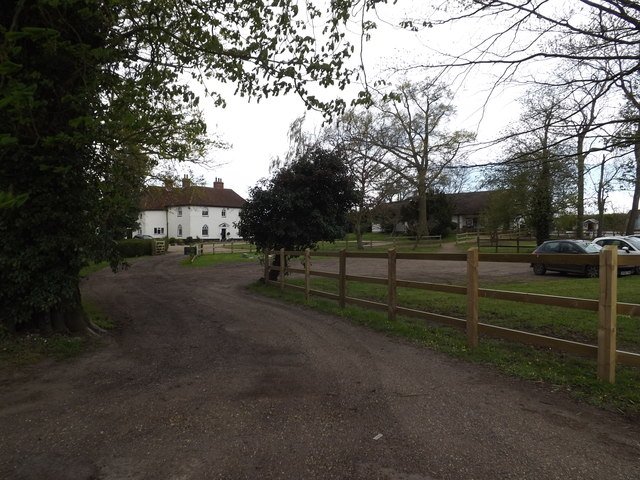



Location: Akenham, Suffolk
Places / associated places: Akenham, Suffolk
Listed in Domesday Book: Yes
Location & Extent
GPS Location & Recorded Land Areas
Representative GPS point: 52.1019, 1.1506
Identity: confirmed — The registry record is securely identified with the historical manor whose former manor house was Akenham Hall in Akenham, Suffolk. Historic England describes Akenham Hall as the former manor house, with a fragmentary medieval core. The associated Rous/Rice Hall was a separate or formerly associated estate that was later amalgamated with Akenham Manor, not a different match for this registry record.
Representative point: 52.1019, 1.1506
Basis: documented_manor_house — Akenham Hall, formerly the manor house of Akenham Manor; Historic England national grid reference TM 15873 49518.
Point confidence: high
Boundary status: representative_point_only
Boundary period: Not established
Boundary confidence: none
Boundary basis: The surviving evidence confirms the manor-house location and indicates a substantial historical holding, including approximately 2,000 acres plus about 200 acres of copyhold estates in 1815. A 1576 survey of the manor and later rentals, tenant lists and court records are catalogued, but the publicly accessible evidence consulted does not provide a legible manor map or enough explicit perimeter evidence to reconstruct the manorial boundary. The modern parish boundary cannot safely be substituted for the historical manor extent.
Sources:
- Akenham Hall, Akenham - Historic England List Entry 1352029: https://historicengland.org.uk/listing/the-list/list-entry/1352029 — Identifies Akenham Hall as a house formerly serving as the manor house and gives National Grid Reference TM 15873 49518, equivalent to approximately 52.1019, 1.1506.
- Akenham parish summary - Suffolk Heritage Explorer: https://heritage.suffolk.gov.uk/media/pdfs/akenham.pdf — Summarizes the medieval and post-medieval history of Akenham Manor, its Brewse, Townsend, Aylmer, Arras and Orford associations, and records approximately 2,000 acres plus 200 acres of copyhold estates in 1815.
- Add MS 41305 - British Library Archives and Manuscripts Catalogue: https://searcharchives.bl.uk/catalog/040-002084848 — Catalogues Ralph Agas's 1576 survey of the manor of Akenham, demonstrating that a potentially valuable historical survey survives, although the catalogue page does not expose its boundary geometry.
- Rise Hall, Akenham - Suffolk's Historic Gardens and Parks Inventory: https://suffolkhistoricgardensandparks.co.uk/rise-hall/ — Identifies Rise Hall as the site of the Rous or Rice Hall estate and states that it was later amalgamated with Akenham Manor, supporting the distinction between the principal manor and the associated estate.
- Akenham Manor manorial records - The National Archives discovery records: https://discovery.nationalarchives.gov.uk/details/c/F249820 — Registry authority and Manorial Documents Register record for the exact supplied manor, including the associated archival record series.
Warnings / uncertainty:
- No defensible historical manor polygon was found in the publicly accessible material consulted.
- The historical extent may have crossed or incorporated land in more than one modern parish or settlement area; the Akenham civil-parish boundary must not be treated as the manor boundary.
- The 1576 survey, rentals, tenant lists with abuttals and later enfranchisement material may permit future reconstruction if the underlying documents or maps are obtained from the British Library, Suffolk Archives or The National Archives.
- The representative point marks the documented former manor house at Akenham Hall, not the geometric centre of the full historical manorial lands.
About the Manor
Akenham Manor was the principal manor associated with Akenham, Suffolk, with its manor house at Akenham Hall. The history of Akenham Manor is closely entangled in older sources with that of Rous or Rice Hall, a separate or formerly associated estate in Akenham that was progressively absorbed or amalgamated with the main manor. The parish's Domesday land was divided among several holdings belonging to Roger de Rames, while the later Akenham Manor is securely associated with the Brewse family by the late thirteenth century. Akenham Hall, formerly the manor house, contains a fragmentary medieval core, a mid-seventeenth-century rear range and a late-eighteenth-century principal front. The public evidence establishes a substantially documented descent from the medieval Brewse interest through the Townsend and Aylmer families, followed by Thomas Arras, John Orford and George Frederick Beaumont, but does not establish every intervening conveyance or the exact legal relationship between all named holders.
Ownership / Holder Account
Akenham contained several Domesday holdings which had belonged before the Conquest to different freeholders and by 1086 belonged to Roger de Rames. The later consolidated Akenham Manor was anciently held by the Brewse family. Richard de Brewse is associated with the absorption of the Rous or Rice Hall interest, although the precise stages of that consolidation remain uncertain. The manor was specifically recorded in the 1482 inquisition post mortem of Sir Thomas Brewse. It subsequently passed in dower on the marriage of Amy Brewse, daughter of William Brewse, to Sir Roger Townsend. A descendant, Roger Townsend, sold the manor in 1586 to John Aylmer, Bishop of London. Aylmer's Suffolk properties were subsequently settled, and an indenture octopartite made Samuel Aylmer sole possessor of Akenham and Claydon by 1594. Samuel Aylmer died in 1635, after which his son Edward Aylmer succeeded to the manors. The Aylmer estate became financially encumbered during and after the Civil War. Contemporary Chancery proceedings document an agreement dated 12 December 1650 for the sale of Akenham Manor by Edward Aylmer to an agent of Edward Arras, and other proceedings record Arras's possession or enjoyment of the manor under related financial arrangements. The precise completion date and legal form of the Aylmer-to-Arras transfer are not fully established. A later source records John Orford as owner in 1817, but the intervening conveyance is not identified in the consulted public sources. By 1900 George Frederick Beaumont was described as lord of the manor. The connection between the Orford family and Beaumont is not established as a conveyance in the sources consulted, so it is recorded as a documentary gap rather than an inferred succession.
Records & References
Sources and references mentioning this manor/title which are not necessarily conveyances or transfers.
17 records found · showing 1–8.
1877-1879: deeds and awards of enfranchisement of copyhold land (7)
Held by: The National Archives
1840-1900: file of evidence rel to enfranchisement of copyhold land
Held by: The National Archives
1771-1772: lists of tenants, incl abuttals, acreages and quit rents
Held by: Suffolk Archives - Ipswich
1771-1771: rental
Held by: Suffolk Archives - Ipswich
1721-1721: rental
Held by: Suffolk Archives - Ipswich
1721-1721: rental
Held by: Suffolk Archives - Ipswich
1718-1922: court books (3, indexed)
Held by: Suffolk Archives - Ipswich
1651-1707: court rolls (2, indexed)
Held by: Suffolk Archives - Ipswich
Conveyance & Descent
First holder to present holder: blood proximity & distance travelled
First recorded holder: Roger de Rames, also rendered Roger de Rheims or Roger of Rames
Present holder:
Recorded title journey: 11 holder entries in this manor's saved Conveyance & Descent history.
No recorded holder currently has a usable saved direct-blood or collateral-blood relationship path from which to calculate proximity percentages.
First recorded holder → present holder
A usable saved blood relationship path between the first recorded holder and the present holder has not yet been recorded, so that first-to-present genealogical distance cannot be calculated.
Roger de Rames, also rendered Roger de Rheims or Roger of Rames, Norman landholder recorded in Domesday Book
Transfer: Domesday tenure; predecessor holdings rather than a demonstrably unified later Akenham Manor
Shared holding: Domesday Akenham holdings
Previous holder: Godwin the priest, Sunwin and Thorbern the priest, together with the unnamed holder of one additional Akenham holding
The Akenham parish manorial summary records four separate pre-Conquest holdings and states that by 1086 they belonged to Roger de Rames, with one holding occupied by Roger's daughter. This is the earliest secure documentary evidence for the later manor's land in Akenham, but it should not be treated as proof that the later consolidated Akenham Manor already existed in its medieval form.
Source: Suffolk Heritage Explorer, Akenham parish history, section 13 Manorial, citing Domesday material. — source link
Richard de Brewse, Knight or member of the de Brewse landed family, exact style varies by source
Transfer: Earlier Brewse family holding; the precise acquisition date is unknown
Shared holding: Brewse family
Co-holder: William Brewse
Previous holder: Brewse family, described as the ancient holders of Akenham Manor
The Suffolk parish-history summary states that Akenham Manor was anciently held by the Brewse family by 1296 and associates Richard de Brewse with the absorption of Rice or Rous Hall into the main manor. The wording does not establish the exact date or legal instrument of Richard's acquisition, and the relationship between the main manor and Rice Hall was historically confused.
Source: Suffolk Heritage Explorer, Akenham parish history, section 13 Manorial; corroborated by the historical account in the Beaumont Collection catalogue summarising Copinger, The Manors of Suffolk, volume II, page 227. — source link
William Brewse, Member of the Brewse landed family
Transfer: Descent within the Brewse family; the manor was later assigned in dower on the marriage of his daughter Amy
Shared holding: Brewse family
Co-holder: Richard de Brewse
Previous holder: Earlier Brewse holders, including the line associated with Sir Thomas Brewse
The manor is specifically mentioned in the inquisition post mortem of Sir Thomas Brewse in 1482. A later account states that it passed in dower on the marriage of Amy, daughter of William Brewse, to Sir Roger Townsend. The evidence supports William Brewse's position in the relevant Brewse descent, but does not provide an exact date for his tenure or the dower settlement.
Source: Historical account of Akenham Manor in the Beaumont Collection catalogue, summarising Copinger, The Manors of Suffolk, volume II, page 227; the same account notes the 1482 inquisition post mortem of Sir Thomas Brewse. — source link
Sir Roger Townsend, member of the Townsend family
Transfer: Received Akenham Manor in dower on his marriage to Amy Brewse
Shared holding: Townsend-Brewse marriage settlement
Previous holder: Amy Brewse, daughter of William Brewse; the dower arrangement derived from the Brewse holding
The historical account states that Akenham Manor passed in dower on the marriage of Amy Brewse, daughter of William Brewse, to Sir Roger Townsend. This is evidence of a manor connection, but the source does not give the marriage date or specify whether the dower interest represented the whole manor or a defined legal share.
Source: Historical account of Akenham Manor in the Beaumont Collection catalogue, summarising Copinger, The Manors of Suffolk, volume II, page 227. — source link
Roger Townsend, Member of the Townsend family, seller of Akenham Manor in 1586
Transfer: Sold Akenham Manor to John Aylmer, Bishop of London
Shared holding: Townsend family
Previous holder: Townsend family, descended from Sir Roger Townsend
A descendant of Sir Roger Townsend, identified as Roger Townsend, sold Akenham Manor in 1586 to John Aylmer, Bishop of London. The source does not establish the intervening descent from Sir Roger Townsend to this Roger Townsend, nor does it give the exact date or instrument of sale.
Source: Historical account of Akenham Manor in the Beaumont Collection catalogue, summarising Copinger, The Manors of Suffolk, volume II, page 227; corroborated by the Suffolk Heritage Explorer parish history. — source link
John Aylmer, Bishop of London, 1577-1594, chaplain and tutor to Lady Jane Grey, tutor to Lady Jane Grey
Transfer: Purchased from Roger Townsend; subsequently settled the estate so that his son Samuel became sole possessor by 1594
Shared holding: Aylmer family
Co-holders: Samuel Aylmer, Edward Aylmer
Previous holder: Roger Townsend, Member of the Townsend family, seller of Akenham Manor in 1586
The Akenham Manor history states that Roger Townsend sold the manor in 1586 to John Aylmer, Bishop of London. A contemporary legal-history account records that John Aylmer and his son Samuel acquired the adjoining manors of Claydon and Akenham in the 1580s and that an indenture octopartite subsequently made Samuel sole possessor of Akenham and Claydon by 1594.
Source: Historical account of Akenham Manor in the Beaumont Collection catalogue; W. P. Hills, Claydon and Mockbeggars Hall, Proceedings of the Suffolk Institute of Archaeology and History, volume XXIII, 1937, pages 8-10. — source link
Transfer: Became sole possessor of Akenham Manor under an indenture octopartite settling his father's Suffolk properties
Shared holding: Aylmer family
Co-holders: John Aylmer, Bishop of London, Edward Aylmer
Previous holder: John Aylmer, Bishop of London, 1577-1594, chaplain and tutor to Lady Jane Grey, tutor to Lady Jane Grey
A legal-history account states that John Aylmer had settled most of his properties by an indenture octopartite under which Samuel Aylmer became sole possessor of Claydon and Akenham. Samuel lived at Akenham Hall and died in 1635. The evidence supports a formal family settlement rather than an inferred succession based solely on kinship.
Source: W. P. Hills, Claydon and Mockbeggars Hall, Proceedings of the Suffolk Institute of Archaeology and History, volume XXIII, 1937, pages 8-10; Suffolk Heritage Explorer records Samuel Aylmer as resident at Akenham Hall and identifies him in the manorial history. — source link
Edward Aylmer, Suffolk landowner, son and successor of Samuel Aylmer
Transfer: Succeeded Samuel Aylmer to Akenham Manor and later agreed to sell the manor to an agent of Edward Arras; the exact completion date is uncertain
Shared holding: Aylmer family
Co-holders: John Aylmer, Bishop of London, Samuel Aylmer
Previous holder: Samuel Aylmer, Suffolk landowner, High Sheriff of Suffolk in 1626
The legal-history account states that Edward Aylmer succeeded to both Akenham and Claydon and to his father's Suffolk properties after Samuel Aylmer's death in 1635. Chancery proceedings recited an agreement dated 12 December 1650 for the sale of Akenham Manor by Edward Aylmer to an agent of Edward Arras for £4,779 10 shillings. The source also records financial arrangements under which Arras was to enjoy the manor, so the precise date of completed legal transfer should not be assumed.
Source: W. P. Hills, Claydon and Mockbeggars Hall, Proceedings of the Suffolk Institute of Archaeology and History, volume XXIII, 1937, pages 8-10, discussing Aylmer v. Arris and Aylmer v. Eldred. — source link
Thomas Arras, also rendered Edward Arras or Edward Arris in the contemporary litigation, Physician or medical practitioner in the Akenham litigation, exact style varies by source
Transfer: Acquired or contracted to acquire Akenham Manor from Edward Aylmer; the completion of the sale is not fully established
Shared holding: Arras or Arris family
Previous holder: Edward Aylmer, Suffolk landowner, son and successor of Samuel Aylmer
The Suffolk parish-history summary gives Thomas Arras as owner in 1646, while the contemporary legal-history study records an agreement dated 12 December 1650 for Edward Aylmer to sell Akenham Manor to an agent of Edward Arras and describes Arras as enjoying the manor under related bonds. Because the 1646 date conflicts with the more specific 1650 Chancery evidence, this entry uses the cautious date 'by 1650' and records the legal uncertainty rather than treating 1646 as a proven completed conveyance.
Source: W. P. Hills, Claydon and Mockbeggars Hall, Proceedings of the Suffolk Institute of Archaeology and History, volume XXIII, 1937, pages 8-10; Suffolk Heritage Explorer, Akenham parish history. — source link
John Orford, Recorded owner or lord of Akenham Manor in 1817
Transfer: Later owner; the intervening conveyance from the Arras or Arris interest is not identified
Shared holding: Orford family
Previous holder: Thomas Arras or his successors
The Suffolk parish-history summary records John Orford as owner of Akenham Manor in 1817, after noting an estate of approximately 2,000 acres and copyhold estates of approximately 200 acres in 1815. No source consulted establishes the conveyance by which the manor passed from Thomas Arras or his successors to John Orford, so the intervening gap is left explicit.
Source: Suffolk Heritage Explorer, Akenham parish history, section 13 Manorial. — source link
George Frederick Beaumont, Esquire, Fellow of the Society of Antiquaries, lord of Akenham Manor by 1900
Transfer: Later documented lordship; the conveyance from the Orford family or any intervening holder is not identified
Shared holding: Beaumont family
Previous holder: Robert Baker Orford or another undocumented predecessor
Kelly's Directory of Suffolk for 1900 described George Frederick Beaumont of The Lawn, Coggeshall, Essex, as lord of the manor of Akenham. The source establishes his manor connection but does not identify the conveyance by which the lordship reached him. The entry is therefore recorded as a later documented holder, not as a presumed successor by inheritance or family connection.
Source: Kelly's Directory of Suffolk, 1900, parish description of Akenham, reproduced by Forebears. — source link
Corrections / Challenges
Sign in to challenge or submit evidence against a recorded assertion.
JSON API
Machine-readable published manor data, including public images, mapped land areas, notes, rights, conveyances, relationships, records, source/document-library entries and public file links.
https://manorialregistry.com/index.php?rest_route=/mhr/v1/manor/akenham-manorPublic API access is currently disabled. Authorised API clients must use a private X-MHR-API-Key; currently only administrator keys are enabled.
Private source files, pending edits, moderation/admin information, user API keys and non-public import identifiers are not returned.