


Historical names: Edintone; Addington
Location: Addington, Kent
Places / associated places: Addington, Kent
Listed in Domesday Book: Yes
Location & Extent
GPS Location & Recorded Land Areas
Representative GPS point: 51.357409, -0.04081
Identity: confirmed — The registry record, TNA/MDR reference F287537, authority reference GB/NNAF/M313585, associated place Addington, and the documented descent through the Aguilon, Bardolf, Leigh, Trecothick and Archbishops of Canterbury interests identify the Surrey/Kent-border manor at Addington, historically in Surrey and now in the London Borough of Croydon. It is distinct from the unrelated Addington manors in Buckinghamshire and Northamptonshire.
Representative point: 51.357409, -0.040810
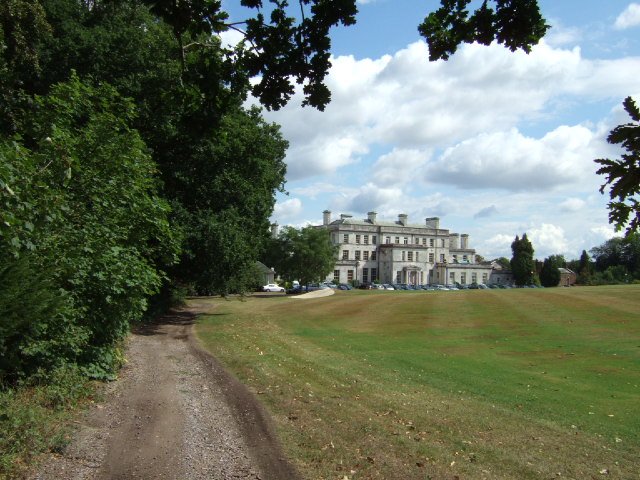
Basis: documented_estate_centre — Addington Palace occupies the historic Addington manor-house and estate centre. Historic England identifies the property as originally part of the manor of Addington and records the eighteenth-century mansion as the successor to the earlier manor-house site. The London Borough of Croydon likewise identifies the palace and surrounding park as belonging to the Manor of Addington.
Point confidence: high
Boundary status: representative_point_only
Boundary period:
Boundary confidence: none
Boundary basis: The available evidence establishes the manor-house and later estate centre, but does not provide a sufficiently accessible and georeferenced perimeter for the medieval or early-modern manorial land. The cited 1837 Addington Manor tithe map, 1802 Addington Park plan, rentals and court surveys are strong archival leads, but the web-accessible evidence does not expose their parcel geometry. The approximately 5,000-acre figure reported for the Leigh/Trecothick estate describes a later consolidated estate and cannot safely be converted into a manor polygon. The later Addington Palace park is also not equivalent to the full historical manor.
Sources:
- The National Archives, Manorial Documents Register: Addington Manor, F287537: https://discovery.nationalarchives.gov.uk/details/c/F287537 — Registry record for the exact Addington Manor, with location Addington, Kent and authority/reference GB/NNAF/M313585.
- Historic England, Addington Palace, Register of Parks and Gardens, entry 1000790: https://historicengland.org.uk/listing/the-list/list-entry/1000790?section=official-list-entry — Identifies Addington Palace as originally part of the manor of Addington, records the Domesday and Leigh/Trecothick history, and gives National Grid Reference TQ3661164521 for the historic estate centre.
- Planning Data, Addington Palace listed building record: https://www.planning.data.gov.uk/entity/31814600 — Provides the mapped point POINT (-0.04081 51.357409), used as the representative WGS84 coordinate for the documented palace/manorial centre.
- London Borough of Croydon, Addington Park History: https://www.croydon.gov.uk/sites/default/files/2021-02/addington-parks-history.pdf — States that Addington Park was an ancient hunting site belonging to the Manor of Addington, that the Leigh manor house stood behind the church, and that Addington Palace replaced the old manor house.
- Parks & Gardens, Addington Palace – Addington Village: https://www.parksandgardens.org/places/addington-palace — Records the historic park associated with Addington Palace, its relationship to the Addington Manor estate, the 1837 Addington Manor tithe map, and the mapped park extent of approximately 120 hectares.
- Surrey Archaeological Society, indexed Surrey archive maps: https://www.surreyarchaeology.org.uk/sites/default/files/SAS%20Archives%20-%20Maps%20indexed%20File%202%20pages%20163-342.pdf — Lists an 1802 Addington Park estate plan and a 1837 plan of rack-rented lands belonging to the Archbishop of Canterbury, identifying important archival mapping leads but not supplying a usable manor boundary polygon.
- Kent History and Library Centre, Addington manorial documents in Discovery: https://discovery.nationalarchives.gov.uk/details/r/N17345079 — Catalogue record for the 1657 Addington Manor court roll with court of survey, supporting the existence of detailed manorial survey material while not exposing its geographic perimeter online.
Warnings / uncertainty:
- The representative point is the later Addington Palace/manorial estate centre, not a claim that the surviving mansion footprint is identical to the medieval manor house.
- The medieval manor-house site is described as behind St Mary's Church; the eighteenth-century palace replaced or closely succeeded the earlier manor-house complex, so the point should be treated as a documented manorial centre rather than a precisely proven medieval building location.
- No historical manor polygon is returned because the accessible evidence does not establish the perimeter of the manorial lands. Do not substitute the modern parish, London Borough of Croydon boundary, conservation-area boundary, listed park boundary or present-day Addington Palace estate boundary.
- The 1837 Addington Manor tithe map, 1802 Addington Park plan, 1661 survey and the 1550, 1575, 1680 and 1696 rentals should be consulted directly at the relevant archive before attempting a historical boundary reconstruction.
About the Manor
Addington Manor was a medieval manor at Addington, historically in Surrey and now within the London Borough of Croydon, close to the Kent boundary. Domesday Book records two estates at Edintone/Addington, including one held of the king by Tezelin, the king's cook, and the manor retained a distinctive grand-serjeanty service connected with presenting a dish of pottage at a royal coronation. In the thirteenth century the principal manor was associated with Robert de Aguilon, who received royal licence to embattle his house at Addington in 1278. The manor subsequently passed through the Bardolf interest and was acquired by the Leigh family in the fifteenth century. Nicholas Leigh obtained an additional Addington estate formerly held by the Knights Hospitaller in an exchange with Henry VIII in 1544, thereby consolidating the principal Addington holdings. The Leigh family remained associated with the manor until the death of Sir John Leigh in 1737 and the subsequent litigation and parliamentary settlement. In January 1768 Addington was assigned to Ann Spencer, who with her eldest son Wolley Leigh Spencer sold the manor, mansion, rectory and advowson to Barlow Trecothick. Trecothick's nephew James Ivers Trecothick succeeded under Trecothick's will. In 1807 the manor, mansion and associated estate were purchased for the Church of England and became the country residence of the Archbishops of Canterbury, after which the house was known as Addington Palace. The medieval manor-house was replaced by the eighteenth-century mansion, and later estate sales and subdivisions should not automatically be treated as transfers of the manorial lordship.
Ownership / Holder Account
The secure descent is necessarily incomplete. Domesday evidence establishes a royal or royal-serjeanty holding at Addington in 1086, including the estate held by Tezelin, the king's cook. A thirteenth-century descent through the Aguilon family is supported by the licence granted to Robert de Aguilon in 1278 and by later antiquarian and archaeological accounts identifying Isabella, daughter and heir of Robert de Aguilon, as the wife of Hugh Bardolf. The Bardolf connection is documented into the late fourteenth century, but the precise conveyance from the Bardolf interest to the Leigh family is not established by the sources consulted. John atte Legh is reported to have acquired the manor of Addington in 1447; other secondary accounts give dates in the 1420s or 1430s, so the transition should be treated as a documentary gap rather than assigned an exact transfer date. Nicholas Leigh's 1544 exchange with Henry VIII for the former Hospitaller manor and associated ecclesiastical property is directly documented. The Leigh family held the consolidated Addington estate until Sir John Leigh died without surviving issue in November 1737. A House of Lords decree in 1744 awarded the estates to Mrs Bennett and Mrs Spencer, daughters of Sir John Leigh's uncle Wolley Leigh; an Act of Parliament in 1767 enabled division, and Addington was assigned to Mrs Spencer in January 1768. Mrs Spencer and Wolley Leigh Spencer then sold the manor and associated property to Barlow Trecothick in the same month. Trecothick's will left the estate to his nephew James Ivers, who assumed the Trecothick name. In 1807 the Church of England, acting through the Archbishop of Canterbury and trust funds of the see, acquired the manor, mansion and estate. Later records document sales and subdivision of the estate, including the 1898 sale to Frederick Alexander English, but the sources consulted do not establish a continuous post-1807 descent of the manorial lordship distinct from ownership of the mansion and portions of the former estate.
Manorial Rights & Privileges
Historic manorial rights / privileges (1)
Grand-serjeanty service involving the presentation of a dish of pottage at a royal coronation.
Provisional
A distinctive service associated with the Addington holding and its royal or serjeanty tenure.
Records & References
Sources and references mentioning this manor/title which are not necessarily conveyances or transfers.
9 records found · showing 9–9.
1472-1473: court roll
Held by: Kent History and Library Centre
Conveyance & Descent
First holder to present holder: blood proximity & distance travelled
First recorded holder: Tezelin, the king's cook
Present holder:
Recorded title journey: 13 holder entries in this manor's saved Conveyance & Descent history.
No recorded holder currently has a usable saved direct-blood or collateral-blood relationship path from which to calculate proximity percentages.
First recorded holder → present holder
A usable saved blood relationship path between the first recorded holder and the present holder has not yet been recorded, so that first-to-present genealogical distance cannot be calculated.
Tezelin, the king's cook, holder of an Addington estate by royal serjeanty
Transfer: Held at the time of the Domesday Survey as an estate of the king, by a distinctive kitchen or grand-serjeanty service.
Shared holding: Royal serjeanty holding
Previous holder: King Edward the Confessor's tenant Osward is recorded for one of the Domesday estates; the precise identity and continuity of the two Domesday holdings are not fully resolved.
Domesday Book records two estates at Edintone/Addington. One was held of the king by Tezelin, the king's cook, and was assessed at eight hides before reduction in the recorded assessment. Later medieval and antiquarian accounts describe the holding as attached to the service of presenting a dish of pottage at a coronation. Because Domesday records two Addington estates, this entry should not be read as proving that Tezelin held every later component of the manor.
Source: Manning, The History and Antiquities of Surrey, account of the manors of Addington, quoting Domesday Book and later manorial evidence. — source link
Robert de Aguilon (also styled Robert de Aguillon or Aguilon), Lord of the manor of Addington, sheriff of Surrey and Sussex and governor of Guildford Castle according to later accounts
Transfer: The manor is explicitly associated with Robert de Aguilon by a royal licence to embattle his house at Addington and grant of free warren.
Shared holding: Aguilon family
Previous holder: Earlier royal and serjeanty holding; intervening transfers are not securely established in the sources consulted.
In 1278 Robert de Aguilon received royal licence to embattle his house at Addington and was granted free warren in his manor there. The date of his death is given as 1286 in the antiquarian material. The sources do not establish whether his interest represented an uninterrupted descent from the Domesday serjeanty holding or a separate component of the later manor.
Source: Manning, The History and Antiquities of Surrey, account of the manors of Addington; the source also records the 1278 licence and free-warren grant. — source link
Hugh Bardolf and Isabella de Aguilon, Lord Bardolf, associated with the manor of Addington through marriage to Isabella de Aguilon
Transfer: Isabella, daughter and heir of Robert de Aguilon, married Hugh Bardolf, bringing the Addington interest into the Bardolf family.
Shared holding: Bardolf family
Co-holder: Bardolf family
Previous holder: Robert de Aguilon
Several historical accounts explicitly connect the Addington manor with Isabella, daughter and heir of Robert de Aguilon, and her husband Hugh Bardolf. The marriage explains the entry of the manor into the Bardolf family, but the exact legal date and form of the conveyance are not supplied by the sources consulted.
Source: Surrey Archaeological Collections, 'Surrey Etymologies', citing Manning, History of Surrey; corroborated by the published Bardolf family research compilation reproducing the cited passage. — source link
Bardolf family, Bardolf holder associated with Addington, licence to alienate Bardolf's Court in 1379 is reported
Transfer: Continued possession after the Aguilon-Bardolf marriage; a 1379 licence is reported for William Bardolf to alienate Bardolf's Court, but the source does not establish that this was the whole manor of Addington.
Shared holding: Bardolf family
Co-holder: Hugh Bardolf and Isabella de Aguilon
Previous holder: Hugh Bardolf and Isabella de Aguilon, Lord Bardolf, associated with the manor of Addington through marriage to Isabella de Aguilon
The manor remained associated with the Bardolf family after the Aguilon inheritance. The evidence is sufficient to record continued Bardolf lordship, but not to create a precise conveyance to the Leighs. One source reports that William Bardolf had licence in 1379 to alienate Bardolf's Court; this may relate to a component or associated holding and is not treated here as a transfer of the whole Addington manor.
Source: Surrey Archaeological Collections, 'Surrey Etymologies', citing Manning, History of Surrey; the account identifies the Bardolfs as lords of Addington and reports the 1379 alienation licence. — source link
John atte Legh and the Leigh family, Holder of the manor of Addington
Transfer: John atte Legh is reported to have acquired the manor of Addington itself in 1447. The immediate transfer from the Bardolf interest is not documented in the sources consulted.
Shared holding: Leigh family
Co-holders: Nicholas Leigh, John Leigh and the Leigh family, Sir Oliph Leigh and the Leigh family, Leigh family, including Sir Thomas Leigh and Sir John Leigh
Previous holder: Bardolf family; precise transfer unknown
A Surrey History Centre report states that John atte Legh acquired the manor of Addington in 1447. Other antiquarian summaries give slightly earlier dates, including 1424 or 1434, so 1447 is recorded as the date supplied by the archival-history report rather than treating the conflicting earlier dates as exact. The documentary bridge from the Bardolfs to John atte Legh remains unresolved.
Source: Surrey Archaeological Society, Surrey History report on the Leigh-Bennett archive, stating that John atte Legh acquired the manor of Addington in 1447. — source link
Transfer: Exchange with Henry VIII: Nicholas Leigh surrendered specified lands in Headley, Leatherhead, Ashtead and Walton-on-the-Hill and received the former Hospitaller manor of Addington, together with the rectory and advowson and additional lands.
Shared holding: Leigh family
Co-holders: John atte Legh and the Leigh family, John Leigh and the Leigh family, Sir Oliph Leigh and the Leigh family, Leigh family, including Sir Thomas Leigh and Sir John Leigh
Previous holder: Henry VIII and the Crown, following the dissolution of the Knights Hospitaller and associated religious houses
A deed abstract preserved in the Leigh family material records an exchange dated 25 June in the 36th year of Henry VIII, corresponding to 1544. Nicholas Leigh received the manor of Addington otherwise called Temple, formerly belonging to the Priory of St John of Jerusalem, together with the parsonage and church of Addington and other lands. This was an additional Addington estate, consolidating Nicholas Leigh's position as holder of the Addington property.
Source: Surrey County Council, 'Seals among the deeds of the Leigh-Bennett family', summarising the 1544 exchange; corroborated by Surrey Archaeological Collections, 'Notices of the Family of Leigh of Addington'. — source link
Transfer: Succession within the Leigh family after the death of Nicholas Leigh; the cited family history identifies John Leigh as his successor and records John's death in 1576.
Shared holding: Leigh family
Co-holders: John atte Legh and the Leigh family, Nicholas Leigh, Sir Oliph Leigh and the Leigh family, Leigh family, including Sir Thomas Leigh and Sir John Leigh
Previous holder: Nicholas Leigh, Nicholas Leigh of Addington, gentleman
The Leigh family history records Nicholas Leigh's death in 1565 and identifies John Leigh as the succeeding holder, with John dying in 1576. The exact instrument of succession is not given in the source consulted, so this is recorded as a documented family descent rather than a separately sourced conveyance deed.
Source: Manning, The History and Antiquities of Surrey, account of the manors of Addington, describing the Leigh descent and the death of John Leigh in 1576. — source link
Sir Oliph Leigh and the Leigh family, holder of Addington, member of the Leigh family of Addington Place
Transfer: Succession within the Leigh family after John Leigh's death.
Shared holding: Leigh family
Co-holders: John atte Legh and the Leigh family, Nicholas Leigh, John Leigh and the Leigh family, Leigh family, including Sir Thomas Leigh and Sir John Leigh
Previous holder: John Leigh
The Addington history identifies Sir Oliph Leigh as the eldest-son successor of John Leigh and records that the manor descended through him. Sir Oliph Leigh died in 1611. The source does not provide a separate transfer deed for the succession.
Source: Manning, The History and Antiquities of Surrey, account of the manors of Addington; corroborated by the Surrey coats-of-arms record identifying the Leighs of Addington Place and the memorial evidence at Addington church. — source link
Leigh family, including Sir Thomas Leigh and Sir John Leigh, Knight, of Addington
Transfer: Continued descent within the Leigh family; the family history identifies successive Leigh holders and records Sir John Leigh as the last holder of the family line at Addington.
Shared holding: Leigh family
Co-holders: John atte Legh and the Leigh family, Nicholas Leigh, John Leigh and the Leigh family, Sir Oliph Leigh and the Leigh family
Previous holder: Sir Oliph Leigh
The manor remained with the Leigh family for approximately three centuries. The family archive includes a 1660 deed describing a bargain and sale of the manor of Addington by Sir Thomas Leigh to Anthony Rolfe, probably as part of a marriage settlement, followed by a recovery and deed to bar entail. These instruments appear to be settlement devices within the Leigh family rather than an enduring loss of lordship, since contemporary and later sources continue to identify the Leighs as lords of Addington. Sir John Leigh died without surviving issue in November 1737.
Source: Surrey Archaeological Collections, 'Notices of the Family of Leigh of Addington', listing the 1660 bargain and sale, recovery and entail documents; Manning, The History and Antiquities of Surrey, for the Leigh descent and Sir John Leigh's death. — source link
Mary Bennett and Ann Spencer, with the estates held for division under trustees, Female heir and assignee of Addington in January 1768
Transfer: A House of Lords decree in 1744 awarded Sir John Leigh's estates to his first cousins Mrs Bennett and Mrs Spencer; an Act of Parliament in 1767 vested the estates in trustees for division, and Addington was assigned to Mrs Spencer in January 1768.
Holding arrangement: Joint — The sources describe the estates as divided between the two female heirs; the precise fractional shares in Addington are not stated here.
Shared holding: Leigh-Bennett and Spencer heirs
Previous holder: Sir John Leigh
After Sir John Leigh's death, his will in favour of relations of his second wife was set aside. The cited history states that a House of Lords decree in 1744 awarded the estates to Mrs Bennett and Mrs Spencer, daughters of Sir John Leigh's uncle Wolley Leigh. The 1767 Act of Parliament enabled division of the estates, and Addington was assigned to Mrs Spencer in January 1768. Because the sources describe the legal settlement rather than a simple private sale, this is recorded as a joint or divided succession followed by assignment.
Source: Manning, The History and Antiquities of Surrey, account of the manors of Addington, describing the 1744 decree, the 1767 Act and the January 1768 assignment. — source link
Barlow Trecothick, Merchant, alderman of London, MP for the City of London, Lord Mayor of London 1770-1771
Transfer: Purchased the manor of Addington, mansion, rectory, advowson and associated farms from Ann Spencer and her eldest son Wolley Leigh Spencer in January 1768.
Shared holding: Trecothick family
Co-holder: James Ivers Trecothick
Previous holder: Ann Spencer and Wolley Leigh Spencer
The 1768 sale is explicitly described in the Surrey history as a conveyance of the manor of Addington together with the mansion, rectory, advowson and associated farms. The purchase price is reported in different secondary accounts as either £3,500 or £38,500; the price discrepancy does not affect the identification of the purchaser. Barlow Trecothick commissioned the eighteenth-century mansion later known as Addington Palace.
Source: Manning, The History and Antiquities of Surrey, account of the manors of Addington; Historic England, Addington Palace listing, confirming purchase of the manor by Barlow Trecothick in 1768. — source link
James Ivers Trecothick, Holder of Addington Manor, nephew and successor of Barlow Trecothick
Transfer: Inherited the Addington estate under the will of his uncle Barlow Trecothick and assumed the Trecothick name and arms.
Shared holding: Trecothick family
Co-holder: Barlow Trecothick
Previous holder: Barlow Trecothick, Merchant, alderman of London, MP for the City of London, Lord Mayor of London 1770-1771
Barlow Trecothick's will left his estates to his nephew James Ivers on condition that he assumed the Trecothick name and arms. James Ivers Trecothick therefore succeeded to Addington after Barlow's death in 1775. He completed the new mansion and commissioned Capability Brown for landscape work. The sources document his ownership of the Addington estate and manor-house complex, although the exact probate or conveyance instrument has not been consulted.
Source: Manning, The History and Antiquities of Surrey, account of the manors of Addington; Historic England, Addington Palace listing, confirming James Ivers Trecothick's role after the 1768 purchase. — source link
The Church of England, acting through the Archbishop of Canterbury and the see's trustees, first archbishop associated with residence at Addington Palace
Transfer: Purchased Addington Manor, mansion and estate under statutory authority for use as a country residence of the Archbishops of Canterbury.
Holding arrangement: Trust
Shared holding: Archiepiscopal estate
Previous holder: James Ivers Trecothick and the Trecothick estate
In 1807 the Church of England purchased the Addington site and estate for the use of the Archbishops of Canterbury. Contemporary and later sources describe the transaction as including the manor, mansion, rectory and advowson, and the house thereafter became known as Addington Palace. The purchase was made with trust funds associated with the see. Later sources record the 1898 sale of the house and land to Frederick Alexander English, but the material consulted does not establish whether every manorial right or the whole legal manor passed in that later sale; therefore no separate post-1807 manorial conveyance is asserted.
Source: Historic England, Addington Palace listing, recording the 1807 purchase by the Church of England; Manning, The History and Antiquities of Surrey, describing purchase of Addington Park and mansion by Archbishop Sutton with trust money of the see. — source link
Corrections / Challenges
Sign in to challenge or submit evidence against a recorded assertion.
JSON API
Machine-readable published manor data, including public images, mapped land areas, notes, rights, conveyances, relationships, records, source/document-library entries and public file links.
https://manorialregistry.com/index.php?rest_route=/mhr/v1/manor/addington-manor-3Public API access is currently disabled. Authorised API clients must use a private X-MHR-API-Key; currently only administrator keys are enabled.
Private source files, pending edits, moderation/admin information, user API keys and non-public import identifiers are not returned.