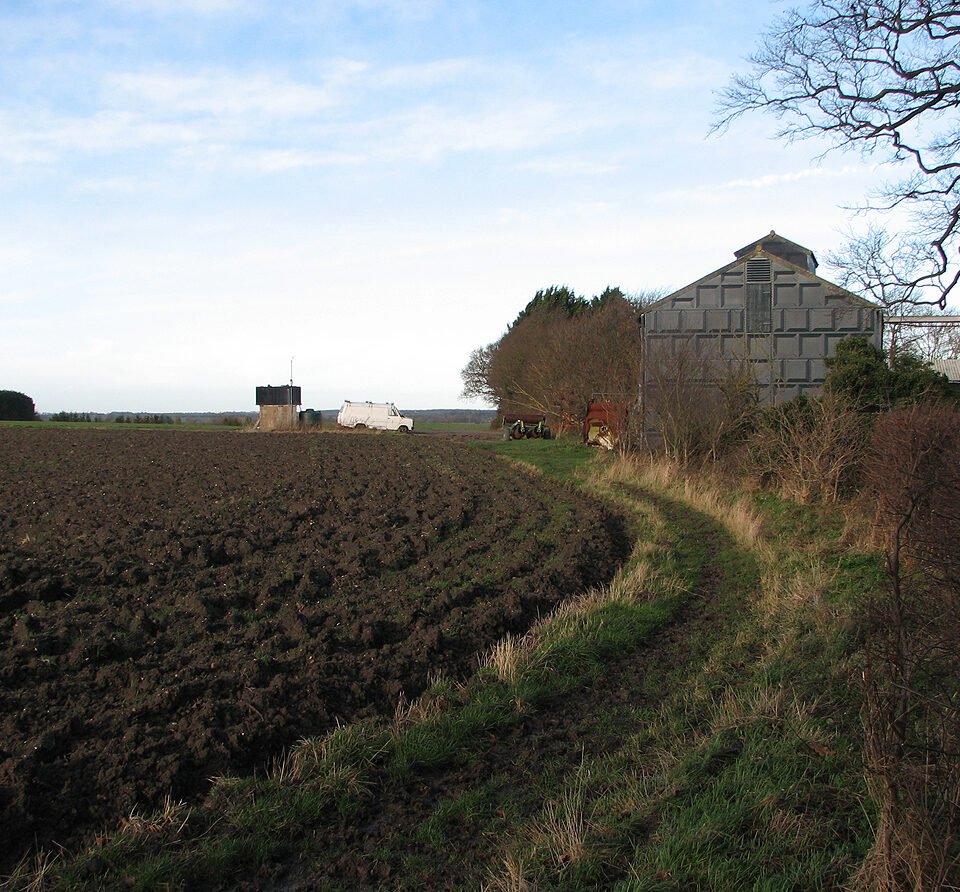



Historical names: Abington by Shingay (Manor) | Abington in the Clay (Manor)
Location: Abington Pigotts, Cambridgeshire
Places / associated places: Abington Pigotts, Cambridgeshire
Listed in Domesday Book: Yes
Location & Extent
GPS Location & Recorded Land Areas
Representative GPS point: 52.0863, -0.0983
Identity: confirmed — The record is securely identified with the later Pigott manor at Abington Pigotts, historically Abington by Shingay or Abington in the Clay. Historic England identifies Manor Farmhouse on Church Lane as the former manor house built by Henry Pigott in the mid sixteenth century, matching the supplied registry history and location. The Domesday holdings are multiple and cannot be treated as a single direct predecessor of this later manor.
Representative point: 52.0863, -0.0983
Basis: documented_manor_house — Manor Farmhouse, Church Lane, Abington Pigotts, the surviving moated former manor house. Historic England gives National Grid Reference TL 30393 44813, equivalent to approximately 52.0863, -0.0983 WGS84.
Point confidence: high
Boundary status: representative_point_only
Boundary period:
Boundary confidence: none
Boundary basis: No source located provides a reliable polygon or explicit perimeter for the historical territorial extent of Abington Pigotts Manor. The surviving evidence establishes the manor-house site and association with the Pigott estate, but does not distinguish the manor's historic landholding boundary from the parish, later estate holdings, or other medieval estates. The Cambridgeshire Archives tithe-map catalogue concerns the whole parish and is not evidence that the parish boundary was the manor boundary.
Sources:
- Manor Farmhouse, Abington Pigotts - Historic England List Entry 1330849: https://historicengland.org.uk/listing/the-list/list-entry/1330849 — Identifies Manor Farmhouse as the former manor house; states that it was built by Henry Pigott in the mid sixteenth century, became a farmhouse after Granado Pigott removed to Bassingbourn in 1680, and is situated within a moated site. Gives NGR TL 30393 44813.
- Abington Pigotts Manor record - The National Archives Discovery, F274643: https://discovery.nationalarchives.gov.uk/details/c/F274643 — Registry record and authority context for the exact manor, including the historical names Abington by Shingay and Abington in the Clay and associated Clare Honour court-roll references.
- Copy of Tithe Apportionment Map for Abington Pigotts - Cambridgeshire Archives catalogue: https://calm.cambridgeshire.gov.uk/TreeBrowse.aspx?field=RefNo&key=K296%2FP%2FB%2F5&src=CalmView.Catalog — Confirms the existence of a whole-parish tithe map for Abington Pigotts, but does not identify a manor-specific boundary.
- Kelly's Directory of Cambridgeshire, 1904 - Abington Pigotts entry: https://forebears.io/england/cambridgeshire/abington-pigotts — Records Thomas Graham-Foster-Pigott as lord of the manor and states that nearly all property in the parish was vested in the Pigott family, with exceptions. This supports the late estate association but is not sufficient to reconstruct the medieval or early-modern manor boundary.
Warnings / uncertainty:
- Do not substitute the modern or historic parish boundary for the manor boundary.
- Domesday Book records several distinct estates at Abington; those holdings should not be merged into a single continuous predecessor of the later Pigott manor.
- The representative point is suitable for map injection, but no historically defensible manor-territory polygon should be injected from the evidence located.
About the Manor
Abington Pigotts Manor was the principal lay manor associated with Abington Pigotts, historically also called Abington by Shingay and Abington in the Clay. The medieval settlement contained several distinct Domesday landholdings, including holdings of the Crown, the bishop of Winchester, Hugh of Ivry, the earl of Shrewsbury, Hardwin of Scales, and Picot of Cambridge; the Domesday evidence should therefore not be treated as a single uninterrupted descent of the later named manor. By the early fifteenth century the Pigott family had acquired an estate at Abington near Shingay, from which the place later took the name Abington Pigotts. The surviving Manor Farmhouse on Church Lane is a moated former manor house, built or substantially rebuilt by Henry Pigott in the mid sixteenth century. It ceased to function as the principal manor house after 1680, when Granado Pigott removed to Bassingbourn. The estate remained associated with the Pigott family and its Foster-Pigott and Graham-Foster-Pigott successors into the nineteenth and early twentieth centuries. No distinct barony, seigneury, or other associated feudal title has been securely identified for this manor.
Ownership / Holder Account
The secure public evidence is discontinuous. Domesday Book records several separate estates at Abington in 1086, not one clearly identifiable unit corresponding to the later Abington Pigotts Manor. A Pigott estate at Abington near Shingay is documented from the early fifteenth century, and the place subsequently became known as Abington Pigotts. John Pigott was associated with the Abington estate and its advowson by 1440, but the available evidence does not establish a complete legal conveyance from the medieval predecessors to him. Henry Pigott is directly associated with the sixteenth-century manor house, which Historic England dates to the mid sixteenth century and describes as built by Henry Pigott, who died in 1588. Granado Pigott was in possession of the estate and manor house by the late seventeenth and eighteenth centuries; the house became a farmhouse after he removed to Bassingbourn in 1680. Granado Pigott died in 1802. The estate then passed through the female line to the Foster and Graham families: contemporary and later material records William Foster-Pigott and subsequently the Graham-Foster-Pigott family in connection with the Abington Pigotts lordship and estate. William Graham Foster Pigott was recorded as lord of the manor in 1871, and Thomas Graham-Foster-Pigott was recorded as lord of the manor in 1904. The precise legal instruments and dates of several transitions, especially between the medieval Pigotts, the eighteenth-century Granado Pigott, William Foster-Pigott, and the Graham-Foster-Pigott successors, remain unresolved in the sources located.
Records & References
Sources and references mentioning this manor/title which are not necessarily conveyances or transfers.
9 records found · showing 9–9.
1320-1362: court rolls (Clare Honour), with other manors (3)
Held by: The National Archives
Conveyance & Descent
First holder to present holder: blood proximity & distance travelled
First recorded holder: Pigott family, unnamed early holder or holders
Present holder:
Recorded title journey: 8 holder entries in this manor's saved Conveyance & Descent history.
No recorded holder currently has a usable saved direct-blood or collateral-blood relationship path from which to calculate proximity percentages.
First recorded holder → present holder
A usable saved blood relationship path between the first recorded holder and the present holder has not yet been recorded, so that first-to-present genealogical distance cannot be calculated.
Transfer: Acquisition of an estate at Abington near Shingay; the precise conveyance and the identity of the transferring party are not established in the available sources.
Shared holding: Pigott family
Co-holders: John Pigott, Henry Pigott, Granado Pigott
Previous holder: Unknown; earlier Abington landholdings were divided among several medieval lords and should not be assumed to be one continuous manor.
Magna Britannia states that in the early fifteenth century the Pigotts were possessed of estates at Abington near Shingay, from which the place acquired the name Abington-Pigotts. This is the earliest located source explicitly connecting the Pigott family with the Abington estate, but it does not supply a deed or exact acquisition date and does not prove the complete descent from any particular Domesday holding.
Source: Daniel Lysons and Samuel Lysons, Magna Britannia, volume II, Cambridgeshire and Cheshire, nineteenth-century county account, section on Cambridgeshire families and estates. — source link
Transfer: First located evidence of John Pigott in possession of the Abington estate and associated patronage; the transfer from the preceding Pigott holder is not identified.
Shared holding: Pigott family
Co-holders: Pigott family, unnamed early holder or holders, Henry Pigott, Granado Pigott
Previous holder: Unnamed earlier Pigott holder or holders
A historical account of St Michael's church states that by 1440 the patronage had come to John Pigott and descended with his estate. This links John Pigott to the Abington estate, but the evidence is primarily for the advowson and associated estate rather than a surviving manorial conveyance. It is therefore recorded as a cautious estate-holder entry rather than a fully documented legal transfer of the manor.
Source: Victoria County History, Cambridgeshire, volume VIII, account of Abington Pigotts church and manorial context, reproduced in the historical account of St Michael's Church, Abington Pigotts. — source link
Transfer: Continuation of the Pigott family's possession; the precise legal transfer to Henry Pigott is unknown.
Shared holding: Pigott family
Co-holders: Pigott family, unnamed early holder or holders, John Pigott, Granado Pigott
Previous holder: Earlier Pigott holder or holders
Historic England identifies the surviving Manor Farmhouse as formerly the manor house and states that it was built by Henry Pigott, who died in 1588. This is direct evidence linking Henry Pigott to the manor house and the Abington Pigotts manor estate, although it does not identify the instrument by which he acquired the manor or distinguish inherited from purchased interests.
Source: Historic England, listing entry 1330849, Manor Farmhouse, Church Lane, Abington Pigotts, dated 22 November 1957 and incorporating references to the Royal Commission on Historical Monuments and Victoria County History. — source link
Transfer: Continuation or inheritance within the Pigott family; the exact date and legal form of Granado Pigott's acquisition are not established.
Shared holding: Pigott family
Co-holders: Pigott family, unnamed early holder or holders, John Pigott, Henry Pigott
Previous holder: Earlier Pigott holder or holders
Historic England states that the manor house became a farmhouse after 1680 when Granado Pigott removed to Bassingbourn. This directly places Granado Pigott in possession of the Abington Pigotts manor house and estate by 1680. He died on 18 September 1802. The source does not document the intervening succession from the sixteenth-century Pigotts, so no specific transfer is asserted.
Source: Historic England, listing entry 1330849, Manor Farmhouse, Church Lane, Abington Pigotts; corroborated by the memorial inscription for Granado Pigott at Bath Abbey. — source link
Colonel George Graham, later associated with the Graham-Foster-Pigott family.
Transfer: Succession by marriage to the Pigott estate: George Graham married the niece and heiress of William Foster-Pigott and later succeeded to the Pigott estates. The exact legal date of possession of the manor is uncertain.
Shared holding: Graham-Foster-Pigott family
Co-holders: George Granado Graham Foster Pigott, William Graham Foster Pigott, Thomas Graham-Foster-Pigott
Previous holder: William Foster Pigott or his estate and heiress
A modern scholarly compilation of parliamentary families states that George Graham married in 1794 the niece and heiress of William Foster-Pigott, acquired the Abington Pigotts Hall estate by marriage in 1802, and succeeded to the Pigott estates in 1824. This supports a marriage-based succession to the estate, but the source does not reproduce the manorial settlement or distinguish the precise date of legal possession. It is therefore recorded with medium evidence for the estate succession and an explicit uncertainty regarding the manor conveyance.
Source: Ellis Wasson, Parliamentary Families: The Past and Present Members of the House of Commons and Their Families, entry for the Pigott and Graham-Foster-Pigott families. — source link
George Granado Graham Foster Pigott, Esquire, Fellow of the Royal Astronomical Society.
Transfer: Continuation of the Graham-Foster-Pigott family succession; no separate conveyance instrument has been located.
Shared holding: Graham-Foster-Pigott family
Co-holders: George Graham, William Graham Foster Pigott, Thomas Graham-Foster-Pigott
Previous holder: Graham family or Foster-Pigott estate
The historical account of St Michael's Church identifies George Granado Graham-Foster-Pigott as heir to the manor and advowson from 1831, when he acted as curate. He died in 1878. The source establishes his status as heir and his close association with the manor, but does not provide the precise date on which legal possession passed to him.
Source: Historical account of St Michael's Church, Abington Pigotts, drawing on Victoria County History material; corroborated by Royal Astronomical Society biographical records and the church memorial record. — source link
Reverend William Graham Foster Pigott, Master of Arts, lord of the manor of Abington Pigotts.
Transfer: First located contemporary directory evidence explicitly naming William Graham Foster Pigott as lord of the manor. The preceding transfer is not documented in the source.
Shared holding: Graham-Foster-Pigott family
Co-holders: George Graham, George Granado Graham Foster Pigott, Thomas Graham-Foster-Pigott
Previous holder: Unknown Graham-Foster-Pigott predecessor
A nineteenth-century Cambridgeshire directory identifies the Reverend William Graham Foster Pigott as lord of the manor of Abington Pigotts and states that the whole of the parish property, apart from small specified holdings, was vested in the Graham Foster Pigott family. This is direct contemporary evidence for his manorial status in 1871, though it does not establish the date or instrument of succession.
Source: Post Office Directory of Cambridgeshire, 1871, entry for Abington Pigotts, digitised by the University of Leicester Special Collections. — source link
Thomas Graham-Foster-Pigott, Esquire, Justice of the Peace, lord of the manor of Abington Pigotts.
Transfer: First located contemporary directory evidence explicitly naming Thomas Graham-Foster-Pigott as lord of the manor. The preceding transfer is not documented in the source.
Shared holding: Graham-Foster-Pigott family
Co-holders: George Graham, George Granado Graham Foster Pigott, William Graham Foster Pigott
Previous holder: Unknown Graham-Foster-Pigott predecessor
Kelly's Directory of Cambridgeshire for 1904 identifies Thomas Graham-Foster-Pigott as lord of the manor of Abington Pigotts. This is the latest securely located explicit statement of manorial lordship in the public sources searched. The source does not establish whether he held personally, jointly, or through a settlement, and no later public source confirming a subsequent holder was located.
Source: Kelly's Directory of Cambridgeshire, 1904, entry for Abington Pigotts, reproduced in a parish and genealogy reference transcription. — source link
Corrections / Challenges
Sign in to challenge or submit evidence against a recorded assertion.
JSON API
Machine-readable published manor data, including public images, mapped land areas, notes, rights, conveyances, relationships, records, source/document-library entries and public file links.
https://manorialregistry.com/index.php?rest_route=/mhr/v1/manor/abington-pigotts-manorPublic API access is currently disabled. Authorised API clients must use a private X-MHR-API-Key; currently only administrator keys are enabled.
Private source files, pending edits, moderation/admin information, user API keys and non-public import identifiers are not returned.