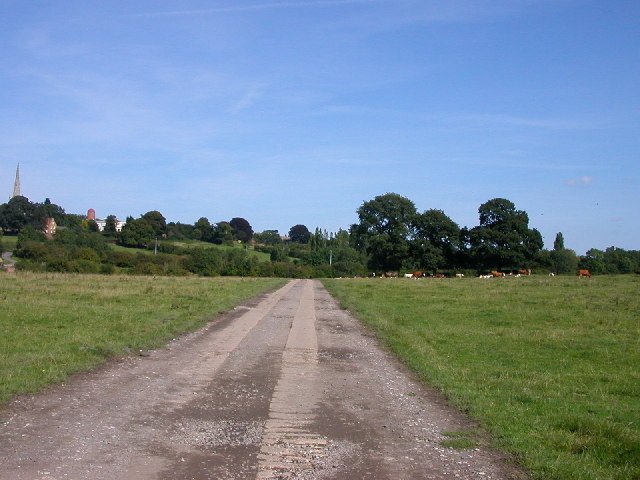



Historical names: Brandeston (Manor) | Lilleshull (Manor)
Location: Braunston, Northamptonshire
Places / associated places: Braunston, Northamptonshire
Location & Extent
GPS Location & Recorded Land Areas
Representative GPS point: 52.2866, -1.2194
Identity: confirmed — The supplied alternative names match the documentary identification of Brandeston/Braunston land granted by Dame Hillaria Trussebut to Lilleshall Abbey. Northamptonshire Historic Environment Record and Historic England independently identify Braunstonbury as a medieval manor belonging to Lilleshall Abbey, with a moated manorial site and fishponds, matching the registry description of Abbots Manor. The evidence also distinguishes this Lilleshall-associated holding from other parts of the wider Braunston manor, so the record should not be mapped to the modern parish or to the later Manor House in Braunston village.
Representative point: 52.2866, -1.2194
Basis: documented_manor_site — The point is the Historic England/NHLE location for Braunstonbury deserted medieval village, moat and fishpond. The scheduled monument includes the moated site understood to be the medieval manor-house site or manorial homestead; the Northamptonshire HER places the rectangular manor-house earthwork within the same Braunstonbury complex.
Point confidence: high
Boundary status: representative_point_only
Boundary period:
Boundary confidence: none
Boundary basis: The sources establish the location of the manorial centre and describe the Braunstonbury medieval settlement, moat, fishpond and surrounding ridge-and-furrow landscape. The 1785 Braunston estate map is reported to show the medieval boundaries of the deserted village, but no accessible source located here supplies a reliable polygon for the full historical manorial landholding of the Lilleshall/Brandeston share. The scheduled-monument area is an archaeological protection boundary, not the manor's territorial boundary, and the modern parish boundary must not be substituted.
Sources:
- Historic England, Braunstonbury deserted medieval village, moat and fishpond, NHLE 1017580: https://historicengland.org.uk/listing/the-list/list-entry/1017580 — Identifies Braunstonbury as a site of manorial status; records the moated site, manorial fishpond, approximate dimensions, Lilleshall Abbey ownership, tenancy in 1421 and sale to the Earl of Rutland at the Dissolution. Gives NGR SP 53354 65668.
- Northamptonshire Historic Environment Record, Monument MNN8327, Probable Medieval Manor: https://her.northamptonshire.gov.uk/Monument/MNN8327/ — Records the Lilleshall Abbey connection, tenancy in 1421, sale to the Earl of Rutland, the moated building remains and the approximate centre SP 53317 65760.
- Northamptonshire Historic Environment Record, Monument MNN332, Braunstonbury: https://her.northamptonshire.gov.uk/Monument/MNN332/ — States that the documentary history groups Braunstonbury with Braunston and related settlements; identifies the rectangular earthwork as a manor-house site; records the 1785 estate map as showing medieval village boundaries and the fishpond as Fish Wier/Fish Weir Field.
- Eyton, Antiquities of Shropshire, volume 11, discussion of Hillaria Trussebut's charter: https://www.melocki.org.uk/eyton/Vol11.html — Records Hillaria Trussebut's grant of all her land at Braundeston, identified as a third part of Branston in Northamptonshire, to Lilleshall Abbey, while retaining a third part of the advowson.
- Mapping the Medieval Countryside, Inquisition Post Mortem, Braunston entry: https://inquisitionspostmortem.ac.uk/view/inquisition/23-530/545.html — Provides a useful caution that the wider Braunston manor and the site called Braunstonbury could be treated separately in fifteenth-century records, supporting the decision not to use the whole parish or modern Braunston manor as the boundary.
Warnings / uncertainty:
- The historical territorial extent of this exact Lilleshall/Brandeston share is not securely recoverable from the located sources.
- The representative point is suitable for geospatial injection as the documented manorial-site location, but it should not be interpreted as the geometric centre of the full manor.
- No boundary polygon is returned because the available evidence does not define the full manorial perimeter.
About the Manor
Abbots Manor, also recorded as the manor of Brandeston or Lilleshull, was a medieval manorial estate at Braunston, Northamptonshire. The surviving evidence associates it with the manor and medieval settlement of Braunston/Braunstonbury, including a moated manorial site and fishponds. A medieval charter discussed by Eyton records Dame Hillaria Trussebut's gift of all her land at Braundeston, identified there as a third part of Branston in Northamptonshire, to Lilleshall Abbey for the support of a canon; she retained a third part of the advowson. Later Northamptonshire heritage records describe the manor as belonging to Lilleshall Abbey, still tenanted in 1421, and state that its lands were sold to the Earl of Rutland at the Dissolution. The post-Dissolution descent of this particular manor has not been securely established from the sources located.
Ownership / Holder Account
The earliest securely identified proprietary interest is a one-third share of Brandeston/Braunston held by Dame Hillaria Trussebut, widow of Robert de Boulers. After a date later than 1216 and by 1241, she granted that land to Lilleshall Abbey, although the charter expressly concerned her share and she retained a third of the advowson. Later records describe the Braunston manor as belonging to Lilleshall Abbey and record that it was still tenanted in 1421. At the Dissolution, the lands were sold to the Earl of Rutland, identified in the period as Thomas Manners, first Earl of Rutland. The available evidence does not establish whether the abbey's original share was subsequently enlarged, nor does it provide a secure later descent after the Rutland acquisition.
Manorial Rights & Privileges
Historic manorial rights / privileges (1)
A third part of the advowson of Braunston/Brandeston was retained by Dame Hillaria Trussebut when she granted her one-third part of the land to Lilleshall Abbey.
Provisional
The recorded medieval charter expressly states that Hillaria retained a third part of the advowson.
Records & References
Sources and references mentioning this manor/title which are not necessarily conveyances or transfers.
4 records found · showing 1–4.
1540-1540: court roll
Held by: Northamptonshire Archives Service
1532-1533: court rolls
Held by: Staffordshire and Stoke-on-Trent Archive Service: Staffordshire County Record Office
Further information: NRA 10699 Leveson-Gower
1518-1526: court rolls (7)
Held by: Staffordshire and Stoke-on-Trent Archive Service: Staffordshire County Record Office
Further information: NRA 10699 Leveson-Gower
1495-1506: court rolls (6)
Held by: Staffordshire and Stoke-on-Trent Archive Service: Staffordshire County Record Office
Further information: NRA 10699 Leveson-Gower
Conveyance & Descent
First holder to present holder: blood proximity & distance travelled
First recorded holder: Dame Hillaria Trusbut
Present holder:
Recorded title journey: 3 holder entries in this manor's saved Conveyance & Descent history.
No recorded holder currently has a usable saved direct-blood or collateral-blood relationship path from which to calculate proximity percentages.
First recorded holder → present holder
A usable saved blood relationship path between the first recorded holder and the present holder has not yet been recorded, so that first-to-present genealogical distance cannot be calculated.
Dame Hillaria Trusbut, widow of Sir Robert de Boulers, heiress and landholder in the Trussebut/Boulers inheritance.
Transfer: Inherited or otherwise held a one-third part of Brandeston/Braunston; the precise commencement of her interest is not established by the sources located.
Holding arrangement: Share — one-third part of Brandeston/Braunston, as described by Eyton
Shared holding: Trussebut/Boulers interest
Eyton states that Hillaria Trussebut's charter to Lilleshall gave all her land at Braundeston, which he identifies as a third part of Branston in Northamptonshire. The source does not establish when she first acquired the share, and the family relationship to earlier holders is not used as a substitute for a documented manor link.
Source: Eyton, Antiquities of Shropshire, volume 11, p. 124-125, discussion of Hillaria Trussebut's grant to Lilleshall; the text cites the Lilleshall Chartulary, folio 76. — source link
Transfer: Gift by Dame Hillaria Trusbut of her land at Braundeston, identified as a third part of Branston/Braunston, to maintain a canon at Lilleshall Abbey. The charter's explanatory text records the revenues of the third of Brandeston being applied to the abbey's uses.
Holding arrangement: Share — At least one-third of Brandeston/Braunston is directly evidenced by the charter; later heritage records describe the manor itself as belonging to Lilleshall Abbey, but the process by which any additional share was acquired is not established.
Shared holding: Lilleshall Abbey
Previous holder: Dame Hillaria Trusbut, widow of Sir Robert de Boulers, heiress and landholder in the Trussebut/Boulers inheritance.
The direct medieval charter evidence establishes an abbey interest in Hillaria Trusbut's one-third share. Eyton dates the grant to later than 1216 because it is absent from Pope Honorius's confirmation issued after that year. Independent Northamptonshire heritage records subsequently describe the Braunston manor as belonging to Lilleshall Abbey and state that it was still tenanted in 1421. The entry therefore preserves the distinction between the charter's directly evidenced share and the later description of the manor as an abbey holding.
Source: Eyton, Antiquities of Shropshire, volume 11, p. 124-125, citing the Lilleshall Chartulary, folio 76; corroborated by Northamptonshire Historic Environment Record MNN8327, Probable Medieval Manor, Braunston. — source link
Thomas Manners, 1st Earl of Rutland, 12th Baron de Ros, Knight of the Garter.
Transfer: At the Dissolution, the lands of the Braunston manor associated with Lilleshall Abbey were sold to the Earl of Rutland. The available source does not specify the precise legal instrument, exact completion date, or whether the sale covered the whole manor or only the abbey's interest.
Holding arrangement: Other — Not stated in the available sources; described as the manor's lands or the lands belonging to the abbey manor.
Shared holding: Rutland estate
Previous holder: Lilleshall Abbey, Augustinian abbey of St Mary, Shropshire.
Northamptonshire Historic Environment Record MNN8327 and Historic England's Braunstonbury scheduled-monument record both state that the manor or its lands belonged to Lilleshall Abbey and were sold to the Earl of Rutland at the Dissolution. A separate Northamptonshire HER entry for Braunston Mill dates the Rutland acquisition of the former religious-house manors to circa 1540. Thomas Manners was the first Earl of Rutland from 1525 and died in 1543. No secure subsequent holder of this particular Abbots Manor has been identified in the sources searched.
Source: Northamptonshire Historic Environment Record MNN8327, Probable Medieval Manor, Braunston; Historic England, Braunstonbury deserted medieval village, moat and fishpond, National Heritage List entry 1017580; Northamptonshire HER MNN171602, Braunston Mill, for the circa 1540 Rutland acquisition context. — source link
Corrections / Challenges
Sign in to challenge or submit evidence against a recorded assertion.
JSON API
Machine-readable published manor data, including public images, mapped land areas, notes, rights, conveyances, relationships, records, source/document-library entries and public file links.
https://manorialregistry.com/index.php?rest_route=/mhr/v1/manor/abbots-manor-3Public API access is currently disabled. Authorised API clients must use a private X-MHR-API-Key; currently only administrator keys are enabled.
Private source files, pending edits, moderation/admin information, user API keys and non-public import identifiers are not returned.