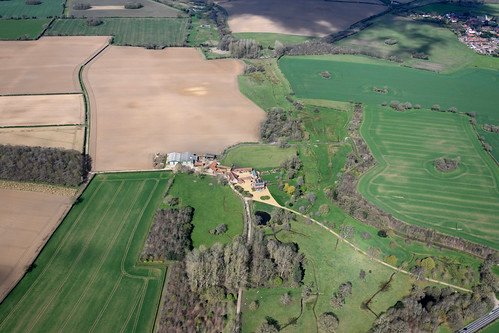



Historical names: Alatorp
Location: Alethorpe, Norfolk
Places / associated places: Alethorpe, Norfolk
Listed in Domesday Book: Yes
Location & Extent
GPS Location & Recorded Land Areas
Representative GPS point: 52.844, 0.8914
Identity: confirmed — The registry record identifies Alethorpe Manor in Alethorpe, Norfolk, and its associated court records include Alethorpe among the Norfolk manors of the Honour of Clare. The historical Alethorpe settlement is the deserted medieval village near Fakenham, now within Little Snoring, rather than another similarly named manor.
Representative point: 52.8440, 0.8914
Basis: supported_manorial_centre — The point is the approximate WGS84 conversion of OS grid reference TF948313, identified for the site of Alethorpe and the location of modern Alethorpe Hall. The Hall stands at or immediately beside the deserted medieval settlement and is the best surviving geographic proxy for the former manor and its manorial centre.
Point confidence: medium
Boundary status: representative_point_only
Boundary period:
Boundary confidence: none
Boundary basis: Sources establish the location of Alethorpe and indicate that it was a small former extra-parochial settlement/manorial landscape, with a recorded area of about 243 acres in the early twentieth century. However, no accessible source located in this research supplies a documented manor boundary, manor map, mapped rental, tithe/enclosure plan explicitly defining Alethorpe Manor, or sufficiently clear perimeter landmarks. The modern civil-parish and postcode boundaries cannot safely be substituted for the historical manorial extent.
Sources:
- The National Archives: Alethorpe Manor, MDR record F238007: https://discovery.nationalarchives.gov.uk/details/c/F238007 — Primary Manorial Documents Register record for Alethorpe Manor, Norfolk, matching the supplied registry ID and authority reference.
- The National Archives: Alethorpe and Fakenham court rolls, 1310-1312, SC 2/192/89: https://discovery.nationalarchives.gov.uk/details/r/N14317048 — Early court-roll reference linking Alethorpe with Fakenham and confirming the medieval manorial record context.
- Norfolk Heritage Explorer: Alethorpe medieval church and deserted settlement: https://www.heritage.norfolk.gov.uk/record-details?uid=%27TNF412%27 — Identifies the former medieval hamlet of Alethorpe, its deserted settlement, and the surviving archaeological and church-site context.
- Alethorpe: https://en.wikipedia.org/wiki/Alethorpe — Provides OS grid reference TF948313 and identifies Alethorpe Hall as standing on the deserted-village site; used only as a geographic lead, checked against the Norfolk heritage evidence.
- Kelly's Directory of Norfolk, 1904: https://leicester.contentdm.oclc.org/digital/api/collection/p16445coll4/id/249431/download — Describes Alethorpe as formerly extra-parochial, consisting of one farm, with an area of 243 acres, and identifies the lord of the manor and sole landowner.
- The Lost Villages of Norfolk: https://archaeologydataservice.ac.uk/archiveDS/archiveDownload?t=arch-3749-1%2Fdissemination%2Fpdf%2Fvol_31%2FNorfolkArchaeology31_P116_P162.pdf — Scholarly discussion of Alethorpe as a deserted settlement and of documentary rentals and manorial land disputes associated with its manor.
Warnings / uncertainty:
- The representative point is suitable for locating the historical manor in a map interface but should not be interpreted as a surveyed historic manor-house coordinate.
- No defensible historical manor polygon was found; do not inject a boundary based on the modern Little Snoring civil parish, the former extra-parochial area, or the NR21 0PA postcode.
About the Manor
Alethorpe was a medieval settlement and manor in the former parish and hundred of Gallow, Norfolk, approximately two miles north-east of Fakenham. It was recorded in Domesday Book as Alatorp, when the estate was held by King William; before the Norman Conquest it had been held by Earl Harold. The settlement survived as a substantial medieval vill but declined through the later medieval and Tudor periods, probably in connection with enclosure and the conversion of arable and common land to sheep pasture. The church of All Saints was still in use in 1552 but was in disrepair and being used as a barn by 1602. By the nineteenth century Alethorpe had become a very small extra-parochial and later civil-parish unit, consisting principally of one farm. A modern Alethorpe Hall and a seventeenth-century barn occupy or adjoin the deserted settlement site; only low earthworks and traces of the former village remain.
Ownership / Holder Account
The earliest securely identified lordship is the pre-Conquest holding of Earl Harold, followed by King William's royal holding recorded in Domesday Book in 1086. The surviving publicly accessible material located in this research does not provide a continuous medieval descent for the manor. A late sixteenth- and early seventeenth-century body of evidence identifies William Dye as a substantial landlord or manorial demesne holder at Alethorpe, involved in disputes concerning the manor's foldcourse, enclosure, common rights, and sheep pasture; the available evidence does not establish the precise legal conveyance by which he acquired the manor or prove that he held the entire manorial lordship rather than the demesne and associated manorial interests. By 1896, Sir Lawrence John Jones, baronet, of Cranmer Hall, was explicitly recorded as lord of the manor and sole landowner of Alethorpe, a status repeated in the early twentieth-century directory evidence. The links between the medieval holders, William Dye, and the Jones family remain documentary gaps in the publicly accessible sources consulted.
Records & References
Sources and references mentioning this manor/title which are not necessarily conveyances or transfers.
6 records found · showing 1–6.
1772-1794: court book, with other Norfolk manors of the Honour of Clare
Held by: Norfolk Record Office
Further information: NRA 27666 Bradfer-Lawrence
1772-1782: suit rolls and lists of fines, with other manors (1 bdl, Clare honour)
Held by: The National Archives
1772-1774: court rolls, with other manors (Clare honour)
Held by: The National Archives
1721-1734: court memoranda, with other manors (Clare honour)
Held by: Norfolk Record Office
1554-1571: court book, with other manors
Held by: Norfolk Record Office
1310-1312: court rolls, with Fakenham
Held by: The National Archives
Conveyance & Descent
First holder to present holder: blood proximity & distance travelled
First recorded holder: Earl Harold
Present holder:
Recorded title journey: 4 holder entries in this manor's saved Conveyance & Descent history.
No recorded holder currently has a usable saved direct-blood or collateral-blood relationship path from which to calculate proximity percentages.
First recorded holder → present holder
A usable saved blood relationship path between the first recorded holder and the present holder has not yet been recorded, so that first-to-present genealogical distance cannot be calculated.
Earl Harold, Earl of Wessex, King Harold II of England from January 1066
Transfer: Held immediately before the Norman Conquest; no separate conveyance is recorded in the source used.
Domesday-derived evidence identifies Alethorpe, recorded as Alatorp, as held by Earl Harold in 1066. This is evidence of the pre-Conquest lordship, not a documented private conveyance.
Source: Open Domesday, Alethorpe, TF9431, summarising Domesday Book evidence for the pre-Conquest and 1086 lords. — source link
King William I, King of England, 1066-1087, Duke of Normandy, King of England (1066-1087)
Transfer: The estate appears in the Domesday survey in the royal holding after the Norman Conquest; the precise legal mechanism of transfer from Earl Harold is not stated in the cited source.
Shared holding: Royal holding
Previous holder: Earl Harold, Earl of Wessex, King Harold II of England from January 1066
Alethorpe was recorded in Domesday Book as Alatorp, with King William both tenant-in-chief and immediate lord in 1086. The entry records the royal holding but does not supply a detailed conveyance or intervening feudal tenant.
Source: Open Domesday, Alethorpe, TF9431, summarising the Domesday Book entry and identifying King William as tenant-in-chief and lord in 1086. — source link
Transfer: Acquisition and the precise nature of the interest are unknown. The evidence places William Dye as the landlord or manorial demesne holder involved in Alethorpe disputes, but does not document a conveyance to him or establish that he held every component of the manor.
Holding arrangement: Other — Unspecified manorial or demesne interest; extent not established
Research on the Alethorpe enclosure disputes identifies William Dye as the landlord in proceedings concerning a thirty-acre croft, the manor's foldcourse, enclosure, common rights, and sheep pasture in 1580. A further petition by the poor inhabitants of Alethorpe in 1604 complained of Dye's treatment of their common and cultivated land. These sources directly link Dye to the Alethorpe manorial economy and demesne, but the surviving evidence located does not prove a complete legal title to the manor or specify the transfer by which he acquired his interest.
Source: David Belcher, “The Chiefest Wealth of Our Country”: Land, Lordship and Rural Society in Norfolk, doctoral thesis, University of East Anglia, discussion of Alethorpe and William Dye, citing A. Hassell Smith and G. M. Baker, The Papers of Nathaniel Bacon of Stiffkey, volume II, Norfolk Record Society XLIX (1982), pp. 131, 152; and related enclosure evidence. — source link
Transfer: The transfer from the preceding holder is not identified in the sources consulted. By 1896 the directory explicitly records Sir Lawrence John Jones of Cranmer Hall as lord of the manor and sole landowner; the same status is repeated in the 1904 and 1912 directory evidence.
Shared holding: Jones family of Cranmer Hall
Late Victorian and Edwardian directory evidence directly identifies Sir Lawrence John Jones, baronet, of Cranmer Hall, as lord of the manor and sole landowner of Alethorpe. The 1896 entry describes Alethorpe as a former extra-parochial tract and then a parish consisting of one farm; the 1904 and 1912 evidence repeats Jones's lordship and sole landownership. No conveyance, inheritance instrument, or date of acquisition was located, so the earlier descent into the Jones family remains an unbridged gap.
Source: Kelly's Directory of Norfolk, 1896, Alethorpe entry; Kelly's Directory of Norfolk, 1904, Alethorpe entry; Kelly's Directory of Norfolk, 1912, Alethorpe entry. — source link
Corrections / Challenges
Sign in to challenge or submit evidence against a recorded assertion.
JSON API
Machine-readable published manor data, including public images, mapped land areas, notes, rights, conveyances, relationships, records, source/document-library entries and public file links.
https://manorialregistry.com/index.php?rest_route=/mhr/v1/manor/alethorpe-manorPublic API access is currently disabled. Authorised API clients must use a private X-MHR-API-Key; currently only administrator keys are enabled.
Private source files, pending edits, moderation/admin information, user API keys and non-public import identifiers are not returned.