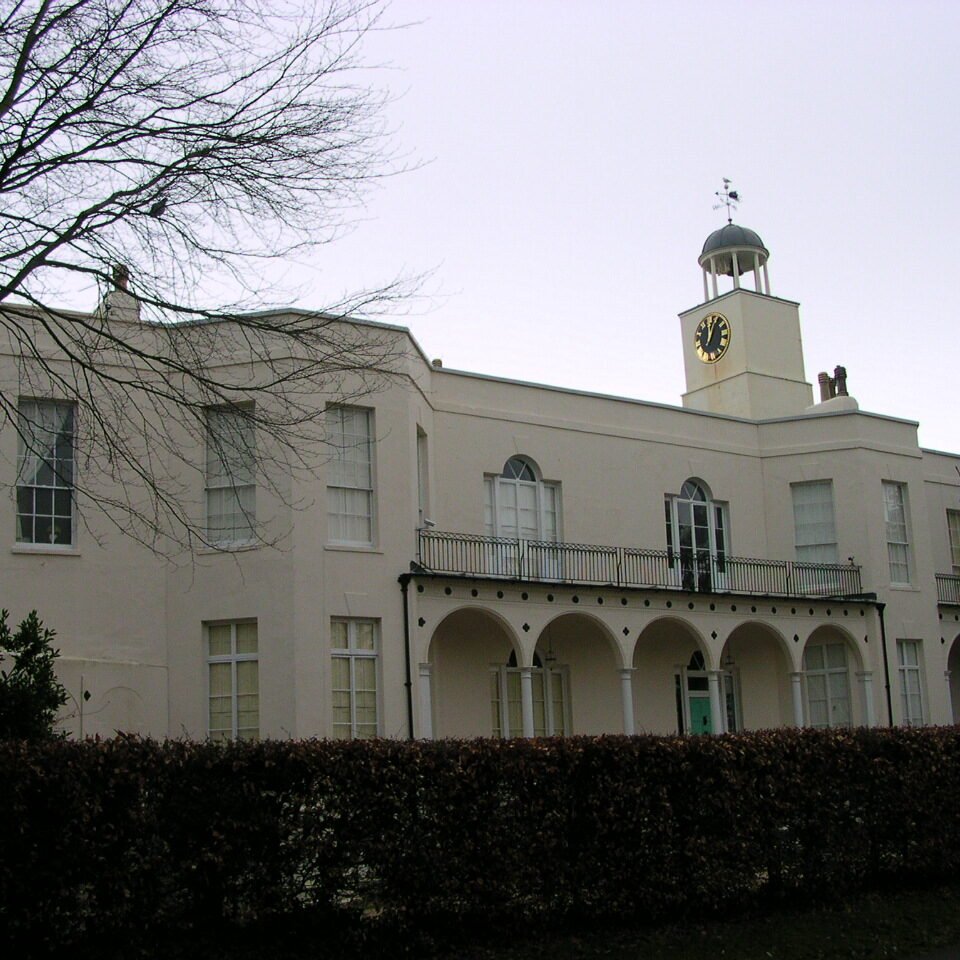



Historical names: Little Aldwick (Manor)
Location: Pagham, Sussex
Places / associated places: Pagham, Sussex
Location & Extent
GPS Location & Recorded Land Areas
Representative GPS point: 50.7866, -0.6672
Identity: confirmed — The registry record is the Aldwick Manor of Pagham, Sussex, also historically associated with Little Aldwick. The supplied Pagham Bailiwick rentals, valuations, ministers' accounts, court rolls and surveys are consistent with the documented medieval and post-medieval manor of Aldwick, not merely the later civil parish or modern settlement. Local historical evidence records Aldwick as a separate manor by the medieval period, with its own manor house and courts, and traces the manor through the Archbishop of Canterbury, the Crown, Sir Richard Hotham and the Fletcher family.
Representative point: 50.7866, -0.6672
Basis: documented_estate_centre — Hotham Park House, formerly Chapel House and Bersted Lodge, was subsequently called Aldwick Manor. It became the residence of William Holland Ballett Fletcher after he inherited the lordship of Aldwick in 1899. The point is therefore a defensible documented later manorial/estate centre, although the building itself dates from 1793 and is not proven to be the medieval manor-house site.
Point confidence: medium
Boundary status: representative_point_only
Boundary period:
Boundary confidence: none
Boundary basis: The evidence establishes the manor's location in the Aldwick tithing of Pagham and gives a quantified 1397 demesne extent of approximately 152 acres of arable land and 158 acres of pasture, excluding the manor-house site. It also identifies lost coastal land called Malemayns and later fragmentation of the manor's lands after the sixteenth century. However, the accessible sources do not provide a sufficiently clear, source-backed perimeter for the historical manorial land. The parish, modern Aldwick civil-parish boundary, Hotham Park boundary and later 575-acre Pagham Farm estate cannot safely be substituted for the manor boundary.
Sources:
- The National Archives, Manorial Documents Register: Aldwick Manor, F255152: https://discovery.nationalarchives.gov.uk/details/c/F255152 — Registry identity, primary name, historical name Little Aldwick, and location in Pagham, Sussex.
- Aldwick Parish Council, Aldwick History: https://aldwickparishcouncil.gov.uk/about-aldwick/aldwick-history/ — States that Aldwick became a separate administrative and manorial centre of the Canterbury estates; records the 1397 extent of 152 acres of arable and 158 acres of pasture, the manor-house site, the lost Malemayns land, later ownership and the separation of Aldwick Farm.
- Aldwick Parish Council, Parish Design Statement: The History of Aldwick: https://aldwickparishcouncil.gov.uk/media/5249/parishdesignstatementjune15.pdf — Provides a fuller historical summary, including the medieval development of Aldwick Manor, the 1608, 1768 and 1786 surveys, the lost tithing of Charlton, coastal erosion and post-1542 subdivision of the manor lands.
- Historic England, A Delicious Retreat: The Marine Villa and its Setting in England c.1760-c.1840: https://historicengland.org.uk/research/results/reports/8852/ADeliciousRetreat_TheMarineVillaanditsSettinginEnglandC1760toC1840AContextualStudy — Identifies Hotham Park House as the 1792/1793 house built by Sir Richard Hotham, subsequently called Bersted Lodge and Aldwick Manor, and distinguishes it from the earlier manor history.
- Hotham Park House, listed building record based on Historic England entry 1027745: https://britishlistedbuildings.co.uk/101027745-hotham-park-house-bognor-regis — Supplies the mapped location and coordinates of Hotham Park House: OS grid SZ940994, latitude 50.7866, longitude -0.6672.
- The National Archives, survey and rental of Pagham Bailiwick, ED 2068: https://discovery.nationalarchives.gov.uk/details/r/N14703503 — Supplied archival lead for the medieval territorial and tenurial structure of the Pagham Bailiwick, including Aldwick.
- The National Archives, survey of Aldwick and other manors, CLA/044/03/004/001: https://discovery.nationalarchives.gov.uk/details/r/N14708623 — Supplied archival lead for the 1612 manorial survey relevant to identifying historical holdings and boundaries.
- The National Archives, survey of Aldwick and other manors, Add MS 6027: https://discovery.nationalarchives.gov.uk/details/r/N14708797 — Supplied archival lead for the 1617 survey relevant to the post-medieval territorial extent of the manor.
- The National Archives, survey of Aldwick and other manors, CLA/044/03/006/019: https://discovery.nationalarchives.gov.uk/details/r/N14709139 — Supplied archival lead for the 1625 survey relevant to historical manorial lands.
Warnings / uncertainty:
- The representative point is a later documented house called Aldwick Manor, not a proven surviving medieval manor-house site.
- Aldwick Manor must not be equated with the whole ancient parish of Pagham, the modern Aldwick civil parish, the Hundred of Aldwick, Hotham Park, or the later Pagham Farm estate.
- The historical manor was affected by coastal erosion, including the loss of Malemayns and Charlton-related land, and by post-Dissolution subdivision; its extent therefore changed over time.
- No defensible historical manor polygon was found in the accessible evidence, so no boundary coordinates are returned.
About the Manor
Aldwick Manor was the manor associated with Aldwick, a tithing of the ancient parish of Pagham in Sussex and the settlement from which the Hundred of Aldwick took its name. The manor was connected with the Canterbury estates and, by 1397, was recorded as containing 152 acres of arable land and 158 acres of pasture, excluding the manor-house site; its courts were held every three weeks. A property called Malemayns, associated with Nicholas de Malemayn in 1292, was later described as the manor of Aldwick, although the surviving evidence does not establish an uninterrupted descent from that holding to the later manor. The manor and the courts of the Hundred of Aldwick were separated administratively from Pagham by the late fourteenth century. The archiepiscopal holding continued until Archbishop Cranmer exchanged Aldwick to Henry VIII in June 1542. Queen Elizabeth I restored it to Cardinal Archbishop Reginald Pole; after Pole's death in 1558 it reverted to the Crown, which granted the manor to Sir Richard Sakevyle in 1559. The later descent is incompletely documented in the readily available online sources. Local historical accounts state that the manor subsequently passed through the Dingley, Comber and Miller interests, apparently in divided or successive shares, before Sir Richard Hotham acquired the remaining second half in 1789. The manor then passed through later owners and was acquired by John Ballett Fletcher in 1835; his son William Holland Ballett Fletcher was lord of the manor by 1899 and is explicitly recorded in that capacity in 1930. The residential building later called Aldwick Manor was originally Chapel House and then Bersted Lodge; Historic England notes that the building's use of the name Aldwick Manor was confusing and should not be treated as proof that the building itself was identical with the historic manor estate.
Ownership / Holder Account
The earliest secure institutional holder in the available evidence is the Archbishop of Canterbury, whose Canterbury estates included Pagham and Aldwick. A 1397 description confirms the existence and extent of Aldwick Manor but does not name an individual lord. In June 1542 Archbishop Cranmer exchanged the manor to Henry VIII. It was restored by Queen Elizabeth I to Cardinal Archbishop Reginald Pole and reverted to the Crown on Pole's death in 1558. The Crown granted the manor to Sir Richard Sakevyle in 1559. There is then a substantial documentary gap in the online evidence. A local historical account describes a later descent through John Dingley and his family, John Comber and the Miller family, but does not provide a complete deed-by-deed chain. A separate family-history compilation reports a 1675 quitclaim involving the manor of Aldwick and a 1677 sale by John Dingley to John Coomber; these details are retained only as low-strength evidence. Canon Miller is explicitly associated with the second half of the manor in the account of Sir Richard Hotham's 1789 acquisition. John Ballett Fletcher is reported to have bought the manor in 1835, while the surviving house and estate were acquired by him in 1857 according to a separate local heritage account; these are treated as distinct transactions. William Holland Ballett Fletcher inherited or acquired the lordship by 1899 and was recorded as lord of the manor in 1930. No reliable online source located in this research establishes a later transfer of the manorial lordship after the Fletcher period. The 1946 acquisition of Hotham Park by Bognor Regis Urban District Council concerns the house, grounds and neighbouring land and is not treated as a proven transfer of the lordship of Aldwick Manor.
Manorial Rights & Privileges
Historic manorial rights / privileges (1)
Manorial courts held every three weeks
Provisional
A 1397 description records that Aldwick Manor held courts every three weeks.
Records & References
Sources and references mentioning this manor/title which are not necessarily conveyances or transfers.
18 records found · showing 1–8.
1891-1891: minutes (draft)
Held by: West Sussex Record Office
1863-1892: deeds and awards of enfranchisement of copyhold land
Held by: The National Archives
1857-1923: steward's fees account book, with other manors
Held by: West Sussex Record Office
1840-1900: file of evidence rel to enfranchisement of copyhold land
Held by: The National Archives
1836-1836: list of annual quit rents, with Shripney
Held by: West Sussex Record Office
Further information: NRA 13819 Holden
1797-1801: quit rent roll
Held by: West Sussex Record Office
1786-1786: perambulation
Held by: Hampshire Archives
Further information: NRA 25223 Longcroft
1768-1768: survey
Held by: Hampshire Archives
Further information: NRA 25223 Longcroft
Conveyance & Descent
First holder to present holder: blood proximity & distance travelled
First recorded holder: Henry VIII, King of England
Present holder:
Recorded title journey: 4 holder entries in this manor's saved Conveyance & Descent history.
No recorded holder currently has a usable saved direct-blood or collateral-blood relationship path from which to calculate proximity percentages.
First recorded holder → present holder
A usable saved blood relationship path between the first recorded holder and the present holder has not yet been recorded, so that first-to-present genealogical distance cannot be calculated.
Transfer: Exchange by Archbishop Thomas Cranmer to Henry VIII.
Shared holding: Crown
Co-holder: The Crown
Previous holder: Archbishops of Canterbury
The Aldwick historical account states that Cranmer exchanged the manor to Henry VIII in June 1542. The subsequent restoration to Cardinal Pole is dated to 1556 in the same local historical tradition. The manor was therefore held by the Crown during this intervening period.
Source: Aldwick Parish Council, Aldwick History, recording Cranmer's June 1542 exchange of Aldwick to Henry VIII and its later restoration to Cardinal Pole. — source link
Transfer: Reversion on the death of Cardinal Reginald Pole.
Shared holding: Crown
Co-holder: Henry VIII, King of England
Previous holder: Cardinal Reginald Pole, Archbishop of Canterbury
The local history states that Aldwick reverted to the Crown on Pole's death in 1558 and was granted to Sir Richard Sakevyle in 1559.
Source: Aldwick Parish Council, Aldwick History. — source link
Transfer: Grant by the Crown in 1559.
Previous holder: The Crown, Crown of England
Aldwick Parish Council states that the manor was granted in 1559 to Sir Richard Sakevyle, knight, described as a Queen's privy councillor and a leading land speculator in the area. The available online evidence does not establish the date or instrument of his subsequent disposal of the manor, so no unproven transfer is inserted.
Source: Aldwick Parish Council, Aldwick History. — source link
Transfer: Held the second half of Aldwick Manor until Sir Richard Hotham purchased it in 1789.
Holding arrangement: Share — One half of the manor
Shared holding: Miller family or ecclesiastical interest
Previous holder: Earlier Miller and Comber family interests; exact transfer unknown
Bognor Regis Town Council states that Sir Richard Hotham became lord of Aldwick Manor in 1789 when he purchased the second half of the manor from Canon Miller. The source does not identify Canon Miller's full name or establish when or how the Miller interest arose. This entry records only the explicitly stated half-share transaction.
Source: Bognor Regis Town Council, History, section on Sir Richard Hotham and the Manor of Aldwick. — source link
Corrections / Challenges
Sign in to challenge or submit evidence against a recorded assertion.
JSON API
Machine-readable published manor data, including public images, mapped land areas, notes, rights, conveyances, relationships, records, source/document-library entries and public file links.
https://manorialregistry.com/index.php?rest_route=/mhr/v1/manor/aldwick-manor-3Public API access is currently disabled. Authorised API clients must use a private X-MHR-API-Key; currently only administrator keys are enabled.
Private source files, pending edits, moderation/admin information, user API keys and non-public import identifiers are not returned.