


Historical names: Arrowsley
Location: Wirksworth, Derbyshire
Places / associated places: Wirksworth, Derbyshire
Listed in Domesday Book: No
Location & Extent
GPS Location & Recorded Land Areas
Representative GPS point: 53.076, -1.5137
Identity: confirmed — The registry name and Wirksworth, Derbyshire context match the documented medieval and later manor of Alderwasley. The supplied TNA/MDR references are consistent with a manor represented in Duchy of Lancaster records from the fourteenth to early sixteenth centuries. Later Derbyshire archival catalogues explicitly identify the continuing manor as the Manor of Alderwasley and Ashleyhay.
Representative point: 53.0760, -1.5137
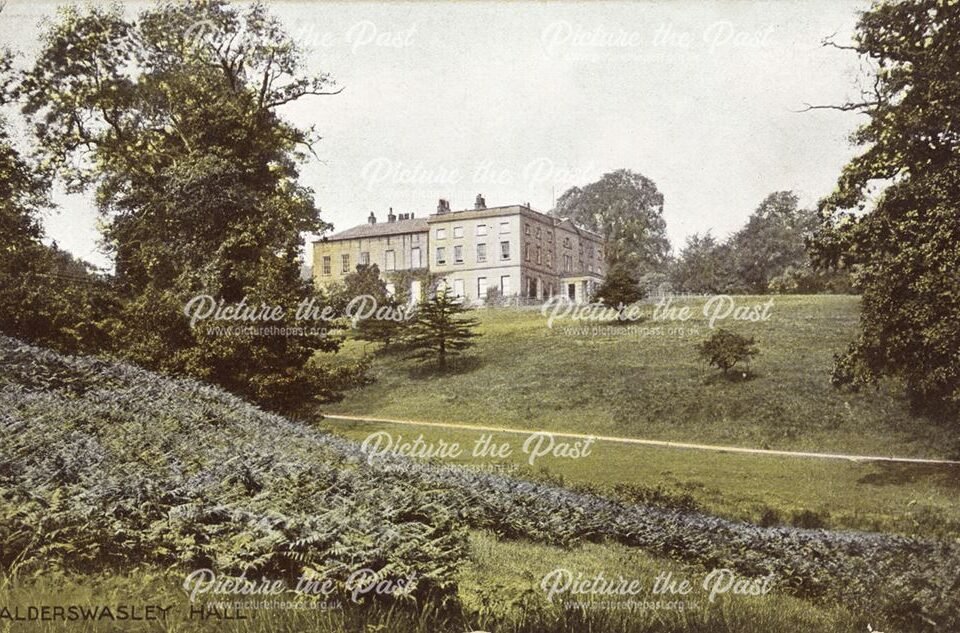
Basis: documented_manor_house — Alderwasley Hall, formerly the principal house associated with the Alderwasley estate and manor, at Historic England National Grid Reference SK 32678 53308. The present house is late eighteenth-century but stands at the documented historic manorial centre; the Derbyshire Historic Environment Record notes the possibility of an earlier house on the site and describes the hall as the former Hurt family residence.
Point confidence: high
Boundary status: representative_point_only
Boundary period: Medieval to early modern; later composite extent documented in the nineteenth century
Boundary confidence: medium
Boundary basis: The best located historical extent is described textually rather than supplied as a recoverable polygon. Glover's nineteenth-century county history states that Alderwasley, Milnehay and the whole of Ashleyhay formed one manor, bounded by the lordships of Crich and Belper to the east, Belper and Shottle to the south, Alton to the west, and Wigwell Grange and Wirksworth to the north. This is useful evidence for the territorial composition and approximate limits of the manor, but it does not provide sufficiently precise mapped boundary geometry, and it may describe the later composite manor rather than every phase represented by the medieval TNA records. The modern civil parish of Alderwasley has not been substituted for the historical manorial boundary.
Sources:
- The National Archives: Alderwasley Manor, TNA/MDR record F253244: https://discovery.nationalarchives.gov.uk/details/c/F253244 — Registry record supplied for the exact manor identity and authority reference GB/NNAF/M271280.
- Derbyshire Historic Environment Record: Alderwasley Hall School, formerly Alderwasley Hall, MDR9799: https://her.derbyshire.gov.uk/Monument/MDR9799 — Identifies Alderwasley Hall at SK 32678 53308, describes it as the former Hurt family hall, notes a possible earlier house on the site, and records the surrounding estate and park context.
- Historic England: St Benets School, formerly Alderwasley Hall, list entry 1109075: https://historicengland.org.uk/listing/the-list/list-entry/1109075 — Authoritative location for the hall at National Grid Reference SK 32678 53308 and description of the country house occupying the historic Alderwasley Hall site.
- Derbyshire Record Office: Manor of Alderwasley and Ashleyhay, D164: https://calmview.derbyshire.gov.uk/calmview/overview.aspx?q=refno%3AD164%2F%2A+%7Caltrefno%3AD164&src=calmview.catalog — Catalogues the surviving manor court books under the explicit title Manor of Alderwasley and Ashleyhay, covering 1528-1915 and confirming the later territorial association.
- S. Glover, History and Gazetteer of the County of Derby, 1833, digitised copy: https://www.totleyhistorygroup.org.uk/app/download/25716847/The_History_of_the_County_of_Derby.pdf — Provides the principal territorial description: Alderwasley, Milnehay and the whole of Ashleyhay formed one manor, with stated boundaries adjoining Crich, Belper, Shottle, Alton, Wigwell Grange and Wirksworth.
Warnings / uncertainty:
- No authoritative historical manor map or parcel-level boundary plan was located in the consulted online sources.
- The stated territorial extent is textual and approximate; it should not be converted into an invented polygon or treated as identical to the modern Alderwasley civil parish.
- The documented hall is a defensible representative point, but the surviving late eighteenth-century building may not occupy exactly the footprint of the medieval manor house.
About the Manor
Alderwasley Manor, also historically called Arrowsley, lay about two miles south-east of Wirksworth in Derbyshire. It was probably originally a member of the wider manor of Duffield and lay within Duffield Frith. The manor was associated with Alderwasley and Ashleyhay, and surviving records show that courts were held at Alderwasley. The manor did not appear as a separate entry in Domesday Book. Medieval ownership is connected with the Ferrers family; following the forfeiture of Robert de Ferrers, Earl of Derby, after the battle of Chesterfield in 1266, Alderwasley was annexed to the Earldom of Lancaster and subsequently formed part of the Duchy of Lancaster. In 1528 Henry VIII granted the manor to Anthony Lowe. It descended in the Lowe family, although the precise intermediate descent is not fully established in the sources consulted. During the Civil War the manor was sequestered as the property of Edward Lowe, a royalist, and in 1646 was leased to Richard Chadwick. In 1690 the manor passed by marriage to Nicholas Hurt of Castern in Staffordshire and thereafter remained with the Hurt family. The Alderwasley Hall estate was broken up in 1920, and in 1930 the manor and associated estate were sold to Major Frank Robertson Griggs, who was reported still to retain the lordship in 1941.
Ownership / Holder Account
The earliest securely stated ownership is by the Ferrers family, probably as part of the Duffield complex. After 1266 the manor was annexed to the Earldom of Lancaster and later became part of the Duchy of Lancaster. Henry VIII granted it in 1528 to Anthony Lowe. The manor then remained in the Lowe family through the sixteenth and seventeenth centuries. Anthony Lowe was recorded as seised of the manor in the late Elizabethan period, with Edward Lowe as his son and heir. Edward Lowe was the recorded owner whose estate was sequestered during the Civil War. The manor was leased to Richard Chadwick in 1646 during that period, but the lease did not amount to a transfer of lordship. The later Lowe descent contains documentary gaps; the cited sources state that in 1690 the manor passed by marriage to Nicholas Hurt of Castern, husband of Elizabeth Lowe, described as the sister and heir of the last Lowe holder. It remained with the Hurts, represented in the eighteenth and nineteenth centuries by the Alderwasley branch of the family, until the sale of the Alderwasley Hall estate and manor to Major Frank Robertson Griggs in 1930. Griggs was reported to retain the lordship in 1941. The research does not establish a later historical lord after that report.
Manorial Rights & Privileges
Historic manorial rights / privileges (1)
Manorial courts were held at Alderwasley.
Provisional
The registry description states that surviving records show courts being held at Alderwasley; it does not specify the precise jurisdiction or court type.
Records & References
Sources and references mentioning this manor/title which are not necessarily conveyances or transfers.
63 records found · showing 1–8.
1878-1906: minute book
Held by: Derbyshire Record Office
1878-1906: minute book
Held by: Derbyshire Record Office
Further information: NRA 13911
1871-1880: deeds and awards of enfranchisement of copyhold land
Held by: The National Archives
1833-1860: minute book
Held by: Derbyshire Record Office
Further information: NRA 13911
1833-1860: minute book (fragile in parts)
Held by: Derbyshire Record Office
1811-1833: minute book
Held by: Derbyshire Record Office
1738-1915: court books (6)
Held by: Derbyshire Record Office
1721-1721: rental and survey
Held by: Derbyshire Record Office
Further information: NRA 13911
Conveyance & Descent
First holder to present holder: blood proximity & distance travelled
First recorded holder: Ferrers family
Present holder:
Recorded title journey: 9 holder entries in this manor's saved Conveyance & Descent history.
No recorded holder currently has a usable saved direct-blood or collateral-blood relationship path from which to calculate proximity percentages.
First recorded holder → present holder
A usable saved blood relationship path between the first recorded holder and the present holder has not yet been recorded, so that first-to-present genealogical distance cannot be calculated.
Ferrers family, Lords of Duffield and Earls of Derby
Transfer: The manor was annexed to the Earldom of Lancaster after the defeat and forfeiture of Robert de Ferrers, Earl of Derby, at the battle of Chesterfield in 1266.
Shared holding: Ferrers lordship
Alderwasley is described by the Derbyshire Record Office catalogue and by the early county history as having belonged to the Ferrers family. The sources indicate that it was probably treated as a member of the wider manor of Duffield. The exact individual Ferrers holder and the precise date of the original acquisition are not established in the sources consulted.
Source: Derbyshire Record Office, Manor of Alderwasley catalogue entry, DS/UK/M/3629; Magna Britannia, volume 5, Derbyshire, 1817, p. 301. — source link
Earldom and Duchy of Lancaster, Earldom of Lancaster
Transfer: Following the Ferrers forfeiture, Alderwasley was annexed to the Earldom of Lancaster and later formed part of the Duchy of Lancaster. In 1528 Henry VIII granted the manor to Anthony Lowe.
Shared holding: Lancastrian and Crown estate
Previous holder: Ferrers family, Lords of Duffield and Earls of Derby
The manor remained in the possessions of the Earldom of Lancaster and subsequently the Duchy of Lancaster until the 1528 grant. The change from earldom to duchy is a change in the legal or administrative designation of the Lancastrian estate rather than a separately documented private conveyance in the sources consulted.
Source: Derbyshire Record Office, Manor of Alderwasley catalogue entry, DS/UK/M/3629; Derbyshire Record Office, D164, Manor of Alderwasley and Ashleyhay, 1528-1915; Magna Britannia, volume 5, Derbyshire, 1817, p. 301. — source link
Anthony Lowe, Esquire, gentleman of the bedchamber to Henry VIII, Edward VI and Mary I, hereditary forester of Duffield Frith
Transfer: Henry VIII granted the manor of Alderwasley, with lands in Alderwasley and Ashleyhay, to Anthony Lowe and his heirs by letters patent in 1528.
Shared holding: Lowe family
Co-holders: Anthony Lowe of Alderwasley, Edward Lowe of Alderwasley
Previous holder: Earldom and Duchy of Lancaster, Earldom of Lancaster
The 1528 grant is directly documented in the Derbyshire Record Office catalogue and in an associated Lowe family record. A 1529 bond concerning the grant refers expressly to the manor of Alderwasley and related premises. The later descent from the grantee to the Elizabethan Anthony Lowe is not presented as a continuous chain here because the consulted sources do not supply every intermediate conveyance.
Source: Derbyshire Record Office, D164, Manor of Alderwasley and Ashleyhay, 1528-1915; Derbyshire Record Office, D2535/M/12/3/5, bond and related documents concerning the grant of Alderwasley to Anthony Lowe, 16 February 1529; Magna Britannia, volume 5, Derbyshire, 1817, p. 301. — source link
Anthony Lowe of Alderwasley, Esquire, lord of Alderwasley Manor
Transfer: On the death of Anthony Lowe, the manor was recorded as descending to his son and heir Edward Lowe, then a minor.
Shared holding: Lowe family
Co-holders: Anthony Lowe, Edward Lowe of Alderwasley
Previous holder: Lowe family
A nineteenth-century county history, drawing on an inquisition post mortem, states that Anthony Lowe died in the forty-second year of Elizabeth I seised of the manor of Alderwasley and associated lands, leaving Edward Lowe, his son and heir, aged eight. The date is therefore expressed as 1599 or 1600 rather than as an exact modern date. This Anthony should not be conflated without qualification with the earlier Anthony Lowe who received the 1528 grant.
Source: The History, Gazetteer, and Directory of the County of Derby, 1829, section on Alderwasley, quoting the inquisition post mortem of Anthony Lowe; Derbyshire Record Office, D2535 Hurt family of Alderwasley catalogue and related Lowe documents. — source link
Edward Lowe of Alderwasley, Esquire, royalist landowner, lord of Alderwasley Manor
Transfer: Edward Lowe succeeded as son and heir to Anthony Lowe. During the Civil War his estate, including Alderwasley Manor, was sequestered because he was a royalist.
Shared holding: Lowe family
Co-holders: Anthony Lowe, Anthony Lowe of Alderwasley
Previous holder: Anthony Lowe of Alderwasley, Esquire, lord of Alderwasley Manor
Edward Lowe is directly linked to Alderwasley Manor by the county history, which records that he inherited it as Anthony Lowe's son and heir, and by the account of the Civil War sequestration. The sequestration was a parliamentary custody or confiscatory measure and should not be treated as a voluntary conveyance of the lordship. The sources consulted do not establish the exact date of Edward Lowe's death, the date of restoration, or the precise legal route by which the manor later passed to the Hurt family.
Source: The History, Gazetteer, and Directory of the County of Derby, 1829, section on Alderwasley; Daniel and Samuel Lysons, Magna Britannia, volume 5, Derbyshire, 1817, p. 301; Derbyshire Archaeological Journal, article discussing Edward Lowe of Alderwasley and the Civil War sequestration. — source link
Transfer: The sequestered manor was leased to Richard Chadwick in 1646. This was a lease or custodial tenancy and not evidence that Chadwick became lord or owner of the manor.
Holding arrangement: Other
Shared holding: Civil War lease or sequestration administration
Previous holder: Edward Lowe
Lysons records that Alderwasley Manor was sequestered as the property of Edward Lowe in 1643 and leased to Richard Chadwick in 1646. Chadwick is included to preserve the documented lease, but he is not treated as a lord or owner. The end date and subsequent legal position are not established in the cited source.
Source: Daniel and Samuel Lysons, Magna Britannia, volume 5, Derbyshire, 1817, p. 301; Derbyshire Record Office, Manor of Alderwasley catalogue entry, DS/UK/M/3629. — source link
Nicholas Hurt of Castern, Esquire of Castern, Staffordshire
Transfer: The manor passed by marriage in 1690 to Nicholas Hurt of Castern, Staffordshire, through his marriage to Elizabeth Lowe, the Lowe heiress.
Shared holding: Hurt family
Co-holder: Hurt family of Alderwasley
Previous holder: Lowe family
The Derbyshire Record Office catalogue states that the manor passed by marriage to Nicholas Hurt in 1690. Lysons describes Elizabeth as the sister and heir of the last Lowe holder and says that she brought the manor and estate to Nicholas Hurt. The intervening legal history between the Civil War sequestration and the 1690 marriage is not fully documented in the sources consulted and is therefore left as a gap rather than inferred.
Source: Derbyshire Record Office, Manor of Alderwasley catalogue entry, DS/UK/M/3629; Daniel and Samuel Lysons, Magna Britannia, volume 5, Derbyshire, 1817, p. 301; Derbyshire Record Office, D2535 Hurt family of Alderwasley catalogue. — source link
Hurt family of Alderwasley, Owners and lords of Alderwasley Manor, principal proprietors of the Alderwasley Hall estate
Transfer: The manor remained with the Hurt family after its passage to Nicholas Hurt. The cited sources establish the family holding but do not provide a complete individual-by-individual succession for the eighteenth and nineteenth centuries.
Shared holding: Hurt family
Co-holder: Nicholas Hurt of Castern
Previous holder: Nicholas Hurt of Castern, Esquire of Castern, Staffordshire
The manor catalogue states that Alderwasley remained with the Hurts until the decision to sell in 1930, apart from the Civil War sequestration. County directories and estate records identify successive Hurts as occupants, principal landowners, and lords of the manor, including Francis Hurt in the nineteenth century. Because the consulted sources do not establish every individual legal conveyance, this entry records the continuous family holding rather than inventing a detailed succession.
Source: Derbyshire Record Office, Manor of Alderwasley catalogue entry, DS/UK/M/3629; Derbyshire Record Office, D164, Manor of Alderwasley and Ashleyhay; Derbyshire Record Office, D2535/M/19/1, Alderwasley estate map, 1784; White's Directory and related nineteenth-century county directories. — source link
Major Frank Robertson Griggs, lord of Alderwasley Manor from 1930 according to the cited catalogue
Transfer: The Alderwasley Hall estate and manor were sold to Major Frank Robertson Griggs in 1930. He was reported still to retain the lordship in 1941.
Shared holding: Griggs ownership
Previous holder: Hurt family of Alderwasley, Owners and lords of Alderwasley Manor, principal proprietors of the Alderwasley Hall estate
The Derbyshire Record Office catalogue states that the manor was sold with the Alderwasley Hall estate to Major Frank Robertson Griggs in 1930 and that he was said still to retain the lordship in 1941. This is the latest securely documented historical lordship located in the public sources consulted. The catalogue does not establish whether a later conveyance of the manorial lordship occurred after 1941.
Source: Derbyshire Record Office, Manor of Alderwasley catalogue entry, DS/UK/M/3629, citing Alderwasley and the Hurts, Kelly's Directories 1878-1941, and related estate records. — source link
Corrections / Challenges
Sign in to challenge or submit evidence against a recorded assertion.
JSON API
Machine-readable published manor data, including public images, mapped land areas, notes, rights, conveyances, relationships, records, source/document-library entries and public file links.
https://manorialregistry.com/index.php?rest_route=/mhr/v1/manor/alderwasley-manorPublic API access is currently disabled. Authorised API clients must use a private X-MHR-API-Key; currently only administrator keys are enabled.
Private source files, pending edits, moderation/admin information, user API keys and non-public import identifiers are not returned.