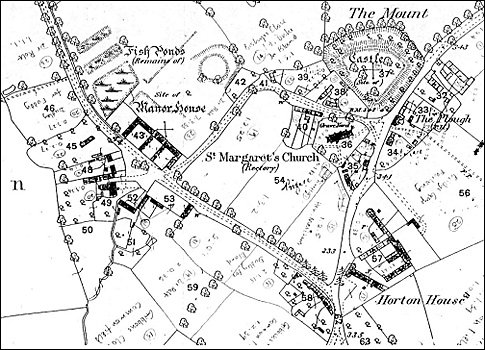



Location: Alderton, Northamptonshire
Places / associated places: Alderton, Northamptonshire
Listed in Domesday Book: Yes
Location & Extent
GPS Location & Recorded Land Areas
Representative GPS point: 52.1155, -0.9228
Identity: confirmed — The record is securely identified with the historical manor of Alderton, Northamptonshire, associated with the Honour of Grafton. The supplied National Archives references explicitly concern Alderton manor records within the Honour of Grafton, while Northamptonshire Historic Environment Record evidence identifies the surviving archaeological and documentary site of Alderton Manor House in the north-west part of Alderton village.
Representative point: 52.1155, -0.9228
Basis: documented_manor_house — Approximate WGS84 conversion of Northamptonshire Historic Environment Record grid reference SP 7386 4690, centred on the documented site of the medieval and later Alderton manor house. The site included the Gorges mansion of 1582, later Manor Farm buildings, archaeological remains, garden features and a former moat.
Point confidence: medium
Boundary status: representative_point_only
Boundary period: Medieval to early modern; specifically evidenced by records and surveys from the 16th to 18th centuries
Boundary confidence: none
Boundary basis: The evidence establishes the manor house and associated manorial landscape but does not provide a sufficiently documented perimeter for the manor's entire territorial extent. Sources mention Alderton's open fields, demesne and appurtenant closes, including Pond Close, and indicate that the manor was later leased as a large agricultural unit after annexation to the Honour of Grafton. However, no accessible manor map, rental map, enclosure award or other source was found that defines the complete manorial boundary. The civil parish, village, Honour of Grafton and modern administrative boundaries cannot safely be substituted for the historical manor extent.
Sources:
- Northamptonshire Historic Environment Record: Site of Alderton Manor House, monument record 4745/4/1: https://her.northamptonshire.gov.uk/Monument/MNN24695 — Identifies the probable medieval manor-house site, the 1582 Gorges mansion, archaeological investigations, former gardens and moat, and gives grid reference SP 7386 4690.
- Northamptonshire Historic Environment Record: Alderton Manor archive, Historic England Archive BF107320: https://her.northamptonshire.gov.uk/Source/SNN116081/ — Records the Historic England archive plan of the manor-house site and adjacent ring castle.
- Grafton Estate: The Manor at Alderton: https://www.mkheritage.org.uk/grafton/Alderton/Alderton%20Manor.html — Provides detailed historical and archaeological discussion of the medieval manor site, Gorges mansion, Manor Farm, 1726 village map, gardens, moat and 17th-century surveys describing the manor-house complex and appurtenant land.
- Grafton Estate: Alderton History: https://www.mkheritage.org.uk/grafton/Alderton/Alderton%20History.html — States that Alderton was annexed to the Honour of Grafton in 1542, describes its open fields and explains that the manor was leased as one large unit while remaining divided into farms, fields and holdings.
- The National Archives: TNA/MDR record F279089: https://discovery.nationalarchives.gov.uk/details/c/F279089 — Registry record supplied for Alderton with Members Manor; the associated archival series are court rolls, rentals, accounts and other records of Alderton within the Honour of Grafton.
- The National Archives: Ministers' accounts, Honour of Grafton, SC 6/HENVII/6081-6088: https://discovery.nationalarchives.gov.uk/details/r/N16464262 — Supplied archival lead for 1541-1546 accounts relating to Alderton and other Honour of Grafton manors.
Warnings / uncertainty:
- The title 'with Members' does not by itself establish that the manor included the whole Honour of Grafton or a separately identifiable group of territorial members.
- The representative coordinate is a documented manor-house-site point, not a reconstructed boundary centroid.
- No historically defensible complete manor polygon was established from the accessible evidence; the civil parish and Honour of Grafton boundaries were not used as substitutes.
About the Manor
Alderton with Members was the principal medieval and post-medieval manor of Alderton, Northamptonshire, associated with the settlement's castle or ringwork, later manor house, demesne, and customary lands. Domesday Book records two holdings at Alderton in 1086, both under Robert, Count of Mortain. The manor was later held through a succession of overlords and undertenants, including the Warennes, Brewers or Brueres, Maudits, Sauvages, Chaworths, and Combemartins. From the fourteenth century Alderton was treated as part of, or closely linked to, the manor of Stoke Bruerne. The estate came into Crown hands by 1539 and was annexed to the Honour of Grafton in 1542. The Crown subsequently granted leases or tenancy interests to Sir John Williams, Robert Stafford, William Gorges, and others. William Gorges built a substantial new mansion at Alderton in 1582. The property was associated with the Hesilrige family in the seventeenth century, and Sir Arthur Hesilrige was recorded as lord of the manor in 1655. By the early eighteenth century the manor house had been partly demolished; the site later became Manor Farm. Local estate history states that the lordship of Alderton remained with the Duke of Grafton, although the publicly available evidence reviewed here does not provide a complete modern conveyance chain.
Ownership / Holder Account
The earliest securely identified lordship is the pre-Conquest holding of Edmar and Edwin, followed in 1086 by Robert, Count of Mortain, who held two Alderton holdings as tenant-in-chief and lord. The descent between Domesday and the early thirteenth century is incompletely documented in the sources consulted. A local historical account states that the manor was assigned to William de Warenne in 1204 and then passed through the Brewer or Bruere, Maudit, Sauvage, Chaworth, and Combemartin interests. A charter of William de Warenne confirms land of his fee in Stoke Bruerne, Shutlanger, and Alderton to William Briwerre; this is evidence of a feudal connection but does not by itself establish that William Briwerre held the whole manor as immediate lord. Thomas le Sauvage held the castle and lands of Alderton before Pagan de Chaworth acquired them during the reign of Edward I; Pagan was lord of the manor by 1278 and obtained market and fair rights there. After Pagan's death, the lordship passed to his brother Patrick de Chaworth, and then through Patrick's daughter Maud to Henry, Earl of Lancaster. In 1307 Henry granted Alderton, with its advowson and the advowson of Stoke Bruerne, to William de Combemartin. William de Combemartin died in 1318. The subsequent medieval descent is not fully established by the sources reviewed. By 1539 Alderton was in Crown hands, and in 1542 it was annexed to the Honour of Grafton. The later named occupants and lessees should not be treated uniformly as fee-simple lords: Sir John Williams, Robert Stafford, William Gorges, and Samuel Rolt are evidenced as Crown or estate lessees or tenants, while Sir Arthur Hesilrige is specifically described as lord of the manor in 1655. The Duke of Grafton is reported by local estate history as retaining the lordship in the modern period, but a complete chain of post-1542 legal conveyances was not located.
Records & References
Sources and references mentioning this manor/title which are not necessarily conveyances or transfers.
15 records found · showing 1–8.
1765-1801: court book, with other manors (Honour of Grafton)
Held by: Northamptonshire Archives Service
Further information: NRA 4937 Fitzroy
1752-1752: quit rental, with other manors (Honour of Grafton) (1 vol)
Held by: Northamptonshire Archives Service
Further information: NRA 4937 Fitzroy
1725-1753: minute books, with other manors (2) (Honour of Grafton)
Held by: Northamptonshire Archives Service
Further information: NRA 4937 Fitzroy
1723-1732: court books, with other manors (2) (Honour of Grafton)
Held by: Northamptonshire Archives Service
Further information: NRA 4937 Fitzroy
1723-1777: court files (Honour of Grafton),mainly suit rolls and orders; some jury lists
Held by: Northamptonshire Archives Service
Further information: NRA 4937 Fitzroy
1700-1800: schedule of tenants holdings, with other manors
Held by: The National Archives
1700-1725: rental, with other manors (Honour of Grafton)
Held by: The National Archives
1680-1680: rental, with other manors (Honour of Grafton)
Held by: The National Archives
Conveyance & Descent
First holder to present holder: blood proximity & distance travelled
First recorded holder: Edmar and Edwin
Present holder:
Recorded title journey: 18 holder entries in this manor's saved Conveyance & Descent history.
No recorded holder currently has a usable saved direct-blood or collateral-blood relationship path from which to calculate proximity percentages.
First recorded holder → present holder
A usable saved blood relationship path between the first recorded holder and the present holder has not yet been recorded, so that first-to-present genealogical distance cannot be calculated.
Transfer: Pre-Conquest lordship; no specific transfer recorded in the sources consulted.
Holding arrangement: Joint — Jointly described as proprietors or lords of Alderton before the Norman Conquest; individual shares are unknown.
Shared holding: Pre-Conquest proprietors
A local historical account identifies Edmar and Edwin as Saxon proprietors of Aldritone before the Conquest. This is a place-specific statement about Alderton, but the precise legal nature and division of their interests are not known.
Source: Dorothy Macmillan, 'Our County Villages No. 46: Alderton', Northampton County Magazine, November 1932, lines 12-15 as reproduced by Milton Keynes Heritage Association. — source link
Transfer: Norman post-Conquest reallocation; Domesday Book records the Alderton holdings under Robert, Count of Mortain.
Shared holding: Domesday tenant-in-chief
Previous holder: Edmar and Edwin, Saxon proprietors or lords of Alderton
Domesday evidence records two holdings at Alderton in 1086, both under Robert, Count of Mortain. The Domesday entries do not establish a single undivided manor in the later sense, so this entry records the two documented Alderton holdings without assuming that their later consolidation was immediate.
Source: Domesday Book evidence for Alderton, summarized in the Northamptonshire place and heritage sources; see also the Northamptonshire Historic Environment Record summary citing the Domesday and manor history. — source link
William de Warenne, earl of Surrey, 5th Earl of Surrey, 1st Earl of Surrey, Norman baron and Domesday landholder
Transfer: The manor is stated in local estate history to have been assigned to William de Warenne in 1204; the exact instrument and subsequent date of disposition were not located.
Shared holding: Warenne interest
Previous holder: Crown or royal administration
The local historical account states that Alderton remained intermittently in royal hands until it was assigned to William de Warenne in 1204. A separate published charter confirms William de Warenne's fee interest in land at Stoke Bruerne, Shutlanger, and Alderton, supporting the feudal connection but not proving that he personally occupied the whole manor as immediate lord.
Source: Grafton Estate, 'Alderton History'; corroborating charter of William de Warenne confirming William Briwerre's land of the Warenne fee in Stoke Bruerne, Shutlanger, and Alderton, published by the Northamptonshire Record Society. — source link
William Briwerre or Brewer, Feudal tenant of land of the Warenne fee
Transfer: Feudal confirmation by William de Warenne of land of his fee in Stoke Bruerne, Shutlanger, and Alderton.
Holding arrangement: Other — A fee or subinfeudated interest is evidenced; no evidence establishes that William Briwerre held the entire manor as immediate lord.
Shared holding: Subinfeudated Warenne fee
Previous holder: William de Warenne, earl of Surrey, 5th Earl of Surrey, 1st Earl of Surrey, Norman baron and Domesday landholder
A published charter of William de Warenne confirms to William Briwerre all the land of Warenne's fee in Stoke Bruerne, Shutlanger, and Alderton, to hold by knight service. This is relevant to the descent of the Alderton estate but should be treated as a feudal or mesne-tenure interest rather than automatically as sole manorial ownership.
Source: Northamptonshire Record Society, Book of Seals, charter of William de Warenne confirming the Warenne fee in Stoke Bruerne, Shutlanger, and Alderton to William Briwerre. — source link
Thomas le Sauvage, Lord or holder of Alderton castle and lands
Transfer: Sold or conveyed the castle and lands of Alderton to Pagan de Chaworth during the reign of Edward I.
Shared holding: Sauvage interest
Previous holder: Earlier intermediate holders, including the Brewer, Maudit, and possibly other interests; exact sequence uncertain
The sources state that Thomas le Sauvage sold the castle and manor or lands of Alderton to Pagan de Chaworth during the reign of Edward I. The exact date is not given, and the transaction should not be dated more precisely than the thirteenth century.
Source: Northamptonshire Historic Environment Record, Monument MNN1808, citing the medieval manor history; corroborated by the Alderton parish history and the 1932 Northampton County Magazine article. — source link
Pagan de Chaworth, Lord of Alderton, Chaworth nobleman
Transfer: Acquired the castle and manor or lands of Alderton from Thomas le Sauvage during the reign of Edward I.
Shared holding: Chaworth lordship
Previous holder: Thomas le Sauvage, Lord or holder of Alderton castle and lands
Pagan de Chaworth acquired Alderton from Thomas le Sauvage and was lord of the manor by 1278. In 1270 he obtained a licence to enclose his wood and make a park at Stoke, and in 1278 he received a grant of a weekly market and an annual fair at Alderton. These rights provide strong place-specific corroboration of his manorial authority.
Source: Dorothy Macmillan, 'Our County Villages No. 46: Alderton', Northampton County Magazine, November 1932; Northamptonshire Historic Environment Record, Monument MNN1808; Archaeological Data Service, Northamptonshire Extensive Urban Survey, Appendix 2, Alderton market grant. — source link
Patrick de Chaworth, Chaworth lord of Alderton, according to the local account
Transfer: Succeeded his brother Pagan de Chaworth according to the local historical account.
Shared holding: Chaworth succession
Previous holder: Pagan de Chaworth, Lord of Alderton, Chaworth nobleman
The 1932 local account states that Pagan de Chaworth died without issue and was succeeded by his brother Patrick. Patrick is said to have had no son, after which his daughter Maud carried the lordship by marriage to Henry, Earl of Lancaster. The precise dates and documentary instruments are not supplied by the source.
Source: Dorothy Macmillan, 'Our County Villages No. 46: Alderton', Northampton County Magazine, November 1932. — source link
Maud de Chaworth and Henry, Earl of Lancaster, heiress
Transfer: Maud de Chaworth is reported to have carried the lordship by marriage to Henry, Earl of Lancaster.
Holding arrangement: Joint — Maud's hereditary interest and Henry's marital or conjugal interest are reported together; exact shares are unknown.
Shared holding: Chaworth-Lancaster lordship
Previous holder: Patrick de Chaworth, Chaworth lord of Alderton, according to the local account
The local account states that Patrick de Chaworth had no son and that his daughter Maud carried the lordship in marriage to Henry, Earl of Lancaster. This entry records the reported manorial connection, but the precise legal mechanism and whether Henry held jointly, by curtesy, or through another form of marital tenure are not established.
Source: Dorothy Macmillan, 'Our County Villages No. 46: Alderton', Northampton County Magazine, November 1932. — source link
William de Combemartin, Knight, lord of Alderton and Stoke Bruerne interests
Transfer: Henry, Earl of Lancaster, granted Alderton with the advowson of the church and manor, together with the advowson of Stoke Bruerne, to William de Combemartin.
Shared holding: Combemartin lordship
Previous holder: Henry, Earl of Lancaster
The 1307 grant is the clearest medieval conveyance found for Alderton after the Chaworth-Lancaster phase. William de Combemartin is recorded as holding the property until his death in 1318. The later descent after his death is not filled by inference; although later genealogical material mentions daughters and coheirs, it was not used here as sole evidence of a specific conveyance of this manor.
Source: Dorothy Macmillan, 'Our County Villages No. 46: Alderton', Northampton County Magazine, November 1932; the account also records the surviving effigy of Sir William de Combemartin at Alderton church. — source link
Transfer: Alderton came into Crown hands by 1539; in 1542 it was annexed to the Honour of Grafton. The precise Crown acquisition instrument was not located.
Shared holding: Crown ownership
Previous holder: Medieval holders after William de Combemartin; intervening descent uncertain
The sources identify a substantial documentary gap between the Combemartin period and the Crown's possession. The manor is stated to have been in Crown hands in 1539 and annexed to the Honour of Grafton in 1542. No intervening conveyance is invented.
Source: Dorothy Macmillan, 'Our County Villages No. 46: Alderton', Northampton County Magazine, November 1932; Grafton Estate, 'Alderton History'; Northamptonshire Historic Environment Record, Monument MNN1808. — source link
Transfer: Alderton was annexed to the Honour of Grafton in 1542.
Shared holding: Grafton honour estate
Previous holder: The Crown, Royal owner or custodian, Honour of Grafton annexation
Annexation to the Honour of Grafton marks the principal institutional change in the post-medieval history of the manor. The honour or Crown estate remained the superior ownership structure even when the property was leased to named individuals. The sources do not provide a complete list of all later leases or estate settlements.
Source: Grafton Estate, 'Alderton History'; Northamptonshire Historic Environment Record, Monument MNN1808. — source link
Transfer: The Crown leased the manor or estate to Sir John Williams in 1548.
Holding arrangement: Other — Leasehold or Crown tenancy; not equivalent to fee-simple lordship.
Shared holding: Crown lessee
Co-holder: Robert Stafford
Previous holder: Honour of Grafton or the Crown
Grafton Estate history states that after the manor was leased by the Crown to Sir John Williams in 1548, a manor house appears to have been built on the lower site. This is recorded as a lease or tenancy interest, not as a conveyance of the superior manorial ownership.
Source: Grafton Estate, 'Alderton History'. — source link
Transfer: Robert Stafford held the lease after Sir John Williams; by 1567 the property was reported to be in need of repair.
Holding arrangement: Other — Leasehold or Crown tenancy; not superior ownership.
Shared holding: Crown lessee
Co-holder: Sir John Williams
Previous holder: Sir John Williams, Knight, Crown lessee of Alderton
The Grafton Estate history identifies Robert Stafford as the lessee of Alderton by 1567. It reports that the manor house was then in need of repair. The source does not give the exact date or instrument of Stafford's succession from Sir John Williams.
Source: Grafton Estate, 'Alderton History'. — source link
William Gorges, Esquire or gentleman, lessee of Alderton
Transfer: Became the next lessee after Robert Stafford and substantially rebuilt or replaced the manor house in 1582.
Holding arrangement: Other — Leasehold or estate tenancy under the Crown or Honour of Grafton; not proven to be the superior fee-simple lord.
Shared holding: Gorges leasehold interest
Previous holder: Robert Stafford, Lessee of Alderton
William Gorges is identified as the next lessee after Robert Stafford. In 1582 he built a very large mansion at Alderton, on or near the site of the earlier manor house. The archaeological record confirms the 1582 construction, while the estate history identifies Gorges as lessee. The later statement that his daughter Frances's marriage to Thomas Hesilrige brought the manor house to the Hesilrige family should be understood cautiously as transfer of the Gorges family interest or leasehold estate unless a legal conveyance of the superior manor is found.
Source: Grafton Estate, 'Alderton History'; Northamptonshire Historic Environment Record, 'Site of Alderton Manor House', Monument 4745/4/1; Alderton, Northamptonshire parish history. — source link
Thomas Hesilrige and Frances Gorges, later 1st Baronet, heiress of William Gorges of Alderton
Transfer: Frances Gorges, daughter and heiress of William Gorges, married Thomas Hesilrige; local history states that the manor house passed to the Hesilrige family.
Holding arrangement: Joint — Family or leasehold interest associated with the manor house; exact legal shares and whether the superior manor passed are not established.
Shared holding: Hesilrige-Gorges interest
Previous holder: William Gorges, Esquire or gentleman, lessee of Alderton
The sources explicitly connect Frances Gorges, daughter and heiress of William Gorges of Alderton, with Thomas Hesilrige and state that the manor house passed to the Hesilrige family. Because the surrounding evidence identifies Gorges and his successors primarily as Crown or estate lessees, this entry records the family interest without converting it into an unsupported fee-simple conveyance of the superior manor.
Source: Alderton, Northamptonshire parish history; Westminster Abbey registers, biographical note identifying Frances Gorges as daughter and heiress of Sir William Gorges of Alderton and wife of Sir Thomas Hesilrige. — source link
Sir Arthur Hesilrige, 2nd Baronet, Parliamentarian, lord of Alderton manor in 1655
Transfer: Recorded as lord of the manor of Alderton in 1655; the precise succession instrument from Thomas Hesilrige or another predecessor was not located.
Shared holding: Hesilrige lordship
Previous holder: Hesilrige family; exact immediate predecessor uncertain
Alderton's local history records Sir Arthur Hesilrige, 2nd Baronet, as lord of the manor in 1655. This is direct evidence of his manorial status at that date. It does not establish whether he held the fee simple, a leasehold lordship under the Honour of Grafton, or another estate interest, and no unsupported conveyance is supplied.
Source: Alderton, Northamptonshire parish history; corroborating biographical sources identify Sir Arthur Hesilrige as the son and successor of Sir Thomas Hesilrige and as a major landholder. — source link
Samuel Rolt, Lessee or tenant of the Alderton manorial demesnes
Transfer: Held the tenancy of the Alderton manorial demesnes; local estate history identifies him as the then lessee and states that he demolished part of the mansion. The date of the lease commencement was not located.
Holding arrangement: Other — Lessee or tenant of the manorial demesnes, not proven to be lord of the manor.
Shared holding: Manorial demesne lessee
Previous holder: Hesilrige family or Honour of Grafton estate; immediate transfer uncertain
Samuel Rolt is described by the Grafton Estate history as the then lessee of Alderton when part of the mansion was demolished. The same source states that the Duke of Grafton acquired Manor Farm shortly after Rolt's death in 1722. This entry records Rolt's leasehold or tenancy only and does not treat him as the superior manorial owner.
Source: Grafton Estate, 'Alderton History'; Grafton Estate, 'The Manor at Alderton'. — source link
Duke of Grafton, reported lord of Alderton manor
Transfer: The Duke of Grafton acquired Manor Farm shortly after Samuel Rolt's death, and local estate history states that the lordship of Alderton remains with the Duke of Grafton. The exact legal conveyance and date of acquisition of the superior manor were not located.
Shared holding: Grafton estate
Previous holder: Samuel Rolt as lessee; superior ownership remained connected with the Honour of Grafton
The public local-history sources state that the Duke of Grafton acquired Manor Farm shortly after Samuel Rolt's death in 1722 and that the lordship of Alderton still remains with the Duke of Grafton. Because the same sources distinguish the later farm property from the historic manor and do not reproduce the relevant conveyance, this is recorded as the latest reported holder with a qualification rather than as a fully documented modern conveyance.
Source: Grafton Estate, 'Alderton History'; Grafton Estate, 'The Manor at Alderton'; late nineteenth-century and early twentieth-century local descriptions also identify the Duke of Grafton as lord of the manor and principal landowner. — source link
Corrections / Challenges
Sign in to challenge or submit evidence against a recorded assertion.
JSON API
Machine-readable published manor data, including public images, mapped land areas, notes, rights, conveyances, relationships, records, source/document-library entries and public file links.
https://manorialregistry.com/index.php?rest_route=/mhr/v1/manor/alderton-with-members-manorPublic API access is currently disabled. Authorised API clients must use a private X-MHR-API-Key; currently only administrator keys are enabled.
Private source files, pending edits, moderation/admin information, user API keys and non-public import identifiers are not returned.