


Historical names: Aldeborne
Location: Aldbourne, Wiltshire
Places / associated places: Aldbourne, Wiltshire
Listed in Domesday Book: Yes
Location & Extent
GPS Location & Recorded Land Areas
Representative GPS point: 51.4793, -1.6264
Identity: confirmed — The registry name, Aldbourne location, associated parish, TNA record F272865 and authority GB/NNAF/M290927 correspond to the large royal and later Lancastrian manor historically centred on Aldbourne village in Wiltshire. The documentary sequence, including the 1509 Duchy of Lancaster rental and the 1560–1561 chase survey, matches this manor and distinguishes it from other Aldbourne-named estates such as Upper Upham.
Representative point: 51.4793, -1.6264
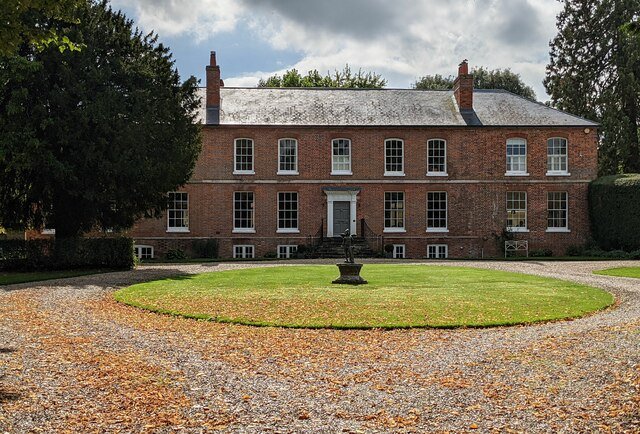
Basis: documented_manor_house — The best surviving location evidence is the historic Manor House at 43 West Street, Aldbourne, identified in the University of Southampton archaeological gazetteer at OS grid reference SU26047566. The site is also associated with the Brown family, whose records state that William Brown bought the manor house and adjoining land at Aldbourne about 1812. The point represents the documented manor-house site in the village, rather than the later Court House, which is associated with the separate Goddard manor house at Upham.
Point confidence: medium
Boundary status: representative_point_only
Boundary period: Medieval manor, with extent considered principally from the thirteenth to early seventeenth centuries before the 1620s sales and settlements
Boundary confidence: none
Boundary basis: The historical evidence establishes a very large and territorially complex manor but does not provide a sufficiently recoverable perimeter for a defensible polygon from the accessible sources. Domesday records Aldbourne at 40 hides with extensive demesne, meadow, woodland and four mills. In 1311 the demesne included 306 acres of arable, 80 acres of meadow in Wanborough, pasture for 24 oxen and 500 sheep. The associated Aldbourne Chase and warren were substantial components: later evidence describes hunting rights over about 1,400 acres extending from the southern boundary to Snap and from Priors Wood to Southward Down, while other descriptions give the chase a much larger historical area. The 1608 Duchy of Lancaster map documents a dispute over the royal rabbit warren within Aldbourne Chase, and surveys and maps are catalogued for 1552–1571, 1560–1561, 1603–1625, 1613–1614 and 1805–1808. However, the available web evidence does not expose enough mapped boundary geometry to reconstruct the whole manorial perimeter without conflating the manor with the later parish or with separately held estates. The manor was also fragmented by sales of the demesne, warren and component rights in the 1630s, so its extent varied by date.
Sources:
- The National Archives: Aldbourne Manor record F272865: https://discovery.nationalarchives.gov.uk/details/c/F272865 — Registry record for the exact manor and its historical description.
- 1509–1510 rental of the manor of Aldbourne, DL 43/9/23: https://discovery.nationalarchives.gov.uk/details/r/N16164184 — Primary Duchy of Lancaster rental identifying the manor and its tenants and holdings.
- 1509 Rent Roll of the Manor of Aldbourne: transcription: https://aldbourneheritage.org.uk/records/historic-documents/1509-rent-roll-manor-aldbourne/1509-rent-roll-manor-aldbourne-transcription — Transcription of DL 43/9/23, confirming the manor court and named Aldbourne holdings.
- Aldbourne Heritage Centre: Early Medieval timeline: https://aldbourneheritage.org.uk/village-history/aldbourne-timeline/early-medieval — Summarizes Domesday assessment, 1311 demesne acreage, park, chase, warren, market and later Lancastrian descent.
- Aldbourne Heritage Centre: Early Modern timeline: https://aldbourneheritage.org.uk/village-history/aldbourne-timeline/early-modern — Records the approximately 1,400-acre chase rights, warren, southern demesne sales and fragmentation of the manor in the 1630s.
- The National Archives: Aldbourne Chase map from 1608: https://www.nationalarchives.gov.uk/education/students/videos/spotlight-on/spotlight-on-maps/ — Confirms the existence and purpose of a 1608 Duchy of Lancaster map documenting the Aldbourne Chase royal-warren dispute.
- Aldbourne Chase disputes: https://aldbourneheritage.org.uk/heritage-centre/past-exhibits/2015-panels/113-2 — Describes the chase, Priors Wood, Dudmore Lodge, disputed warren areas and the survey map created for the litigation.
- Medieval pottery and archaeological gazetteer entry: Aldbourne Manor House, SU26047566: https://eprints.soton.ac.uk/460183/3/270070_v.3.pdf — Provides the documented Manor House site and National Grid reference SU26047566.
- University of Reading Archive: Aldbourne Farm, Baydon Farm and Warren Farm: https://www.reading.ac.uk/adlib/Details/archive/110234909 — States that William Brown bought the Manor house and adjoining land at Aldbourne about 1812.
- Wiltshire and Swindon History Centre catalogue: 1805–1808 boundaries and maps, ref. 211/6: https://discovery.nationalarchives.gov.uk/details/r/N16168108 — Catalogue lead for later boundary documentation associated with Aldbourne.
- Wiltshire and Swindon History Centre catalogue: 1805–1808 maps, ref. 211/6: https://discovery.nationalarchives.gov.uk/details/r/N16168109 — Catalogue lead for mapped evidence, but not sufficient from the accessible record alone to construct a polygon.
Warnings / uncertainty:
- The representative point is based on the documented historic Manor House site at SU26047566, not on the modern parish centroid.
- The manorial extent was not identical in every period to Aldbourne civil or ancient parish, and the manor included rights and lands whose ownership later diverged from the lordship.
- No boundary polygon is returned because the accessible evidence confirms the manor's location and broad territorial components but does not provide a sufficiently recoverable, historically specific perimeter.
- Aldbourne Chase and warren should not automatically be treated as the complete manor boundary; they were component rights and areas subject to dispute and later separate disposal.
- The Court House at approximately SU2638975902 is not used as the representative point because its listing associates it with the Goddard manor house at Upham rather than securely identifying it as the principal house of Aldbourne Manor.
About the Manor
Aldbourne Manor was a very large royal and later Lancastrian manor centred on Aldbourne in Wiltshire. Domesday evidence describes an estate assessed at 40 hides, with extensive demesne arable, meadow, pasture, woodland and four mills. In the medieval period the manor included a park, free chase, warren and a market. Its history is closely connected with the counts of Perche, the Longespee earls of Salisbury, the Lancaster inheritance and the Duchy of Lancaster. In the early seventeenth century the manor and its component rights and lands were divided by sales and settlements. The lordship of the manor continued separately from much of the former demesne land until the nineteenth century; the manor's court and lordship were abolished or became obsolete in the late nineteenth century.
Ownership / Holder Account
The securely evidenced descent begins with Gytha, identified by the local historical source as holding Aldbourne in 1066. William I seized the manor in 1086 and it was granted to a count of Perche. By 1135 it was held by Rotrou, count of Perche, and descended through his son Rotrou and grandson Geoffrey. After Geoffrey's son Thomas, count of Perche, died at the battle of Lincoln, the manor was confiscated in 1217 and granted to William Longespee, earl of Salisbury. It passed to William's widow Ela, countess of Salisbury, and then to their son Sir William Longespee. Medieval title and possession thereafter involved the Salisbury inheritance, the Warenne and Montagu interests, and the Lancaster inheritance. In 1365 John of Gaunt received Aldbourne from William de Montagu, earl of Salisbury, following litigation and settlement concerning the former Warenne and Lancaster lands. Aldbourne subsequently formed part of the Duchy of Lancaster and is documented as a Duchy manor in the 1509 rental. In 1624 James I settled the manor on Prince Charles, and about 1626 Charles I sold it to the City of London. The City sold the lordship of the manor to Thomas Bond in 1632. The former demesne, warren and other component interests were separately disposed of, including sales recorded in 1631. Elizabeth Bond was described as Lady of the Manor in 1728. H. D. Francis was described as lord of the manor in nineteenth-century directories, and by 1892 William Brown was described as Lord of the Manor; the transfer between the Francis and Brown interests is not securely documented in the sources consulted. The lordship, copyhold land and East Leaze Farm had been sold by 1875, and the court leet and office of lord of the manor were abolished or ceased to operate in 1888.
Manorial Rights & Privileges
Historic manorial rights / privileges (6)
Park
Provisional
The medieval manor included a park.
Free chase
Provisional
The medieval manor included a free chase.
Warren
Provisional
The manor included warren rights, with the warren later treated as a separately disposed component interest.
Market
Provisional
The medieval manor included a market.
Court leet
Provisional
A court leet operated in connection with the lordship until it was abolished or ceased to operate in 1888.
Copyhold
Provisional
Copyhold land formed part of the later manorial interests and had been sold by 1875.
Records & References
Sources and references mentioning this manor/title which are not necessarily conveyances or transfers.
16 records found · showing 1–8.
1875-1925: map, with Ogbourne St Andrew and Ogbourne St George
Held by: Cambridge University: King's College Archive Centre
1837-1837: valuation, with other manors
Held by: Cambridge University: King's College Archive Centre
1826-1826: stewards' papers, with bill and receipt for new set of weights and measures
Held by: Wiltshire and Swindon History Centre
1818-1830: rent accounts with other papers
Held by: Wiltshire and Swindon History Centre
1805-1808: list of residents with other papers
Held by: Wiltshire and Swindon History Centre
1805-1808: maps with other papers
Held by: Wiltshire and Swindon History Centre
1805-1808: boundaries with other papers
Held by: Wiltshire and Swindon History Centre
1705-1705: survey book, with other manors
Held by: Wiltshire and Swindon History Centre
Further information: NRA 22080 Herbert
Conveyance & Descent
First holder to present holder: blood proximity & distance travelled
First recorded holder: Gytha, mother of King Harold
Present holder:
Recorded title journey: 18 holder entries in this manor's saved Conveyance & Descent history.
No recorded holder currently has a usable saved direct-blood or collateral-blood relationship path from which to calculate proximity percentages.
First recorded holder → present holder
A usable saved blood relationship path between the first recorded holder and the present holder has not yet been recorded, so that first-to-present genealogical distance cannot be calculated.
Transfer: Held the Aldbourne estate before its seizure by William I
The Aldbourne Heritage Centre timeline states that Gytha, the mother of King Harold, held the estate of Aldbourne in 1066. This is an estate-holding statement rather than evidence of a formal conveyance instrument.
Source: Aldbourne Heritage Centre, Early Medieval – 1066-1365, entries for 1066 and 1086. — source link
William I, King of England, 1066–1087
Transfer: Seizure of Aldbourne from Gytha, followed by grant to a count of Perche
Shared holding: Crown
Previous holder: Gytha, mother of King Harold, identified in the local source as holder of Aldbourne in 1066
The 1086 Domesday-related account states that William I seized the manor of Aldbourne from Gytha and granted it to a count of Perche. The exact date of the subsequent grant and the identity of the first count of Perche are not stated in the source consulted.
Source: Aldbourne Heritage Centre, Early Medieval – 1066-1365, entry for 1086; Open Domesday, Aldbourne. — source link
Count of Perche
Transfer: Granted by William I; later descent to Rotrou, count of Perche
Previous holder: William I, King of England, 1066–1087
Aldbourne was granted by William I to a count of Perche. The consulted source does not name the grantee or establish the precise date of the grant. By 1135 the manor was held by Rotrou, count of Perche.
Source: Aldbourne Heritage Centre, Early Medieval – 1066-1365, entries for 1086 and 1135. — source link
Rotrou, count of Perche
Transfer: Held as count of Perche; succeeded by his son Rotrou
Previous holder: Count of Perche, unnamed grantee
By 1135 Aldbourne was held by Rotrou, count of Perche, who died in 1144. The source states that the manor passed with the title to his son Rotrou.
Source: Aldbourne Heritage Centre, Early Medieval – 1066-1365, entry for 1135. — source link
Rotrou, count of Perche
Transfer: Inherited from his father Rotrou, count of Perche; succeeded by his son Geoffrey
Previous holder: Rotrou, count of Perche
The Aldbourne timeline states that the younger Rotrou inherited the manor with the title after his father's death and held it until his own death in 1191.
Source: Aldbourne Heritage Centre, Early Medieval – 1066-1365, entry for 1135. — source link
Geoffrey, count of Perche
Transfer: Inherited from his father Rotrou; succeeded by his son Thomas
Previous holder: Rotrou, count of Perche
The source states that Aldbourne passed with the title from Rotrou, who died in 1191, to his son Geoffrey, who died in 1202.
Source: Aldbourne Heritage Centre, Early Medieval – 1066-1365, entry for 1135. — source link
Thomas, count of Perche
Transfer: Inherited from Geoffrey; manor confiscated after Thomas's death at the battle of Lincoln and granted to William Longespee
Previous holder: Geoffrey, count of Perche
Thomas, son of Geoffrey, count of Perche, held the manor until his death at the battle of Lincoln. The local account dates the confiscation and subsequent grant to William Longespee to 1217.
Source: Aldbourne Heritage Centre, Early Medieval – 1066-1365, entry for 1217. — source link
William Longespee, earl of Salisbury
Transfer: Royal grant after confiscation from Thomas, count of Perche; succeeded after William's death by his widow Ela
Previous holder: Thomas, count of Perche
After the confiscation of Thomas of Perche's lands in 1217, Aldbourne was granted to William Longespee, earl of Salisbury.
Source: Aldbourne Heritage Centre, Early Medieval – 1066-1365, entry for 1217. — source link
Ela, countess of Salisbury
Transfer: Passed to William Longespee's widow after his death; in 1229 it was granted to her son Sir William
Previous holder: William Longespee, earl of Salisbury
The local account states that after William Longespee's death in 1226 Aldbourne passed to his widow Ela, countess of Salisbury. In 1229 it was granted to their son Sir William, and in 1230 Ela was ordered to release the manor to him.
Source: Aldbourne Heritage Centre, Early Medieval – 1066-1365, entries for 1226 and 1230. — source link
Sir William Longespee, member of the Longespee family
Transfer: Granted by Henry III to William Longespee; Ela was ordered to release the manor to him in 1230
Previous holder: Ela, countess of Salisbury
Aldbourne was granted to Sir William Longespee in 1229. The source records an order in 1230 requiring Ela to release the manor to him. The endpoint of his holding is not established by the sources consulted.
Source: Aldbourne Heritage Centre, Early Medieval – 1066-1365, entries for 1229 and 1230. — source link
Transfer: Received Aldbourne from William de Montagu, earl of Salisbury, after litigation and settlement concerning the Warenne and Lancaster inheritances
Previous holder: William de Montagu, earl of Salisbury
Aldbourne Heritage Centre's account of the medieval manor states that John of Gaunt received Aldbourne from the Earl of Salisbury in 1365. The related discussion explains that William de Montagu had secured the former Warenne lands, while John of Gaunt, with Blanche, pursued the Lancaster claim; a 1365 settlement left Aldbourne with Lancaster. The exact legal form of the transfer is not stated in the source consulted.
Source: Aldbourne Heritage Centre, Lifting the Lid on Medieval Aldbourne; Aldbourne Heritage Centre, Early Medieval – 1066-1365. — source link
Transfer: Passed into the Lancastrian royal estate after the accession of John of Gaunt's son Henry IV; continued as a Duchy of Lancaster manor
Holding arrangement: Other
Shared holding: Duchy of Lancaster
Previous holder: John of Gaunt, duke of Lancaster, son of Edward III
The local history states that Aldbourne became Crown property again as part of the Duchy of Lancaster after the fourteenth-century Lancastrian descent. A 1509 rent roll of the manor is held at The National Archives under DL 49/9/23 and records Aldbourne among the Duchy of Lancaster manors. The source material does not provide a complete list of every royal holder or every intermediate grant during this period.
Source: Aldbourne Heritage Centre, Lifting the Lid on Medieval Aldbourne; Aldbourne Heritage Centre, Historic Documents – 1509 Rent Roll of the Manor of Aldbourne; Open Domesday, Aldbourne. — source link
Trustees for Charles, prince of Wales, Prince of Wales from 1616, King of England from 1625, King of England, Scotland and Ireland, 1625-1649, Scotland and Ireland from 1625
Transfer: James I settled Aldbourne Manor on Prince Charles; the manor was held under a settlement for Charles
Holding arrangement: Trust
Shared holding: Trustees for the Prince of Wales
Previous holder: Crown in right of the Duchy of Lancaster, Royal Duchy estate
The Aldbourne Heritage Centre timeline states that in 1624 James I settled Aldbourne Manor on Prince Charles and that the manor, including the right to hunt deer over Aldbourne Chase, was settled for 99 years on trustees for the prince of Wales. The legal identity of every trustee is not supplied in the source consulted.
Source: Aldbourne Heritage Centre, Early Modern – 1600-1837, entries for 1617 and 1624. — source link
City of London, Municipal corporation
Transfer: Charles I sold Aldbourne Manor to the City of London
The source dates the sale by Charles I to the City of London to about 1626. The date is retained as approximate because the consulted source does not give a precise day or month.
Source: Aldbourne Heritage Centre, Early Modern – 1600-1837, entry for c.1626. — source link
Thomas Bond, Lord of Aldbourne Manor
Transfer: City of London sold the lordship of the manor to Thomas Bond
Previous holder: City of London, Municipal corporation
The Aldbourne Heritage Centre timeline explicitly states that in 1632 the City of London sold the lordship of the manor to Thomas Bond. This is direct evidence for the lordship, although the same source records separate sales of demesne lands and the warren in 1631, so the lordship should not be treated as identical to every parcel formerly belonging to the medieval manor.
Source: Aldbourne Heritage Centre, Early Modern – 1600-1837, entry for 1632. — source link
Elizabeth Bond, Lady of the Manor of Aldbourne
Transfer: Held or succeeded to the manorial lordship; the precise conveyance from Thomas Bond is not established
Previous holder: Thomas Bond, Lord of Aldbourne Manor
Aldbourne Heritage Centre's probate index identifies Elizabeth Bond of St Giles in the Fields, London, widow, in 1728 as Lady of the Manor. The source also describes her as Thomas Bond's daughter-in-law in connection with the sale of Court House, but that relationship is not by itself treated as proof of succession; the manorial link is independently supplied by the explicit description Lady of the Manor.
Source: Aldbourne Heritage Centre, Wills, Admons & Inventories, entry for BOND, Elizabeth of St Giles in the Fields, London, widow – 1728; Aldbourne Heritage Centre, Early Modern – 1600-1837, entry for 1713. — source link
H. D. Francis, Lord of the Manor of Aldbourne
Transfer: Held the lordship of Aldbourne Manor; the source does not identify the acquisition or subsequent transfer
Previous holder: Unknown after the Bond interest
Nineteenth-century county directories identify H. D. Francis as lord of the manor of Aldbourne. The available directory evidence establishes the manorial link but does not provide a conveyance date. The Aldbourne Heritage Centre timeline states that the lordship, copyhold land and East Leaze Farm had been sold by 1875, without naming the purchaser or proving that the sale was to William Brown.
Source: Kelly's Directory of Wiltshire, 1861, Aldbourne entry; Aldbourne Heritage Centre, Modern – 1838 onwards, entry for 1875. — source link
Captain William Brown, Lord of the Manor of Aldbourne, J.P., C.C.
Transfer: Held the title of Lord of the Manor after an undocumented transfer; by 1939 he was still described as lord of the manor
Previous holder: Unknown; the 1875 sale purchaser is not identified
The Aldbourne Heritage Centre timeline states that in 1892 the title of Lord of the Manor was held by William Brown and that his manor court was replaced by the parish council. Kelly's Directory for 1939 also identifies Captain William Brown as lord of the manor and resident at Manor House. The conveyance from the prior holder is not known and is deliberately left undocumented.
Source: Aldbourne Heritage Centre, Modern – 1838 onwards, entries for 1875 and 1892; Kelly's Directory, 1939, Aldbourne entry. — source link
Corrections / Challenges
Sign in to challenge or submit evidence against a recorded assertion.
JSON API
Machine-readable published manor data, including public images, mapped land areas, notes, rights, conveyances, relationships, records, source/document-library entries and public file links.
https://manorialregistry.com/index.php?rest_route=/mhr/v1/manor/aldbourne-manorPublic API access is currently disabled. Authorised API clients must use a private X-MHR-API-Key; currently only administrator keys are enabled.
Private source files, pending edits, moderation/admin information, user API keys and non-public import identifiers are not returned.