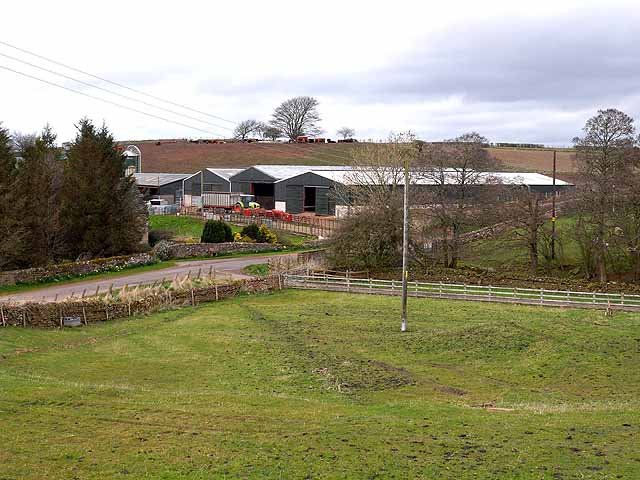



Historical names: Aynstaplith (Manor)
Location: Ainstable, Cumberland
Places / associated places: Ainstable, Cumberland
Location & Extent
GPS Location & Recorded Land Areas
Representative GPS point: 54.8113, -2.74
Identity: confirmed — The record matches the principal secular manor of Ainstable, Cumberland, historically styled Ainstapleth, Ainstaplight and similar forms. The modern Victoria County History account distinguishes it from the separate manor of Ermathwaite or Armathwaite (the Nunnery estate), and documents the same Dacre, Crown, Howard and Ecroyd ownership sequence supplied in the registry record.
Representative point: 54.8113, -2.7400
Basis: documented_manor_site — Ainstable Hall is identified by the Victoria County History project as a possible site of the medieval principal messuage or manor house mentioned in the late-fifteenth-century bounder and survey of Ainstable Manor. The surviving listed building is at OS grid reference NY5253846522.
Point confidence: medium
Boundary status: representative_point_only
Boundary period: Medieval to early modern manor; documentary evidence particularly from the 1488 extent, 1568 survey and 1650 parliamentary survey
Boundary confidence: none
Boundary basis: The evidence establishes that Ainstable Manor comprised the manorial holdings associated with Ainstable settlement and its common fields, with documented connections to Ruckcroft and Dale, the demesne at Low Hall, Dale Mill on Croglin Water, and fishing rights on the River Eden and Croglin Water. The sources do not provide an accessible, sufficiently precise and georeferenced perimeter for the manor itself. The 4,433-acre historic township/parish boundary cannot safely be substituted because it also contained the distinct Ermathwaite or Nunnery manor and other estates.
Sources:
- Victoria County History of Cumbria Project, Ainstable draft parish/township history: https://www.cumbriacountyhistory.org.uk/sites/default/files/Ainstable%20Full%20Draft%20Complete%20July%202024_0.pdf — Distinguishes the Manor of Ainstable from the Manor of Ermathwaite; identifies Ainstaplight as a historical form; discusses the 1488 extent, 1568 survey, 1650 survey, Low Hall demesne, common fields, Ruckcroft, Dale, Dale Mill and manorial fishing rights.
- The National Archives, Manorial Documents Register record F242689: https://discovery.nationalarchives.gov.uk/details/c/F242689 — Registry record for Ainstable Manor, Cumberland, including historical names, authority reference GB/NNAF/M191846 and associated manorial archive references.
- Ainstable Hall, National Heritage List for England entry 1144835: https://historicengland.org.uk/listing/the-list/list-entry/1144835 — Provides the location of Ainstable Hall at OS grid reference NY5253846522, corresponding to approximately 54.8113, -2.7400.
- Cumbria County History Trust, Ainstable: https://www.cumbriacountyhistory.org.uk/township/ainstable — Confirms the historic Ainstable location and the distinction between the Ainstable manor and the Nunnery or Armathwaite manor.
Warnings / uncertainty:
- No defensible manor polygon has been identified from the accessible evidence.
- Do not substitute the historic or modern parish/township boundary: it included the separate Ermathwaite or Nunnery estate and other landholdings.
- Ainstable Hall is a supported possible manor-site representative point, not a certain surviving medieval manor house; the present building is nineteenth-century.
- The archival bounder and survey cited by the VCH project (Cumbria Archives, DHN/C/201/4/B), together with the 1568 and 1650 surveys, would be the appropriate sources for a future parcel-level boundary reconstruction.
About the Manor
Ainstable Manor was the principal secular manor of Ainstable in Cumberland, historically also called Ainstapleth or Ainstaplight. It included the settlement and lands of Ainstable and was distinct from the neighbouring manor of Ermathwaite, also known as the Nunnery or Armathwaite and Ruckcroft estate, which originated in the endowment of Armathwaite Nunnery. Ainstable was an immediate or mesne manor whose medieval tenure was associated at different times with the Neville, Dacre and other superior interests. From the seventeenth century it became an out-manor of the Barony of Gilsland under the Howards of Naworth, later Earls of Carlisle. The manor was held by the Crown after the forfeiture of Leonard Dacre in 1570, was claimed and recovered by branches of the Howard family after the mid-seventeenth-century settlement of forfeited Dacre lands, and was sold by the Earl of Carlisle's estate to Edward Ecroyd in 1890. The Ecroyd family continued as lords of the manor into the twenty-first century. The record concerns Ainstable Manor itself, not the separate Ermathwaite or Nunnery manor.
Ownership / Holder Account
Ainstable is traditionally said by John Denton to have been granted by Henry I to Adam son of Swein, although the surviving evidence supports this only cautiously: the Pipe Rolls record Henry I's grant of four vills to Adam, son of Swein, and one of the unnamed vills is considered likely to have been Ainstable. After Adam's death about 1159, interests descended through his daughters' marriages. In 1212 the manor was recorded as divided into three moieties held by Roger de Montbegon, Simon son of Walter and Alexander de Nevill. The evidence between 1212 and 1276 is incomplete. John Denton stated that William Boyvill of Thursby was lord by about 1239 and held of Richard Neville; William de Boyvill is documented in connection with Ainstable in 1276/7 and held the manor at his death in 1305. The manor then passed through John and Edmund de Boyvill. Edmund de Boyvill sold it to Andrew de Harcla, Earl of Carlisle, whose estates were forfeited after his execution in 1323. Edward II granted the forfeited manor to Richard de Denton, while a quarter was separately held by Margaret de Askeby and Joan de Boyvill asserted a life dower interest in 1324. The Dentons retained the manor until Sir John Denton's enfeoffment in 1446, first to William de Moore and then to Thomas Dacre, Lord of Gilsland, Phillippa Dacre and William Marshall. The transfer was challenged by later Dentons, but the manor thereafter formed part of the Dacre estates. After Ralph Dacre's death and Humphrey Dacre's attainder in the Wars of the Roses, the estate was temporarily assigned to Joan Dacre Fenys and her Fenys family. In 1473 Edward IV restored the Dacre estates to Humphrey Dacre, who was ennobled as Baron Dacre of the North. Ainstable descended with the northern Dacre barony through Thomas, William, Thomas and George Dacre. Following the extinction of the barony and the disputes arising after George Dacre's death in 1569, Ainstable was awarded to Leonard Dacre, whose rebellion and attainder in 1570 caused the manor to be forfeited to the Crown. The Crown retained it until the mid-seventeenth century, although it granted leases to Fergus Graham in 1583 and Robert Graham in 1602. In the post-Civil-War settlement, the Howards of Arundel and Naworth successfully claimed the manor through descent from Dacre co-heirs. Their claim was allowed in 1649, the estate was awarded in 1651, and in 1654 the Howards of Arundel transferred their half share to the Howards of Naworth. The manor thereafter descended with the Barony of Gilsland and the Naworth Howard, later Carlisle, estate. In 1834 it was placed in trust for the Earl of Carlisle, with the 6th Duke of Devonshire and James Loch as trustees; after Loch's death in 1868, the trust was renewed with the then Duke of Devonshire and Edward Wentworth Keppel Coke. Edward Ecroyd purchased the manor from the Earl of Carlisle's estate on 14 May 1890. The manor then descended through Thomas Backhouse Ecroyd, William Edward Bedingfield Ecroyd, Edward Peter Ecroyd and Charles Ecroyd, who was identified as lord of the manor in 2023.
Records & References
Sources and references mentioning this manor/title which are not necessarily conveyances or transfers.
99 records found · showing 1–8.
1930-1944: papers rel to redemption of free rents (5 files)
Held by: Cumbria Archive Centre, Carlisle
1919-1922: ancient rentals, with Gilsland barony
Held by: Cumbria Archive Centre, Carlisle
Further information: NRA 11493
1916-1925: minute book, with Gilsland barony
Held by: Cumbria Archive Centre, Carlisle
Further information: NRA 11493
1916-1916: papers rel to general fine
Held by: Cumbria Archive Centre, Carlisle
1912-1935: rent receipt books (12)
Held by: Cumbria Archive Centre, Carlisle
1906-1937: annual statement of account, with Gilsland barony
Held by: Cumbria Archive Centre, Carlisle
Further information: NRA 11493
1906-1911: papers rel to free rent arrears
Held by: Cumbria Archive Centre, Carlisle
1905-1918: ancient rents, with Gilsland barony (5 vols)
Held by: Cumbria Archive Centre, Carlisle
Further information: NRA 11493
Conveyance & Descent
First holder to present holder: blood proximity & distance travelled
First recorded holder: Adam son of Swein
Present holder:
Recorded title journey: 34 holder entries in this manor's saved Conveyance & Descent history.
No recorded holder currently has a usable saved direct-blood or collateral-blood relationship path from which to calculate proximity percentages.
First recorded holder → present holder
A usable saved blood relationship path between the first recorded holder and the present holder has not yet been recorded, so that first-to-present genealogical distance cannot be calculated.
Adam son of Swein
Transfer: Traditionally said by John Denton to have received Ainstable as a royal grant from Henry I. The modern county history states that Henry I granted Adam son of Swein four vills, of which Ainstable is considered likely to have been one; the identification is not certain.
Previous holder: The Crown
This is the earliest proposed lord of Ainstable. The manor link is plausible but not fully demonstrated because the surviving Pipe Roll evidence does not name all four vills. Adam died about 1159.
Source: Victoria County History of Cumbria Project, Ainstable parish history, draft July 2024, section 'The Manor of Ainstable', pp. 20-21, discussing John Denton and VCH Cumberland I, p. 422. — source link
Roger de Montbegon
Transfer: Recorded in 1212 as holding one of three moieties of Ainstable.
Holding arrangement: Share — one of three moieties
Shared holding: Three recorded moiety holders in 1212
Co-holders: Simon son of Walter, Alexander de Nevill
Previous holder: Descended through the inheritance of Adam son of Swein; the immediate transfer is not documented.
The 1212 record states that Ainstable was divided into three moieties held by Roger de Montbegon, Simon son of Walter and Alexander de Nevill for 112s. 8d. cornage. The exact conveyance into Roger's hands is not known.
Source: Victoria County History of Cumbria Project, Ainstable parish history, draft July 2024, p. 20, citing VCH Cumberland I, p. 422. — source link
Simon son of Walter
Transfer: Recorded in 1212 as holding one of three moieties of Ainstable.
Holding arrangement: Share — one of three moieties
Shared holding: Three recorded moiety holders in 1212
Co-holders: Roger de Montbegon, Alexander de Nevill
Previous holder: The immediate transfer is not documented.
Simon son of Walter was one of the three persons recorded as holding the divided manor in 1212. No later descent for his share is securely established in the consulted sources.
Source: Victoria County History of Cumbria Project, Ainstable parish history, draft July 2024, p. 20, citing VCH Cumberland I, p. 422. — source link
Alexander de Nevill
Transfer: Recorded in 1212 as holding one of three moieties of Ainstable.
Holding arrangement: Share — one of three moieties
Shared holding: Three recorded moiety holders in 1212
Co-holders: Roger de Montbegon, Simon son of Walter
Previous holder: The immediate transfer is not documented.
Alexander de Nevill was one of the three persons recorded as holding the divided manor in 1212. Later Ainstable lordship was associated with the Neville family, but the intervening descent is not fully documented.
Source: Victoria County History of Cumbria Project, Ainstable parish history, draft July 2024, p. 20, citing VCH Cumberland I, p. 422. — source link
William de Boyvill of Thursby, knight
Transfer: John Denton stated that William Boyvill was lord of Ainstable by about 1239 and held it of Richard Neville. The instrument by which Boyvill acquired the manor has not been found.
Previous holder: Earlier divided holders; precise predecessor unknown
The modern county history treats William de Boyvill as the first securely documented later lord after the uncertain period between 1212 and 1276. He exchanged land in Ainstable in 1276/7 and held the manor at his death in 1305.
Source: Victoria County History of Cumbria Project, Ainstable parish history, draft July 2024, pp. 20-21, citing John Denton, A History of Cumberland, and F.M.H. Parker, 'A Calendar of Feet of Fines for Cumberland'. — source link
John de Boyvill
Transfer: Succeeded his father William de Boyvill as heir and held the manor until his death in 1319.
Previous holder: William de Boyvill
The Inquisition Post Mortem evidence identifies John as William de Boyvill's heir. The manor descent is stated in the county history, but the precise date of John's entry is inferred from William's death in 1305.
Source: Victoria County History of Cumbria Project, Ainstable parish history, draft July 2024, p. 21, citing Calendar of Inquisitions Post Mortem, vol. VI, no. 131. — source link
Edmund de Boyvill
Transfer: Succeeded his brother John de Boyvill and sold the manor to Andrew de Harcla.
Previous holder: John de Boyvill
Edmund de Boyvill is identified as John's heir and as the seller of Ainstable to Andrew de Harcla. The date of sale is not stated more precisely than before Harcla's forfeiture in 1323.
Source: Victoria County History of Cumbria Project, Ainstable parish history, draft July 2024, p. 21. — source link
Andrew de Harcla, Earl of Carlisle, created 1322
Transfer: Purchased Ainstable from Edmund de Boyvill. His estate was forfeited after his execution for treason in 1323.
Previous holder: Edmund de Boyvill
Andrew de Harcla, created Earl of Carlisle in 1322, acquired the manor shortly before his execution and forfeiture in 1323.
Source: Victoria County History of Cumbria Project, Ainstable parish history, draft July 2024, p. 21. — source link
Richard de Denton
Transfer: King Edward II granted the forfeited manor of Ainstable to Richard de Denton after Andrew de Harcla's forfeiture.
Previous holder: Andrew de Harcla, Earl of Carlisle, created 1322
The royal grant is recorded in a patent-roll recital. The exact date of grant and the subsequent date of transfer from Richard de Denton are not established in the consulted sources.
Source: Victoria County History of Cumbria Project, Ainstable parish history, draft July 2024, p. 21, citing Calendar of Patent Rolls, 1334-1338, p. 111, reciting events of 1323. — source link
Margaret de Askeby, widow of Robert de Askeby
Transfer: Held one quarter of Ainstable, reportedly purchased from Andrew de Harcla, and held it from John de Neville of Hornby.
Holding arrangement: Share — one quarter
Previous holder: Andrew de Harcla, Earl of Carlisle, created 1322
Margaret de Askeby, widow of Robert de Askeby, is recorded as holding a quarter of the manor separately from the main Denton interest. This was a shared or fractional holding, not sole lordship of the whole manor.
Source: Victoria County History of Cumbria Project, Ainstable parish history, draft July 2024, p. 21, citing Calendar of Patent Rolls, 1334-1338, p. 111, reciting events of 1323. — source link
Joan de Boyvill, widow of William de Boyvill
Transfer: Asserted a right to hold the manor as her dower for life in an agreement involving Sir John de Denton and Sir Richard de Denton.
Holding arrangement: Other — life dower interest
Previous holder: William de Boyvill
Joan's interest was a dower claim rather than unrestricted ownership. The 1324 agreement records her claim to hold the manor for life; the extent to which the claim was accepted is not fully detailed in the consulted summary.
Source: Victoria County History of Cumbria Project, Ainstable parish history, draft July 2024, p. 21, citing F.M.H. Parker, 'A Calendar of Feet of Fines for Cumberland', no. 247. — source link
Sir John Denton, knight
Transfer: The Denton family retained Ainstable until Sir John Denton enfeoffed the manor to William de Moore in 1446.
Previous holder: Richard de Denton and the Denton family
The county history states that the Denton family held the manor until the 1446 enfeoffment. Sir John Denton is the named Denton party to the conveyance.
Source: Victoria County History of Cumbria Project, Ainstable parish history, draft July 2024, pp. 21-22, citing Cumbria Archive Service, DHN C/1/1. — source link
William de Moore, vicar of Ainstable
Transfer: Sir John Denton enfeoffed the manor to William de Moore, vicar of Ainstable, who then enfeoffed Thomas Dacre, Phillippa Dacre and William Marshall.
Previous holder: Sir John Denton, knight
William de Moore appears to have been an intermediary feoffee. His role was connected directly with the 1446 transfer, but the duration of his beneficial or legal holding is not known.
Source: Victoria County History of Cumbria Project, Ainstable parish history, draft July 2024, pp. 21-22, citing Cumbria Archive Service, DHN C/1/1. — source link
Thomas Dacre, Phillippa Dacre and William Marshall, Lord of Gilsland, vicar of Kirkoswald
Transfer: William de Moore enfeoffed Thomas Dacre, Lord of Gilsland, Phillippa his wife, and William Marshall, vicar of Kirkoswald. The conveyance was later challenged by Denton descendants, but the manor is documented as part of the Dacre estates from 1446.
Holding arrangement: Joint
Shared holding: 1446 Dacre-Marshall feoffees
Previous holder: William de Moore, vicar of Ainstable
This is the principal 1446 conveyance into the Dacre estate. The exact beneficial interests of the three named feoffees are not stated in the consulted summary.
Source: Victoria County History of Cumbria Project, Ainstable parish history, draft July 2024, pp. 21-22, citing Cumbria Archive Service, DHN C/1/1. — source link
Ralph Dacre
Transfer: Succeeded to the Dacre interest in Ainstable after Thomas Dacre of 1446; Ralph was the owner of the manor at the beginning of the Wars of the Roses.
Previous holder: Thomas Dacre
Ralph Dacre, younger son of Thomas Dacre, held Ainstable until his death fighting for the Lancastrian side at Towton in 1461.
Source: Victoria County History of Cumbria Project, Ainstable parish history, draft July 2024, p. 22. — source link
Transfer: Edward IV acquired the Dacre estates by attainder after the Lancastrian defeat and assigned them to Joan Dacre Fenys, daughter of the deceased elder Dacre brother. The Fenys family held Ainstable during the period before Humphrey Dacre's restoration.
Shared holding: Fenys family holding of the Dacre inheritance
Previous holder: Ralph Dacre and Humphrey Dacre
This was a temporary royal reassignment of the wider Dacre inheritance, including Ainstable. The estate was restored to Humphrey Dacre in 1473 after Edward IV returned to the throne.
Source: Victoria County History of Cumbria Project, Ainstable parish history, draft July 2024, pp. 22-23, citing TNA, SC/29/144. — source link
Humphrey Dacre, Baron Dacre of the North
Transfer: Edward IV reversed Humphrey Dacre's attainder in 1473, restored the Dacre estates including Ainstable, and ennobled him as Baron Dacre of the North.
Previous holder: Joan Dacre Fenys and the Fenys family
Humphrey Dacre held Ainstable until his death in 1485. The manor was recorded among his possessions at the time of his death.
Source: Victoria County History of Cumbria Project, Ainstable parish history, draft July 2024, pp. 22-23, citing TNA, SC/29/144 and Calendar of Inquisitions Post Mortem, Henry VII, vol. 1, no. 157. — source link
Thomas Dacre, 2nd Baron Dacre of the North
Transfer: Inherited Ainstable with the Dacre estates after the death of Humphrey Dacre.
Previous holder: Humphrey Dacre, Baron Dacre of the North
The manor descended regularly with the northern Barons Dacre after Humphrey Dacre's death.
Source: Victoria County History of Cumbria Project, Ainstable parish history, draft July 2024, p. 22. — source link
William Dacre, 3rd Baron Dacre of the North
Transfer: Inherited Ainstable with the northern Dacre estates after the death of Thomas Dacre.
Previous holder: Thomas Dacre, 2nd Baron Dacre of the North
The manor descended with the Barons Dacre of the North.
Source: Victoria County History of Cumbria Project, Ainstable parish history, draft July 2024, p. 22. — source link
Thomas Dacre, 4th Baron Dacre of the North
Transfer: Inherited Ainstable with the northern Dacre estates after the death of William Dacre.
Previous holder: William Dacre, 3rd Baron Dacre of the North
The manor descended with the Barons Dacre of the North.
Source: Victoria County History of Cumbria Project, Ainstable parish history, draft July 2024, p. 22. — source link
Transfer: Inherited Ainstable as a child after the death of Thomas Dacre.
Previous holder: Thomas Dacre, 4th Baron Dacre of the North
George Dacre was the child and last Baron Dacre of the North. He died in 1569 aged seven, after which the title was treated as extinct and the inheritance became subject to competing claims.
Source: Victoria County History of Cumbria Project, Ainstable parish history, draft July 2024, p. 22, citing Cumbria Archive Service, D/MH/10/6/16. — source link
Leonard Dacre, Dacre claimant
Transfer: A small group of Dacre manors including Ainstable was awarded to Leonard Dacre, an unsuccessful claimant and uncle of George Dacre. After Leonard's defeat and attainder in 1570, the manor was forfeited to the Crown.
Previous holder: George Dacre and the disputed Dacre inheritance
Leonard Dacre's possession arose from the disputed settlement of the Dacre inheritance. His rebellion against the Crown ended in defeat near Castle Carrock on 20 February 1570, followed by attainder and forfeiture.
Source: Victoria County History of Cumbria Project, Ainstable parish history, draft July 2024, pp. 22-23; the instrument by which Leonard acquired the manors is stated not to have been found. — source link
The Crown
Transfer: Ainstable was forfeited to the Crown after Leonard Dacre's attainder and remained in Crown hands until the mid-seventeenth-century settlement of the forfeited Dacre estates.
Previous holder: Leonard Dacre, Dacre claimant
The Crown held the manor directly during this period. Crown leases to Fergus Graham in 1583 and Robert Graham in 1602 did not necessarily transfer the lordship and are recorded separately as leases.
Source: Victoria County History of Cumbria Project, Ainstable parish history, draft July 2024, pp. 23-24, citing TNA, E 178/576 and Cumbria Archive Service, DHN/C/1/2. — source link
Fergus Graham
Transfer: Leased Ainstable from the Crown for 21 years in 1583.
Holding arrangement: Other — leasehold interest
Previous holder: The Crown
Fergus Graham was a Crown lessee, not an unrestricted lord of the manor. The lease term is recorded as 21 years beginning in 1583.
Source: Victoria County History of Cumbria Project, Ainstable parish history, draft July 2024, p. 23, citing TNA, E 178/576. — source link
Robert Graham
Transfer: Leased Ainstable from the Crown for 21 years in 1602.
Holding arrangement: Other — leasehold interest
Previous holder: The Crown
Robert Graham was a Crown lessee under a 21-year lease granted in 1602. The lease was granted while the Crown retained the manor and should not be treated as a transfer of the freehold lordship.
Source: Victoria County History of Cumbria Project, Ainstable parish history, draft July 2024, p. 23, citing Cumbria Archive Service, DHN/C/1/2. — source link
Howards of Arundel and Naworth, Howard branches descended from Dacre co-heirs
Transfer: The Court of Exchequer allowed the Howard claim to Ainstable in 1649. The manors were awarded to the Howards of Arundel and Naworth in 1651, following claims based on descent from Dacre co-heirs.
Holding arrangement: Joint — shared between the Howard branches; exact shares in the 1651 award are not fully stated in the consulted source
Shared holding: Howard branches claiming the Dacre inheritance
Previous holder: The Crown
This was a restoration or recovery claim to lands forfeited from Leonard Dacre rather than a simple private sale. The modern county history dates the court allowance to 1649 and the award to 1651.
Source: Victoria County History of Cumbria Project, Ainstable parish history, draft July 2024, pp. 23-24, citing Cumbria Archive Service, DHN/C/1/8. — source link
Transfer: The Howards of Arundel transferred their half share of Ainstable to the Howards of Naworth in 1654.
Previous holder: Howards of Arundel and Naworth, Howard branches descended from Dacre co-heirs
After the 1654 transfer, the Naworth branch held the whole manor. Ainstable became an out-manor of the Barony of Gilsland. The Naworth Howards were created Earls of Carlisle in 1661.
Source: Victoria County History of Cumbria Project, Ainstable parish history, draft July 2024, p. 23, citing Cumbria Archive Service, DHN/C/1/9. — source link
6th Duke of Devonshire and James Loch, trustees for the 5th Earl of Carlisle
Transfer: Ainstable was placed in trust in 1834 for the 5th Earl of Carlisle, with the 6th Duke of Devonshire and James Loch acting as trustees.
Holding arrangement: Trust
Shared holding: Trust for the Earl of Carlisle
Previous holder: Howard family, Earls of Carlisle
The trustees held the legal or administrative interest in trust. This should not be interpreted as an outright conveyance away from the Carlisle estate.
Source: Victoria County History of Cumbria Project, Ainstable parish history, draft July 2024, p. 24. — source link
Duke of Devonshire and Edward Wentworth Keppel Coke, trustees for the Earl of Carlisle
Transfer: After the death of James Loch, the trust was renewed in 1868 with the then Duke of Devonshire and Edward Wentworth Keppel Coke as trustees. The manor was sold from the Earl of Carlisle's estate to Edward Ecroyd on 14 May 1890.
Holding arrangement: Trust
Shared holding: Renewed trust for the Earl of Carlisle
Previous holder: 6th Duke of Devonshire and James Loch, trustees for the Earl of Carlisle
The trustees administered the manor until the sale in 1890. The exact identity of the Duke of Devonshire in the renewed trust is not specified in the consulted passage.
Source: Victoria County History of Cumbria Project, Ainstable parish history, draft July 2024, p. 24. — source link
Edward Ecroyd, lord of the manor of Ainstable, mill owner
Transfer: Purchased Ainstable Manor from the estate of the Earl of Carlisle on 14 May 1890.
Previous holder: Earl of Carlisle's estate, administered by trustees
Edward Ecroyd had purchased the Low House estate at Armathwaite in 1877 and later bought the separate lordship of Ainstable. He held manorial courts from May 1895 and died on 27 September 1916.
Source: Victoria County History of Cumbria Project, Ainstable parish history, draft July 2024, p. 24; the source cites Ecroyd family papers at Low House, Armathwaite. — source link
Thomas Backhouse Ecroyd, lord of the manor of Ainstable
Transfer: Succeeded Edward Ecroyd after his death; the Ecroyd descent of the manor is stated by the modern county history.
Previous holder: Edward Ecroyd, lord of the manor of Ainstable, mill owner
Thomas Backhouse Ecroyd held Ainstable Manor until his death in 1945.
Source: Victoria County History of Cumbria Project, Ainstable parish history, draft July 2024, p. 24, based on Ecroyd family papers and information from Charles Ecroyd. — source link
Transfer: Succeeded Thomas Backhouse Ecroyd in the regular Ecroyd family descent.
Previous holder: Thomas Backhouse Ecroyd, lord of the manor of Ainstable
William Edward Bedingfield Ecroyd held Ainstable Manor until his death in 1957.
Source: Victoria County History of Cumbria Project, Ainstable parish history, draft July 2024, p. 24, based on Ecroyd family papers and information from Charles Ecroyd. — source link
Transfer: Succeeded William Edward Bedingfield Ecroyd in the regular Ecroyd family descent.
Previous holder: William Edward Bedingfield Ecroyd, lord of the manor of Ainstable
Edward Peter Ecroyd held Ainstable Manor until his death in 2002.
Source: Victoria County History of Cumbria Project, Ainstable parish history, draft July 2024, p. 24, based on Ecroyd family papers and information from Charles Ecroyd. — source link
Charles Ecroyd, lord of the manor of Ainstable
Transfer: Succeeded Edward Peter Ecroyd in the regular Ecroyd family descent. The modern county history identified Charles Ecroyd as lord of the manor in 2023.
Previous holder: Edward Peter Ecroyd, lord of the manor of Ainstable
Charles Ecroyd was the latest securely identified historical holder in the consulted public source, which records him as lord of Ainstable Manor in 2023. No later independent public evidence was located during this research sufficient to extend the dated descent beyond 2023.
Source: Victoria County History of Cumbria Project, Ainstable parish history, draft July 2024, p. 24, based on Ecroyd family papers and information from Charles Ecroyd. — source link
Corrections / Challenges
Sign in to challenge or submit evidence against a recorded assertion.
JSON API
Machine-readable published manor data, including public images, mapped land areas, notes, rights, conveyances, relationships, records, source/document-library entries and public file links.
https://manorialregistry.com/index.php?rest_route=/mhr/v1/manor/ainstable-manorPublic API access is currently disabled. Authorised API clients must use a private X-MHR-API-Key; currently only administrator keys are enabled.
Private source files, pending edits, moderation/admin information, user API keys and non-public import identifiers are not returned.