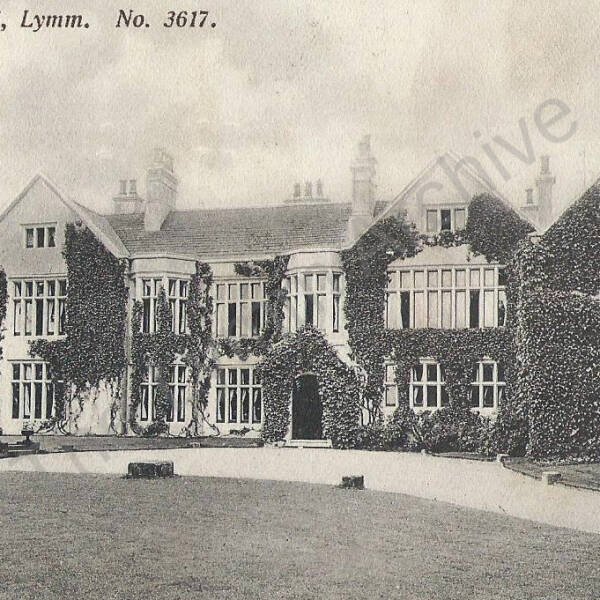



Historical names: Acton (Manor)
Location: Agden (Lymm), Cheshire
Places / associated places: Agden (Lymm), Cheshire
Location & Extent
GPS Location & Recorded Land Areas
Representative GPS point: 53.365, -2.4289
Identity: confirmed — The record is securely identified with the Agden/Acton manor in the former township of Agden, within the historical parish and hundred of Bucklow and now associated with Lymm. The historical forms Aketon and Acton match the medieval and early-modern descriptions of this estate, while the Chetwode papers explicitly connect George Venables of Acton or Agdon with Agdon Hall and lands in Agden. This is distinct from the separate Agden near Malpas in south Cheshire.
Representative point: 53.3650, -2.4289
Basis: documented_estate_centre — Agden Hall/Agden Hall Farm on Agden Lane, Lymm, is the documented historic hall and estate centre associated with the Venables and Chetwode ownership. The point is based on the Agden Hall Farm postcode location and the British Geological Survey reference placing Agden Hall near SJ7156 8569; it is intentionally rounded because the accessible evidence does not provide a surveyed manor-house coordinate.
Point confidence: medium
Boundary status: representative_point_only
Boundary period:
Boundary confidence: none
Boundary basis: The evidence confirms the manor's location and historical ownership, but does not publish a complete mapped perimeter of the manorial lands. The 1691 survey lead (DE/Cd/M25) is catalogued as a survey with other manors, but its publicly accessible catalogue description does not expose a boundary map or parcel list. The 1353-1372 bailiff-account material likewise does not establish a reconstructable territorial perimeter. The estate included two moieties and specifically excluded Ousingcroft Farm and its appurtenances by 1619, making the modern parish or township boundary an unsafe substitute.
Sources:
- The National Archives: Agden Manor record F286792: https://discovery.nationalarchives.gov.uk/details/c/F286792 — Registry record for Agden Manor, including the Agden/Lymm location, historical forms Aketon and Acton, and the manor's descent through the Aketon, Venables and Chetwode families.
- Sir Peter Leycester, Historical Antiquities concerning Cheshire, section on Bucklow Hundred and Agden: https://quod.lib.umich.edu/e/eebo2/a70453.0001.001/1%3A9?rgn=div1&view=fulltext — States that Agden was written Aketon and sometimes Acton, and describes the descent of the Agden lands through Ellen, John Daniel, Thomas Warburton and William Venables.
- Chetwode Papers handlist, Keele University Special Collections: https://www.keele.ac.uk/media/k-web/k-central-services/libraries/specialcollections/pdfs/chetwodepapershandlist.pdf — The 1662/3 settlement identifies George Venables of Acton or Agdon and refers to Agdon Hall and lands in Acton alias Agdon, alongside lands in Agden and neighbouring places.
- British Geological Survey, Geology of the Country around Stockport and Knutsford: https://webapps.bgs.ac.uk/Memoirs/docs/B01555.html — Places Agden Hall approximately at SJ7156 8569 by describing an exposure about 250 yards north of Agden Hall.
- Agden Lane, Agden, Cheshire: location data: https://www.streetlist.co.uk/wa/wa1/wa16-6/agden-lane-agden — Confirms the Lymm Agden Lane locality and provides nearby OS-grid positioning consistent with the Agden Hall/Agden Hall Farm estate centre.
- The National Archives: Agden Hall catalogue entry: https://discovery.nationalarchives.gov.uk/details/r/aa9364c0-4357-44f8-9726-8460be74e4fc — Archive catalogue entry for Agden Hall, supporting the identification of the historic hall associated with the manor.
Warnings / uncertainty:
- Do not substitute the modern parish, township, civil parish or postcode boundary for the historical manorial extent.
- The same name, Agden, also occurs near Malpas in south Cheshire; that is a different place and manor context.
- The representative point is suitable for locating the manor but should not be interpreted as the full extent of its historical lands.
- No defensible historical polygon was found in the accessible evidence.
About the Manor
Agden Manor was a small Cheshire estate in Agden, within the historical parish and hundred of Bucklow, now associated with Lymm. Medieval and early modern deeds used the forms Aketon and Acton, while Agden became the customary name. The estate comprised two distinct moieties. One moiety was held in the reign of Henry III by William son of Simon de Lee, who granted it to his son-in-law William Rag; William Rag subsequently adopted the name William de Aketon from his residence there. That moiety descended through the Aketon family to Ellen, daughter of William de Aketon, and by her marriage to John Daniel of Agden. After Ellen's second marriage to Thomas Warburton, she settled her Agden lands on William Venables and Ellen, daughter of John Daniel. The other moiety was held of the barony of Dunham-Massy and was recorded in the early fifteenth century in the hands of Robert Warburton. Agnes, widow of John Leech and daughter and heir of Robert de Aketon, sold that moiety to Sir John Savage in 1418; the Savage interest was sold by Sir Thomas Savage to George Venables of Agden in 1619. By 1619 George Venables therefore held the whole manor, except Ousingcroft Farm and its appurtenances, which had previously been separated from the Savage moiety. The Venables estate continued through the later seventeenth and early eighteenth centuries, and the heiress of George Venables married Sir Philip Touchet Chetwode in 1727. Sir John N. L. Chetwode was described as sole proprietor of Agden in 1850, while Agden Hall was still associated with the Chetwode ownership in early nineteenth-century reference works. No distinct feudal or peerage title belonging to Agden Manor itself has been established; the barony of Dunham-Massy was an overlordship of one moiety, not an associated title of this manor.
Ownership / Holder Account
The securely documented descent begins with William son of Simon de Lee in the reign of Henry III, who granted one half of Agden, then called Acton, to his son-in-law William Rag. William Rag was later known as William de Aketon. The first moiety descended by entail to William de Aketon's daughter Ellen, who married John Daniel of Agden in the thirty-eighth year of Edward III. Ellen subsequently married Thomas Warburton and, after his death, covenanted in 1401 to settle her Agden lands on William Venables and his wife Ellen, the daughter of John Daniel. Their issue and succeeding posterity held that moiety through 1669. The second moiety was held of the barony of Dunham-Massy. Robert Warburton held it in 3 Henry IV, and Agnes, widow of John Leech and daughter and heir of Robert de Aketon, sold it to Sir John Savage in 6 Henry V, 1418. Sir Thomas Savage sold the reversion to George Venables of Agden in 17 James I, 1619. At that point George Venables held the whole manor apart from Ousingcroft Farm and its appurtenances. A 1662/3 Chetwode settlement identifies George Venables of Acton or Agdon and his son Richard in connection with Agdon Hall and the wider Agden estate. Later antiquarian evidence states that the sole daughter and heiress of George Venables married Sir Philip Touchet Chetwode in 1727. Sir John N. L. Chetwode was sole proprietor in 1850. The publicly accessible evidence located does not establish a complete named succession after the mid-nineteenth century and does not justify extending the historical ownership chain to modern occupants or freehold purchasers.
Records & References
Sources and references mentioning this manor/title which are not necessarily conveyances or transfers.
2 records found · showing 1–2.
1691-1691: survey, with other manors
Held by: Hertfordshire Archives and Local Studies
Further information: NRA 19506 Alexander
1353-1372: bailiff's accounts, with other manors
Held by: The National Archives
Further information: See SC6/783/1-14;SC6
Conveyance & Descent
First holder to present holder: blood proximity & distance travelled
First recorded holder: William son of Simon de Lee
Present holder:
Recorded title journey: 12 holder entries in this manor's saved Conveyance & Descent history.
No recorded holder currently has a usable saved direct-blood or collateral-blood relationship path from which to calculate proximity percentages.
First recorded holder → present holder
A usable saved blood relationship path between the first recorded holder and the present holder has not yet been recorded, so that first-to-present genealogical distance cannot be calculated.
William son of Simon de Lee
Transfer: Earlier possession; no preceding conveyance is stated.
Sir Peter Leycester states that William son of Simon de Lee was possessed of Agden in the reign of Henry III. The grant cited in the source describes the land as one half of his land of Acton, held of Henry de Trafford. This is the earliest securely evidenced holder of the Agden estate located in the research.
Source: Sir Peter Leycester, Historical Antiquities, account of Agden in the Antiquities of Bucklow Hundred, page 202; the cited original was then in the possession of Venables of Agden. — source link
William Rag, later William de Aketon
Transfer: Granted one moiety by William son of Simon de Lee to his son-in-law William Rag, for homage and service and to the heirs of William Rag by Agnes, daughter of William son of Simon de Lee.
Previous holder: William son of Simon de Lee
The grant expressly conveys the moiety of Acton to William Rag and his heirs by Agnes. The source says that William Rag was afterwards called William de Aketon from his residence at Agden. In 1270 Matthew Somervyle, lord of Alpraham, released to William de Aketon and his heirs the right to implead him or his tenants in the court of Alpraham, providing additional contemporary evidence of his connection with the estate.
Source: Sir Peter Leycester, Historical Antiquities, account of Agden, citing the original deed in Lib. C, fol. 265 a-b, and a release dated 1270. — source link
John Daniel of Agden
Transfer: The moiety came to John Daniel, son of William Daniel, in marriage with Ellen, daughter of William de Aketon, by entail.
Holding arrangement: Joint — One moiety of Agden
Shared holding: Daniel-Aketon marriage settlement
Previous holder: Ellen, daughter of William de Aketon, and her Aketon predecessors
Leycester states that this moiety came to John Daniel of Agden, son of William Daniel, in marriage with Ellen, daughter of the last William de Aketon or Agden, by entail in 38 Edward III. The source does not specify whether the legal holding was vested solely in John Daniel or jointly in the married couple, so the entry is treated as a marriage-related joint holding with the underlying estate interest remaining one moiety.
Source: Sir Peter Leycester, Historical Antiquities, account of Agden, citing Lib. C, fol. 266 m. — source link
Ellen, formerly wife of John Daniel and later wife of Thomas Warburton
Transfer: Continuation through Ellen's marriage and widowhood; no separate conveyance into the Warburton holding is stated. After Thomas Warburton's death, Ellen covenanted to settle her Agden lands on William Venables and his wife Ellen.
Shared holding: Ellen's inherited and settled interest
Previous holder: John Daniel of Agden and Ellen, daughter of William de Aketon
The source states that Ellen, after her marriage to John Daniel, married Thomas Warburton as her second husband. Following Thomas Warburton's death, she covenanted to settle all her lands in Agden on William Venables and Ellen, the daughter of John Daniel and Ellen. This entry records Ellen's documented control of the inherited moiety; it does not treat Thomas Warburton as owner of that moiety merely because he was her husband.
Source: Sir Peter Leycester, Historical Antiquities, account of Agden, citing Lib. C, fols. 265 f-k and 266 m. — source link
William Venables and Ellen, his wife
Transfer: Ellen, after the death of Thomas Warburton, covenanted by deed to settle all her lands in Agden on William Venables and his wife Ellen, daughter of John Daniel and Ellen.
Holding arrangement: Joint — One moiety of Agden
Shared holding: Venables of Agden moiety
Previous holder: Ellen, formerly wife of John Daniel and later wife of Thomas Warburton
This is a directly documented settlement of the Daniel-Aketon moiety. Leycester states that the issue of William Venables and Ellen enjoyed the moiety and that their succeeding posterity continued to enjoy it through 1669. The source gives no complete named succession between this couple and the later George Venables, so the intervening descent is left unfilled rather than reconstructed from pedigree alone.
Source: Sir Peter Leycester, Historical Antiquities, account of Agden, deed dated 2 Henry IV, 1401, citing Lib. C, fol. 265 f-k. — source link
Robert Warburton
Transfer: Recorded as holding the other moiety of Acton in the Dunham-Massy rental; the preceding transfer is not stated.
Shared holding: Dunham-Massy superior tenure
An old rental of Dunham-Massy dated 3 Henry IV records Robert Warburton as holding one half of the town of Acton, formerly John Acton's, by the service of one third of a knight's fee and a penny rent at the feast of St John the Baptist. This was a tenurial holding under Dunham-Massy and should not be confused with ownership of the superior barony.
Source: Sir Peter Leycester, Historical Antiquities, account of Agden, citing the old Dunham-Massy rental, Lib. B, page 209. — source link
Sir John Savage of Clifton, Knight
Transfer: Purchased the second moiety from Agnes, widow of John Leech of Altrincham and daughter and heir of Robert de Aketon and Jone his wife.
Shared holding: Savage moiety
Co-holder: Sir Thomas Savage, Baronet
Previous holder: Agnes, widow of John Leech of Altrincham
Agnes, identified as the widow of John Leech and daughter and heir of Robert de Aketon and Jone, sold this moiety to Sir John Savage of Clifton in 1418. This is a distinct transaction from the Daniel-Venables descent of the other moiety.
Source: Sir Peter Leycester, Historical Antiquities, account of Agden, sale dated 6 Henry V, 1418, citing Lib. C, fol. 265 g. — source link
Sir Thomas Savage, Baronet, member of the Savage family of Clifton and Rock Savage
Transfer: Inherited or otherwise held the Savage reversion in the second moiety and sold it to George Venables of Agden the elder in 1619.
Shared holding: Savage moiety
Co-holder: Sir John Savage of Clifton
Previous holder: Sir John Savage of Clifton and his Savage successors
Leycester states that Sir Thomas Savage, baronet, being seised of the reversion of the moiety purchased by Sir John Savage, sold it to George Venables of Agden the elder in 17 James I, 1619. The source does not provide the intervening Savage succession in detail.
Source: Sir Peter Leycester, Historical Antiquities, account of Agden, sale in 17 James I, 1619, citing Lib. C, fol. 265 g. — source link
George Venables of Agden the elder, Esquire
Transfer: Purchased the second moiety from Sir Thomas Savage. The other moiety was already held by the Venables family through the settlement of 1401.
Shared holding: Consolidated Venables manor
Previous holder: Sir Thomas Savage, Baronet, member of the Savage family of Clifton and Rock Savage
The 1619 purchase consolidated the two historical moieties in the Venables family. Leycester expressly states that George Venables of Agden then had the whole manor of Agden, except Ousingcroft Farm with its appurtenances. A Chetwode Papers settlement dated 27 February 1662/3 identifies George Venables of Acton or Agdon, his wife Margaret, and their son Richard in relation to Agdon Hall and lands in Agdon and neighbouring townships, corroborating the continuity of the Venables estate.
Source: Sir Peter Leycester, Historical Antiquities, account of Agden; Chetwode Papers handlist, item 70, settlement dated 27 February 1662/3. — source link
Richard Venables of Agden, Gentleman
Transfer: Named with his parents in a marriage settlement concerning Agdon Hall and associated lands; the instrument does not by itself establish a completed transfer of the manor to Richard.
Holding arrangement: Other — Interest or prospective interest in Agdon Hall and associated estate lands; exact legal share not stated
Shared holding: Venables family settlement
Previous holder: George Venables of Agden the elder, Esquire
The Chetwode Papers record a settlement upon the marriage of Richard Venables and Mary, daughter of Robert Venables, covering Agdon Hall in Acton alias Agdon and lands in Agdon and several neighbouring places. Because the catalogue description does not state the precise legal effect of the settlement or identify Richard as sole lord of the manor, this entry records the documented family-estate interest without treating it as an unqualified conveyance of the whole manor.
Source: Keele University, Chetwode Papers handlist, item 70, settlement upon the marriage of Richard Venables and Mary, 27 February 1662/3. — source link
Elizabeth Venables and Sir Philip Touchet Chetwode, Baronet
Transfer: The sole daughter and heiress of George Venables of Agden married Sir Philip Touchet Chetwode, bringing the Agden property into the Chetwode family by heiress succession.
Holding arrangement: Joint — Agden estate and manor, as described by the antiquarian source; exact exclusion of Ousingcroft Farm not restated
Shared holding: Venables-Chetwode succession
Previous holder: George Venables of Agden and his Venables successors
The 1850 account of Agden states that the heiress of George Venables married Sir Philip Touchet Chetwode in 1727 and identifies him as ancestor of the then proprietor. A genealogical account names the heiress as Elizabeth Venables, sole daughter and heiress of George Venables. The exact conveyancing instrument and the precise legal division of the estate are not identified in the accessible sources, so the event is recorded as an heiress succession rather than as a presumed purchase.
Source: Samuel Bagshaw, History, Gazetteer and Directory of the County Palatine of Chester, 1850, entry for Agden; corroborated by the Venable family account derived from Cheshire pedigrees. — source link
Sir John N. L. Chetwode, Baronet
Transfer: Later Chetwode succession; the precise intervening transfer from Sir Philip Touchet Chetwode's descendants is not stated.
Shared holding: Chetwode ownership
Previous holder: Chetwode family successors
Samuel Bagshaw's 1850 account states that Sir John N. L. Chetwode was sole proprietor of Agden. The same account describes the manor's descent from the Aketons through Daniel and Venables, the purchase of the second moiety by the Venables family, and the 1727 marriage of the Venables heiress to Sir Philip Touchet Chetwode. The exact date and instrument by which Sir John N. L. Chetwode became proprietor are not identified.
Source: Samuel Bagshaw, History, Gazetteer and Directory of the County Palatine of Chester, 1850, entry for Agden. — source link
Corrections / Challenges
Sign in to challenge or submit evidence against a recorded assertion.
JSON API
Machine-readable published manor data, including public images, mapped land areas, notes, rights, conveyances, relationships, records, source/document-library entries and public file links.
https://manorialregistry.com/index.php?rest_route=/mhr/v1/manor/agden-manorPublic API access is currently disabled. Authorised API clients must use a private X-MHR-API-Key; currently only administrator keys are enabled.
Private source files, pending edits, moderation/admin information, user API keys and non-public import identifiers are not returned.