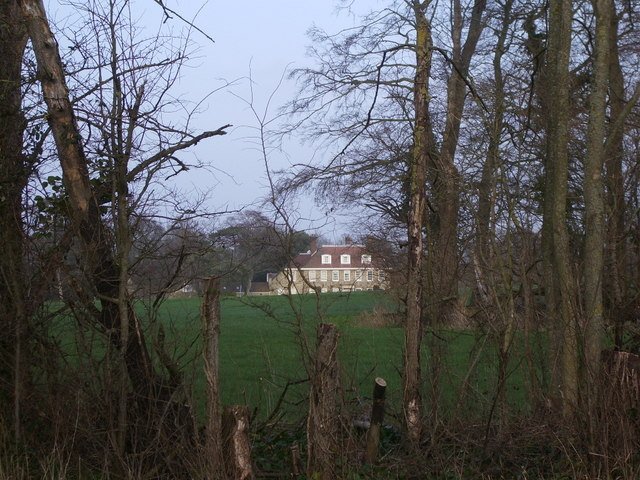



Historical names: Affetune (Manor)
Location: Freshwater, Isle of Wight
Places / associated places: Freshwater, Isle of Wight
Listed in Domesday Book: Yes
Location & Extent
GPS Location & Recorded Land Areas
Representative GPS point: 50.6801, -1.5081
Identity: confirmed — The registry name, historical form Affetune, Freshwater location, and Domesday-manor description match Afton Manor in Freshwater, Isle of Wight. Historic England identifies Afton Manor, Newport Road, as one of the island's original Domesday manors. This is distinct from West Afton and the other Freshwater manors.
Representative point: 50.6801, -1.5081
Basis: documented_manor_house — Historic England lists the surviving Afton Manor house at National Grid Reference SZ 34851 86836, corresponding to approximately 50.6801, -1.5081. The listed house dates mainly from about 1725, so this point represents the documented later manor house rather than a securely identified medieval manor-house site.
Point confidence: high
Boundary status: representative_point_only
Boundary period:
Boundary confidence: none
Boundary basis: No authoritative source located supplies a defensible polygon for the historical manorial land of Afton. Historic England's archaeological record confirms the manor and associated settlement/mill but states that the medieval manor-house site and deserted settlement have not been securely identified. References to the Afton estate, parkland, kitchen garden, mill and settlement establish locality and associated land use but do not define the full medieval or later manorial perimeter. The Freshwater parish boundary, modern estate grounds, conservation-area boundary or settlement extent would therefore be inappropriate substitutes.
Sources:
- Afton Manor, Freshwater - Historic England List Entry 1219355: https://historicengland.org.uk/listing/the-list/list-entry/1219355 — Identifies Afton Manor at Newport Road, Freshwater; gives National Grid Reference SZ 34851 86836; describes the c.1725 house and states that it is one of the original Domesday manors.
- Afton: deserted medieval village and tide-mill record - Heritage Gateway / Historic England Research Records: https://www.heritagegateway.org.uk/Gateway/Results_Single.aspx?resourceID=19191&uid=4a04190c-9f1d-4ddb-8a5c-55a4061fca46 — Records Afton as Affetune in the eleventh century and Affintone in the thirteenth century; describes the Domesday estate, medieval water-mill, windmill and settlement; states that no evidence of the old manor house or trace of the deserted medieval village was found.
- The Walled Kitchen Gardens of the Isle of Wight - Isle of Wight Gardens Trust: https://iowgardenstrust.co.uk/uploads/1/4/3/7/143782901/walled_20kitchen_20gardens_20of_20the_20iw-compressed.pdf — Places Afton House at SZ 3476 8693 and documents the surviving c.18 walled kitchen garden, the 1769 Andrews map, later parkland and estate landscape. It does not define the full historical manor boundary.
- Manor Records & References: Afton Manor, 1544 valuation, 22M72/F1: https://discovery.nationalarchives.gov.uk/details/r/N14248194 — Archive lead for a 1544 Afton Manor valuation held by Hampshire Archives; potentially relevant to reconstructing the manor's extent, but the publicly available record description does not provide a mapped boundary.
- The National Archives MDR record F240015: https://discovery.nationalarchives.gov.uk/details/c/F240015 — Registry record supplied for Afton Manor in Freshwater, Isle of Wight, under authority/reference GB/NNAF/M167734.
Warnings / uncertainty:
- The representative point is the surviving listed Afton Manor house, not a proven medieval manor-house location.
- The medieval manor and later manorial estate may have occupied a substantially wider and changing area than the house and surviving grounds.
- No boundary polygon is returned because available evidence does not establish the historical manorial perimeter without speculative substitution of parish, settlement or modern estate boundaries.
About the Manor
Afton, recorded as Affetune in the eleventh century and Affintone in the thirteenth century, is the historic manor and settlement at Afton in the parish of Freshwater, Isle of Wight. It was one of the Domesday estates of the island. The manor house now known as Afton Manor is a substantial house of approximately 1725, with earlier eighteenth-century fabric and later alterations, and is listed Grade II*. The associated medieval settlement was partly deserted and later resettled; the medieval manor site itself has not been securely identified archaeologically. Afton also had a water-mill from the fourteenth to sixteenth centuries and a windmill recorded in 1342. The name Afton Manor should not be conflated with the distinct manor of West Afton or with Priors Freshwater and Kings Freshwater.
Ownership / Holder Account
Before the Norman Conquest, Afton was held by Earl Tostig. In 1086 it was held by King William. The manor's medieval overlordship subsequently followed Carisbrooke Castle, while named tenants and local holders are recorded intermittently. A surviving feet-of-fines abstract records that on 24 June 1302 John de Droxford granted Richard de Afton the manor for Richard's life, after which it was to revert to John and his heirs; this was a life interest rather than an unrestricted fee-simple conveyance. The later descent is incompletely documented in the readily available public sources. A local-authority conservation appraisal states that Afton was purchased by David Urry in 1591 and remained with the Urry family until the death of David Urry of Afton in 1779, when he died without sons and left his property to his daughters, who were married to Sir John Oglander and Charles Holmes. The exact division of the manor between the daughters and their husbands is not established by the source consulted. By 1878 Benjamin Cotton was explicitly listed as lord of the manor of Afton in a contemporary directory. A 1889 directory instead identifies George Fletcher Jones as lord of the distinct manor of West Afton; that entry has not been merged into the present Afton Manor descent. No securely sourced later conveyance of the Afton Manor lordship was identified.
Records & References
Sources and references mentioning this manor/title which are not necessarily conveyances or transfers.
1 record found · showing 1–1.
1544: valuation
Held by: Hampshire Archives
Conveyance & Descent
First holder to present holder: blood proximity & distance travelled
First recorded holder: Earl Tostig
Present holder:
Recorded title journey: 6 holder entries in this manor's saved Conveyance & Descent history.
No recorded holder currently has a usable saved direct-blood or collateral-blood relationship path from which to calculate proximity percentages.
First recorded holder → present holder
A usable saved blood relationship path between the first recorded holder and the present holder has not yet been recorded, so that first-to-present genealogical distance cannot be calculated.
Transfer: Held before the Norman Conquest; the precise commencement of Tostig's tenure is unknown.
Afton, called Affetune, was held by Earl Tostig before the Conquest. This is an overlordship or manorial holding statement derived from the Domesday and archaeological record; no more precise conveyance is supplied.
Source: Historic England Research Record for Afton, Hob Uid 459467, citing M. Beresford, Lost Villages of England (1954), p. 355, and Victoria County History, Hampshire, volume 5 (1912), p. 242. — source link
King William I, King of England, 1066-1087, Duke of Normandy, King of England (1066-1087)
Transfer: Afton passed into royal possession after the Norman Conquest; the exact legal mechanism and date are not stated in the source.
Shared holding: Royal demesne
Previous holder: Earl Tostig, Earl of Northumbria
The Afton estate was held by the King in 1086. This records the Crown's lordship in the Domesday period and should not be read as proof of a specific dated conveyance from Earl Tostig.
Source: Historic England Research Record for Afton, Hob Uid 459467, citing Victoria County History, Hampshire, volume 5 (1912), p. 242; corroborated by the Domesday entry for Afton. — source link
Richard de Afton, Holder of a life interest in the manor of Afton, Freshwater
Transfer: John de Droxford granted Richard de Afton the manor for Richard's life by a plea of covenant enrolled at York one week from Holy Trinity, 30 Edward I, dated 24 June 1302. The manor was to revert to John de Droxford and his heirs after Richard's death.
Holding arrangement: Other — Life interest
Previous holder: John de Droxford
This is a documented life grant, not an unrestricted hereditary conveyance. The fine states that John de Droxford had the right to the manor and granted it to Richard de Afton for Richard's lifetime, subject to reversion to John and his heirs. The place-name identification is Afton in Freshwater.
Source: Feet of Fines, CP 25/1/205/15, number 25, abstracted from the record dated one week from Holy Trinity, 30 Edward I, 24 June 1302; persons and place identified as Richard de Afton, John de Droxford and Afton in Freshwater. — source link
David Urry, Gentleman of Afton, Freshwater
Transfer: Purchased Afton in 1591. The seller and the precise conveyance instrument are not identified in the public source consulted.
Shared holding: Urry family of Afton
Previous holder: Unknown
A local-authority conservation appraisal states that the manor came into the Urry family in 1591 when purchased by David Urry. The source does not identify the vendor or provide a complete intermediate descent before the later David Urry of Afton who died in 1779.
Source: Isle of Wight Council, Church Place Conservation Area Character Appraisal, section 16.5, stating that Afton Manor came into the Urry family in 1591 when purchased by David Urry. — source link
The daughters of David Urry of Afton, including the marital interests of Sir John Oglander and Charles Holmes, Gentleman and landholder of Afton, Freshwater
Transfer: On the death of David Urry of Afton in 1779, he died without sons and left everything to his daughters, who were married to Sir John Oglander and Charles Holmes. The exact allocation of Afton Manor between the daughters and their husbands is not stated.
Holding arrangement: Share — Unspecified shares or interests among the daughters; exact division unknown
Shared holding: Urry daughters and their marital households
Previous holder: David Urry of Afton
The source explicitly links the 1779 succession to David Urry's daughters and identifies their husbands, but it does not specify whether the manor was held jointly, in separate shares, or through settlements. The entry therefore preserves the uncertainty and does not treat either husband as an independently proven sole owner.
Source: Isle of Wight Council, Church Place Conservation Area Character Appraisal, section 16.5. — source link
Benjamin Cotton, Esquire, lord of the manor of Afton, principal landowner at Freshwater
Transfer: By 1878 he was recorded as lord of the manor of Afton. The preceding conveyance and date of acquisition are not established by the source consulted.
Previous holder: Unknown
A contemporary directory for Freshwater lists Benjamin Cotton as lord of the manor of Afton and as a principal landowner. This provides direct evidence of his manorial status by 1878, but the source does not document how or when the manor passed to him. Other contemporary material identifies him as resident at Afton House, also called Afton Manor, and as a prominent local landowner.
Source: Post Office Directory and Gazetteer entry for Freshwater, 1878, listing the manors and their lords: Afton, Benjamin Cotton, Esq.; corroborated by the directory's description of Benjamin Cotton at Afton House. — source link
Corrections / Challenges
Sign in to challenge or submit evidence against a recorded assertion.
JSON API
Machine-readable published manor data, including public images, mapped land areas, notes, rights, conveyances, relationships, records, source/document-library entries and public file links.
https://manorialregistry.com/index.php?rest_route=/mhr/v1/manor/afton-manorPublic API access is currently disabled. Authorised API clients must use a private X-MHR-API-Key; currently only administrator keys are enabled.
Private source files, pending edits, moderation/admin information, user API keys and non-public import identifiers are not returned.