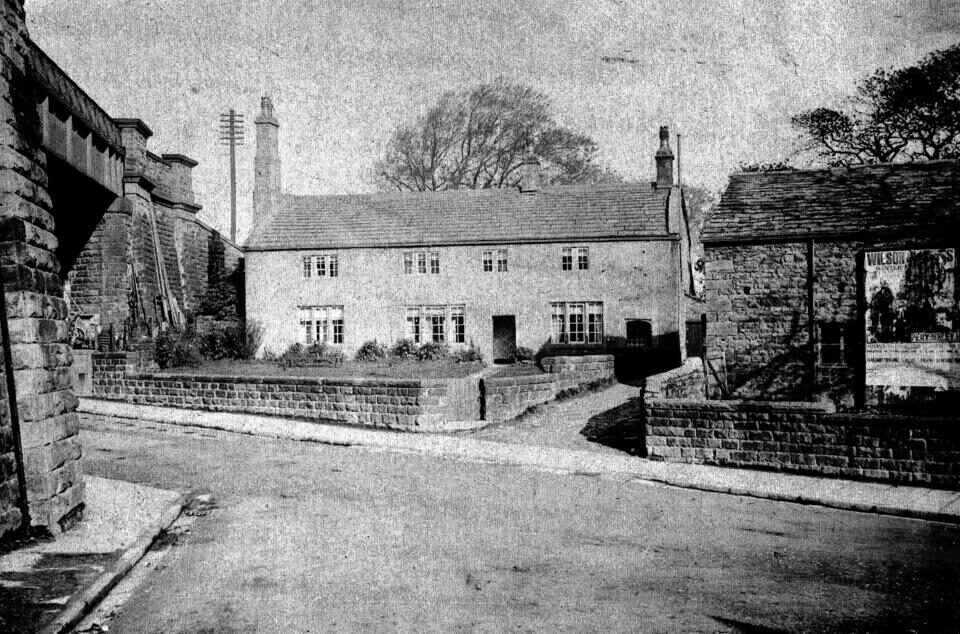



Associated title (legacy text): Lordship of the Manor of Addingham
Historical names: Adyngham
Location: Addingham, Yorkshire
Places / associated places: Addingham, Yorkshire
Listed in Domesday Book: Yes
Location & Extent
GPS Location & Recorded Land Areas
Representative GPS point: 53.94259, -1.8707
Identity: confirmed — The registry record's Addingham, Yorkshire location and historical description match the documented medieval manorial centre at Addingham beside St Peter's Church in the historic West Riding of Yorkshire. Historic England identifies the surviving earthworks, fishponds, demesne orchards and open-field remains as the medieval manorial centre of Addingham, while documentary history confirms the two medieval parts of the vill were held under the single mesne lordship of the Vavasours.
Representative point: 53.94259, -1.87070
Basis: documented_manor_site — Approximate centre of the Historic England scheduled monument at NGR SE 08581 49617, which includes the medieval manorial centre, manor-house earthworks and fishponds immediately beside St Peter's Church. The manor house itself was later lost to River Wharfe erosion, so the point represents the documented manorial site rather than a surviving building.
Point confidence: high
Boundary status: representative_point_only
Boundary period: Medieval manor, with documentary extent evidenced mainly from the twelfth to seventeenth centuries
Boundary confidence: none
Boundary basis: The sources establish that Addingham was a medieval vill divided between two estates in 1066 and 1086, later held under a single Vavasour mesne lordship. A medieval account records three carucates of land in Addingham, and a 1611/1612 manor survey recorded demesne lands including the Hall Orchards. However, the publicly available evidence located does not provide a complete mapped perimeter of the manorial land. The Historic England scheduled-monument boundary covers the archaeological manorial centre and associated remains, not the full territorial extent of Addingham Manor, and must not be substituted for the manor boundary.
Sources:
- Anglo-Saxon cemetery and medieval manorial centre including fishponds and part of the open field system adjacent to St Peter's Church, Addingham: https://historicengland.org.uk/listing/the-list/list-entry/1021088 — Historic England identifies the medieval manorial centre beside St Peter's Church, including manor-house earthworks, fishponds, demesne orchards and part of the open-field system. It states that the manorial homestead stood in or near Church Orchard and records the scheduled monument's NGR as SE 08581 49617.
- Parish of Addingham, History of Craven: https://www.skiptoncastle.co.uk/craven-history/24_Parish-of-Addingham.pdf — The historical account describes Addingham as a berewick dependent on Bolton and part of the original fee of Skipton, held as a mesne manor by the Vavasours. It records three carucates of land in Addingham and cites the 1611 survey and later documentary evidence.
- Church History - St Peters Addingham: https://stpetersaddingham.org.uk/information/church-history/ — The local church history identifies the Vavasours as lords of the manor, records the manor's association with the site beside St Peter's Church, and notes the medieval manorial park and manor-house tradition.
- Creating a Christian Timeline for Addingham: https://stpetersaddingham.org.uk/wp-content/uploads/2022/08/st-peters-church-info-boards-west.pdf — The site information board states that a medieval manor house stood near the church on Wharfe Brow, that the building was lost through river erosion, and that two manorial fishponds and the Hall Orchard/Lord's Orchard survive or are documented.
- TNA/MDR record F246452: Addingham Manor: https://discovery.nationalarchives.gov.uk/details/c/F246452 — The National Archives manor record identifies Addingham Manor in Addingham, Yorkshire under authority/reference GB/NNAF/M170154, matching the registry identity used in this research.
Warnings / uncertainty:
- No reliable complete polygon for the historical manorial land has been located in the publicly accessible sources consulted.
- The Historic England scheduled-monument boundary is an archaeological-site boundary, not the full medieval or later legal boundary of Addingham Manor.
- The representative point is suitable for identifying the documented manorial site but should not be interpreted as the precise location of the lost manor house or as the centre of the entire manor.
About the Manor
Addingham was a medieval manor and manorial settlement in the parish and township of Addingham in the historic West Riding of Yorkshire, now West Yorkshire. Before the Norman Conquest it formed part of an Anglo-Saxon estate centred on Otley and associated with the archbishops of York. By 1066 the vill had been divided between two estates, which in 1086 were attributed to Bolton in Cravescire and Burghshire. The two parts later came under a single mesne lordship held by the Vavasour family. Archaeological remains beside St Peter's Church include the medieval manorial centre, manor-house earthworks, fishponds, demesne orchards, and part of the open-field system. The original manorial homestead near the church was reported in 1669 to have fallen into the River Wharfe through erosion. Addingham should not be confused with other places named Addingham, including Addingham in Cumberland.
Ownership / Holder Account
The earliest post-Conquest ownership is not fully documented in the sources consulted. A local antiquarian history considers that Addingham was probably granted by Robert de Romille to Mauger de Vavasour near the end of the eleventh century, but this is presented as a probability rather than a demonstrated conveyance. By 1166 both parts of the vill were held under a single mesne lord, William Vavasour. The Vavasours retained manorial rights through the medieval period; evidence includes Vavasour control or patronage connected with the manor and advowson in the thirteenth, fourteenth, and fifteenth centuries. An inquisition post mortem records Henry Vavasour as holding the manor of Adyngham and the advowson in 1452–1453. Authoritative modern heritage evidence states that the Vavasours sold the lordship of the manor in 1714. The identity of the purchaser and the precise legal conveyance have not been established from the public sources consulted. Later sources associate the manor with George Myers junior in 1728, George Smith in the mid-eighteenth century, and Richard Smith from the later eighteenth century and in the nineteenth century, but the sequence and legal transfers between these holders remain incompletely documented and partly conflicting. A nineteenth-century account expressly says that Richard Smith held the manor but that the writer did not know by what title.
Manorial Rights & Privileges
Historic manorial rights / privileges (2)
Manorial rights
Provisional
The Vavasour family retained manorial rights at Addingham through the medieval period, and later holders were described as lords of the manor.
Advowson of Addingham church
Provisional
The advowson is recorded with Addingham manorial interests, including in the records concerning William le Vavasour and Henry Vavasour.
Records & References
Sources and references mentioning this manor/title which are not necessarily conveyances or transfers.
3 records found · showing 1–3.
1663-1779: call books, Skipton Honour
Held by: Yorkshire Archaeological and Historical Society
Further information: NRA 12905
1628-1635: court roll
Held by: West Yorkshire Archive Service, Bradford
Further information: See Annual Return 2015
1611: survey (tenants, quality and acreage of land and yearly value)
Held by: West Yorkshire Archive Service, Leeds
Conveyance & Descent
First holder to present holder: blood proximity & distance travelled
First recorded holder: William Vavasour
Present holder:
Recorded title journey: 7 holder entries in this manor's saved Conveyance & Descent history.
No recorded holder currently has a usable saved direct-blood or collateral-blood relationship path from which to calculate proximity percentages.
First recorded holder → present holder
A usable saved blood relationship path between the first recorded holder and the present holder has not yet been recorded, so that first-to-present genealogical distance cannot be calculated.
Transfer: The two parts of Addingham were recorded as belonging to a single mesne lord, William Vavasour. The source establishes his manorial lordship or mesne lordship but does not identify the conveyance by which he acquired it.
Holding arrangement: Other — Both parts of the vill are described as belonging to a single mesne lord; the exact proprietary structure is not stated.
Shared holding: Vavasour family
Co-holders: William le Vavasour, Lady Vavasour, Henry Vavasour, Vavasour family
Previous holder: The preceding holder or holders are not securely identified. The vill had previously been divided between estates attributed in 1086 to Bolton in Cravescire and Burghshire.
This is the earliest securely dated direct link found between a named person and the whole divided vill of Addingham. Mesne lordship should not be equated automatically with absolute ownership or with the superior lordship of the Honour of Skipton.
Source: Historic England, scheduled monument entry 1021088, section on the medieval manorial centre at Addingham. — source link
William le Vavasour, Vavasour landholder, holder of the advowson of Addingham and one messuage there.
Transfer: An escheat recorded that William le Vavasour held the advowson of Addingham church and one messuage there. This is direct evidence of a Vavasour manorial interest at Addingham but does not by itself prove that he held every element of the manor in that year.
Holding arrangement: Other — Specific interest consisting of the advowson and one messuage; the extent of the manor held is not stated in the source.
Shared holding: Vavasour family
Co-holders: William Vavasour, Lady Vavasour, Henry Vavasour, Vavasour family
Previous holder: Not stated.
This entry is included as corroborating evidence for continuing Vavasour control at Addingham. It should not be read as a complete conveyance of the manor because the cited record specifies an advowson and a messuage rather than the entire lordship.
Source: History and Antiquities of the Deanery of Craven, parish account of Addingham, citing an escheat in the sixth year of Edward II. — source link
Lady Vavasour, Lady of the manor of Addingham.
Transfer: The Nomina Villarum is cited as recording Domina le Vavasour as lady of the manor. No transfer or personal identity is supplied.
Holding arrangement: Other — The source describes her as lady of the manor but does not define whether this was sole, joint, dower, or another form of holding.
Shared holding: Vavasour family
Co-holders: William Vavasour, William le Vavasour, Henry Vavasour, Vavasour family
Previous holder: Not stated.
This is a dated record of a female Vavasour manorial holder or representative. Because the source gives no personal name and does not explain the legal basis of her holding, the entry is retained with an approximate regnal-year date and an unspecified holding type.
Source: History and Antiquities of the Deanery of Craven, parish account of Addingham, citing the Nomina Villarum for the ninth year of Edward II. — source link
Henry Vavasour, Esquire, holder of Addingham manor and advowson, holder of Fryston manor.
Transfer: An inquisition post mortem is cited as recording Henry Vavasour as holding the manor of Adyngham and the advowson of the church, together with Fryston manor. The source does not state how he acquired Addingham.
Shared holding: Vavasour family
Co-holders: William Vavasour, William le Vavasour, Lady Vavasour, Vavasour family
Previous holder: Not stated.
This is the strongest medieval direct evidence for a named individual holding the manor of Addingham. It records the manor and advowson together, but it does not establish whether Henry held them in fee simple, by entail, jointly, or under another feudal arrangement.
Source: History and Antiquities of the Deanery of Craven, parish account of Addingham, citing the inquisition post mortem of the thirty-first year of Henry VI. — source link
Vavasour family, Lords or mesne lords of Addingham, the family was associated with Hazlewood and other Yorkshire estates.
Transfer: The Vavasours continued to hold manorial rights at Addingham until the lordship of the manor was sold in 1714. The purchaser and the deed or other instrument of sale are not identified in the public sources consulted.
Holding arrangement: Other — Family holding; the sources do not define the precise shares or legal form over the whole period.
Shared holding: Vavasour family
Co-holders: William Vavasour, William le Vavasour, Lady Vavasour, Henry Vavasour
Previous holder: Earlier Vavasour holders, including William Vavasour in 1166 and Henry Vavasour in 1452-1453.
This entry represents the securely documented continuity of Vavasour manorial rights, not an inferred uninterrupted descent by named heirs. The 1714 endpoint is supported by Historic England, which states that the Vavasours sold the lordship. Another local account says that their interest was not relinquished until 1715; this is treated as a possible completion or calendar discrepancy rather than a separate proven conveyance.
Source: Historic England, scheduled monument entry 1021088; corroborated by the Addingham parish history and local church history. — source link
George Myers junior, Described in the cited source as Lord of the Manor of Addingham, associated with Farfield Hall.
Transfer: A published account of Yorkshire Quaker meeting houses states that George Myers junior, described there as Lord of the Manor of Addingham, rebuilt Farfield Hall in 1728. The source does not state how or from whom he acquired the manorial title.
Shared holding: Myers family
Previous holder: The purchaser from the Vavasours in or around 1714 is unknown.
This is a direct but secondary statement identifying George Myers junior as Lord of the Manor in 1728. It conflicts or may be difficult to reconcile with other sources that place George Smith or Richard Smith in the post-1714 lordship. The entry should therefore be retained as a documented historical claim rather than treated as a fully established conveyance.
Source: H. Godwin Arnold, Early Meeting Houses, Friends Historical Association journal, discussion of Farfield Meeting House near Addingham. — source link
Richard Smith, Lord of the Manor of Addingham, resident at the Manor House with his wife Mary.
Transfer: Richard Smith and his wife Mary are documented as living at Addingham Manor House in the late eighteenth century, with Richard explicitly described as Lord of the Manor. By 1871 and 1875 directory and local-history evidence still identifies Richard Smith as Lord of the Manor. The conveyance by which he acquired the title is not established.
Shared holding: Smith family
Previous holder: The immediate predecessor is uncertain. Sources variously mention George Myers junior in 1728 and George Smith around 1748.
Richard Smith is the latest securely evidenced historical holder found in the public sources consulted. A nineteenth-century history says that the manor belonged to Richard Smith but that the writer did not know by what title. This uncertainty is preserved; no descent from George Smith or George Myers is asserted.
Source: Addingham Civic Society, The Manor House; Addingham local history account; 1871-era directory entry reproduced by Forebears. — source link
Lordship / Title Associations
Associations are recorded by period so changes in estate composition do not imply that every manor remained attached to the same title indefinitely.
Corrections / Challenges
Sign in to challenge or submit evidence against a recorded assertion.
JSON API
Machine-readable published manor data, including public images, mapped land areas, notes, rights, conveyances, relationships, records, source/document-library entries and public file links.
https://manorialregistry.com/index.php?rest_route=/mhr/v1/manor/addingham-manorPublic API access is currently disabled. Authorised API clients must use a private X-MHR-API-Key; currently only administrator keys are enabled.
Private source files, pending edits, moderation/admin information, user API keys and non-public import identifiers are not returned.