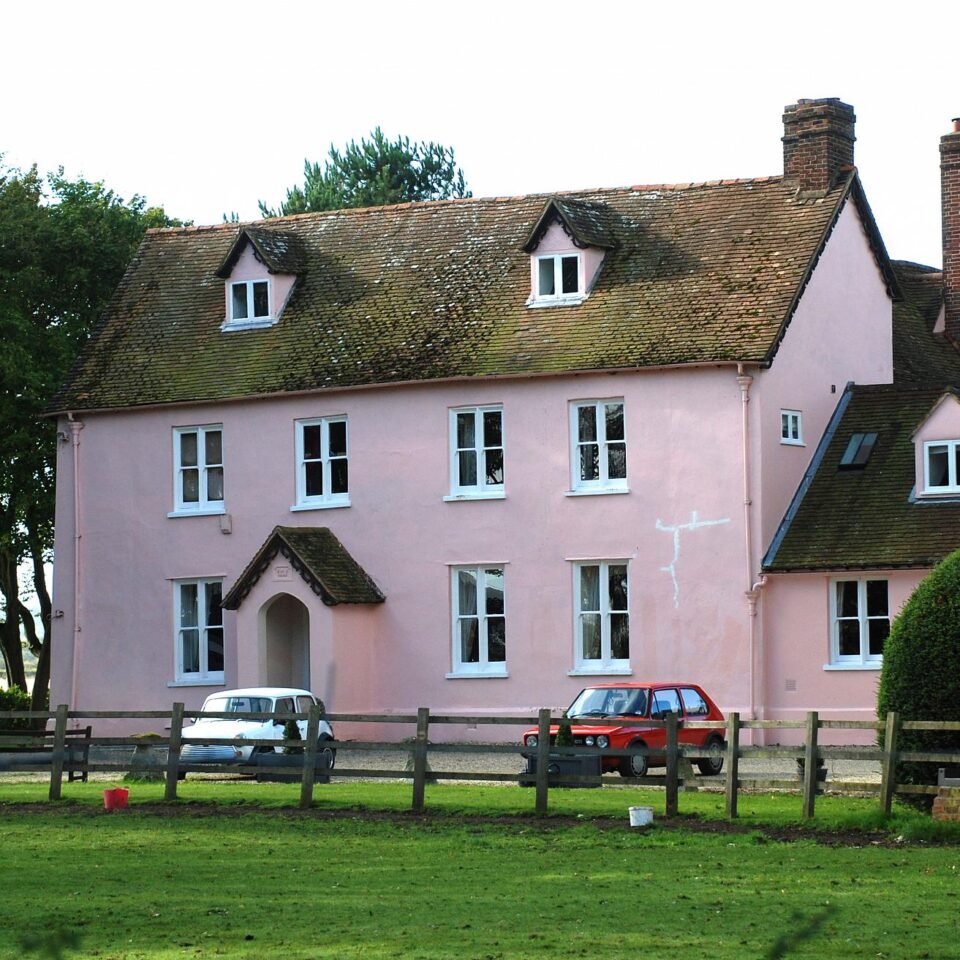



Historical names: Bessells Ackhampstead (Manor) | Lewknor (Manor)
Location: Lewknor, Oxfordshire
Places / associated places: Lewknor, Oxfordshire
Location & Extent
GPS Location & Recorded Land Areas
Representative GPS point: 51.5905, -0.8392
Identity: confirmed — The registry record, Lewknor location, and historical names Bessells Ackhampstead and Lewknor correspond to the medieval and fifteenth-century manor of Ackhampstead, an outlying holding of Lewknor in the Chiltern uplands. The identification is distinct from the principal Lewknor manor, although a later Lewknor manor has been suggested, uncertainly, as a possible continuation of the Bessels Ackhampstead estate.
Representative point: 51.5905, -0.8392
Basis: supported_manorial_centre — Best available proxy for the historical Ackhampstead manorial centre, located in the documented Moor Farm/Ackhampstead settlement area near the former chapel and possible nearby manor house. No securely identified manor-house site survives; the point is therefore approximate and low precision.
Point confidence: low
Boundary status: representative_point_only
Boundary period: Medieval to early nineteenth century
Boundary confidence: none
Boundary basis: Sources document Ackhampstead as a detached township or chapelry of Lewknor and give an approximate historical township perimeter of about 456 acres, bounded approximately by SU 8045 9096, SU 8185 9000, SU 8171 8863 and SU 8020 9013. However, the available evidence does not demonstrate that this township perimeter was identical to the territorial extent of Ackhampstead Manor. Medieval references establish holdings in Ackhampstead, including two carucates held by Thomas de Leigh, but no defensible manor-specific boundary polygon has been located. The approximate township outline has therefore not been injected as a manor boundary.
Sources:
- The National Archives, Manorial Documents Register: Ackhampstead Manor, F285831: https://discovery.nationalarchives.gov.uk/details/c/F285831 — Registry identification of Ackhampstead Manor, including the Lewknor location and historical manor-name context.
- Buckinghamshire Heritage Portal: Ackhamstead (Moor Farm), Monument MBC3647: https://heritageportal.buckinghamshire.gov.uk/Monument/MBC3647 — Documents the former Ackhampstead township/chapelry, gives the site point SU 80560 90720, records the approximate township perimeter, and identifies the Moor Farm/Ackhampstead settlement area.
- Gordon H. Wyatt, A History of Ackhampstead: https://www.friethhistory.org/A%20History%20of%20Frieth/090_Ackhampstead.html — Provides the historical geography of Ackhampstead, describes its approximate strip-shaped extent of about 456 acres, places Moor Farm and Finnamore Farm within it, and records the manor, chapel, Leigh and Bessels descent, and the uncertainty over the later Lewknor identification.
- Lewknor Manors, Aston Rowant and Chilterns Spring Line Villages: https://astonrowant.wordpress.com/lewknor-manors/ — Summarizes the medieval descent of Ackhampstead Manor through the Leigh and Bessels families and explicitly distinguishes the uncertain possible relationship with the later Lewknor Manor.
- Moorend Common Geological and Archaeological Report: https://www.chilterns.org.uk/wp-content/uploads/2025/02/Moorend-Common-Geological-and-Archaeological-Report.pdf — Locates the possible medieval Ackhampstead settlement around SU 807 907 and documents the later administrative transfer and surviving historic landscape context.
Warnings / uncertainty:
- The representative point is not a securely identified manor house or manor-house site; it is a low-confidence proxy for the Ackhampstead manorial centre.
- The documented approximate perimeter belongs to the historical township or chapelry of Ackhampstead, not demonstrably to the manor itself.
- No manor-specific historical map, rental, survey, or parcel boundary sufficient to construct a defensible polygon was located.
- The possible identification of the later Lewknor Manor with the former Bessels Ackhampstead estate remains explicitly uncertain and has not been used to extend the boundary.
About the Manor
Ackhampstead was a detached upland township or chapelry of Lewknor, historically in Oxfordshire and later transferred administratively to Buckinghamshire. It lay in Lewknor Uphill in the Chiltern Hills and is now largely within Great Marlow and Lane End areas. The estate was associated with the hamlet of Ackhampstead, also called The Moor, and was distinct from, although connected by tenure and geography with, the principal manor of Lewknor. Ackhampstead was explicitly described as a manor by the fifteenth century. Medieval evidence shows land there held under the Abbot of Abingdon by members of the Leigh family, followed by Katherine de Leigh and the Bessels family. In 1412 Sir Peter Bessels dealt with the manor's reversion while Thomas Chaucer held it for life. After Sir Peter's death in 1425 the subsequent descent is not securely established. A late-fifteenth- and sixteenth-century manor called Lewknor may possibly have represented the former Bessels Ackhampstead estate, but the identification is expressly uncertain and should not be treated as a proven continuation.
Ownership / Holder Account
The wider Lewknor estate, including Ackhampstead or its appurtenances, was traditionally said to have been granted to Abingdon Abbey by Edward the Confessor and Queen Eadgitha in 1052, with a further grant or confirmation recorded in 1278. This represents an overlordship or superior estate, not necessarily direct occupation of Ackhampstead Manor. By the late twelfth and thirteenth centuries, the land specifically associated with Ackhampstead was in the hands of the Leigh family. Feet of fines and related evidence record William de Leigh dealing with land there in 1199 and 1222, and a 1247 settlement recognised Thomas de Leigh's right to a carucate in Achamsted. Thomas was holding the estate in 1279. The descent then passed to John de Leigh, who died about 1348, and subsequently to Katherine de Leigh, wife of Sir Thomas Bessels, and her son Sir Peter Bessels. Ackhampstead Manor was expressly recorded in 1412, when Sir Peter Bessels placed it in trust; at that time Thomas Chaucer possessed a life lease and Sir Peter could dispose only of the reversion. Sir Peter died in 1425 after directing that his lands be sold for alms. The later history of Ackhampstead Manor has not been securely traced. The possible identification with a later Lewknor Manor is a historical hypothesis rather than a documented conveyance.
Records & References
Sources and references mentioning this manor/title which are not necessarily conveyances or transfers.
3 records found · showing 1–3.
1822-1847: court book (Ewelme Honour, Horspath Division)
Held by: Oxfordshire History Centre
Further information: NRA 41922 Ewelme Honour
1790-1847: minutes (Ewelme Honour, Horspath Division)
Held by: Oxfordshire History Centre
Further information: NRA 41922 Ewelme Honour
1790-1847: stewards papers (Ewelme Honour, Horspath Division)
Held by: Oxfordshire History Centre
Further information: NRA 41922 Ewelme Honour
Conveyance & Descent
First holder to present holder: blood proximity & distance travelled
First recorded holder: Abingdon Abbey
Present holder:
Recorded title journey: 7 holder entries in this manor's saved Conveyance & Descent history.
No recorded holder currently has a usable saved direct-blood or collateral-blood relationship path from which to calculate proximity percentages.
First recorded holder → present holder
A usable saved blood relationship path between the first recorded holder and the present holder has not yet been recorded, so that first-to-present genealogical distance cannot be calculated.
Transfer: Traditional grant by Edward the Confessor and Queen Eadgitha, with a later grant or confirmation in 1278; the abbey was the superior lord of the wider Lewknor estate and its appurtenances.
Holding arrangement: Other
Shared holding: overlordship or superior estate
The evidence concerns the wider Lewknor estate, described as including Ackhampstead or its members, rather than a separately documented freehold of Ackhampstead Manor. Abingdon Abbey should therefore be treated as overlord or superior holder, not as proof that the abbey directly occupied the later Bessels Ackhampstead manor.
Source: Gordon Wyatt, A History of Ackhampstead, citing the Abingdon Abbey tradition and the Hundred Rolls; corroborated by the Buckinghamshire Heritage Portal monument record for Ackhampstead. — source link
Transfer: Documented transactions and recognitions concerning land in Akamsted, Hakamsted and Achamsted, including a 1199 Curia Regis or related fine, a 1222 fine involving half a hide, and a 1247 recognition of Thomas de Leigh's right.
Shared holding: Leigh family estate
Co-holders: Thomas de Leigh, John de Leigh
William de Leigh is the earliest securely named lay holder connected directly with land in Ackhampstead. The surviving evidence records specific parcels and rights rather than using the full expression Ackhampstead Manor throughout, so the entry should be understood as the documented predecessor estate from which the later manor developed.
Source: Feet of fines and related records as transcribed by Gordon Wyatt in A History of Ackhampstead; the account identifies the 1199, 1222, 1231 and 1247 transactions and connects the Leigh family with Ackhampstead. — source link
Thomas de Leigh
Transfer: In 1247 William de Leigh recognised that a carucate in Achamsted belonged to Thomas de Leigh and the heirs of his body, with a remainder to Stephen de Leigh if Thomas had no heirs. Thomas is recorded as holding the estate in 1279.
Shared holding: Leigh family estate
Co-holders: William de Leigh, John de Leigh
Previous holder: William de Leigh, member of the Leigh family of Besselsleigh
The 1247 fine or recognition provides a direct link between Thomas de Leigh and a substantial Ackhampstead holding. The 1279 evidence confirms that Thomas held it. The precise legal form of the 1279 tenure is not stated in the available source.
Source: Feet of fine dated 3 June 1247, as transcribed by Gordon Wyatt in A History of Ackhampstead; 1279 holding evidence discussed in the Lewknor Manors account. — source link
John de Leigh
Transfer: Descent from Thomas de Leigh to his heir John de Leigh; John is reported to have died about 1348.
Shared holding: Leigh family estate
Co-holders: William de Leigh, Thomas de Leigh
Previous holder: Thomas de Leigh
The available local and county-history material identifies John de Leigh as Thomas de Leigh's heir and places the Ackhampstead holding in the Leigh descent until John's death about 1348. No separate dated deed of transfer has been located, so the conveyance is recorded as an evidenced hereditary descent rather than as a specific instrument.
Source: Lewknor Manors historical account, drawing on the descent of the Leigh family and the medieval estate evidence; corroborated by the Ackhampstead historical account. — source link
Katherine de Leigh, wife of Sir Thomas Bessels
Transfer: Descent after the death of John de Leigh; Katherine de Leigh is recorded in possession of Ackhampstead and died in 1406.
Shared holding: Leigh-Bessels family estate
Previous holder: John de Leigh
Katherine de Leigh is explicitly associated with possession of Ackhampstead after the death of John de Leigh. She was the wife of Sir Thomas Bessels, who died about 1378, and the mother of Sir Peter Bessels. The source does not establish whether her possession was in fee, for life, or under another precise legal form.
Source: Lewknor Manors historical account, stating that Ackhampstead was found in the possession of Katherine de Leigh, wife of Sir Thomas Bessels, and her son Sir Peter Bessels. — source link
Transfer: In 1412 Sir Peter Bessels placed Ackhampstead Manor in trust and dealt with the reversion because Thomas Chaucer held the manor for life.
Holding arrangement: Trust — Reversionary interest; exact share not stated
Shared holding: Bessels family estate
Previous holder: Katherine de Leigh, wife of Sir Thomas Bessels
This is the first source located that expressly uses the designation Ackhampstead Manor. Sir Peter Bessels did not have unfettered present possession because Thomas Chaucer held the manor for life. Sir Peter's interest was therefore a reversionary and trust-related interest rather than immediate occupational possession. He died in 1425, after directing that his lands be sold for alms. The later execution of that direction and the identity of any purchaser are not securely documented.
Source: Lewknor Manors historical account, which dates the first explicit record of Ackhampstead Manor to 1412 and describes Sir Peter Bessels's trust arrangement and 1425 death; see also the underlying medieval estate discussion in the Ackhampstead history. — source link
Transfer: Life lease or life tenure already in existence when Sir Peter Bessels dealt with the reversion in 1412; the reversion of the manor held by Thomas Chaucer for life was still recorded in 1429.
Holding arrangement: Other — Life interest or life lease
Shared holding: life tenant under Bessels reversion
Previous holder: Katherine de Leigh and Sir Peter Bessels
Thomas Chaucer was the life tenant of Ackhampstead Manor, not necessarily its fee-simple owner. The 1412 trust transaction expressly states that Sir Peter Bessels could dispose only of the reversion, and a 1429 record describes the reversion of the manor as held by Thomas Chaucer for life. This entry must therefore be distinguished from ownership of the reversion by Sir Peter Bessels and his trustees.
Source: Ackhampstead historical account citing a 1429 record of the reversion of the manor of Akhampstede held by Thomas Chaucer for life; the Lewknor Manors account gives the corresponding 1412 trust context. — source link
Corrections / Challenges
Sign in to challenge or submit evidence against a recorded assertion.
JSON API
Machine-readable published manor data, including public images, mapped land areas, notes, rights, conveyances, relationships, records, source/document-library entries and public file links.
https://manorialregistry.com/index.php?rest_route=/mhr/v1/manor/ackhampstead-manorPublic API access is currently disabled. Authorised API clients must use a private X-MHR-API-Key; currently only administrator keys are enabled.
Private source files, pending edits, moderation/admin information, user API keys and non-public import identifiers are not returned.