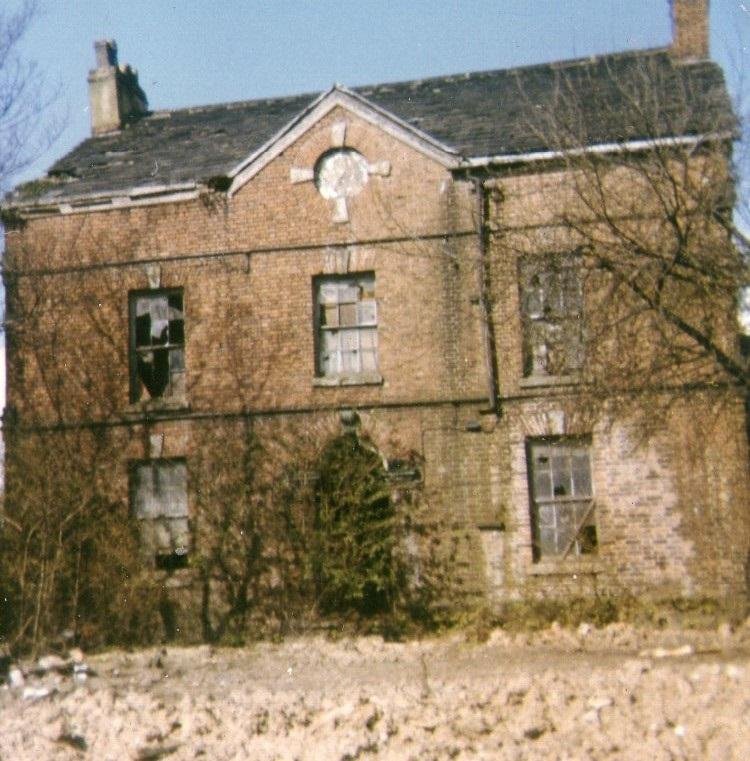



Historical names: Edburgham; Adburgham; Abraham
Location: Abram, Lancashire
Places / associated places: Abram, Lancashire
Location & Extent
GPS Location & Recorded Land Areas
Representative GPS point: 53.50638, -2.5938
Identity: confirmed — The record is the historic manor of Abram, also called Edburgham, Adburgham and Abraham, in the township of Abram, ancient parish of Wigan, Lancashire. The documented descent of the Abram/Abraham family and later owners, together with the association with Abram Hall, matches the supplied TNA/MDR record and the relevant VCH account.
Representative point: 53.50638, -2.59380
Basis: documented_manor_house — Abram Hall was the principal moated manor house associated with the manor. The historic hall site is identified at the present Abram Hall Farm/Riding Centre on Warrington Road, Abram; the coordinate represents that documented hall-site location rather than the modern settlement centre.
Point confidence: medium
Boundary status: representative_point_only
Boundary period:
Boundary confidence: none
Boundary basis: The sources establish Abram Hall as the manorial residence and describe the manor's historical tenure, but do not provide a recoverable map or explicit perimeter for the manorial land. The manor should not be equated automatically with the township of Abram: the township contained other substantial holdings and manorial or estate interests, including Bickershaw, Bamfurlong and the former Cockersand Abbey holding at Occleshaw. No historically grounded polygon could therefore be returned without inventing boundaries.
Sources:
- The National Archives: Abram Manor, TNA/MDR record F245222: https://discovery.nationalarchives.gov.uk/details/c/F245222 — Registry record identifying Abram Manor and its authority/reference GB/NNAF/M229579.
- Victoria County History of Lancashire, Volume 1, Abram entry: https://en.wikisource.org/wiki/Page%3AVCH_Lancaster_1.djvu/474 — Describes Abram/Edburgham, the 1212 holding by Richard de Adburgham, the grant associated with Henry II and Warin son of Godfrey, the later Abram family, and the manor of Abram.
- Wigan Heritage Service, Medieval Farming in Abram: https://www.wigan.gov.uk/Docs/PDF/Resident/Leisure/Museums-and-archives/archives/Past-Forward/pf56.pdf — Explains that Abram Hall was a substantial late-medieval manor house on the edge of the township and distinguishes the township's scattered holdings and other manorial interests.
- Wigan Council Archives map index: https://www.wigan.gov.uk/Docs/PDF/Resident/Leisure/Museums-and-archives/archives/Maps-index.pdf — Lists Abram Hall and Moat on the 1905 1:2500 Ordnance Survey sheet for Abram, confirming a mapped historical hall-and-moat site.
- Abram Hall Riding Centre location: https://mapcarta.com/W1041896785 — Provides the coordinate for the present Abram Hall Riding Centre at the documented Abram Hall Farm location on Warrington Road.
- Historical Society of Lancashire and Cheshire, Crooks of Crook: https://www.hslc.org.uk/wp-content/uploads/2017/06/78-5-Crooks.pdf — States that Thomas Crook of Abram Hall inherited the Abram estate and that the moat and bridge remained at Abram Hall, supporting identification of the hall as the manorial site.
Warnings / uncertainty:
- The returned point is for the documented Abram Hall manorial site, not for the centre of the modern Abram settlement.
- No reliable source located in this research supplies the perimeter of the historical Abram Manor estate; no polygon is returned.
- The historical manor was not necessarily coterminous with the township of Abram, and other holdings within the township must not be absorbed into the manor boundary without parcel-level evidence.
About the Manor
Abram, historically recorded as Edburgham, Adburgham and later Abraham, was a manor in the township of Abram in the ancient parish of Wigan, Lancashire. Before and after the Norman Conquest it appears to have been a member of the manor and fee of Newton. Henry II is stated to have granted Abram to Warine son of Godfrey, whose descendants adopted the local name of Abram or Abraham and held the estate into the seventeenth century. The manor was associated with Abram Hall, a moated residence. The estate should be distinguished from separate holdings within the township, including the former Cockersand Abbey estate at Occleshaw, which was later incorporated into the wider Abram estate. By the early twentieth century the lordship was still described as belonging to the Whitley family, although no manorial rights were then claimed.
Ownership / Holder Account
The earliest securely described lordship is the grant by Henry II to Warine son of Godfrey, probably during the reign of Henry II between 1154 and 1189. The VCH evidence then records Richard de Abram in possession in 1212, holding four oxgangs in Edburgham by the gift of King Henry in fee farm at an annual rent of four shillings. The medieval Abram or Adburgham family is documented at intervals, but the complete pedigree cannot be reconstructed securely. A Gilbert Abram died about 1470 leaving two daughters, Constance and Isabel, whose later holdings are thought by the VCH to represent part of the family inheritance; the manor itself, however, continued in the male line. Thomas Abram is reported as lord about 1500 and John Abram in 1528. In 1567 Thomas Abraham was deforciant of the manor of Abram, and a 1598 settlement secured the estate to Mary Abram for life, with reversion to Henry Lance and Susan, her eldest daughter, and in default to Philip Langton and Mary, the younger daughter. After Thomas Abram's death in 1606 the manor was assigned to Susan Lance. Abraham Lance, Susan's son and heir, was involved in the estate during the mid-seventeenth century, but the family suffered sequestration and financial decline during the Civil War period. In 1649 William Gerard of Garswood was appointed receiver for Abraham Lance and his wife, with a remainder to Gerard; the estate was conveyed to Richard Hilton on 16 September 1667. Richard Hilton died about the beginning of 1690. The estate then descended through his daughter Abigail and her husband Thomas Crook. Their son Richard Crook died without issue in November 1727, after which the inheritance passed to five sisters as co-heirs. The manor appears to have been allotted to the second sister, Anne, wife of John Darbyshire, and then to their only child Abigail, wife of Thomas Clayton. In 1734 all the heirs joined in a lease of the manor. Thomas Clayton sold the manor in 1785 to Peter Arrowsmith, who sold it in 1828 to John Whitley. The Whitley family continued as owners: Henry Jackson Whitley succeeded John Whitley, and John Henry Arthur Whitley was reported as owner in the early twentieth century. The evidence is strong for the principal descent from the late sixteenth century onward, but intermediate medieval successions and the precise legal mechanism of some seventeenth-century transitions remain undocumented in the consulted public sources.
Conveyance & Descent
First holder to present holder: blood proximity & distance travelled
First recorded holder: Warine son of Godfrey
Present holder:
Recorded title journey: 17 holder entries in this manor's saved Conveyance & Descent history.
No recorded holder currently has a usable saved direct-blood or collateral-blood relationship path from which to calculate proximity percentages.
First recorded holder → present holder
A usable saved blood relationship path between the first recorded holder and the present holder has not yet been recorded, so that first-to-present genealogical distance cannot be calculated.
Warine son of Godfrey
Transfer: Grant by Henry II, probably during the reign of Henry II
Previous holder: The Crown, under Henry II
Victoria County History states that before and after the Conquest Abram was a member of the manor and fee of Newton and that Henry II gave it to Warine son of Godfrey. The precise date of the grant is not known; the local historical account places it during the reign of Henry II, 1154-1189, and a modern local archival publication places it approximately around 1170. This was a grant in fee farm rather than evidence that Abram was an independent barony or distinct titled lordship.
Source: W. Farrer and J. Brownbill, A History of the County of Lancaster, Volume IV, 1911, Abram section, p. 111; see also Lancashire Inquests and Extents, volume I, p. 77, cited by the VCH. — source link
Richard de Abram
Transfer: Descent from Warine son of Godfrey; intervening successions are not securely documented
Previous holder: Warine son of Godfrey and his descendants
At the great inquest of service in 1212, Richard de Abram is recorded as holding land in Edburgham, now Abram, by the gift of King Henry in fee farm and rendering four shillings yearly. The VCH states that the descendants of Warine adopted the local name and held the estate to the seventeenth century, but it does not provide a continuous succession between Warine and Richard or between Richard and later medieval members of the family.
Source: W. Farrer and J. Brownbill, A History of the County of Lancaster, Volume IV, 1911, Abram section, pp. 111-112; Lancashire Inquests and Extents, volume I, p. 77, cited by the VCH. — source link
John Abram, Lord of Abram
Transfer: Unspecified succession within the Abram family
Previous holder: Earlier Abram family holder; exact predecessor unknown
The VCH states that John Abram appears as lord of Abram in 1528. The source does not identify the legal transfer to him or provide a complete pedigree linking him securely to each earlier medieval holder.
Source: W. Farrer and J. Brownbill, A History of the County of Lancaster, Volume IV, 1911, Abram section, p. 112, note 18a, citing Duchy Pleadings, volume I, pp. 162-163. — source link
Thomas Abram, Lord of Abram
Transfer: Unspecified succession within the Abram family
Previous holder: Earlier Abram family holder; exact predecessor unknown
Thomas Abram is reported by the VCH to have been lord about 1500. In 1540 he was defendant in a claim concerning messuages and other property in Abram, and in 1567 Thomas Abraham was deforciant of the manor of Abram and lands in the township. The source does not provide a continuous legal descent from John Abram in 1528 and therefore no direct transfer between those two holders is asserted.
Source: W. Farrer and J. Brownbill, A History of the County of Lancaster, Volume IV, 1911, Abram section, p. 112 and note 18a, citing Duchy Pleadings, Ducatus Lancastriae, and Palatinate of Lancaster Feet of Fines, bundle 29, membrane 68. — source link
Mary wife of Thomas Abram
Transfer: Settlement by indenture, with life interest
Holding arrangement: Other — Life interest
Previous holder: Thomas Abram, Lord of Abram
An indenture dated 10 December 1598 secured the estate to Mary, wife of Thomas Abram, for her life. The settlement provided that on her death the estate would revert to Henry Lance and Susan his wife, the elder daughter of Thomas Abram and her heirs, and in default to Philip Langton and Mary his wife, the younger daughter of Thomas Abram. This entry records a life interest and future uses rather than an outright conveyance to Mary in fee simple.
Source: W. Farrer and J. Brownbill, A History of the County of Lancaster, Volume IV, 1911, Abram section, p. 112, note 16, citing J. Leyland, Abram, p. 11. — source link
Transfer: Remainder under the 10 December 1598 settlement; the manor was assigned to Susan after Thomas Abram's death
Holding arrangement: Joint — Susan Lance's inheritance, with Henry Lance as her husband; exact legal form of the husband's interest is not specified
Previous holder: Thomas Abram and Mary Abram
The VCH states that Thomas Abram died in 1606 leaving two daughters and that the manor was assigned to the elder daughter Susan, who had married Henry Lance. This accords with the 1598 settlement, which gave the reversion to Henry Lance and Susan and their heirs. Henry Lance was buried in 1629-30; the estate remained associated with the Lance family during this period.
Source: W. Farrer and J. Brownbill, A History of the County of Lancaster, Volume IV, 1911, Abram section, pp. 112-113 and note 16, citing the 1598 indenture and Wigan parish registers. — source link
Abraham Lance, Gentleman of Abram, later associated with the Royalist cause
Transfer: Succession as son and heir of Henry and Susan Lance; exact legal transfer not stated
Previous holder: Henry Lance and Susan Lance
Abraham Lance is described as the son and heir of Henry and Susan Lance. The VCH records him as of Abram in the recusant rolls in 1626 and states that in 1652 he petitioned for removal of the sequestration of his mother's lands. A related note records that Abraham Lance died about 1659 without male issue. The source does not establish a precise date at which he obtained the manor or whether sequestration interrupted his possession.
Source: W. Farrer and J. Brownbill, A History of the County of Lancaster, Volume IV, 1911, Abram section, pp. 112-113 and notes 17-18, citing recusant rolls, the Calendar of the Committee for Compounding, and Royalist Composition Papers. — source link
William Gerard of Garswood, Son and heir apparent of Sir William Gerard of Brynn, later of Garswood
Transfer: Appointment as receiver, with remainder to his use; not an ordinary outright conveyance
Holding arrangement: Trust — Receiver for Abraham Lance and his wife and their heirs, with remainder to the use of William Gerard
Previous holder: Abraham Lance, Gentleman of Abram, later associated with the Royalist cause
In 1649 Abraham Lance appointed William Gerard of Garswood, son and heir apparent of Sir William Gerard of Brynn, receiver for the benefit of Abraham Lance, his wife and their heirs, with remainder to the use of William Gerard. This is recorded as a receivership and remainder arrangement, not simply as proof that Gerard immediately became the beneficial owner. A bond signed by Gerard in 1667 states that Abraham Lance had died about seven years earlier without male issue.
Source: W. Farrer and J. Brownbill, A History of the County of Lancaster, Volume IV, 1911, Abram section, p. 113, note 20, citing Palatinate of Lancaster Feet of Fines, bundles 146, membranes 111 and 180, membrane 17, and J. Leyland, Abram, p. 12. — source link
Richard Hilton of Westleigh, Yeoman of Westleigh
Transfer: Conveyance for £1,505
Previous holder: The Lance and Gerard interests under the earlier settlement and receivership arrangement
On 16 September 1667 the estate was conveyed to Richard Hilton of Westleigh, yeoman, for £1,505. The conveyance included two pews in Wigan Church and various fee-farm rents. The VCH identifies this as the conveyance following the Lance and Gerard period. Richard Hilton died at the beginning of 1690.
Source: W. Farrer and J. Brownbill, A History of the County of Lancaster, Volume IV, 1911, Abram section, p. 113, note 21, citing J. Leyland, Abram, pp. 12-13. — source link
Thomas Crook and Abigail Hilton, Gentleman of Hoole, Lancashire
Transfer: Descent through Abigail Hilton, daughter of Richard Hilton, and her husband Thomas Crook
Holding arrangement: Joint — Not stated
Previous holder: Richard Hilton
The VCH states that the estate descended with Richard Hilton's daughter Abigail to her children by her husband Thomas Crook. This identifies the Crook family as the next possessors after Richard Hilton, but the exact date and legal form of the transfer are not given. Thomas Crook is described as a substantial landowner and benefactor; the manor was subsequently associated with their son Richard Crook.
Source: W. Farrer and J. Brownbill, A History of the County of Lancaster, Volume IV, 1911, Abram section, pp. 113-114 and note 22, citing J. Leyland, Abram, pp. 14 and 118-121. — source link
Richard Crook
Transfer: Succession within the Crook family; died without issue
Previous holder: Thomas Crook and Abigail Hilton, Gentleman of Hoole, Lancashire
Richard Crook is identified as the new owner after the Hilton-Crook succession. He died without issue in November 1727, and the inheritance, including Abram and lands elsewhere in Lancashire, passed to his five sisters as co-heirs. The source does not provide an exact date or instrument for his succession from his parents.
Source: W. Farrer and J. Brownbill, A History of the County of Lancaster, Volume IV, 1911, Abram section, p. 113. — source link
The five Crook sisters as co-heirs, including Anne Crook Darbyshire
Transfer: Descent as co-heirs after the death of Richard Crook
Holding arrangement: Share — Five co-heir shares; the precise share in the manor is not stated
Shared holding: Five Crook sisters and their husbands
Previous holder: Richard Crook
After Richard Crook's death in November 1727, the inheritance passed to his five sisters as co-heirs. The VCH states that the manor of Abram seems to have been the portion of the second sister, Anne, who married John Darbyshire of Warrington, and that their only child Abigail married Thomas Clayton. Because the wording is 'seems to have been,' the exact allocation is retained as uncertain. In 1734 all five heir groups joined in a lease of the manor.
Source: W. Farrer and J. Brownbill, A History of the County of Lancaster, Volume IV, 1911, Abram section, pp. 113-114 and notes 25-26, citing J. Leyland, Local Gleanings, and the 1734 lease. — source link
Thomas Yates and Lydia his wife; Thomas Clayton and Abigail his wife; John Andrews and Abigail his wife; Thomas Summers and Margaret his wife; Reverend Thomas Heys and Isabel his wife
Transfer: Joint lease by all the Crook heirs and their spouses; subsequent beneficial allocation of the manor appears to have been through Anne Darbyshire's branch
Holding arrangement: Joint — Jointly represented in the 1734 lease; individual shares not stated
Shared holding: All five Crook heir groups
Previous holder: The five Crook sisters as co-heirs
In 1734 all the heirs joined in a lease of the manor of Abram. The VCH lists the five married heir groups by name. This is direct evidence of their collective participation in the manor's lease, but it does not by itself establish that each party held an equal legal share or that the lease represented a final partition. The manor is elsewhere stated to have passed through Anne Darbyshire's daughter Abigail to Thomas Clayton.
Source: W. Farrer and J. Brownbill, A History of the County of Lancaster, Volume IV, 1911, Abram section, note 26, citing the 1734 lease and J. Leyland, Local Gleanings, volume II, pp. 231 and 237. — source link
Peter Arrowsmith of Astley
Transfer: Purchase from Thomas Clayton
Previous holder: Thomas Clayton and Abigail Clayton
Thomas Clayton sold the manor of Abram in 1785 to Peter Arrowsmith of Astley. The sale is stated directly in the VCH's account of the manor's descent.
Source: W. Farrer and J. Brownbill, A History of the County of Lancaster, Volume IV, 1911, Abram section, p. 113. — source link
John Whitley
Transfer: Purchase from Peter Arrowsmith
Previous holder: Peter Arrowsmith of Astley
Peter Arrowsmith sold the manor of Abram to John Whitley in 1828. The source does not give the date of John Whitley's death or the exact date on which his son succeeded him.
Source: W. Farrer and J. Brownbill, A History of the County of Lancaster, Volume IV, 1911, Abram section, p. 113. — source link
Henry Jackson Whitley, Of Biggleswade
Transfer: Succession from his father John Whitley
Previous holder: John Whitley
Henry Jackson Whitley of Biggleswade succeeded his father John Whitley as owner of the manor of Abram. The source does not give the precise date of succession. He was followed by his son John Henry Arthur Whitley.
Source: W. Farrer and J. Brownbill, A History of the County of Lancaster, Volume IV, 1911, Abram section, p. 113. — source link
John Henry Arthur Whitley, Of Bourton, Shropshire
Transfer: Succession from his father Henry Jackson Whitley
Previous holder: Henry Jackson Whitley, Of Biggleswade
The VCH identifies John Henry Arthur Whitley of Bourton, Shropshire, as the then owner of the manor in the early twentieth century. It adds that no manorial rights were claimed at that time. This is the latest securely identified historical holder found in the consulted public sources.
Source: W. Farrer and J. Brownbill, A History of the County of Lancaster, Volume IV, 1911, Abram section, p. 113. — source link
Corrections / Challenges
Sign in to challenge or submit evidence against a recorded assertion.
JSON API
Machine-readable published manor data, including public images, mapped land areas, notes, rights, conveyances, relationships, records, source/document-library entries and public file links.
https://manorialregistry.com/index.php?rest_route=/mhr/v1/manor/abram-manorPublic API access is currently disabled. Authorised API clients must use a private X-MHR-API-Key; currently only administrator keys are enabled.
Private source files, pending edits, moderation/admin information, user API keys and non-public import identifiers are not returned.