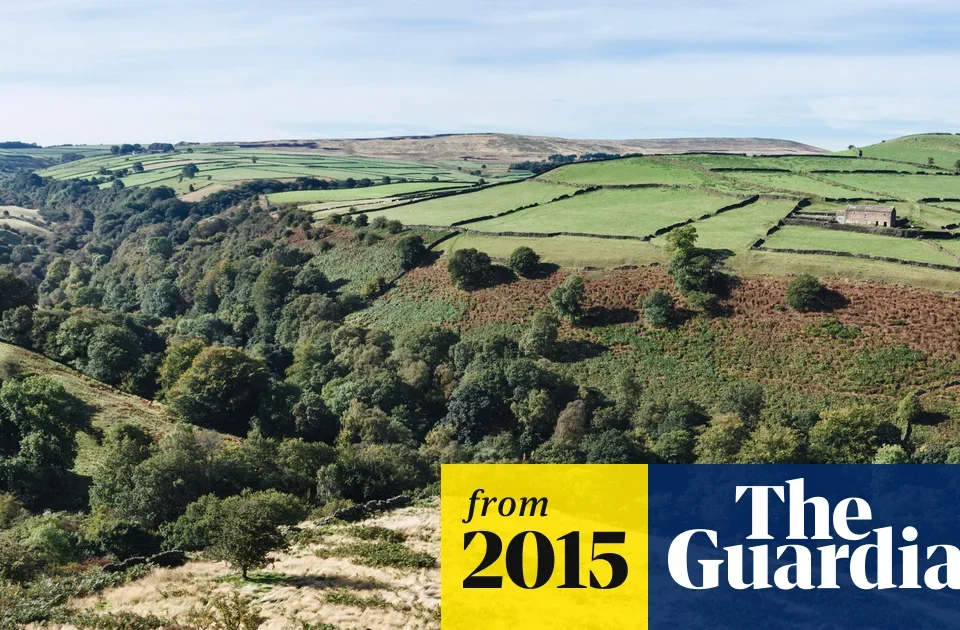



Historical names: Abney; Abney Grange
Location: Hope, Derbyshire
Places / associated places: Hope, Derbyshire
Listed in Domesday Book: Yes
Location & Extent
GPS Location & Recorded Land Areas
Representative GPS point: 53.313, -1.7082
Identity: confirmed — The supplied registry record, TNA/MDR record F253243, Derbyshire location, and historical description match the documented Manor of Abney in the ancient parish of Hope. The Derbyshire Record Office catalogue and C. E. B. Bowles's study independently identify the same manor comprising Abney and Abney Grange, with the recorded Peverel, Rufford Abbey, Archer, Bagshaw, Bradshaw, Galliard and Bowles succession.
Representative point: 53.3130, -1.7082
Basis: documented_manor_house — Approximate position of the former manor-house area at Abney, associated with the modern address Manor House, Abney, S32 1AH. The Peak District conservation appraisal confirms that a manor house formerly stood at Abney and that its remains were derelict by the nineteenth century; the coordinate is therefore suitable as a low-precision site representative rather than as a surviving building centroid.
Point confidence: low
Boundary status: representative_point_only
Boundary period: Medieval boundary tradition documented in a copy dated 1317 and substantially repeated in the 1736 boundary beating; later manorial extent evidenced by seventeenth-century court rolls.
Boundary confidence: medium
Boundary basis: Bowles records a detailed perimeter for the Lordship of Abney beginning at Stoke Ford and running via Routing Wall Sitch, Highlow Head, Berching Hatt, Dunge Clough Head, Burton Boole, Wolf Pit, Saunderson Sitch, the clough head above Offerton, Robin Cross, Blacklow, Clusterberry Low, Rivenage, Arminett Well, Silver Well, Bretton Clough, Musford Green and Odstor before returning to Stoke Ford. These landmarks establish a historically grounded extent of approximately 1,400 acres including the two hamlets and common or waste, but the available sources do not provide sufficiently reliable modern coordinates for every landmark to construct a defensible GIS polygon without conjecture.
Sources:
- Derbyshire Record Office catalogue: Manor of Abney: https://calmview.derbyshire.gov.uk/CalmView/Record.aspx?id=DS%2FUK%2FM%2F3628&src=CalmView.Persons — Identifies the manor as belonging to Hope and records its historical ownership, the Abney and Abney Grange association, and the Bowles-era history.
- The Manor of Abney: its Boundaries and Court Rolls, C. E. B. Bowles, Derbyshire Archaeological Journal vol. 29 (1907): https://places.wishful-thinking.org.uk/DBY/Abney/CourtRolls.html — States that the manor consisted of Abney and Abney Grange, together about 1,400 acres; discusses the Rufford Abbey moiety; reproduces the 1317/1726 boundary description and the 1736 beating of the boundaries; and publishes evidence from the 1654, 1664, 1669 and 1683 court barons.
- Abney Conservation Area Written Statement, Peak District National Park Authority: https://www.peakdistrict.gov.uk/__data/assets/pdf_file/0018/153801/Abney_Appraisal-Document-226.pdf — Confirms the historic manor house at Abney, its dereliction by the nineteenth century, the surrounding wastes and commons, the two-hamlet context, and the later sale of the Bowles estate to tenants.
- The National Archives: F253243: https://discovery.nationalarchives.gov.uk/details/c/F253243 — Registry-level TNA/MDR record supplied for the exact manor identification.
- Derbyshire tithe and enclosure maps catalogue: https://www.derbyshire.gov.uk/site-elements/documents/pdf/leisure/record-office/tithe-and-enclosure-maps.pdf — Lists the 1849 Abney and Abney Grange tithe map, a potentially relevant archival source for later land parcels, but no digitised boundary polygon was located in the consulted material.
- Abney, Derbyshire location reference: https://www.streetmap.co.uk/place/Abney_in_Derbyshire_520611_480611.htm — Provides the modern map position of Abney used to place the former manor-house area approximately within the settlement.
Warnings / uncertainty:
- The representative coordinate is approximate and should not be interpreted as the exact archaeological footprint of the demolished manor house.
- The historical manor was not identical to the modern civil parish or conservation area; it included two hamlets and common or waste extending across surrounding moorland.
- The surviving boundary description is textual. Because several named medieval landmarks cannot be matched to modern coordinates with adequate confidence from the consulted sources, no polygon is returned.
- The Rufford Abbey holding appears to have concerned Abney Grange or a moiety of the manor, but the sources do not prove that Rufford Abbey owned the whole lordship or all of the manorial waste.
About the Manor
Abney Manor was the historic manor of Abney and Abney Grange in the ancient parish of Hope, Derbyshire. The manor comprised two hamlets, Abney and Abney Grange, and included manorial waste or common. Domesday evidence associates the estate with William Peverel, who held it after the Conquest, while Swain is recorded as the pre-Conquest holder. Medieval evidence indicates that a moiety or substantial portion associated with Abney Grange was connected with Rufford Abbey, although the precise relationship between the abbey’s holding and the lordship of the whole manor is uncertain. A 1317 inquisition or related evidence identifies Robert Archer as lord of the whole manor. By 1504 Nicholas Bagshaw was lord. The whole manor was conveyed by Nicholas Bagshawe to Godfrey Bradshawe and Francis Bradshawe in 1593. It remained in the Bradshaw family through the seventeenth and early eighteenth centuries, passing after George Bradshaw’s death in 1735 through the Galliard family and then, by inheritance and marriage, to the Bowles family. The Bowles family remained associated with the manor into the twentieth century. The lords generally lived elsewhere; the manor house at Abney was already derelict by the nineteenth century. The researched sources do not establish a distinct barony, seigneury, or other associated titled dignity for Abney Manor.
Ownership / Holder Account
The earliest securely identified superior holder is William Peverel at Domesday, with Swain recorded as the holder before 1066. A later connection with the Albeney or Albini family is reported by antiquarian sources but is not sufficiently documented here to establish a continuous conveyance. Around 1200, half of the manor was granted or otherwise connected with Rufford Abbey through the Stoke and Albini-related transactions; this appears to have been the portion later known as Abney Grange, but the evidence does not prove that Rufford Abbey owned the whole lordship or the whole manorial waste. By 1317 Robert Archer held the whole manor. The date and mechanism by which the manor passed from the Archers to the Bagshaws remain undocumented in the consulted public sources. Nicholas Bagshaw was lord in 1504, and his family held the manor until the late sixteenth century. On 26 October 1593 Nicholas Bagshawe conveyed the manor to Godfrey Bradshawe and Francis Bradshawe for £1,000; a release dated 7 August 1594 also records the manor in the hands of the Bradshaws. Godfrey’s share was acquired by his brother or the related Francis Bradshaw in 1610, after which the estate descended through the Bradshaw family. Francis Bradshaw held a court baron in 1654; his son or successor George Bradshaw had succeeded the elder Francis’s brother by 1635; the younger Francis Bradshaw held the manor as an infant in 1669; John Bradshaw held the last documented Bradshaw court baron in 1683; and George Bradshaw was the last Bradshaw lord, dying in 1735. George’s widow Ellen was lady of the manor in 1736. After her death the estate passed to her husband’s nephew Pierce Galliard. Pierce died in 1789 and the manor was inherited by his daughter Mary, who was married to Charles Bowles. Charles Bowles died in 1795 and was succeeded by his son Humphry Bowles, who held until his death in 1859. The estate then passed to Charles Bradshaw Bowles. A nineteenth- and early twentieth-century directory identifies Charles Eyre Bradshaw Bowles as lord of the manor and sole landowner, while the Derbyshire Record Office catalogue reports Humphrey Charles Bradshaw Bowles as said to be lord in 1941. The exact legal dates of the later Bowles successions and the eventual sale of the estate to tenants in the late 1960s have not been fully established from primary conveyances in the sources consulted.
Manorial Rights & Privileges
Historic manorial rights / privileges (2)
Manorial waste or common associated with the manor
Provisional
The manor included common or manorial waste connected with Abney and Abney Grange.
Court baron jurisdiction
Provisional
Bradshaw holders are recorded as holding courts baron for the manor, indicating a historic manorial court right or jurisdiction.
Records & References
Sources and references mentioning this manor/title which are not necessarily conveyances or transfers.
4 records found · showing 1–4.
1683-1683: court roll
Held by: Derbyshire Record Office
1669-1669: court roll
Held by: Derbyshire Record Office
1664-1664: court roll
Held by: Derbyshire Record Office
1654-1654: court roll
Held by: Derbyshire Record Office
Conveyance & Descent
First holder to present holder: blood proximity & distance travelled
First recorded holder: Swain
Present holder:
Recorded title journey: 19 holder entries in this manor's saved Conveyance & Descent history.
No recorded holder currently has a usable saved direct-blood or collateral-blood relationship path from which to calculate proximity percentages.
First recorded holder → present holder
A usable saved blood relationship path between the first recorded holder and the present holder has not yet been recorded, so that first-to-present genealogical distance cannot be calculated.
Swain
Transfer: Pre-Conquest holding recorded in Domesday-related historical tradition; the precise tenure form is not stated in the consulted source.
Swain is identified as the holder of Abney before the Norman Conquest. This is an earliest-holder record rather than a documented conveyance deed.
Source: Derbyshire Record Office, Manor of Abney catalogue history, citing C.E.B. Bowles, “The Manor of Abney: its Boundaries and Court Rolls,” Derbyshire Archaeological Society Journal, vol. 29, 1907, pp. 129-140. — source link
Transfer: Acquired or received the estate in the Norman Conquest settlement; no specific conveyance instrument is cited.
Previous holder: Swain
Abney, identified with the Domesday place Habenai, was held by William Peverel after the Conquest. The source treats this as the manor’s Domesday lordship, although Abney was very small and may be represented within a wider Peverel holding.
Source: Derbyshire Record Office, Manor of Abney catalogue history; C.E.B. Bowles, “The Manor of Abney: its Boundaries and Court Rolls,” Derbyshire Archaeological Society Journal, vol. 29, 1907, pp. 129-140; Peak District National Park, Abney Conservation Area Appraisal. — source link
Rufford Abbey, Cistercian abbey of the Blessed Virgin Mary, Nottinghamshire
Transfer: Grant or other alienation of a moiety of Abney to Rufford Abbey, associated in the surviving evidence with Amicia, Lady of Stoke, Gilbert, Lancelin de Stokes, and their ancestors.
Holding arrangement: Share — One half or moiety, although the exact extent and legal character are disputed by the source.
Shared holding: Rufford Abbey holding of Abney Grange
Previous holder: The earlier lord of Abney is not securely identified for this transaction.
A Rufford charter tradition records a grant concerning half the manor of Abney, and another charter records Richard de Grey granting the Abbey half of the manor that he had received from Lancelin de Stokes and Amicia and Amicia’s ancestors. The portion appears to have become Abney Grange. C.E.B. Bowles cautions that the evidence does not establish whether the abbey owned the moiety outright or held it under the principal lord, and notes that the abbey did not later prove a claim to half of the manorial waste. This entry therefore records a documented share connection, not proven ownership of the entire manor.
Source: C.E.B. Bowles, “The Manor of Abney: its Boundaries and Court Rolls,” Derbyshire Archaeological Society Journal, vol. 29, 1907, pp. 129-140, especially the discussion of Rufford Charters 234 and 127. — source link
Robert Archer, Lord of Abney, member of the Archer family of the High Peak
Transfer: The manor is documented in Archer hands in 1317; the date and manner by which it later passed to the Bagshaws are unknown.
Shared holding: Archer lordship
Previous holder: Earlier lordship, including the Peverel and possible Albini or Stoke-related interests, is not connected to Robert Archer by a surviving conveyance in the consulted sources.
In 1317 Robert Archer was lord of the manor, and the contemporary or near-contemporary evidence is interpreted as showing that the whole manor was owned by him. C.E.B. Bowles expressly states that the date and manner in which Abney passed out of Archer possession remain a mystery. No bridging conveyance has been inferred.
Source: C.E.B. Bowles, “The Manor of Abney: its Boundaries and Court Rolls,” Derbyshire Archaeological Society Journal, vol. 29, 1907, pp. 129-140. — source link
Transfer: The manor was in Nicholas Bagshaw’s hands by 1504. The acquisition from the Archers is undocumented in the consulted sources. Nicholas later conveyed the manor to Godfrey Bradshawe and Francis Bradshawe in 1593.
Shared holding: Bagshaw lordship
Previous holder: Robert Archer, Lord of Abney, member of the Archer family of the High Peak
An inquisition post mortem of Robert Eyre, who died in 1504, identifies Nicholas Bagshaw as lord of Abney. The source states that the exact date and manner of the Bagshaw acquisition are unknown. Members of the Bagshaw family were landowners and residents at Abney by 1329, but that earlier family presence is not treated as proof that they then held the manor.
Source: C.E.B. Bowles, “The Manor of Abney: its Boundaries and Court Rolls,” Derbyshire Archaeological Society Journal, vol. 29, 1907, pp. 129-140. — source link
Godfrey Bradshawe and Francis Bradshawe, Gentlemen, purchasers of Abney Manor
Transfer: Purchase and conveyance from Nicholas Bagshawe of Farewell, Staffordshire, to Godfrey Bradshawe of London and Francis Bradshawe of Eyam for £1,000.
Holding arrangement: Joint — Joint holding; individual shares are not specified in the cited conveyance.
Shared holding: Bradshaw joint purchase of Abney
Previous holder: Nicholas Bagshaw, Lord of Abney, gentleman of the Bagshaw family
The conveyance of the manor is dated 26 October 1593, in the thirty-fifth year of Elizabeth I. It conveyed the manor and associated lands from Nicholas Bagshawe to Godfrey Bradshawe and Francis Bradshawe. The deed did not include every later-acquired messuage and parcel of land within the manor. A release dated 7 August 1594 provides additional archival confirmation of the Bradshaw interest.
Source: C.E.B. Bowles, “The Manor of Abney: its Boundaries and Court Rolls,” Derbyshire Archaeological Society Journal, vol. 29, 1907, pp. 129-140; British Library Archives and Manuscripts Catalogue, Wolley Ch xii.85, release dated 7 August 1594. — source link
Transfer: Acquired Godfrey Bradshawe’s share in or by 1610; the exact instrument and consideration are not identified in the consulted sources.
Shared holding: Bradshaw lordship
Co-holders: George Bradshaw, Francis Bradshaw, John Bradshaw
Previous holder: Godfrey Bradshawe and Francis Bradshawe, Gentlemen, purchasers of Abney Manor
The 1907 manor history states that Francis acquired his brother’s share in 1610. A related Bradshaw memorandum describes the manor as descending or being devised to Francis from his uncle Godfrey, who had purchased it and died without issue. The exact legal form of the 1610 transfer is not established here.
Source: C.E.B. Bowles, “The Manor of Abney: its Boundaries and Court Rolls,” Derbyshire Archaeological Society Journal, vol. 29, 1907, pp. 129-140; J. Charles Cox, editor, Memorials of Old Derbyshire, discussion of the Bradshaw family and Abney Manor. — source link
Transfer: Succeeded his brother Francis Bradshaw in possession of the Bradshaw estates, including Abney; the source does not provide a separate conveyance instrument.
Shared holding: Bradshaw lordship
Co-holders: Francis Bradshawe, Francis Bradshaw, John Bradshaw
Previous holder: Francis Bradshaw, Esquire, lord of Abney Manor
The court-roll history states that George succeeded his brother Francis, the high sheriff, in 1635. George’s connection with Abney is explicit in the account of the later Francis Bradshaw, who was George’s eldest son and held a court baron for the manor in 1654.
Source: C.E.B. Bowles, “The Manor of Abney: its Boundaries and Court Rolls,” Derbyshire Archaeological Society Journal, vol. 29, 1907, pp. 129-140. — source link
Francis Bradshaw, Esquire, lord of Abney Manor
Transfer: Inherited or succeeded to the manor through the Bradshaw family; the exact succession instrument is not identified.
Shared holding: Bradshaw lordship
Co-holders: Francis Bradshawe, George Bradshaw, John Bradshaw
Previous holder: George Bradshaw, Esquire, last Bradshaw lord of Abney Manor
Francis Bradshaw, George Bradshaw’s eldest son, held a Great Court Baron for Abney on 20 October 1654. The source describes him as grandson of the original Bradshaw purchaser. He died aged twenty-three on 29 December 1677.
Source: C.E.B. Bowles, “The Manor of Abney: its Boundaries and Court Rolls,” Derbyshire Archaeological Society Journal, vol. 29, 1907, pp. 129-140. — source link
Francis Bradshaw, an infant, by John Bole and Elizabeth Bole as guardians, Infant lord of Abney Manor
Transfer: Court jurisdiction exercised for Francis Bradshaw as infant; this is evidence of wardship or guardianship administration, not a separate transfer of ownership.
Holding arrangement: Trust — Whole manor held for the infant’s beneficial interest; exact legal form not stated.
Shared holding: Infant lordship administered by guardians
Previous holder: Francis Bradshaw, Esquire, lord of Abney Manor
The 1669 Great Court Baron describes Francis Bradshaw as an infant lord of the manor, with John Bole and Elizabeth Bole acting as his guardians. This entry records the documented guardianship administration and does not treat John Bole or Elizabeth Bole as owners in their own right.
Source: C.E.B. Bowles, “The Manor of Abney: its Boundaries and Court Rolls,” Derbyshire Archaeological Society Journal, vol. 29, 1907, pp. 129-140. — source link
John Bradshaw, Esquire, lord of Abney Manor
Transfer: Succeeded his brother Francis Bradshaw after Francis’s death; no separate conveyance instrument is cited.
Shared holding: Bradshaw lordship
Co-holders: Francis Bradshawe, George Bradshaw, Francis Bradshaw
Previous holder: Francis Bradshaw, Esquire, lord of Abney Manor
The manor history states that Francis Bradshaw died on 29 December 1677 and was succeeded by his brother John. John held the last documented Great Court Baron for Abney on 23 April 1683.
Source: C.E.B. Bowles, “The Manor of Abney: its Boundaries and Court Rolls,” Derbyshire Archaeological Society Journal, vol. 29, 1907, pp. 129-140. — source link
George Bradshaw, Esquire, last Bradshaw lord of Abney Manor
Transfer: Succeeded his father John Bradshaw; the exact date and instrument are not stated.
Shared holding: Bradshaw lordship
Co-holders: Francis Bradshawe, Francis Bradshaw, John Bradshaw
Previous holder: John Bradshaw, Esquire, lord of Abney Manor
George Bradshaw was the only surviving son and successor of John Bradshaw and is identified as the last of the Bradshaws of Bradshaw. He died in 1735. A 1736 boundary manuscript was written after his death while his widow Ellen was lady of the manor.
Source: C.E.B. Bowles, “The Manor of Abney: its Boundaries and Court Rolls,” Derbyshire Archaeological Society Journal, vol. 29, 1907, pp. 129-140; Daniel and Samuel Lysons, Magna Britannia, volume 5, Derbyshire, 1817. — source link
Ellen Bradshaw, Lady of Abney Manor
Transfer: Held or administered the estate as George Bradshaw’s widow after his death; the source calls her lady of the manor but does not define the legal interest.
Holding arrangement: Other
Shared holding: Widow’s manorial holding or administration
Previous holder: George Bradshaw, Esquire, last Bradshaw lord of Abney Manor
The manuscript concerning Abney’s boundaries was written in 1736, the year after George Bradshaw died, when Ellen, his widow, was lady of the manor. The source later states that at her death the estate passed to George’s nephew Pierce Galliard. Her exact legal status is therefore recorded conservatively as an uncertain widow’s holding or administration rather than as an assumed fee-simple succession.
Source: C.E.B. Bowles, “The Manor of Abney: its Boundaries and Court Rolls,” Derbyshire Archaeological Society Journal, vol. 29, 1907, pp. 129-140. — source link
Pierce Galliard, Of Bury Hall, Middlesex, holder of Abney Manor
Transfer: The estate passed to Pierce Galliard, George Bradshaw’s nephew through George’s surviving sister, after Ellen Bradshaw’s death.
Shared holding: Galliard lordship
Previous holder: Ellen Bradshaw, Lady of Abney Manor
After Ellen Bradshaw’s death, Abney passed to Pierce Galliard of Bury Hall, Middlesex, who was the son of George Bradshaw’s only surviving sister. Pierce died in 1789, after which the manor was inherited by his daughter Mary.
Source: C.E.B. Bowles, “The Manor of Abney: its Boundaries and Court Rolls,” Derbyshire Archaeological Society Journal, vol. 29, 1907, pp. 129-140. — source link
Mary Galliard and Charles Bowles, Mary: heiress of Pierce Galliard, Charles: of Sheen House, Surrey, High Sheriff of Surrey in 1795
Transfer: Mary Galliard inherited the manor from her father Pierce Galliard in 1789; she was married to Charles Bowles, who became associated with the estate through the marriage.
Holding arrangement: Joint — Mary’s inherited interest is explicit; the precise legal division between Mary and Charles is not stated.
Shared holding: Galliard-Bowles marital holding
Previous holder: Pierce Galliard, Of Bury Hall, Middlesex, holder of Abney Manor
On Pierce Galliard’s death in 1789 the manor was inherited by his daughter Mary, who had married Charles Bowles in 1774. Some catalogue and directory summaries describe the estate as passing to Charles Bowles, while the detailed manor history identifies Mary as the inheriting daughter. This entry preserves both facts without treating Charles as an independently documented purchaser. Charles died in 1795.
Source: C.E.B. Bowles, “The Manor of Abney: its Boundaries and Court Rolls,” Derbyshire Archaeological Society Journal, vol. 29, 1907, pp. 129-140; Surrey County Council, Surrey Coats of Arms, entry for Bowles. — source link
Humphry Bowles, Of Bradshaw and Abney
Transfer: Succeeded his father Charles Bowles after Charles’s death in 1795.
Shared holding: Bowles lordship
Co-holders: Charles Bradshaw Bowles, Charles Eyre Bradshaw Bowles, Humphrey Charles Bradshaw Bowles
Previous holder: Charles Bowles
Charles Bowles died in 1795 and was succeeded by his son Humphry Bowles. Humphry held the Abney estate until his death in 1859, when it passed to his eldest son Charles Bradshaw Bowles.
Source: C.E.B. Bowles, “The Manor of Abney: its Boundaries and Court Rolls,” Derbyshire Archaeological Society Journal, vol. 29, 1907, pp. 129-140; Surrey County Council, Surrey Coats of Arms, entry for Bowles. — source link
Reverend Charles Bradshaw Bowles, Vicar of Woking, associated with Bradshaw and Abney
Transfer: Inherited the Abney estate from his father Humphry Bowles in 1859.
Shared holding: Bowles lordship
Co-holders: Humphry Bowles, Charles Eyre Bradshaw Bowles, Humphrey Charles Bradshaw Bowles
Previous holder: Humphry Bowles, Of Bradshaw and Abney
Humphry Bowles died in 1859 and left the Abney estate to his eldest son Charles Bradshaw Bowles. The cited family and county sources identify Charles Bradshaw Bowles as the eldest son and as a member of the Bowles line associated with Bradshaw and Abney. He died in 1885.
Source: Surrey County Council, Surrey Coats of Arms, entry for Bowles; C.E.B. Bowles, “The Manor of Abney: its Boundaries and Court Rolls,” Derbyshire Archaeological Society Journal, vol. 29, 1907, pp. 129-140. — source link
Charles Eyre Bradshaw Bowles, Esquire, J.P., lord of Abney Manor, sole landowner in Abney according to directory evidence
Transfer: The later succession from Charles Bradshaw Bowles is not documented in the consulted sources. By the late nineteenth and early twentieth centuries Charles Eyre Bradshaw Bowles was publicly identified as lord of Abney Manor and sole landowner.
Shared holding: Bowles lordship
Co-holders: Humphry Bowles, Charles Bradshaw Bowles, Humphrey Charles Bradshaw Bowles
Previous holder: Reverend Charles Bradshaw Bowles, Vicar of Woking, associated with Bradshaw and Abney
Kelly’s directory material identifies Charles Eyre Bradshaw Bowles as the present lord of the manor and sole landowner in Abney in the late nineteenth and early twentieth centuries, including a 1911 directory issue. The exact date by which he succeeded Charles Bradshaw Bowles is not established, so no precise conveyance date is supplied.
Source: Kelly’s Directory, Derbyshire entries for Abney and Abney Grange, nineteenth- and early twentieth-century editions; reproduced in the Leicester ContentDM directory scan. — source link
Transfer: The Derbyshire Record Office catalogue says he was reported as lord of the manor in 1941, but the exact succession from the preceding Bowles holder is not established.
Shared holding: Bowles lordship
Co-holders: Humphry Bowles, Charles Bradshaw Bowles, Charles Eyre Bradshaw Bowles
Previous holder: Charles Eyre Bradshaw Bowles or an intervening Bowles holder
The Derbyshire Record Office catalogue records Humphrey Charles Bradshaw Bowles as being said to be lord of Abney Manor in 1941. This is the latest securely located historical identification in the consulted public sources. The catalogue wording is cautious, and no later conveyance or precise end date has been established.
Source: Derbyshire Record Office, Manor of Abney catalogue history, citing Kelly’s Trade Directories, 1878-1941, and C.E.B. Bowles, “The Manor of Abney: its Boundaries and Court Rolls.” — source link
Corrections / Challenges
Sign in to challenge or submit evidence against a recorded assertion.
JSON API
Machine-readable published manor data, including public images, mapped land areas, notes, rights, conveyances, relationships, records, source/document-library entries and public file links.
https://manorialregistry.com/index.php?rest_route=/mhr/v1/manor/abney-manorPublic API access is currently disabled. Authorised API clients must use a private X-MHR-API-Key; currently only administrator keys are enabled.
Private source files, pending edits, moderation/admin information, user API keys and non-public import identifiers are not returned.