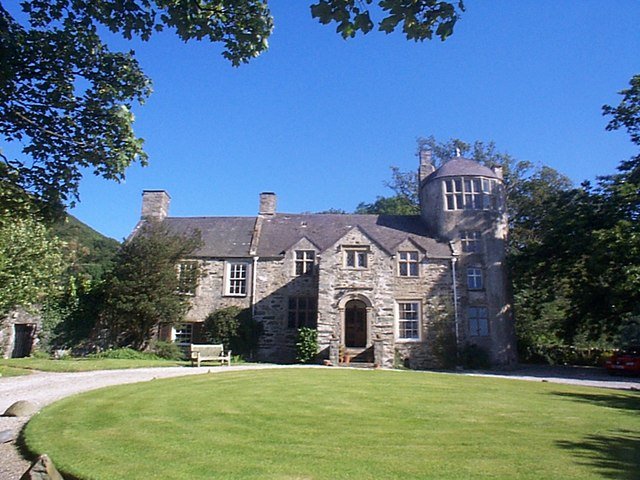



Location: Caernarfonshire
Places / associated places: Caernarfonshire
Location & Extent
GPS Location & Recorded Land Areas
Representative GPS point: 53.23469, -4.01169
Identity: confirmed — The record's Caernarfonshire location and association with Aber/Abergwyngregyn match the documented royal and later manorial centre at Aber. The surviving Pen-y-bryn manor house is explicitly associated with the post-medieval manor and its administrative focus, distinguishing this record from other places named Aber or similarly named manors.
Representative point: 53.23469, -4.01169
Basis: documented_manor_house — Pen-y-bryn, Abergwyngregyn, at OS Grid Reference SH6582072730/SH65824 72739. Archaeological and historic-environment sources identify it as the manor house associated with Aber Manor and state that manorial courts were held there after the Thomas family's acquisition of the manor.
Point confidence: high
Boundary status: representative_point_only
Boundary period:
Boundary confidence: none
Boundary basis: The available evidence confirms the manor's location and identifies associated holdings, including Henfaes and later upland holdings at Merun Uchaf and Nant, but does not provide an accessible, sufficiently clear historical manor-boundary map or a complete parcel-based reconstruction. The parish, village, modern Penrhyn estate, and later farm holdings cannot safely be substituted for the historical manorial extent.
Sources:
- The National Archives Discovery: Aber Manor, F236189: https://discovery.nationalarchives.gov.uk/details/c/F236189 — Registry record for Aber Manor in historic Caernarfonshire, centred on Aber/Abergwyngregyn.
- RCAHMW/Coflein Site Record: Pen-y-Bryn, Abergwyngregyn, NPRN 32: https://coflein.gov.uk/en/sites/32 — Documents Pen-y-Bryn at SH6582072730 in the historic county of Caernarfonshire and identifies it as a multi-period house associated with the Aber site.
- North West Wales Dendrochronology Project: Pen-y-bryn, Abergwyngregyn: https://coflein.gov.uk/media/82/47/dcp2011_20_01.pdf — Gives the more precise house reference SH65824 72739 and describes Pen-y-bryn as a historic house approximately 235 metres northwest of Abergwyngregyn village.
- Gwynedd Archaeological Trust, Historic Asset Setting Impact Assessment: Land at Cae'r Felin, Abergwyngregyn: https://www.walesher1974.org/her/groups/GAT/media/GAT_Reports/GATreport_1562_compressed.pdf — States that the royal manor of Aber was leased by Rice Thomas in 1553, that Sir William Thomas acquired it outright, and that Pen-y-bryn became the manorial focus and administrative centre where manorial courts were held.
- Bangor University Archives: Baron Hill and Aber Manor catalogue material: https://calmview.bangor.ac.uk/Calmview/TreeBrowse.aspx?action=983e26e1&field=RefNo&key=BMSSXII%2F21171&src=CalmView.Catalog — Lists a 1830 survey of property in the parish of Aber belonging to the Baron Hill estate and archival material specifically concerning the Manor of Aber, including court records and perambulation material.
- Gwynedd Archaeological Trust, Coedydd Aber Historic Landscape Resource Management Survey: https://walesher1974.org/her/groups/GAT/media/GAT_Reports/GATreport_419_compressed.pdf — Identifies archival material concerning the Manor of Aber, including a 1591 manorial rental reference, Henfaes farm records, a 1848 tithe map, and a 1872 reference to the Manor of Aber; these are evidence leads but do not themselves provide an accessible complete manor boundary.
Warnings / uncertainty:
- The medieval llys or princely court at Aber and the later Pen-y-bryn manor house are related but are not necessarily the same physical site; the point uses the documented later manor house and manorial administrative centre.
- The historical territorial extent remains unresolved. Do not inject a polygon based on the modern Aber community, parish, settlement, Penrhyn estate, or the later Henfaes/Merun Uchaf/Nant farm holdings.
- Some published summaries conflict on individual medieval dates and on the exact date of Sir William Thomas's outright acquisition; those chronological conflicts do not affect identification of the manor's location.
About the Manor
Aber Manor was the manor of Aber in the historic county of Caernarfonshire, centred on Aber, now Abergwyngregyn, in north-west Wales. The manor appears to have developed from the royal or princely maerdref associated with the llys at Aber. It was successively a manor of the Crown or Prince, a grant to named medieval holders, and from the sixteenth century an estate associated with the Thomas family, the Bulkeley family of Baron Hill, and subsequently the Penrhyn estate. Pen-y-bryn, a surviving Jacobean manor house at Abergwyngregyn, was the principal Thomas residence associated with the manor by the late sixteenth or early seventeenth century. The available evidence is not a continuous title abstract: several medieval and early Tudor transitions remain undocumented or are reported only through later calendars and archival summaries.
Ownership / Holder Account
Aber was a princely or royal manor before the surviving named grants. In 1287 it was granted to Henry Somur for five years. Medieval evidence then records named holders including Edmond de Dynieton in 1323 and John de Houseum in 1327, although one later summary gives a conflicting date of 1352 for Edmond de Dynieton. Henry de Coton claimed the manor in 1390, but the manor was seized by the Prince's escheator and Coton was compensated with Walton upon Trent; this was not a confirmed tenure of Aber. The manor was granted to John de Pont in 1417, and a 1437 petition refers to the houses, woods, closes and gardens belonging to it. In 1484 Aber, together with Cemaes in Anglesey, was granted to Richard Vaughan. The intervening descent from Richard Vaughan to the Thomas family is not established in the sources consulted. Rice Thomas was lessee of Aber by 1551, and in 1553 he and his wife Jane received a grant of the manors of Aber and Cemaes to themselves and their heirs. The Thomas family held the manor through Rice Thomas, William Thomas, Sir William Thomas, William Thomas, Richard Thomas, Gruffydd Thomas and John Thomas. Sir William Thomas obtained a further Crown grant or confirmation of Aber and Cemaes in 1609. John Thomas was certainly lord of Aber from at least 1686 until his death in 1705, although Lord Bulkeley appears to have obtained temporary possession in or about 1680. After John's death the manor passed out of the Thomas family's possession; it was certainly owned by Richard, Viscount Bulkeley, by 1715, and a separate archival summary places the manor with the Bulkeley family by 1689. The Bulkeley family remained the principal proprietors until 1863, when the Aber and other Caernarfonshire holdings were sold to the Penrhyn estate. The Penrhyn holding continued into the twentieth century and is reported to have lasted until 1925, when Henfaes and associated upland holdings were sold. The precise legal conveyance from the Thomas family to Bulkeley, the identity of every intervening Bulkeley holder, and the precise 1863 conveyance instrument were not established from publicly accessible material.
Conveyance & Descent
First holder to present holder: blood proximity & distance travelled
First recorded holder: Henry Somur
Present holder:
Recorded title journey: 15 holder entries in this manor's saved Conveyance & Descent history.
No recorded holder currently has a usable saved direct-blood or collateral-blood relationship path from which to calculate proximity percentages.
First recorded holder → present holder
A usable saved blood relationship path between the first recorded holder and the present holder has not yet been recorded, so that first-to-present genealogical distance cannot be calculated.
Transfer: Grant of the manor of Aber for five years
Holding arrangement: Other
Previous holder: Crown or princely lordship; named predecessor not identified
The manor was granted to Henry Somur for five years in 1287. The source does not establish whether this was a lease, custody, or another form of Crown grant, so the holding is recorded as other rather than sole ownership.
Source: Gwynedd Archaeological Trust, Coedydd Aber NNR Historic Landscape Resource Management Survey: Stage One Report, report 419, section 3.2.1.1, citing R. Rees, Calendar of Ancient Petitions Relating to Wales, pp. 61, 167, 323, 451-452. — source link
Transfer: Recorded as holding the manor of Aber
Holding arrangement: Other
Previous holder: Henry Somur or an undocumented intervening Crown holder
A later historical summary records Edmond de Dynieton as holding Aber in 1323. Another summary derived from related material gives the date as 1352, creating a chronological conflict. The 1323 date is retained because it appears in the more detailed account that also records John de Houseum in 1327; the date should be treated as reported rather than fully verified from the underlying medieval record.
Source: Gwynedd Archaeological Trust, Coedydd Aber NNR Historic Landscape Resource Management Survey: Stage One Report, report 419, section 3.2.1.1; compare Abergwyngregyn Conservation Area Appraisal, which gives 1352. — source link
Transfer: Recorded as holding the manor of Aber
Holding arrangement: Other
Previous holder: Edmond de Dynieton or an undocumented intervening holder
John de Houseum is recorded as holding the manor in 1327. No documentary transfer from Edmond de Dynieton, nor the date at which John ceased to hold, was established. The end date is therefore only a chronological boundary before the 1390 claim by Henry de Coton and should not be read as an exact conveyance date.
Source: Gwynedd Archaeological Trust, Coedydd Aber NNR Historic Landscape Resource Management Survey: Stage One Report, report 419, section 3.2.1.1. — source link
Transfer: Grant of the manor of Aber
Previous holder: Crown or princely lordship after the 1390 escheatorial seizure; intervening descent not fully established
The manor was granted to John de Pont in 1417. The accessible source does not provide the duration or later surrender of this grant. A 1437 petition concerning a grant of the manor refers to the maintenance of its houses, woods, closes and gardens, but does not by itself establish the identity of the holder at that date.
Source: Gwynedd Archaeological Trust, Coedydd Aber NNR Historic Landscape Resource Management Survey, report 419, section 3.2.1.1, citing R. Rees, Calendar of Ancient Petitions Relating to Wales, pp. 61, 167, 323, 451-452. — source link
Transfer: Grant of the manors of Aber and Cemaes
Previous holder: Crown; intervening descent after John de Pont not established
A grant dated 1 Richard III, 1484, conveyed the manors of Aber and Cemaes to Richard Vaughan. The accessible archival description identifies the grant directly and the archaeological survey cites University of Wales Bangor manuscript 21275 and British Museum Harleian manuscript 433. The subsequent transition to Rice Thomas is not documented in the sources consulted.
Source: University of Wales Bangor Archives, BMSSXII/21171, item 21275, Grant to Richard Vaughan of the manors of Aber and Wig, co. Caernarvon, and Kemmes, co. Anglesey, 1 Richard III, 1484; corroborated by Gwynedd Archaeological Trust report 419. — source link
Rice Thomas, Justice of the peace, sheriff of Anglesey 1563-1564, sheriff of Caernarfonshire 1573-1574
Transfer: Lease of the manor of Aber
Holding arrangement: Other — Lessee's interest; not recorded as freehold ownership in the 1551 evidence
Shared holding: Thomas family
Co-holders: Rice Thomas and Jane Thomas, William Thomas, Sir William Thomas, Richard Thomas, Gruffydd Thomas, John Thomas
Previous holder: Crown or Crown lessee; intervening descent after Richard Vaughan not established
Rice Thomas acquired a lease of the manors of Aber and Cemaes in 1551. This entry deliberately distinguishes the documented lease from the later grant in fee or inheritance in 1553.
Source: Dictionary of Welsh Biography, 'Thomas family, of Coed Helen (or Alun) and Aber, Caernarfonshire,' citing the Calendar of Patent Rolls, 1553, p. 121. — source link
Transfer: Grant of the manors of Aber and Cemaes to the grantees and their heirs
Holding arrangement: Joint — Grant to the couple and their heirs; exact internal shares not stated
Shared holding: Thomas family
Co-holders: Rice Thomas, William Thomas, Sir William Thomas, Richard Thomas, Gruffydd Thomas, John Thomas
Previous holder: Crown; Rice Thomas previously held a lease from 1551
In 1553 Rice Thomas and his wife Jane acquired a grant of the manors of Aber and Cemaes for themselves and their heirs. The grant is the clearest evidence for the Thomas family's lordship of Aber. The source does not state the precise legal mechanism by which Rice's interest descended to the next Thomas holder.
Source: Dictionary of Welsh Biography, 'Thomas family, of Coed Helen (or Alun) and Aber, Caernarfonshire,' citing Calendar of Patent Rolls, 1553, p. 121. — source link
William Thomas, Justice of the peace, sheriff of Caernarfonshire 1637-1638, Member of Parliament for Caernarfon
Transfer: Succession to the Thomas family's estates, including Aber, after Rice Thomas's death
Shared holding: Thomas family
Co-holders: Rice Thomas, Rice Thomas and Jane Thomas, Sir William Thomas, Richard Thomas, Gruffydd Thomas, John Thomas
Previous holder: Rice Thomas and Jane Thomas
The Dictionary of Welsh Biography identifies William Thomas as Rice Thomas's son and heir and states that he inherited the family's estates in Caernarfonshire, including the manor of Aber. The exact date of entry is not supplied; 1577 is used as the earliest boundary because Rice Thomas died in that year.
Source: Dictionary of Welsh Biography, 'Thomas family, of Coed Helen (or Alun) and Aber, Caernarfonshire.' — source link
Transfer: Succession to the Thomas estates, followed by a Crown grant or confirmation of Aber and Cemaes in 1609
Shared holding: Thomas family
Co-holders: Rice Thomas, Rice Thomas and Jane Thomas, William Thomas, Richard Thomas, Gruffydd Thomas, John Thomas
Previous holder: William Thomas, Justice of the peace, sheriff of Caernarfonshire 1637-1638, Member of Parliament for Caernarfon
Sir William Thomas, the eldest son and heir of William Thomas, succeeded to the Thomas estates. The Dictionary of Welsh Biography states that in 1609, under the commission for confirming defective titles, he paid the Crown for a grant of the manors of Aber and Cemaes. This is recorded as a confirmation or regrant rather than as a newly inferred acquisition. Sir William died in 1634.
Source: Dictionary of Welsh Biography, 'Thomas family, of Coed Helen (or Alun) and Aber, Caernarfonshire'; University of Wales Bangor Archives, BMSSXII/21171, item 21281, Grant by letters patent to Sir William Thomas of the manor of Aber, temp. James I. — source link
William Thomas, Justice of the peace, sheriff of Caernarfonshire 1637-1638, Member of Parliament for Caernarfon
Transfer: Succession to the Caernarfonshire estates of Sir William Thomas, including Aber
Shared holding: Thomas family
Co-holders: Rice Thomas, Rice Thomas and Jane Thomas, Sir William Thomas, Richard Thomas, Gruffydd Thomas, John Thomas
The Dictionary of Welsh Biography states that the second son, William Thomas, succeeded his father in possession of the Caernarfonshire estates, consisting of the manor of Aber and other property. His estates were sequestered by Parliament during the Civil Wars, but the source does not establish a permanent transfer of the manor to another owner during the sequestration.
Source: Dictionary of Welsh Biography, 'Thomas family, of Coed Helen (or Alun) and Aber, Caernarfonshire.' — source link
Transfer: Succession as eldest son and heir of William Thomas
Shared holding: Thomas family
Co-holders: Rice Thomas, Rice Thomas and Jane Thomas, William Thomas, Sir William Thomas, Gruffydd Thomas, John Thomas
Previous holder: William Thomas, Justice of the peace, sheriff of Caernarfonshire 1637-1638, Member of Parliament for Caernarfon
Richard Thomas succeeded his father William Thomas in March 1654 and held the encumbered Thomas estate until his death without issue in early 1666.
Source: Dictionary of Welsh Biography, 'Thomas family, of Coed Helen (or Alun) and Aber, Caernarfonshire.' — source link
Transfer: Succession as brother of Richard Thomas
Shared holding: Thomas family
Co-holders: Rice Thomas, Rice Thomas and Jane Thomas, William Thomas, Sir William Thomas, Richard Thomas, John Thomas
Previous holder: Richard Thomas
After Richard Thomas died without issue in early 1666, his brother Gruffydd Thomas succeeded to the estate. The DWB refers to his tenure of the estate and states that he died without issue in 1676.
Source: Dictionary of Welsh Biography, 'Thomas family, of Coed Helen (or Alun) and Aber, Caernarfonshire.' — source link
John Thomas, Sheriff of Caernarfonshire 1693-1694, lord of the manor of Aber from at least 1686
Transfer: Succession as next kin after the death of Gruffydd Thomas, who was described as tenant for life
Shared holding: Thomas family
Co-holders: Rice Thomas, Rice Thomas and Jane Thomas, William Thomas, Sir William Thomas, Richard Thomas, Gruffydd Thomas
Previous holder: Gruffydd Thomas
John Thomas succeeded Gruffydd Thomas in 1676 as the next kin expectant after Gruffydd's death. Financial transactions with the Bulkeley family in 1678 involved the advowson of Aber and land within the manor. Lord Bulkeley appears to have gained possession of the manor temporarily in 1680, but the Dictionary of Welsh Biography states that John Thomas was certainly lord of the manor from at least 1686 until his death in 1705. The temporary Bulkeley possession is therefore not treated as a permanent conveyance.
Source: Dictionary of Welsh Biography, 'Thomas family, of Coed Helen (or Alun) and Aber, Caernarfonshire,' citing PRO C7/339/71, U.C.N.W. Garthewin MS 2077, U.C.N.W. Baron Hill MS 3133, and Caernarfonshire record office material. — source link
Richard Bulkeley, Viscount Bulkeley of Baron Hill, and the Bulkeley family
Transfer: Manor passed out of the Thomas family's possession and was certainly owned by Richard, Viscount Bulkeley, by 1715; the precise conveyance is not established
Shared holding: Bulkeley family of Baron Hill
Previous holder: John Thomas and the Thomas family
After John Thomas's death in 1705, the manor appears to have passed out of the Thomas family's possession. It was certainly in the ownership of Richard, Viscount Bulkeley of Baron Hill, by 1715. A separate Gwynedd Archaeological Trust summary states that by 1689 the manor had passed to the Bulkeleys, but the accessible DWB account records John Thomas as lord at least until his death and describes the 1680 Bulkeley possession as temporary. The precise legal transfer and the identity of every Bulkeley successor are therefore left open. The Bulkeley family remained the main proprietors until 1863.
Source: Dictionary of Welsh Biography, 'Thomas family, of Coed Helen (or Alun) and Aber, Caernarfonshire'; Gwynedd Archaeological Trust, Coedydd Aber NNR Historic Landscape Resource Management Survey, report 419; Gwynedd Archives and University of Wales Bangor Baron Hill archival catalogue references. — source link
Transfer: Purchase of the Bulkeley family's Aber and other Caernarfonshire holdings; the estate remained in Penrhyn ownership into the twentieth century
Shared holding: Penrhyn Estate
Previous holder: Bulkeley family of Baron Hill
In 1863 the Bulkeley family sold its Caernarfonshire lands and Aber holdings to the Penrhyn estate. The available historical landscape sources state that the property remained in Penrhyn's holding until 1925, when Henfaes and associated upland holdings were sold. The source does not provide the complete deed or establish whether every manorial right was included in the 1925 sale, so 1925 is recorded as the end of the documented Penrhyn holding rather than as a fully defined extinction of the manor.
Source: Gwynedd Archaeological Trust, Coedydd Aber NNR Historic Landscape Resource Management Survey, report 419, section 3.2.1.5; Welsh Government, A55 Abergwyngregyn to Tai'r Meibion Improvements Environmental Statement, appendix A. — source link
Corrections / Challenges
Sign in to challenge or submit evidence against a recorded assertion.
JSON API
Machine-readable published manor data, including public images, mapped land areas, notes, rights, conveyances, relationships, records, source/document-library entries and public file links.
https://manorialregistry.com/index.php?rest_route=/mhr/v1/manor/aber-manorPublic API access is currently disabled. Authorised API clients must use a private X-MHR-API-Key; currently only administrator keys are enabled.
Private source files, pending edits, moderation/admin information, user API keys and non-public import identifiers are not returned.