


Historical names: Dore (Manor) | Dour (Manor)
Location: Abbey Dore, Herefordshire
Places / associated places: Abbey Dore, Herefordshire
Location & Extent
GPS Location & Recorded Land Areas
Representative GPS point: 51.968598, -2.893203
Identity: confirmed — The registry name, historical forms Dore and Dour, location in Abbey Dore, and authority/reference GB/NNAF/M303196 correspond to the former Cistercian manor and principal estate of Dore Abbey in Abbey Dore, Herefordshire. The documented descent from Dore Abbey to the Crown, John Scudamore, the Scudamore heirs, John Higford and Thomas Freke Lewis is consistent with this exact record and not merely with a same-named manor elsewhere.
Representative point: 51.968598, -2.893203
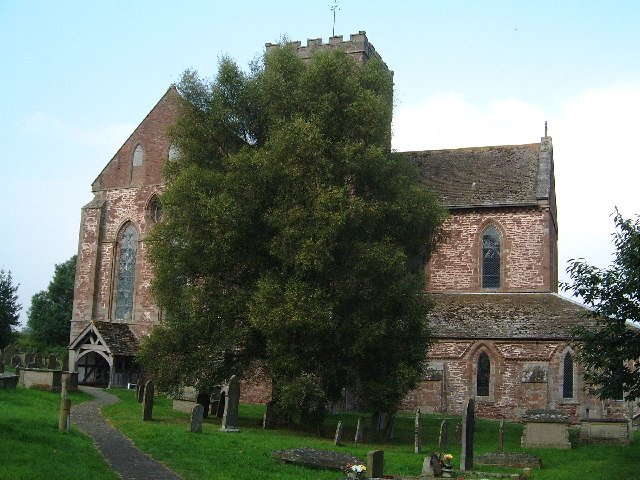
Basis: documented_manor_site — The point represents Dore Abbey, the documented medieval monastic centre and site of the manor and principal estate. It is identified by National Grid Reference SO 3873 3039 and is situated in the parish of Abbey Dore.
Point confidence: high
Boundary status: representative_point_only
Boundary period: Medieval monastic manor and pre-Dissolution estate, with later post-Dissolution estate evidence through 1821
Boundary confidence: none
Boundary basis: No reliable, complete historical perimeter for the manorial land has been located. The evidence establishes a dispersed estate centred on Dore Abbey, with holdings and granges in Abbey Dore and surrounding areas. Medieval descriptions refer to land between the River Dore and Trivel Brook and to other named lands, while later accounts identify granges including Hollin Grange, Morehampton, Newborough, Newbrook, Chapel Grange, Kingston and New Grange. However, the original endowment is expressly not fully identifiable, the granges were dispersed, and the 1,434 acres assigned in the 1821 partition describe a later Scudamore estate division rather than a securely mapped legal boundary of the manor. The modern civil-parish boundary has therefore not been substituted.
Sources:
- The National Archives: Abbey Dore manor record F279988: https://discovery.nationalarchives.gov.uk/details/c/F279988 — Registry authority and identity record for Abbey Dore, historically Dore or Dour, in Abbey Dore, Herefordshire.
- Dore Abbey, Herefordshire, 1536-1912, Woolhope Naturalists' Field Club Transactions, volume XLI, 1975: https://www.woolhopeclub.org.uk/system/files/documents/transaction/woolhope-club-transactions-volume-xli-1975-part-iii.pdf — States that Dore Abbey was dissolved in September 1536; its site and demesne lands were granted to John Scudamore on 30 March 1540; and the estate later descended through the Scudamore family.
- The Mansions and Manors of Herefordshire: Abbey Dore: https://parishmouse.co.uk/england/herefordshire/abbey-dore-herefordshire-family-history-guide/ — Describes the Manor of Dore, the uncertain identification of its original endowment, the grant of land between the River Dore and Trivel Brook, named Abbey granges, and the 1,434-acre 1821 partition assigned to John Parsons/Higford.
- Herefordshire Through Time: The Grange: https://htt.herefordshire.gov.uk/herefordshires-past/the-medieval-period/monasteries/the-grange/ — Confirms that several recorded Herefordshire granges belonged to Dore Abbey and that these were agricultural components of the monastery's wider landholding system.
- Church of St Mary, Abbey Dore, Historic England listing 1099794: https://historicengland.org.uk/listing/the-list/list-entry/1099794 — Identifies the surviving Church of St Mary as the remains of Dore Abbey and gives National Grid Reference SO 38717 30401, supporting the abbey site as the historical manorial centre.
- Dore Abbey, Herefordshire, Gazetteer of British Place Names: https://gazetteer.org.uk/place/Dore_Abbey,_Herefordshire_320111 — Identifies Dore Abbey as the former Cistercian abbey and present-day parish church, gives Grid Reference SO 3873 3039, and supplies the representative coordinates used here.
- The National Archives: Abbey Dore court rolls, C 115/95/6900-6911: https://discovery.nationalarchives.gov.uk/details/r/N16647768 — Catalogues surviving Abbey Dore manorial court rolls for 1539-1677, corroborating the existence of the post-Dissolution manor record, but the catalogue entry does not provide a mappable boundary.
- The National Archives: Abbey Dore perambulation, R70/1: https://discovery.nationalarchives.gov.uk/details/r/N16651575 — Catalogues an 1824 perambulation involving Abbey Dore and other manors. The available catalogue information does not expose sufficient boundary detail to reconstruct a defensible polygon.
Warnings / uncertainty:
- The representative point is for the historic Dore Abbey/manorial centre, not the later Abbey Dore Court country-house estate.
- The historical estate was dispersed and included granges and lands beyond the immediate abbey site; these should not be interpreted as a single contiguous polygon without consulting the underlying medieval charters, surveys, rentals, maps or the 1824 perambulation.
- The modern Abbey Dore civil-parish boundary has deliberately not been used as a proxy for the manor boundary.
- The 1,434 acres assigned in 1821 describe a partitioned Scudamore estate and are not sufficient by themselves to define the legal extent of the manor.
About the Manor
Abbey Dore, also historically called Dore or Dour, was the manor and principal estate associated with Dore Abbey, a Cistercian monastery founded at Abbey Dore in 1147 by Robert de Ewyas. The abbey accumulated lands in the parish and surrounding area, including an important royal grant of land between the River Dore and Trivel Brook, confirmed by Henry III in 1233. The monastic manor and estate remained in the possession of the Cistercian community until the Dissolution of the Monasteries. After the abbey's suppression in September 1536, the estate was temporarily held by the Crown and the site and demesne lands were granted on 30 March 1540 to John Scudamore of Holme Lacy. The estate subsequently descended through the Scudamore family and its co-heirs. In 1821, following a partition of the Scudamore estates, 1,434 acres in Abbey Dore were assigned to John Parsons, who took the name Higford. The property was later bequeathed to his kinsman Thomas Freke Lewis, who was explicitly described as lord of the manor and chief landowner in nineteenth-century directories. The surviving evidence establishes the descent to Thomas Freke Lewis, but does not securely establish a later legal holder of the manor itself. Later owners of Abbey Dore Court should not automatically be treated as holders of the manor, because the available sources describe the country-house estate and its sales rather than the legal title to the manor.
Ownership / Holder Account
Dore Abbey and its manor were held by the Cistercian Abbey of Dore from its foundation in 1147 until the abbey was dissolved in September 1536. The estate then came into Crown hands until the grant of the site and demesne lands to John Scudamore of Holme Lacy on 30 March 1540. By the early seventeenth century the estate had passed to John Scudamore's grandson, later 1st Viscount Scudamore. The estate remained with the Viscount's descendants until a partition of the Scudamore estates in 1821, when 1,434 acres in Abbey Dore were assigned to John Parsons, who assumed the surname Higford. John Higford's property was bequeathed to his kinsman and godson Thomas Freke Lewis. Thomas Freke Lewis was recorded as lord of the manor and chief landowner in 1876 and again in a directory relating to the 1891 parish statistics. The evidence after Lewis's death in 1908 concerns sales and succession of the Abbey Dore Court estate, not necessarily the manor title, so no later manor conveyance is entered.
Records & References
Sources and references mentioning this manor/title which are not necessarily conveyances or transfers.
8 records found.
1824-1824: perambulation, with other manors
Held by: Herefordshire Archive and Records Centre
Further information: NRA 14843 Hereford misc
1705-1705: list of tenants
Held by: The National Archives
1691-1691: presentment
Held by: The National Archives
1648-1648: court roll
Held by: The National Archives
1627-1627: court rolls, with other manors
Held by: The National Archives
1616-1616: rent roll of "petite" tenants
Held by: The National Archives
1539-1705: list of court rolls and other manorial documents (made 1785)
Held by: The National Archives
1539-1677: court rolls
Held by: The National Archives
Conveyance & Descent
First holder to present holder: blood proximity & distance travelled
First recorded holder: Abbey of Dore, Cistercian monastery
Present holder:
Recorded title journey: 7 holder entries in this manor's saved Conveyance & Descent history.
No recorded holder currently has a usable saved direct-blood or collateral-blood relationship path from which to calculate proximity percentages.
First recorded holder → present holder
A usable saved blood relationship path between the first recorded holder and the present holder has not yet been recorded, so that first-to-present genealogical distance cannot be calculated.
Abbey of Dore, Cistercian monastery
Transfer: Foundation of Dore Abbey by Robert de Ewyas, followed by possession and accumulation of the manor and associated lands by the Cistercian community until the Dissolution.
Shared holding: Dore Abbey religious community
Previous holder: Robert de Ewyas and the founders and benefactors of the abbey
The manor of Dore was described as being in the possession of the Cistercian abbey for approximately four centuries. The abbey was founded at Abbey Dore in 1147 and received substantial endowments, including a grant by King John of land between the River Dore and Trivel Brook, confirmed by Henry III in 1233. The source evidence concerns the abbey's lordship and estate rather than a modern freehold title in the later sense.
Source: C. J. Robinson, The Mansions and Manors of Herefordshire, 1873, Abbey Dore section; corroborated by the 1876-77 Abbeydore parish directory. — source link
The Crown, Crown ownership following monastic dissolution
Transfer: The Abbey of Dore was dissolved under the Act of Suppression in September 1536, after which the Dore Abbey estate remained in Crown hands until its grant in 1540.
Shared holding: Crown custody after dissolution
Previous holder: Abbey of Dore, Cistercian monastery
This was a period of Crown ownership or custody following the dissolution. The source expressly states that the estate of Dore Abbey was in Crown hands from the dissolution until 1540. The rectory and tithes followed a separate route and should not be conflated with the site and demesne lands comprising the principal post-dissolution estate.
Source: Michael Neville, Dore Abbey, Herefordshire, 1536-1912, Transactions of the Woolhope Naturalists' Field Club, volume XLI, 1975, pp. 312-313. — source link
John Scudamore of Holme Lacy, Esquire of Holme Lacy, later family landowner
Transfer: Grant by Henry VIII of the site and demesne lands of Dore Abbey to John Scudamore of Holme Lacy on 30 March 1540.
Shared holding: Scudamore estate
Co-holder: John Scudamore, later 1st Viscount Scudamore
Previous holder: The Crown, Crown ownership following monastic dissolution
The 1540 grant covered the site and demesne lands of Dore Abbey. The rectory and tithes were initially granted separately to Henry Courtenay, Earl of Devon, and later passed through other hands before being acquired by a Scudamore. Those rectory and tithe transactions are not treated as separate manor conveyances here unless they are expressly linked to the manor itself.
Source: Michael Neville, Dore Abbey, Herefordshire, 1536-1912, Transactions of the Woolhope Naturalists' Field Club, volume XLI, 1975, pp. 312-313; corroborated by the 1876-77 Abbeydore parish directory. — source link
Transfer: Descent within the Scudamore family from the 1540 grantee to his grandson, John Scudamore, who was created 1st Viscount Scudamore in 1628.
Shared holding: Scudamore estate
Co-holder: John Scudamore of Holme Lacy
Previous holder: John Scudamore of Holme Lacy and intervening Scudamore holders
The historical study states that by the early seventeenth century the estate of Dore had passed to John Scudamore's grandson, likewise John, who became 1st Viscount Scudamore. The same source records his direct involvement with the Dore estate, including the restoration of the abbey church and the re-endowment of the living. The start date is therefore expressed as 'by the early 17th century' rather than converted into an unsupported exact year.
Source: Michael Neville, Dore Abbey, Herefordshire, 1536-1912, Transactions of the Woolhope Naturalists' Field Club, volume XLI, 1975, pp. 313-314; John Scudamore biography in the Dictionary of National Biography. — source link
Transfer: Descent through the Scudamore family after the death of John, 1st Viscount Scudamore; the available source does not identify every intervening holder or every legal conveyance.
Holding arrangement: Other
Shared holding: Scudamore descendants and co-heirs
Previous holder: John Scudamore, 1st Viscount Scudamore, 1st Baronet, Baron Dromore, 1st Viscount Scudamore of Sligo, English diplomat and politician
The antiquarian account states that the Scudamore property continued with the descendants of the Viscount until a partition of the estates in 1821. It does not provide a complete holder-by-holder descent for the intervening period, so no individual names are invented for this gap.
Source: C. J. Robinson, The Mansions and Manors of Herefordshire, 1873, Abbey Dore section. — source link
Transfer: Partition of the Scudamore estates in 1821 assigned 1,434 acres in Abbey Dore to John Parsons, who took the name Higford.
Shared holding: Higford estate in Abbey Dore
Previous holder: Descendants and co-heirs of John, 1st Viscount Scudamore, Members and co-heirs of the Scudamore landed family
The source directly records the assignment of 1,434 acres in Abbey Dore to John Parsons, who assumed the surname Higford. This is evidence for his ownership of the principal Abbey Dore estate or a substantial portion of the former manor lands, but the source does not expressly state that he held the complete legal manor title. He is therefore included as a successor estate holder with that qualification.
Source: C. J. Robinson, The Mansions and Manors of Herefordshire, 1873, Abbey Dore section; corroborated by the Abbey Dore Court historical summary. — source link
Transfer: Bequest of the Abbey Dore property by John Higford to his kinsman and godson Thomas Freke Lewis after Higford's death in 1852.
Shared holding: Lewis estate at Abbey Dore
Previous holder: John Parsons, later John Higford, Esquire, owner of the Abbey Dore estate after the 1821 partition
The 1873 account states that John Higford bequeathed the Abbey Dore property to his kinsman and godson Thomas Freke Lewis. Contemporary directories explicitly identify Captain Thomas Freke Lewis as lord of the manor and chief landowner at Abbey Dore in 1876-77, and again identify him as lord of the manor in a directory using the 1891 parish statistics. The available evidence securely establishes Lewis as the latest historically documented lord of the manor found in this research. The later sale and inheritance history of Abbey Dore Court is not entered as manor descent because those sources concern the country-house estate and do not clearly establish transfer of the legal manor title.
Source: Littlebury's Directory and Gazetteer of Herefordshire, 1876-77, Abbeydore entry; directory entry for Abbeydore using 1891 parish statistics; C. J. Robinson, The Mansions and Manors of Herefordshire, 1873. — source link
Corrections / Challenges
Sign in to challenge or submit evidence against a recorded assertion.
JSON API
Machine-readable published manor data, including public images, mapped land areas, notes, rights, conveyances, relationships, records, source/document-library entries and public file links.
https://manorialregistry.com/index.php?rest_route=/mhr/v1/manor/abbey-dorePublic API access is currently disabled. Authorised API clients must use a private X-MHR-API-Key; currently only administrator keys are enabled.
Private source files, pending edits, moderation/admin information, user API keys and non-public import identifiers are not returned.