


Manor & Lordship
- Manor / site
- Unknown
- Associated lordship
- Lordship of the Manor of Uppingham Associated
- Lordship status
- Unknown
Location: Rutland
Places / associated places: Rutland
Listed in Domesday Book: Yes
About the Manor
UPPINGHAM is most famous for its school, founded in 1584 by the Revd Robert Johnson, Archdeacon of Leicester. The school buildings occupy most of the area in the south of the town. The oldest part was built in about 1590 and had been part of the Hospital of Christ in Uppingham. Many new buildings have been added to the original cluster of splendid 17th century constructions, one of which is now used as a museum of the school.
Much of the centre of the town, at the Market Place, is of the 17th and 18th centuries. On the south side of the Market Place is the ‘Falcon’, once a coaching inn, now an hotel, which used to serve sumptuous cream teas when we last visited many years ago. Two thoroughfares, High Street and North Street, should be noted for their architecture. Hom Lane takes its name from the Manor of Hom and reflects the long presence of the Noel family, whose present head, the Earl of Gainsborough, is the Lord of Uppingham.
At the time of Domesday Book, which was collated in 1086, the Lordship of the Manor of Uppingham was one of 7 Berewicks or Members of the large manor of Ridlington. There is a description of the Lordship which reads:
“In Ridlington its 7 Berewicks (including Uppingham), church sokeland. Queen Edith had 4 carucates of land to the geld. There is land for 16 ploughs. There the king has 4 ploughs in demesne; and 170 villains and 26 bordars having 30 ploughs, and 2 sokemen with 2 ploughs. There are two priests and 3 churches, and 2 sites for mills, And 40 acres of meadow. There is woodland pasture in places, 2 leagues long and 8 furlongs broad. Before 1066 it was worth £40.”
Not long after the Norman Conquest the Lordship was in the possession of the Montfort family. It had been granted to them by their overlord, Henry de Newburgh, the Earl of Warwick. Three generations of Hugh de Montfort held Uppingham until 1124 when the estate was forfeited after Hugh the third had taken part in a rebellion against Henry I. When King Stephen came to the throne in 1130 Robert de Montfort was able to claim back his father’s estates and after his death in 1166 he was succeeded by his brother Thurstan, who lived until 1177. Thurstan was succeeded by his son Robert who died childless and Uppingham in turn descended to his brother, Henry. In 1205 it is recorded that Peter de Montfort was Lord of Uppingham. Born in 1205, Montfort cemented the family’s wealth and by the 1240s he was substantial and influential. Much of his estate was based in Warwickshire and it was here that he was drawn into the circle of Simon de Montfort, Earl of Leicester. He became a key member of the earl’s retinue travelling with him to Gascony in 1248 and was named as an executor of his patron’s will. Peter was also a useful servant of the king and was sent on a number of diplomatic missions by Henry III as well as being given military posts in the Welsh marches. During the civil crisis and warfare between Leicester and the King during the 1260s, Peter remained a staunch ally of the earl and was killed with him at the Battle of Evesham in 1265. Peter’s son and namesake had fought with his father during the civil war but was soon restored to his family’s land and was succeeded by his son John who was summoned as a Baron to Parliament and died in 1296. Uppingham passed to his son John, who was killed in Scotland at the skirmish of Stryvelin in Scotland in 1314 and after this the Lordship devolved to his brother Peter. At the time of his brother’s death, Peter was living as a priest, but was obliged to give up his vocation to marry and inherit the vast estate. His son Guy made a good marriage to Margaret, the daughter of the Earl of Warwick, who retained the overlordship of Uppingham. Guy died childless and by the terms of his marriage settlement the Lordship passed to Thomas, Earl of Warwick. It remained with the succeeding earls until 1488 when it was surrendered to the Crown by Anne, Countess of Warwick. In 1439 the Lordship was inherited by Henry Beauchamp when he succeeded to the family estates on the death of his father.
He was fourteen at the time and his estates spread across the Midlands and Wales. They were administered by a group of close servants. By the 1440s he had become established at Court and was awarded a series of land grants and official offices. He was recognized by Henry VI and his advisers as a potentially powerful recruit for them and he was put on something of a fast track towards the higher peerage. He was seen as a possible counterweight to Humphrey, the Earl of Stafford, a rising and challenging political power. As Stafford was increasingly isolated at Court so many of his offices were transferred to Beauchamp. In a calculated snub to Stafford, Beauchamp was elevated to the position of Premier Earl. A year later when Stafford was created Duke of Buckingham, Beauchamp was raised to the Dukedom of Warwick and given precedence over all other dukes except Norfolk. Perhaps to the embarrassment of both men the dukes were made to alternate precedence. Warwick was never really able to establish himself as the leader of Warwickshire and in his short tenure as duke the old family alliances, such as those with the Verney family, broke down and it was only with his early death in 1446 that local equilibrium was restored.
The Lordship of Uppingham was then devolved to Richard Neville, the husband of King Henry’s sister Anne and he inherited the Earldom of Warwick after Anne’s niece died. Known as the ‘Kingmaker’, Neville was a central player during the Wars of the Roses. He was eventually killed at the Battle of Barnet in 1471. Uppingham remained in the possession of his wife, Countess Anne, until 1488 when she surrendered it to Henry VII. The Lordship was retained by the Crown until 1550 when it was granted by Edward VI to his half-sister, Princess Elizabeth. As Queen, Elizabeth gave Uppingham to her chief minister, William Cecil, Lord Burghley. He died in 1598 and was succeeded by his son Thomas who was created first Earl of Exeter.
In 1622, the second Earl William gave the Manor to his daughter Anne as part of her dowry on her marriage to Henry Earl of Stamford. The couple retained it until 1658 when it was sold to Edward Fawkener. In 1691, he was succeeded by his son Edward, a barrister in the Middle Temple. He died three years later in London, and Uppingham fell to the use of his widow Susanna who is recorded as holding Manor Courts in the early 18th century on behalf of her son Henry. He did not survive into adulthood and Uppingham was inherited by his four sisters in 1722. Within a few years it became the property of John Merriman, son of the eldest sister.
There then follow a number of owners in the middle of the 18th century, all of whom seem to be married or related to the sisters, before the Lordship was sold to the Earl of Gainsborough by Thomas Bradgate, in 1747. Uppingham has remained in the possession of this family until the present day.
The town was a centre of pastoral farming and a cattle market was traditionally held here on Beast Hill. Opposite this was Hog Hill, the site of a pig market. The Manor is thought to be coincident with the town, and covers about 1,200 acres (approx 500 h). It lies 19 miles east of Leicester and 90 miles north of London, easily accessible by car on the A1(M).
Associated manorial documents / archive references
- Enfranchisement 1733 Gloucestershire RO
- Deeds 37-4 Edw III National Archives
- Memoranda Richard II
- None Yet Indexed
- We have not yet indexed a lordship of the manor for this category yet.
Source notes
Catalogue transcribed by the Lord of Finchingfield - a friend to learning
Ownership / Holder Account
Historical holder / succession information
- his brother Peter [source claim requiring identity review]
1314 · passed_to · historical_holder_or_transferee
Source wording: Uppingham passed to his son John, who was killed in Scotland at the skirmish of Stryvelin in Scotland in 1314 and after this the Lordship devolved to his brother Peter. - Thomas, Earl of Warwick
passed_to · historical_holder_or_transferee
Source wording: Guy died childless and by the terms of his marriage settlement the Lordship passed to Thomas, Earl of Warwick. - Richard Neville, the husband of King Henry’s sister Anne and he inherited the Earldom of Warwick [source claim requiring identity review]
passed_to · historical_holder_or_transferee
Source wording: The Lordship of Uppingham was then devolved to Richard Neville, the husband of King Henry’s sister Anne and he inherited the Earldom of Warwick after Anne’s niece died. - Earl of Gainsborough
1747 · sold_to · historical_holder_or_transferee
Source wording: There then follow a number of owners in the middle of the 18th century, all of whom seem to be married or related to the sisters, before the Lordship was sold to the Earl of Gainsborough by Thomas Bradgate, in 1747.
Conveyance & Descent
First holder to present holder: blood proximity & distance travelled
First recorded holder: Thomas, Earl of Warwick
Present holder:
Recorded title journey: 10 holder entries in this manor's saved Conveyance & Descent history.
No recorded holder currently has a usable saved direct-blood or collateral-blood relationship path from which to calculate proximity percentages.
First recorded holder → present holder
A usable saved blood relationship path between the first recorded holder and the present holder has not yet been recorded, so that first-to-present genealogical distance cannot be calculated.
Thomas, Earl of Warwick
Transfer: passed_to
Source role: historical_holder_or_transferee. Guy died childless and by the terms of his marriage settlement the Lordship passed to Thomas, Earl of Warwick.
Source: Lot #10 of Manorial Auctioneers – November 2007
Earl of Gainsborough
Transfer: sold_to
Source role: historical_holder_or_transferee. There then follow a number of owners in the middle of the 18th century, all of whom seem to be married or related to the sisters, before the Lordship was sold to the Earl of Gainsborough by Thomas Bradgate, in 1747.
Source: Lot #10 of Manorial Auctioneers – November 2007
The Crown
Transfer: surrendered_to
Previous holder: Anne, Countess of Warwick
The Lordship was surrendered to Henry VII by Anne, Countess of Warwick, in 1488 and was retained by the Crown.
Transfer: granted_to
Previous holder: The Crown
Edward VI granted Uppingham to his half-sister, Princess Elizabeth, in 1550.
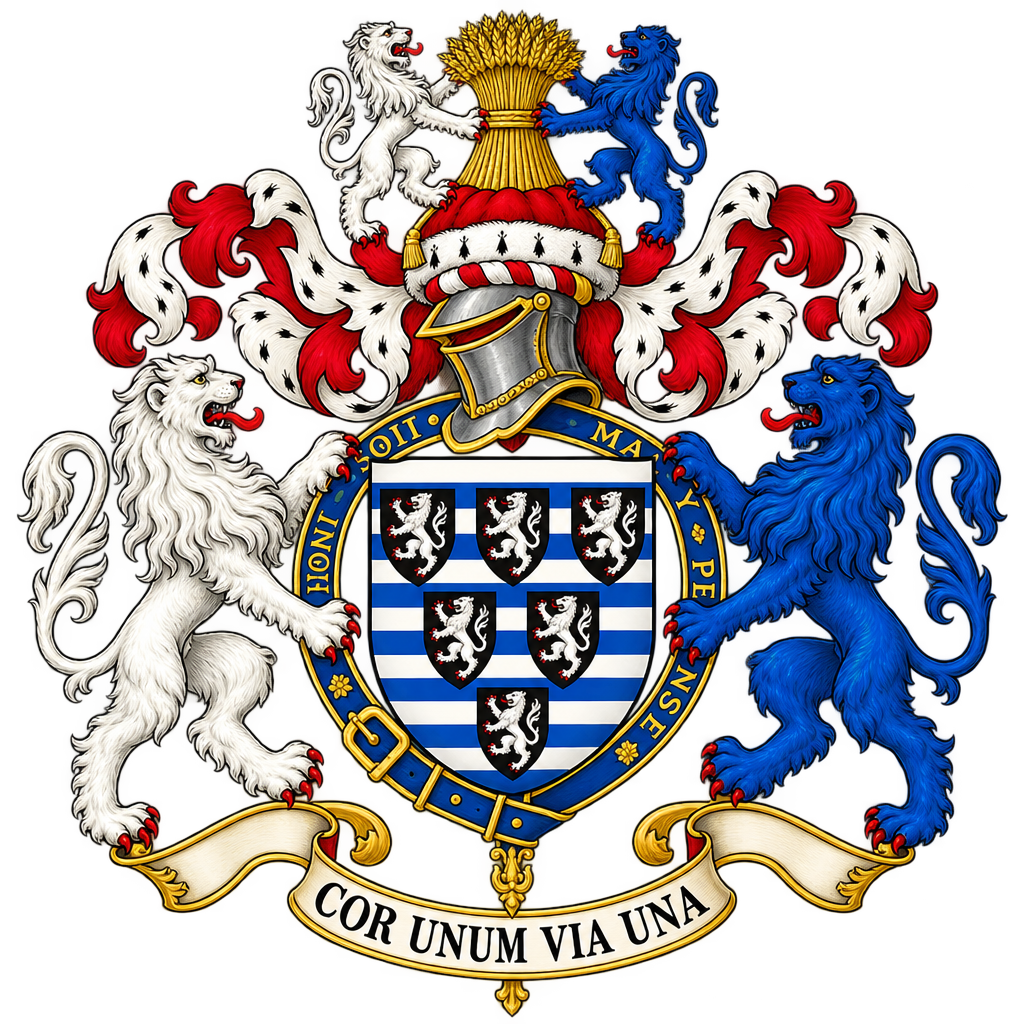
Transfer: granted_to
As Queen, Elizabeth gave Uppingham to her chief minister William Cecil, Lord Burghley, who held it until his death in 1598.
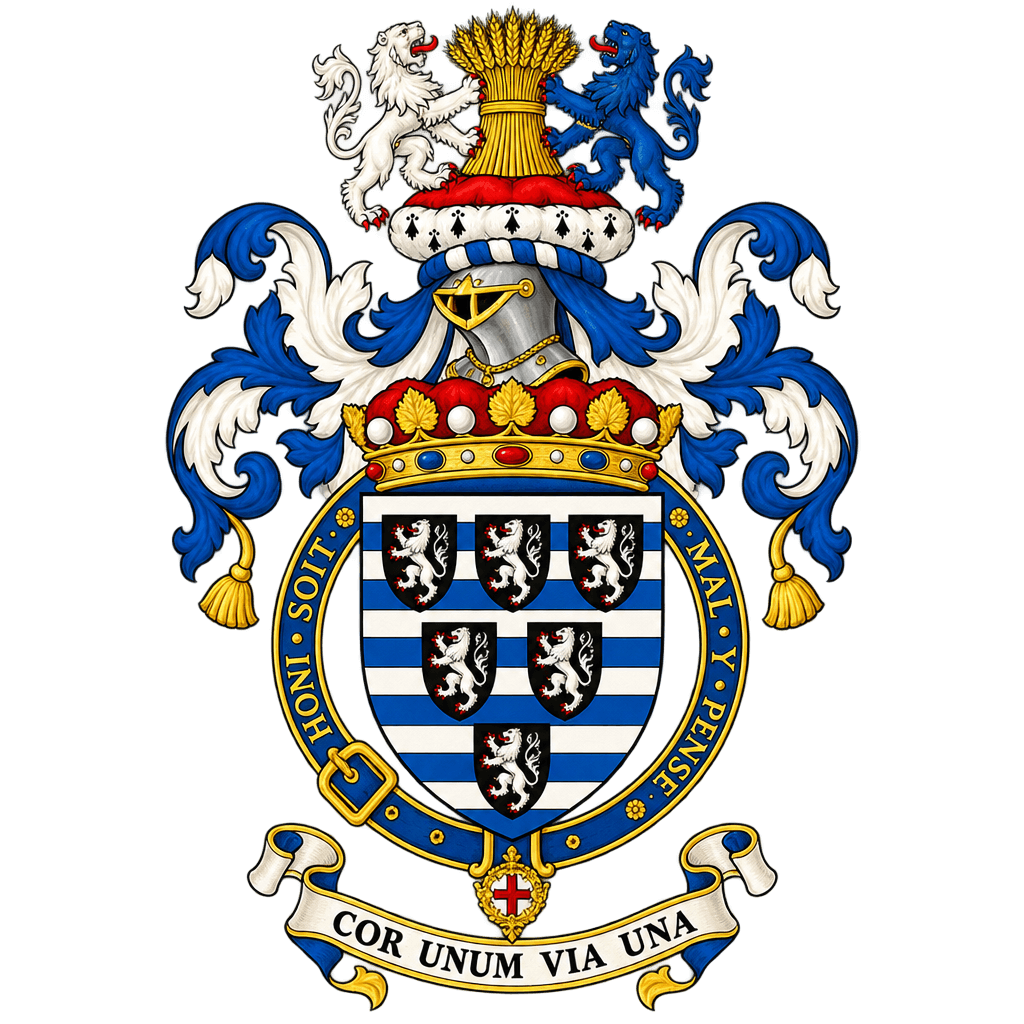
Transfer: inherited_from
Thomas Cecil succeeded his father William Cecil in 1598 and held Uppingham until the manor was given to his daughter Anne as her dowry in 1622.
Anne Cecil, Countess of Stamford, Countess of Stamford by marriage, daughter of William Cecil, 2nd Earl of Exeter
Transfer: gifted_as_dowry
Holding arrangement: Joint
In 1622 the second Earl of Exeter gave the manor to his daughter Anne as part of her dowry on her marriage to Henry Grey, Earl of Stamford; the couple retained it until its sale in 1658.
Henry Grey, 1st Earl of Stamford and Anne Cecil, Countess of Stamford
Transfer: received_as_dowry
Holding arrangement: Joint
The manor was transferred with Anne Cecil's dowry on her marriage to Henry Grey, Earl of Stamford, and was retained by the couple until 1658.
Transfer: sold_to
Previous holder: Henry Grey, 1st Earl of Stamford and Anne Cecil, Countess of Stamford
The manor was sold to Edward Fawkener in 1658.
Transfer: inherited_from
Previous holder: Edward Fawkener
In 1691 Edward Fawkener was succeeded by his son Edward, a barrister of the Middle Temple, who died in London three years later.
Lordship / Title Associations
Associations are recorded by period so changes in estate composition do not imply that every manor remained attached to the same title indefinitely.
Corrections / Challenges
Sign in to challenge or submit evidence against a recorded assertion.
JSON API
Machine-readable published manor data, including public images, mapped land areas, notes, rights, conveyances, relationships, records, source/document-library entries and public file links.
https://manorialregistry.com/index.php?rest_route=/mhr/v1/manor/uppinghamPublic API access is currently disabled. Authorised API clients must use a private X-MHR-API-Key; currently only administrator keys are enabled.
Private source files, pending edits, moderation/admin information, user API keys and non-public import identifiers are not returned.