


Manor & Lordship
- Manor / site
- Unknown
- Associated lordship
- Lordship of the Manor of Chepstow Associated
- Lordship status
- Unknown
The supplied record repeatedly distinguishes the Lordship of Chepstow and the Lordship of the Manor of Chepstow from the underlying place and manor.
Historical names: Striguil | Gilbert Strongbow | Strongbow | Striguil | Gilbert Strongbow | Strongbow
Location: Monmouthshire
Places / associated places: Monmouthshire
About the Manor
Home of Chepstow Races
CHEPSTOW is a market town lying on the border of England and Wales. The town is dissected by the River Wye, which forms the ancient boundary between the two countries. The parish consists of 1,396 acres and the town itself has grown rapidly in the 20th century with the race course after spending most of its existence as a market town. It was founded in the 7th or 8th century, replacing an earlier settlement which had been destroyed. It first appears in the Liber Landavensis, a list of churches and property belonging to the see of Llandaff in the bull of Pope Honorius II to Urban, bishop of Llandaff. In the 16th century the antiquarian Leland describes the early history of the town in his Syllabus Antiquarium Dictionum:
New Gwent, in Welsh Castell Gwent, in English Striguil. Whence also the earls of Striguil deducing their origin from the earl of Ogy, a Frenchman of whom Richard, a man most illustrious both by his descent from the Clares and most distinguished everywhere in war, first of all the Normans, who came into England, went to Ireland and returning victorious having married Eva, daughter of Dermot, ruler of Leinster, laid open to Henry the Second, King of England, a mighty window for possessing the island. Later people called this city Chepstow, that is, the marketing place. But I call this New Gwent in distinction from the old one which was four miles away.
After the Normans had overrun the area in the late 11th century, the lands around Chepstow, also known as Striguil, were granted to William Fitz-Osborne, Earl of Hereford, who was a second cousin of William I. Fitz-Osborne led the Norman force which captured the surrounding Forest of Dean and seems to have done so without much opposition. Any Welsh resistance came in the form of Caradawg ap Gruffyd, Prince of Gwent, who is recorded in Domesday Book as laying waste to four villages. He seems to have quickly given in, however, since he was present with Fitz-Osborne at the consecration of the church in Monmouth by Herwald, bishop of Llandaff in 1069. On his death in the same year, Caradawg was succeeded by his son Wan the Weak, who caved in to Fitz-Osborne completely.
The Lord of Chepstow was then in a secure enough position to erect a castle in the town, probably on the site of a demolished Welsh stockade. The castle was built on a prominent site on rocks above the River Wye and it consists of an oblong outer wall enclosing a number [of] court yards and central hall. This hall had actually been begun in 1067 and survives today, making it the oldest stone fortification in Britain. There are traces of even older buildings in parts of the castle. The archway over the main door into the Hall is constructed with bricks taken from a Roman fort which stood in the town. Over the course of two centuries various Lords of Chepstow added parts to the castle until it resembled the archetypal design of a Norman castle. Remarkably, much of the structure still stands and it is considered by many to be the most important castle in Wales, after Harlech.
In 1071 William Fitz-Osborne, under the personally delivered orders of Queen Maud, was sent to Flanders to aid Arnulph, the Count. He was slain in battle here and was buried in the Abbey of Cormeilles, which he had founded. He was succeeded in his land and titles, including the Lordship of Chepstow, by his son Roger. The second Earl joined the rebellion against William, led by his brother-in-law, Ralph de Guader, Earl of Norfolk. The rebels were defeated at the battle of Fagadon, near Norwich, to where Roger fled. He managed to hold the East Anglian town for a short time but was soon forced into surrender. He was captured and imprisoned until his death.
William I confiscated Chepstow and its castle, and granted it to Gilbert de Clare, also known as Gilbert Strongbow, the second son of Gilbert de Clare of Tonbridge, and brother of the Earl of Hertford. Gilbert was an ambitious man and was given permission to drive his forces into Wales to secure new land. He captured the lands formerly held by Cadwgan ap Bleddyn, whose estates stretched to Aberystwyth, on the West coast. In 1138 he was created Earl of Pembroke, and died ten years later. He is buried in Tintern Abbey, Cornwall. He was succeeded as Lord of Chepstow by his son Richard, also known as Strongbow, who was considered to be the most powerful noble of his day. Richard successfully invaded Ireland and subdued much of the island. To cement his newly conquered lands Richard married Eva, the daughter of Dermot, Earl of Leinster.
Richard had no male heir and his only child was Isobel, wife of William Marshal, hereditary marshal of England. William’s marriage to Isobel brought him the Lordship of Chepstow and the Earldom of Pembroke. Marshal was a confidant of King John (1199–1216) and was considered at the time to be one of this troubled King’s most sensible advisers. After John’s death and until his own in 1219 he was Protector of England, during the minority of Henry III (1216–1272). Marshal is buried in Westminster Abbey. He was succeeded by his eldest son William, who had been one of the Barons who coerced John into signing the Magna Carta. William spent a lot of his time in Chepstow and undertook a great deal of new building on the castle.
In 1228 he received special permission from Henry to remove ten giant oaks from the Forest of Dean to be used in the erection of the castle tower. The Marshal brothers proved to be unlucky, however, and they died one after another in a short time, all succeeding to the Earldom of Pembroke and none producing any heirs. After they had all passed away the Lordship went to their sister, Maud, wife of Hugh Bigod, the third Earl of Norfolk, who became Lord of the Manor.
Norfolk was succeeded by his son Roger, the 4th Earl, who was a powerful nobleman and entrusted by Henry III (1216–1272) with the guardianship of Alexander, King of Scotland, for which he received 500 marks. Roger had a high reputation as a soldier and was considered an eminent example [of] the chivalrous art. He was skilful on the battlefield and in tournaments where he was the champion of his day. In the famous tournament at Blithe in Nottinghamshire in 1237, which resulted in a general conflict between northern and south barons, Norfolk was considered to have won. He distinguished himself fighting in France but then became embroiled in a dispute with King Henry. The chronicler William Dugdale notes:
The Earl of Norfolk, making a just apology for Robert de Ros then charged with some crime, which endangered his life, had very harsh language given him by the king, being openly called traitor; whereat, with a stern countenance, he told the king that he lied; and that he never was, nor would be a traitor; adding ‘if you do nothing but what the law warranteth, you can do me no harm’ ‘Yes’ quoth the King ‘I can thrash your corn, and sell it, and so humble you’ To which he replied ‘If you do so, I will send you the heads of your threshers’. But by the interposing of the Lords then present the heat soon passed over, so that shortly after, he was, together with the Earl of Leicester and some others sent on an embassy to the King of France, to treat with him for restoring some rights which he withheld from the King.
After the victory of the Barons, who railed against Henry’s favouritism of foreigners, at the Battle of Lewes in 1264, Norfolk was made governor of Orford Castle, Suffolk and he was assigned the Marshalship of England.
Roger was succeeded in his estates, including the Lordship of Chepstow, in 1270 by his son Roger, the 5th and final Earl of Norfolk. Roger fought for Edward I in France and Scotland and despite marrying twice bore no children. Roger agreed that on his death his title and possessions would be given to the Crown. He returned his Marshal’s rod on payment of £1,000 annually, surrendering the title to the King on the condition that it would be returned to him if he produced an heir. No heir was forthcoming and on his death, Chepstow once more became the property of the Crown.
Like William Marshal, Roger had added a great deal to Chepstow Castle and most of the remains which can be seen today can be dated to his tenure. An inquisition of 1306 shows that Roger held the Lordship from the King by knight service and that, after paying for the upkeep for the castle, it was worth nothing to him. The Lord received the best fish from the Wye, 32 bottles of the best beer, and the payment of tolls into the city, fines from the evil-doings of bakers and the suit of three burgesses. The barton of the Manor and castle comprised two large woods, containing 251 acres. There was a park, which was home to a number of wild beasts, now known as Chepstow Park. Another area belonging to the Manor was a chase known at Whitewood.
It had been the intention of Edward I to grant Chepstow to his youngest son Thomas de Brotherton but the King died before his wishes could be carried out. Instead it fell to Edward II (1307–1327) to make the gift, in 1312. As well as the Lordship, Thomas was created Earl of Norfolk and Marshal of England. During the reign of Edward II however the castle at Chepstow was seized by Hugh le Despencer, the King’s favourite. In 1310 a commission had been established to investigate whether Despencer had trespassed onto the manorial land and to how he managed the castle. It was found that he had left the castle in very poor condition.
Thomas de Brotherton held his estates until 1338 when he surrendered them to his nephew, Edward III (1327–1377). Chepstow was then held by his daughter Margaret and passed to her grandson, John de Hastings, Earl of Pembroke. After his death in 1389 it passed to Thomas Mowbray, Earl of Nottingham, who was created Duke of Norfolk by Richard III in 1397.
Mowbray was one of the most powerful men in England though his relationship with Richard II (1377–1399) was not initially cordial. In 1388 he took part in the rebellion of Earls of Arundel, and Warwick against Richard’s favourite, the Duke of Ireland, helping to defeat the Duke at Radcot Bridge. He marched to London, bringing up the rear with Arundel and was among those who insisted on an interview with the King. Nottingham agreed to take supper with Richard, who was forced to issue a warrant for the arrest of the Duke of Ireland for treason. Once Richard had shaken off the tutelage of the Barons he became anxious to placate Nottingham, making him Earl-Marshal of England and giving him the responsibility to protect England’s northern border with Scotland. Throughout the 1390s Nottingham was a central player in national politics and in 1397 Richard recognized this by making Nottingham’s title of Earl-Marshal hereditary.
Nottingham seems to have rewarded his King with a loyalty he previously lacked, as in that same year was he instrumental in the arrest and execution of his brother-in-law the Earl of Arundel. Nottingham was granted swathes of Arundel’s land [in] Sussex and Surrey, and in 1397 he was created Duke of Norfolk. His position was still precarious as Richard still remembered his treason and his advisers urged him to get rid of his former enemy. Richard embroiled the Earl of Hereford in the affair when the Earl admitted to the King that Norfolk was concerned for his safety. Hereford was jealous of Norfolk’s power and readily gave a skewed account of a conversation he had had with Norfolk. The King used this to summon both parties to appear before him at Lilleshall. Hereford duly attended and was pardoned for any treason he may have committed, but Norfolk failed to show up. He did appear before Richard at Oswestry to plead his innocence and he challenged Hereford to combat, a court of Chivalry. The contest was arranged to take place in a specially prepared field outside Coventry. Both men appeared in magnificent armour, but before the battle commenced Richard ordered Norfolk’s immediate exile to Germany. Norfolk was forced to leave that day and died without ever returning to England. Hereford was also exiled and the story is the opening of Shakespeare’s Richard II.
Norfolk’s son and heir John, defied Henry VI and was executed in 1432. Chepstow again coming into the hands of the Crown. For a time it remained a Royal manor, but later came to Sir John Howard, grandson of the 2nd Duke. He swapped it for other lands with William Herbert, Earl of Huntingdon. From him it then passed to his son-in-law, Charles Somerset, who was created Earl of Worcester in 1513. Somerset was the illegitimate son of Henry Beaufort, Duke of Somerset and was knighted in 1497. After his marriage he attained great wealth and was summoned to Parliament as Lord Herbert. After a successful military campaign in France, in which he was instrumental in the taking of Terouanne and Tournai, he was created Earl of Worcester. He died in 1526 and was succeeded by his son Henry, the 2nd Earl. Henry’s son, William, the third Earl, is mentioned in an extensive rental of Chepstow Manor, as Lord in 1567. William’s grandson, Henry was created Marquess of Worcester by Charles I in 1642 after his stout defence of Raglan Castle during the early phase of the Civil War. Henry’s son, Edward, who succeeded his father to the Lordship in 1646, was a zealous Loyalist and was appointed Lord Lieutenant of South Wales in 1642. In 1644 he was sent by Charles to Ireland, where he was created Earl of Glamorgan. He survived the war and died in 1667. Among his personal papers were a number of manuscripts he had written, one of which vividly describes the application of the steam engine, almost 60 years before the machine was successfully invented.
Henry, the 2nd Marquess, was created Duke of Beaufort, in 1682, and, like his father, was a committed supporter of the Stuarts. He refused to take the oath of allegiance to William III in 1688 and retired from public life. From this time on the Dukes of Beaufort’s political influence was much reduced and instead they consolidated their position as wealthy landowners and well as Lords of the Manor of Chepstow and hereditary keepers of Raglan Castle.
The Lordship of the Manor of Chepstow remained with the Dukes of Beaufort until the 1960s, and it was under their tenure in the 18th and 19th centuries that the town grew and prospered. In the medieval period it had consisted of a walled enclosure of 113 acres. The town wall, known as Port Wall begins at the River Wye and much of it still remains. The main entrance to the town in the Welsh Gate. After the Civil War the town began to expand, becoming an important regional industrial centre. The port of Chepstow was an important one, since for a long time it was the only one in Gwent, except for Newport, at which large ships could dock. By the 18th century the town had developed a strong overseas trade, dealing in the import and export of wine, deals, hemp, flax, pitch, tar, timber, iron and cider. At this time, the Duke of Beaufort, as Lord of the Manor of Chepstow possessed the fishing rights to the Severn from Cone Pill to the New Passage and in the Wye from Brockweir to the mouth of the river. The rent of fisheries in 1770 was said to be £300. Chepstow was also a centre of shipbuilding, bell making and clock-making.
Today Chepstow is as much known for its race course as itself. The race course lies within the manorial extent of Chepstow, in the grounds of Piercefield House and is the home of racing in Wales, annually holding the Welsh Grand National, a few days after Christmas. Past winners of this event include the immortal Rag Trade and Corbiere, both of which went on to win the Grand National at Aintree. Its first meeting was held in August 1926, making it the youngest of Britain’s 59 racecourses though it is considered by many to be one of the most picturesque courses in Britain, and extremely popular with fans of the sport. It has witnessed some of the most famous incidents in racing, including Sir Gordon Richard’s world record of 11 straight victories at a meeting in 1933 and Frankie Dettori becoming the first teenager in 35 years to ride a 100 winners in a season. It also saw the greatest jockey of all time, Lester Piggott, win his comeback race after five years in 1990, at the age of 54.
The Beauforts sold Chepstow to the Curre family whose trustees sold to the present owner. The Lordship of the Manor is being offered privately for sale by a member of the Manorial Society.
Numerous documents associated with this Lordship which will be handed over to the purchaser, are at the Auctioneers, where they may be inspected by appointment.
Rights, customs and incidents
But by the interposing of the Lords then present the heat soon passed over, so that shortly after, he was, together with the Earl of Leicester and some others sent on an embassy to the King of France, to treat with him for restoring some rights which he withheld from the King.
The Lord received the best fish from the Wye, 32 bottles of the best beer, and the payment of tolls into the city, fines from the evil-doings of bakers and the suit of three burgesses.
At this time, the Duke of Beaufort, as Lord of the Manor of Chepstow possessed the fishing rights to the Severn from Cone Pill to the New Passage and in the Wye from Brockweir to the mouth of the river.
Source notes
Catalogue gifted & transcribed for the archive by the Lord of Finchingfield - a friend to learning
Ownership / Holder Account
Historical holder / succession information
- their sister, Maud [source claim requiring identity review]
passed_to · historical_holder_or_transferee
Source wording: After they had all passed away the Lordship went to their sister, Maud, wife of Hugh Bigod, the third Earl of Norfolk, who became Lord of the Manor. - away the Lordship went to their sister, Maud [source claim requiring identity review]
lord_of_manor · historical_holder_or_transferee
Source wording: After they had all passed away the Lordship went to their sister, Maud, wife of Hugh Bigod, the third Earl of Norfolk, who became Lord of the Manor. - An inquisition of 1306 shows that Roger [source claim requiring identity review]
1306 · held_manor · historical_holder_or_transferee
Source wording: An inquisition of 1306 shows that Roger held the Lordship from the King by knight service and that, after paying for the upkeep for the castle, it was worth nothing to him. - Sir John Howard, grandson of the 2nd Duke
passed_to · historical_holder_or_transferee
Source wording: For a time it remained a Royal manor, but later came to Sir John Howard, grandson of the 2nd Duke.
Manorial Rights & Privileges
Historic manorial rights / privileges (2)
Fishing rights in the River Wye from Brockweir to the mouth of the river
Provisional
The supplied record states that the Duke of Beaufort, as Lord of the Manor of Chepstow, possessed these fishing rights.
Fishing rights in the Severn from Cone Pill to the New Passage
Provisional
The supplied record states that the Duke of Beaufort, as Lord of the Manor of Chepstow, possessed these fishing rights.
Conveyance & Descent
First holder to present holder: blood proximity & distance travelled
First recorded holder: Sir John Howard, grandson of the 2nd Duke
Present holder:
Recorded title journey: 13 holder entries in this manor's saved Conveyance & Descent history.
No recorded holder currently has a usable saved direct-blood or collateral-blood relationship path from which to calculate proximity percentages.
First recorded holder → present holder
A usable saved blood relationship path between the first recorded holder and the present holder has not yet been recorded, so that first-to-present genealogical distance cannot be calculated.
Sir John Howard, grandson of the 2nd Duke
Transfer: passed_to
Source role: historical_holder_or_transferee. For a time it remained a Royal manor, but later came to Sir John Howard, grandson of the 2nd Duke.
Source: Lot #13 of Manorial Auctioneers - Undated but Post-2002
William FitzOsbern, Earl of Hereford, 1st Earl of Hereford, Norman magnate
Transfer: granted_to
After the Norman conquest, the lands around Chepstow, also known as Striguil, were granted to William FitzOsbern, Earl of Hereford, who established the Norman lordship and began the castle works.
Transfer: inherited
Previous holder: William FitzOsbern, Earl of Hereford, 1st Earl of Hereford, Norman magnate
On the death of William FitzOsbern in 1071, his son Roger succeeded to his lands and titles, including the Lordship of Chepstow. The lordship was subsequently confiscated by William I after Roger's rebellion.
Gilbert de Clare, Earl of Pembroke, 1st Earl of Pembroke, lord of Striguil/Chepstow, 8th Earl of Gloucester, 7th Earl of Hertford, English nobleman and military leader
Transfer: granted_to
Previous holder: Roger de Breteuil, 2nd Earl of Hereford
Following royal confiscation, William I granted Chepstow and its castle to Gilbert de Clare, also known as Gilbert Strongbow.
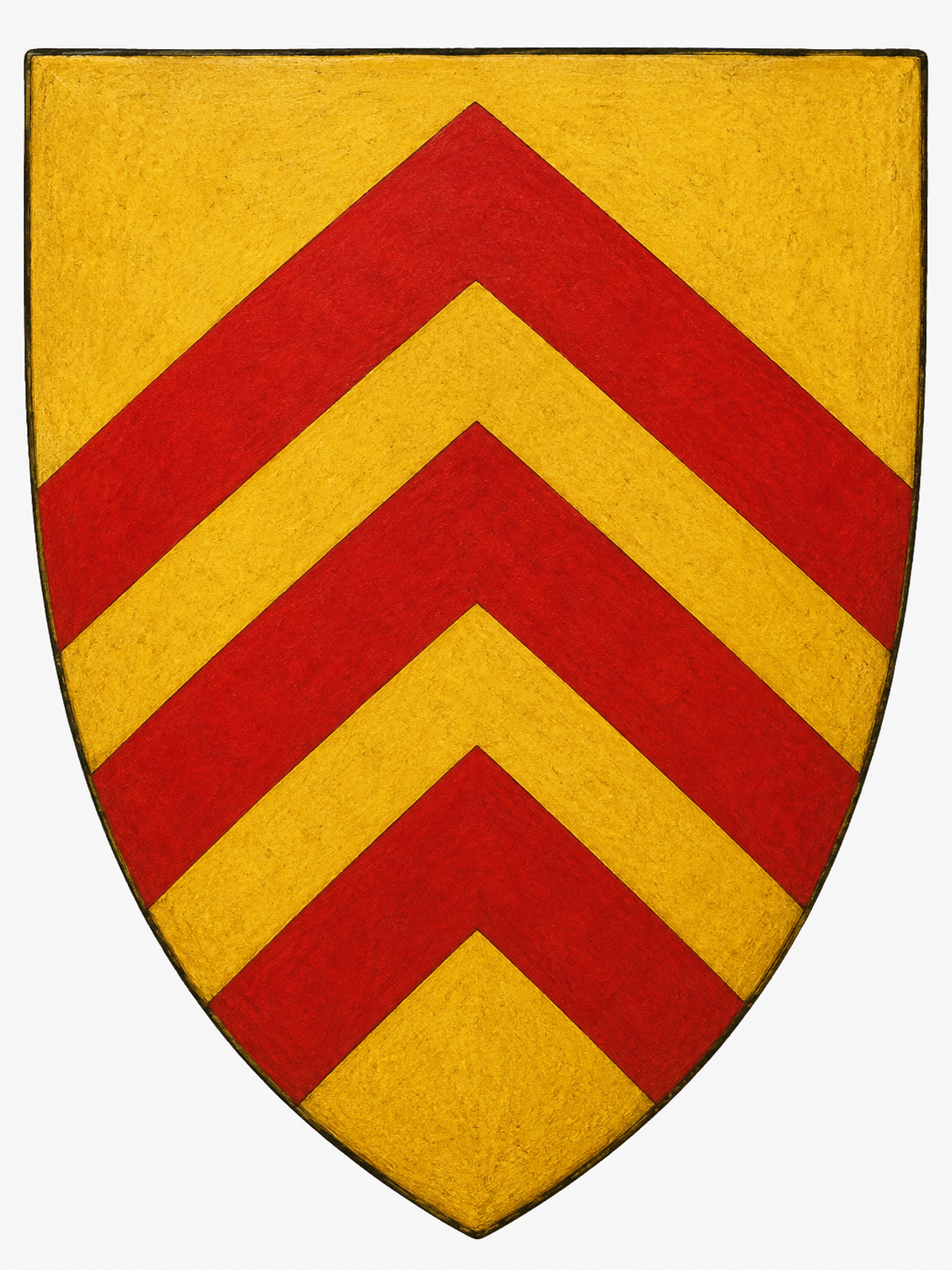
Transfer: inherited
Richard de Clare, known as Strongbow, succeeded his father Gilbert as Lord of Chepstow and Earl of Pembroke.
William Marshal, 1st Earl of Pembroke, Marshal of England, royal regent, regent of England, hereditary Marshal of England, Regent and Protector of England during the minority of Henry III
Transfer: acquired_through_marriage
Previous holder: Isabel de Clare, suo jure Countess of Pembroke, heiress of Richard de Clare
Richard de Clare's only child, Isabel, married William Marshal. Through this marriage William Marshal acquired the Lordship of Chepstow and the Earldom of Pembroke.
Roger Bigod, 4th Earl of Norfolk, 5th Earl of Norfolk, Marshal of England
Transfer: inherited
Previous holder: Maud Marshal, Countess of Norfolk, daughter of William Marshal, 1st Earl of Pembroke
Roger Bigod, 4th Earl of Norfolk, succeeded to the estates including the Lordship of Chepstow.
Roger Bigod, 5th Earl of Norfolk, 4th Earl of Norfolk, Marshal of England
Transfer: inherited
Previous holder: Roger Bigod, 4th Earl of Norfolk, 5th Earl of Norfolk, Marshal of England
Roger Bigod, 5th and final Earl of Norfolk, succeeded his father in 1270 and held the Lordship of Chepstow until his death. An inquisition of 1306 recorded his tenure from the Crown by knight service.
The Crown
Transfer: escheated_to
Holding arrangement: Other
Previous holder: Roger Bigod, 5th Earl of Norfolk, 4th Earl of Norfolk, Marshal of England
After Roger Bigod's death without issue, Chepstow became Crown property and remained a royal manor for a period.
Thomas de Brotherton, Earl of Norfolk, 1st Earl of Norfolk, Marshal of England, son of Edward I, Earl Marshal of England
Transfer: granted_to
Previous holder: The Crown
Edward II granted the Lordship of Chepstow to his half-brother Thomas de Brotherton in 1312, together with the earldom of Norfolk and the Marshalship of England.
Edward III, King of England
Transfer: surrendered_to
Previous holder: Thomas de Brotherton, Earl of Norfolk, 1st Earl of Norfolk, Marshal of England, son of Edward I, Earl Marshal of England
Thomas de Brotherton surrendered his estates, including Chepstow, to his nephew Edward III in 1338.
John Hastings, Earl of Pembroke, lord of Chepstow
Transfer: inherited
Previous holder: Margaret, Countess of Norfolk
Chepstow passed from Margaret to her grandson John Hastings, Earl of Pembroke, who held it until his death in 1389.
Thomas Mowbray, Duke of Norfolk
Transfer: inherited
Previous holder: John Hastings, Earl of Pembroke, lord of Chepstow
After John Hastings's death in 1389, Chepstow passed to Thomas Mowbray, Earl of Nottingham, later Duke of Norfolk.
Lordship / Title Associations
Associations are recorded by period so changes in estate composition do not imply that every manor remained attached to the same title indefinitely.
Associated · medieval period · Provisional
Source: Offline model knowledge; source verification required
The supplied record repeatedly distinguishes the Lordship of Chepstow and the Lordship of the Manor of Chepstow from the underlying place and manor.
Research Status / Wanted Evidence
Wanted evidence: Source-backed evidence resolving this point
Offline backfill could not securely resolve this without source research.
Wanted evidence: Source-backed evidence resolving this point
Offline backfill could not securely resolve this without source research.
Wanted evidence: Source-backed evidence resolving this point
Offline backfill could not securely resolve this without source research.
Corrections / Challenges
Sign in to challenge or submit evidence against a recorded assertion.
JSON API
Machine-readable published manor data, including public images, mapped land areas, notes, rights, conveyances, relationships, records, source/document-library entries and public file links.
https://manorialregistry.com/index.php?rest_route=/mhr/v1/manor/chepstowPublic API access is currently disabled. Authorised API clients must use a private X-MHR-API-Key; currently only administrator keys are enabled.
Private source files, pending edits, moderation/admin information, user API keys and non-public import identifiers are not returned.