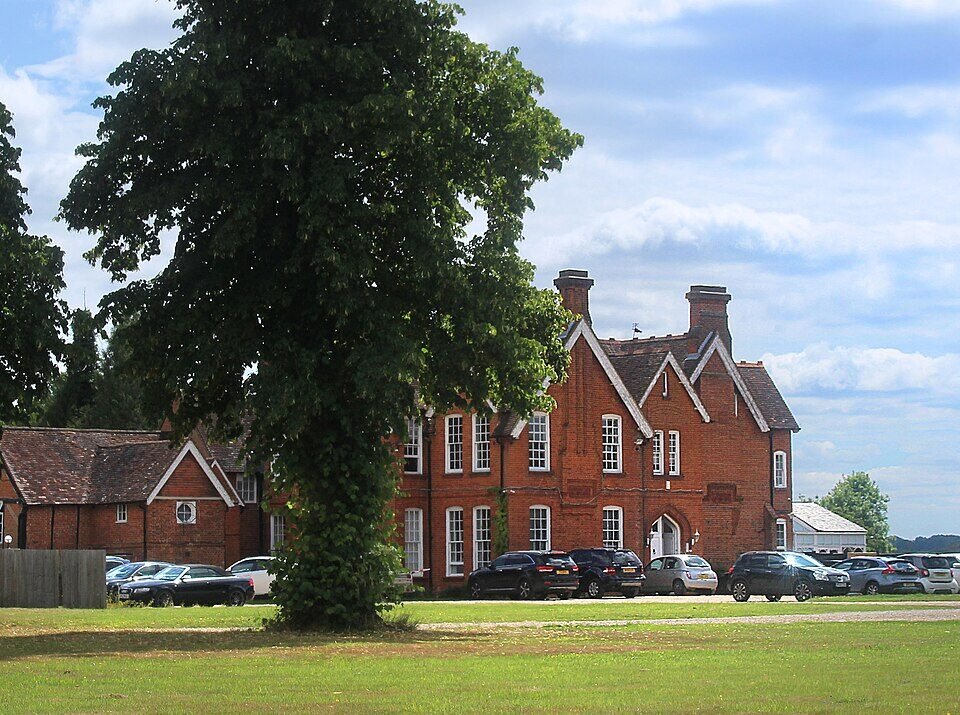



Location: Little Gaddesden, Hertfordshire
Places / associated places: Little Gaddesden, Hertfordshire
Location & Extent
GPS Location & Recorded Land Areas
Representative GPS point: 51.79927, -0.56023
Identity: confirmed — The registry location in Little Gaddesden, Hertfordshire matches the historic Ashridge manor and estate centred on Ashridge House. Historical evidence records the Manor of Ashridge together with Gaddesden Parva and Frithsden, and the surviving Ashridge House occupies the established manorial and estate centre.
Representative point: 51.79927, -0.56023
Basis: documented_manor_house — Ashridge House, the documented historic seat and centre of Ashridge Manor, is listed by Historic England at National Grid Reference SP9939712210. The WGS84 point is approximately 51.79927, -0.56023.
Point confidence: high
Boundary status: representative_point_only
Boundary period: Not established from the available evidence
Boundary confidence: none
Boundary basis: Sources establish that the manor and later estate included Ashridge, Gaddesden Parva/Little Gaddesden and Frithsden, and that the later Ashridge Estate extended across a large area of parkland, woodland, commons and acquired parcels. However, the available web evidence does not provide a reliable, manor-specific historical perimeter. The approximately 800-hectare Historic England registered park is a designed landscape boundary and cannot safely be substituted for the medieval or early-modern manorial extent.
Sources:
- Ashridge House, including raised terrace, walls and steps to east and south, and iron railings to north — Historic England listing 1348442: https://historicengland.org.uk/listing/the-list/list-entry/1348442 — Identifies Ashridge House in Little Gaddesden and gives National Grid Reference SP9939712210, supporting the representative location.
- Ashridge Estate, Little Gaddesden — Historic England registered park and garden 1000330: https://historicengland.org.uk/listing/the-list/list-entry/1000330 — Describes the historic Ashridge estate, its approximately 800-hectare extent, surrounding landmarks and boundaries, while distinguishing the designed estate landscape from a proven manor boundary.
- History of Ashridge — Manor and Mansion: https://ashridge.uk/localhistoryashridgemanorandmansion.htm — Records the 1605 grant of the Manor of Ashridge, Gaddesden Parva and Frithsden, and describes the historic park surrounding the Ashridge house.
- History of Ashridge Estate — National Trust: https://www.nationaltrust.org.uk/visit/essex-bedfordshire-hertfordshire/ashridge-estate/brief-history-of-ashridge — Confirms the continuity of Ashridge as a monastic foundation, royal residence, private Bridgewater/Brownlow estate and later estate divided into parcels; the current National Trust estate is not treated as the historic manor boundary.
- Ashridge House history: https://www.ashridgehouse.org.uk/visit-us/history/ — Confirms Ashridge's historic ownership by Sir Thomas Egerton from 1604 and its continuity as the principal Ashridge house and estate centre.
Warnings / uncertainty:
- The representative point is suitable for locating the manor's historic centre, but the exact manorial land extent remains unproven from the available sources.
- Do not substitute the modern civil parish of Little Gaddesden, the current National Trust estate, or the Historic England registered park boundary for the historic manor boundary.
- Ashridge House is largely an early nineteenth-century rebuilding on the historic Ashridge monastic/manorial site.
About the Manor
Ashridge was a major medieval religious foundation and later country estate at Little Gaddesden. The foundation was established in 1283 by Edmund, 2nd Earl of Cornwall, for the Order of Bonhommes; the religious house was dissolved in 1539.
Ownership / Holder Account
Ashridge was founded as a religious house in 1283. Following its dissolution in 1539, the Ashridge estate passed into Crown hands and was subsequently granted to Anne of Cleves in the reign of Edward VI. Later ownership included Sir Thomas Egerton, Lord Ellesmere, after a Crown grant in the early seventeenth century, and the Egerton/Bridgewater family. This history relates primarily to the Ashridge estate and should not be treated as proof of a separate surviving lordship title without further verification.
Conveyance & Descent
First holder to present holder: blood proximity & distance travelled
First recorded holder: Ashridge Bonhommes religious house
Present holder:
Recorded title journey: 4 holder entries in this manor's saved Conveyance & Descent history.
No recorded holder currently has a usable saved direct-blood or collateral-blood relationship path from which to calculate proximity percentages.
First recorded holder → present holder
A usable saved blood relationship path between the first recorded holder and the present holder has not yet been recorded, so that first-to-present genealogical distance cannot be calculated.
Transfer: Founded by Edmund, 2nd Earl of Cornwall
Holding arrangement: Other
Ashridge was established in 1283 at Little Gaddesden as a religious foundation for the Order of Bonhommes. This records the foundation and institutional tenure of the Ashridge estate, not necessarily a separately constituted manorial lordship.
The Crown
Transfer: Dissolution of the religious house and transfer into Crown hands
Holding arrangement: Other
Previous holder: Ashridge Bonhommes religious house
Following the dissolution of Ashridge in 1539, the Ashridge estate passed into Crown hands.
Anne of Cleves, Queen consort of England, Scotland and Ireland, Queen consort of James VI and I, 1540, Duchess of Cleves, Queen of England (briefly
Transfer: Crown grant
Previous holder: The Crown
The Ashridge estate was subsequently granted by the Crown to Anne of Cleves during the reign of Edward VI.
Sir Thomas Egerton, Lord Ellesmere, 2nd Earl of Wilton, Viscount Grey de Wilton, Baron Grey de Wilton, Lord Chancellor of England, Baron Ellesmere, Viscount Brackley, 1st Baron Ellesmere, 1st Viscount Brackley, Lord Keeper of the Great Seal, 1st Earl of Bridgewater, Solicitor General, Master of the Rolls, Lord Chancellor
Transfer: Crown grant
Previous holder: The Crown
A later Crown grant placed the Ashridge estate with Sir Thomas Egerton, Lord Ellesmere, in the early seventeenth century. The registry describes this as estate ownership and cautions that it should not be treated as proof of a separate surviving lordship title.
Corrections / Challenges
Sign in to challenge or submit evidence against a recorded assertion.
JSON API
Machine-readable published manor data, including public images, mapped land areas, notes, rights, conveyances, relationships, records, source/document-library entries and public file links.
https://manorialregistry.com/index.php?rest_route=/mhr/v1/manor/ashridge-manorPublic API access is currently disabled. Authorised API clients must use a private X-MHR-API-Key; currently only administrator keys are enabled.
Private source files, pending edits, moderation/admin information, user API keys and non-public import identifiers are not returned.