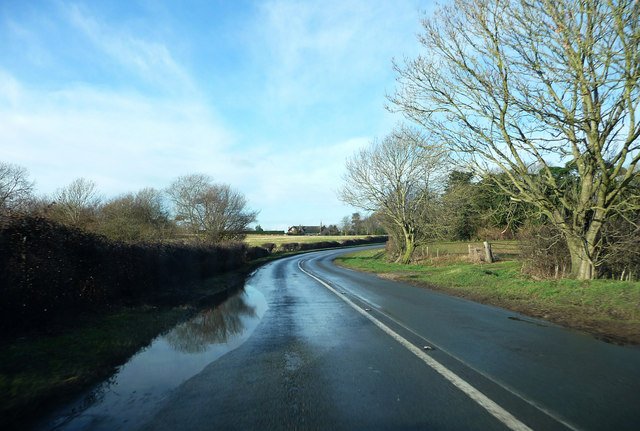



Historical names: Aldesworth
Location: Westbourne, Sussex
Places / associated places: Westbourne, Sussex
Location & Extent
GPS Location & Recorded Land Areas
Representative GPS point: 50.8722, -0.912
Identity: confirmed — The record is explicitly identified as Aldsworth Manor in Westbourne, Sussex. Independent manorial research identifies Aldsworth in Westbourne as a distinct sub-manor, also recorded as Aldesworth, created from the main Westbourne manor in the mid-12th century and reunited with Westbourne in 1661. The supplied Arundel Castle references also expressly identify a Manor of Aldsworth in Westbourne.
Representative point: 50.8722, -0.9120
Basis: supported_manorial_centre — Approximate centre of the surviving Aldsworth Manor/Aldsworth Manor Farm complex in the Aldsworth hamlet of Westbourne. The site is identified by local planning and parish evidence as Aldsworth Manor and its associated farm; the coordinate is interpolated from the documented Ordnance Survey grid reference for the manor-farm complex and nearby mapped property points, rather than from a surveyed building centroid.
Point confidence: medium
Boundary status: representative_point_only
Boundary period: Medieval manor, documented from the mid-12th century; reunited with Westbourne in 1661
Boundary confidence: none
Boundary basis: Sources establish the manor's identity, descent, tenurial status as a quarter or half knight's fee of the Honour of Arundel, and association with the Aldsworth hamlet/manor-farm complex, but no accessible manor map, rental plan, survey, or explicit perimeter has been found. The modern Westbourne parish boundary and the present Stansted or Aldsworth farm estate cannot safely be substituted for the historical manorial extent.
Sources:
- Sheldon Manors: Aldsworth, Westbourne, West Sussex: https://www.sheldonmanors.org.uk/manors/aldsworth — Identifies Aldsworth as a Westbourne manor, also known as Aldesworth, documented from 1150; records its descent, quarter or half knight's fee status, and reunion with Westbourne in 1661. It also states that Aldsworth formed part of the main Westbourne manor before its separate medieval tenure.
- Victoria County History, A History of the County of Sussex, Volume 4, pp. 126-132: https://www.british-history.ac.uk/vch/sussex/vol4/pp126-132 — Cited by the manorial study as the principal scholarly source for the history and descent of Aldsworth and Westbourne.
- Westbourne Village Design Statement: https://www.westbourne-pc.gov.uk/_UserFiles/Files/Neighbourhood%20Plan/Evidence%20Base%20Documents/Housing%20and%20Population/18%20-%20H-P%20-%20Village%20Design%20Statement.pdf — Places Aldsworth as a hamlet of Westbourne and specifically describes Aldsworth Manor together with its farm on the ridge, supporting the surviving manorial-centre location.
- South Downs National Park planning document for Aldsworth Manor Farm: https://chichester.moderngov.co.uk/documents/s14209/12.0%20SDNP-19-00253-FUL%20Aldsworth%20Manor%20Farm.pdf — Provides the surviving site address Aldsworth Manor Farm, Sheepwash Lane, Aldsworth, Westbourne, PO10 8QT, confirming the modern location of the manor-farm complex.
- Historic England: The Manor House, Westbourne: https://historicengland.org.uk/listing/the-list/list-entry/1354630 — Useful negative-control evidence: this separately listed Manor House is in Woodmancote, not Aldsworth, and should not be confused with the exact Aldsworth Manor record.
- Arundel Castle MSS catalogue volume: https://www.arundelcastle.org/wp-content/uploads/2019/11/Vol-2.pdf — Lists the relevant historical record group as the Manor of Aldsworth in Westbourne, including the 1459 court roll and a later admission concerning land called Woolhurst.
- The National Archives: Aldsworth Manor record F255151: https://discovery.nationalarchives.gov.uk/details/c/F255151 — Registry authority record supplied for the exact manor identification.
Warnings / uncertainty:
- The representative coordinate is an approximate manorial-centre point, not a surveyed manor-house centroid.
- No historically defensible perimeter polygon was located; do not inject a boundary derived from the modern Westbourne parish, postcode, or present farm ownership.
About the Manor
Aldsworth was a medieval sub-manor in the ancient parish of Westbourne, Sussex, also recorded as Aldesworth. It was carved out of the main Westbourne estate in the mid-twelfth century, when William, Earl of Arundel, granted it to Ralph de la Roche for the render of a hunting spear at Martinmas; the obligation was later expressed as one boar-spear or 6d. The estate was held as a quarter or half knight's fee of the honour of Arundel. In 1243 a half fee in Aldsworth was assigned to John FitzAlan during the division of the d'Aubigny estates. Aldsworth had become an independent manor by the late thirteenth century. It descended through the de la Roche and Dawtrey families, passed to Philip Jermyn in 1633, and was sold by Alexander Jermyn to Lord Lumley in 1661. Thereafter it followed the descent of the principal Westbourne and Stansted estate through the Lumleys, earls of Scarborough, Richard Barwell, Lewis Way, Charles Dixon, and George Wilder. The manor was reunited with the main Westbourne descent in 1661. The associated manor-house site is in Aldsworth hamlet within Westbourne parish; modern references to Aldsworth Manor should not be confused with the separately located listed Aldsworth Manor in Gloucestershire. Sources: L.F. Salzman, ed., A History of the County of Sussex, volume 4, pages 126-132; Sheldon Manors, Aldsworth profile; Westbourne local-history material.
Ownership / Holder Account
The earliest securely identified mesne lord was Ralph de la Roche, who received Aldsworth from William, Earl of Arundel, in the mid-twelfth century. The estate passed by inheritance to Richard de la Roche and in 1292 was transferred to John Dawtrey and Cecily his wife. A Dawtrey holding is directly evidenced in 1439, when Andrew Dautre was described as lord of the manor of Aldsworth in Westbourne. The manor then descended within the Dawtrey family. Sir John Dawtrey died seised of it in 1542 and had settled it on his son, another Sir John Dawtrey, who died in 1549; William Dawtrey subsequently controlled the manor. In 1624 Anne Dawtrey and her husband Thomas Stanley received the manor, and in 1633 Francis Dawtrey and John Stanley sold it to Philip Jermyn. Alexander Jermyn, his successor, sold Aldsworth to Lord Lumley in 1661. From that sale onward Aldsworth followed the main Westbourne and Stansted descent. The later succession is securely stated in the available secondary source as the Lumleys, earls of Scarborough, Richard Barwell, Lewis Way, Charles Dixon, and George Wilder, although the precise instruments and dates for several of those later transfers have not been located in the public material reviewed. A 1826 conveyance directly records Lewis Way transferring the Stansted estate context to Charles Dixon, and George Wilder was identified as lord of the manor of Westbourne in 1909. The historical descent is therefore complete in broad outline but contains documentary gaps between some later named holders.
Records & References
Sources and references mentioning this manor/title which are not necessarily conveyances or transfers.
8 records found · showing 1–8.
1766-1866: court book
Held by: Hampshire Archives
Further information: NRA 25223 Longcroft
1700-1800: particulars of freehold, copyhold and leasehold, with other manors
Held by: Hampshire Archives
Further information: NRA 25223 Longcroft
1698-1698: court book, with other manors
Held by: West Sussex Record Office
1475-1500: account roll
Held by: Arundel Castle
Further information: NRA 12614 Fitzalan-Howard
1459-1459: court roll
Held by: Arundel Castle
Further information: NRA 12614 Fitzalan-Howard
1410-1411: accounts
Held by: Arundel Castle
Further information: NRA 12614 Fitzalan-Howard
1406-1406: court roll (mutilated)
Held by: Arundel Castle
Further information: NRA 12614 Fitzalan-Howard
1375-1375: accounts, with Stansted
Held by: Arundel Castle
Further information: NRA 12614 Fitzalan-Howard
Conveyance & Descent
First holder to present holder: blood proximity & distance travelled
First recorded holder: Ralph de la Roche
Present holder:
Recorded title journey: 16 holder entries in this manor's saved Conveyance & Descent history.
No recorded holder currently has a usable saved direct-blood or collateral-blood relationship path from which to calculate proximity percentages.
First recorded holder → present holder
A usable saved blood relationship path between the first recorded holder and the present holder has not yet been recorded, so that first-to-present genealogical distance cannot be calculated.
Transfer: Grant by William, Earl of Arundel, to Ralph de la Roche; the grant required the render of a hunting spear at Martinmas.
Previous holder: William, Earl of Arundel
The mid-twelfth-century grant is the first securely described creation of Aldsworth as a separate mesne estate. The estate was held of the honour of Arundel and subject to a customary render, later described as one boar-spear or 6d.
Source: Sheldon Manors, Aldsworth, citing L.F. Salzman, ed., A History of the County of Sussex, volume 4, pages 126-132. — source link
Transfer: Inheritance from the de la Roche holding; Richard de la Roche transferred the manor in 1292.
Shared holding: de la Roche family
Previous holder: Ralph de la Roche
The available source identifies Richard de la Roche as the holder immediately before the 1292 transfer, but does not provide a more precise date for his succession from Ralph de la Roche.
Source: Sheldon Manors, Aldsworth profile, summarising VCH Sussex, volume 4, pages 126-132. — source link
Transfer: Transfer from Richard de la Roche to John Dawtrey and Cecily his wife.
Holding arrangement: Joint
Shared holding: Dawtrey family
Co-holders: Andrew Dautre, Sir John Dawtrey, William Dawtrey
Previous holder: Richard de la Roche
The 1292 transfer is explicitly identified as a transfer of the manor. Cecily Dawtrey is recorded as a holder in 1327. The precise date and mechanism by which the manor passed from this couple to later Dawtrey holders are not established in the sources reviewed.
Source: Sheldon Manors, Aldsworth profile, summarising VCH Sussex, volume 4, pages 126-132. — source link
Transfer: The exact acquisition is unknown. Andrew Dautre was described in a deed of exchange dated 9 April 1439 as lord of the manor of Aldsworth in Westbourne.
Shared holding: Dawtrey family
Co-holders: John Dawtrey and Cecily Dawtrey, Sir John Dawtrey, William Dawtrey
Previous holder: unknown
This is direct documentary evidence of the manor connection. The deed concerned a parcel of the manor, consisting of lands, tenements, meadows, pastures, feedings, rents, and services. The source does not establish whether Andrew Dautre held the entire lordship in fee, a principal share, or the manor subject to another interest; it does, however, explicitly call him lord of the manor.
Source: West Sussex Record Office, Add Mss 12317, deed of exchange, 9 April 1439; catalogue description reproduced by Sheldon Manors. — source link
Transfer: Inheritance within the Dawtrey family; Sir John Dawtrey died seised of Aldsworth in 1542 and had settled it upon his son.
Shared holding: Dawtrey family
Co-holders: John Dawtrey and Cecily Dawtrey, Andrew Dautre, William Dawtrey
Previous holder: Dawtrey family
The source identifies Sir John Dawtrey as the holder who died in 1542. The precise date on which he acquired the manor is not stated. The source also reports that he settled Aldsworth upon his son, Sir John Dawtrey.
Source: Sheldon Manors, Aldsworth profile, summarising VCH Sussex, volume 4, pages 126-132. — source link
Transfer: Settlement by his father, Sir John Dawtrey, followed by possession until his death in 1549.
Shared holding: Dawtrey family
Co-holders: John Dawtrey and Cecily Dawtrey, Andrew Dautre, William Dawtrey
Previous holder: Sir John Dawtrey, Dawtrey landowner
This entry concerns the younger Sir John Dawtrey named in the settlement made by his father. The source gives his death year as 1549. It does not provide the terms of the settlement or identify every intervening legal interest.
Source: Sheldon Manors, Aldsworth profile, summarising VCH Sussex, volume 4, pages 126-132. — source link
Transfer: Inheritance and subsequent control within the Dawtrey family after the death of Sir John Dawtrey in 1549.
Shared holding: Dawtrey family
Co-holders: John Dawtrey and Cecily Dawtrey, Andrew Dautre, Sir John Dawtrey
Previous holder: Sir John Dawtrey, Dawtrey landowner
The source states that William Dawtrey eventually controlled Aldsworth after the death of Sir John Dawtrey in 1549. The exact legal route and date of William's acquisition are not given, so the transfer is recorded as family succession with uncertainty rather than as a precisely documented conveyance.
Source: Sheldon Manors, Aldsworth profile, summarising VCH Sussex, volume 4, pages 126-132. — source link
Transfer: Received the manor in 1624; in 1633 Francis Dawtrey and John Stanley sold Aldsworth to Philip Jermyn.
Holding arrangement: Joint
Shared holding: Dawtrey-Stanley family holding
Previous holder: William Dawtrey, Dawtrey landowner
The source states that William Dawtrey's granddaughter Anne and her husband Thomas Stanley received the manor in 1624. The 1633 sale was made by Francis Dawtrey and John Stanley, indicating that the legal parties to the conveyance were not necessarily identical to the 1624 recipients; the precise intervening interests are not supplied.
Source: Sheldon Manors, Aldsworth profile, summarising VCH Sussex, volume 4, pages 126-132. — source link
Transfer: Purchase from Francis Dawtrey and John Stanley in 1633.
Shared holding: Jermyn family
Co-holder: Alexander Jermyn
Previous holder: Francis Dawtrey and John Stanley
The 1633 sale is explicitly identified as a sale of Aldsworth to Philip Jermyn. The source does not give the precise date on which Philip Jermyn's interest passed to Alexander Jermyn, but Alexander held it by 1661.
Source: Sheldon Manors, Aldsworth profile, summarising VCH Sussex, volume 4, pages 126-132. — source link
Transfer: Inheritance or succession from Philip Jermyn, followed by sale to Lord Lumley in 1661.
Shared holding: Jermyn family
Co-holder: Philip Jermyn
Previous holder: Philip Jermyn
Alexander Jermyn held Aldsworth by 1661 and sold it together with Lordington to Lord Lumley. The exact date and mechanism by which Alexander succeeded Philip Jermyn are not stated.
Source: Sheldon Manors, Aldsworth profile, with VCH closing statement: Alexander Jermyn sold Aldsworth to Lord Lumley in 1661. — source link
Transfer: Purchase from Alexander Jermyn in 1661.
Shared holding: Lumley family
Previous holder: Alexander Jermyn
Lord Lumley purchased Aldsworth and Lordington from Alexander Jermyn in 1661. The acquisition reunited Aldsworth with the main Westbourne descent. The precise identity and title-style of the Lord Lumley involved should be verified from the underlying conveyance if a person-level record is required.
Source: Sheldon Manors, Aldsworth profile and VCH Sussex, volume 4, pages 126-132. — source link
Transfer: Descent through the Lumley family and the earls of Scarborough; the precise transfer instrument and date are not established in the sources reviewed.
Shared holding: Lumley family; Earls of Scarborough
Previous holder: Lord Lumley
After the 1661 purchase, Aldsworth followed the main Westbourne descent through the Lumleys and earls of Scarborough. This is a documented estate descent, but the available public sources do not identify the precise earl who held Aldsworth or the exact date of each succession.
Source: Sheldon Manors, Aldsworth profile, stating that after 1661 Aldsworth followed the main Westbourne descent through the Lumleys and earls of Scarborough. — source link
Transfer: Purchase of Stansted and associated Westbourne estate interests in 1781; Aldsworth followed the Stansted and main Westbourne descent.
Shared holding: Barwell estate
Previous holder: Earls of Scarborough
Richard Barwell purchased Stansted in 1781. The Aldsworth profile states that after 1661 Aldsworth descended with Stansted in Stoughton through the Lumleys, earls of Scarborough, Richard Barwell, Lewis Way, Charles Dixon, and George Wilder. The precise conveyance by which Aldsworth itself passed to Barwell has not been separately located, so the link is recorded as an estate descent rather than an inferred independent purchase of the manor.
Source: Sheldon Manors, Aldsworth profile; Westbourne and local-history sources identifying Richard Barwell's 1781 purchase of Stansted. — source link
Reverend Rev. Lewis Way, Anglican clergyman and philanthropist
Transfer: The precise acquisition is unknown. Lewis Way was described in a 1826 conveyance as late of Stansted Park; on 24-25 October 1826 he conveyed the estate context to Charles Dixon.
Shared holding: Stansted and Westbourne estate
Previous holder: Richard Barwell or his estate
The Aldsworth profile places Lewis Way in the post-Barwell descent. A West Sussex Record Office conveyance dated 24-25 October 1826 records the transfer from Rev. Lewis Way, late of Stansted Park, to Charles Dixon. The instrument should be consulted to determine whether Aldsworth Manor was expressly included in the conveyed property or passed as part of the wider Stansted and Westbourne estate.
Source: West Sussex Record Office, Add Mss 2854-2855, conveyance dated 24-25 October 1826, from Rev. Lewis Way to Charles Dixon; catalogue description reproduced by Sheldon Manors. — source link
Transfer: Conveyance from Rev. Lewis Way by lease and release dated 24-25 October 1826 for £117,600, with covenant to levy a fine.
Shared holding: Dixon estate
Previous holder: Reverend Rev. Lewis Way, Anglican clergyman and philanthropist
The 1826 conveyance is a direct record of Charles Dixon acquiring the Stansted Park estate from Lewis Way. The Aldsworth profile identifies Charles Dixon as the next holder in Aldsworth's descent with Stansted; the public catalogue summary does not reproduce the full schedule, so the exact inclusion of every Aldsworth parcel should be confirmed from the deed itself.
Source: West Sussex Record Office, Add Mss 2854-2855, conveyance dated 24-25 October 1826, from Rev. Lewis Way to Charles Dixon. — source link
Transfer: Descent from the Dixon estate through the Stansted and Westbourne estate; the precise conveyance and date are not established in the sources reviewed.
Shared holding: Wilder estate
Previous holder: Charles Dixon, Esquire, London wine merchant
George Wilder is the latest historical holder securely identified in the public sources reviewed. The Aldsworth profile includes him in the descent after Charles Dixon, and Kelly's Directory for 1909 identifies George Wilder of Stansted as lord of the manor of Westbourne. The exact instrument by which he acquired Aldsworth, and whether the manor remained separately identifiable or was held as part of the Stansted-Westbourne estate, has not been established.
Source: Sheldon Manors, Aldsworth profile; Kelly's Directory, Westbourne, 1909, identifying George Wilder of Stansted as lord of the manor. — source link
Corrections / Challenges
Sign in to challenge or submit evidence against a recorded assertion.
JSON API
Machine-readable published manor data, including public images, mapped land areas, notes, rights, conveyances, relationships, records, source/document-library entries and public file links.
https://manorialregistry.com/index.php?rest_route=/mhr/v1/manor/aldsworth-manor-2Public API access is currently disabled. Authorised API clients must use a private X-MHR-API-Key; currently only administrator keys are enabled.
Private source files, pending edits, moderation/admin information, user API keys and non-public import identifiers are not returned.