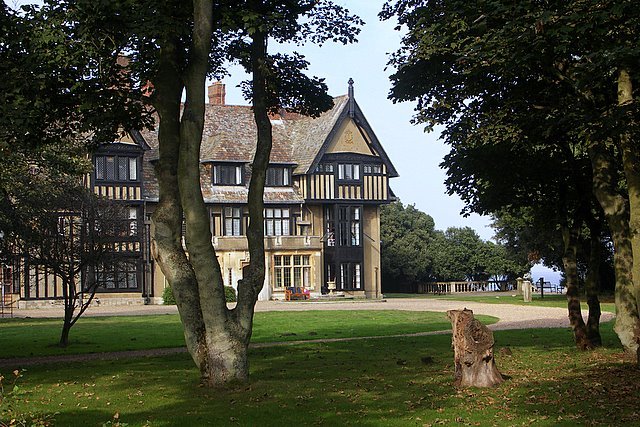



Manor & Lordship
- Manor / site
- Unknown
- Associated lordship
- Lordship of Aldringham Associated
- Lordship status
- Unknown
Location: Aldringham with Thorpe, Suffolk
Places / associated places: Aldringham with Thorpe, Suffolk
Listed in Domesday Book: No
Location & Extent
GPS Location & Recorded Land Areas
Representative GPS point: 52.1903, 1.588
Identity: confirmed — The registry location, associated place, TNA/MDR record F249825 and authority GB/NNAF/M242118 align with the historically documented Aldringham Manor in Aldringham, Suffolk. The manor is separately described from the Manor of Thorpe and is recorded as the lordship of Ranulph de Glanville from the late twelfth century, later passing through the Ufford and de la Pole families and ultimately to the Crown.
Representative point: 52.1903, 1.5880
Basis: supported_manorial_centre — Approximate point at the medieval Church of St Andrew, Aldringham, within the historic Aldringham settlement. The church is closely associated with the manor in the historical accounts, including its appropriation by Ranulph de Glanville, but no documented manor-house site has been identified.
Point confidence: low
Boundary status: representative_point_only
Boundary period: Not established; an 1818 survey records the manor's Aldringham holding at approximately 881 acres, but does not provide a recoverable perimeter in the available evidence.
Boundary confidence: none
Boundary basis: The available sources establish the manor's historical location and approximate scale, but do not identify a documented manor-specific boundary. The 1839 tithe material distinguishes Aldringham and Thorpe and illustrates parish land divisions, yet it is not sufficient to reconstruct the territorial extent of Aldringham Manor. The modern Aldringham with Thorpe parish must not be substituted for the medieval or early-modern manor.
Sources:
- The National Archives: Aldringham Manor, TNA/MDR record F249825: https://discovery.nationalarchives.gov.uk/details/c/F249825 — Registry record supplied for Aldringham Manor, located at Aldringham with Thorpe, Suffolk.
- Manors of Suffolk, Aldringham Manor: https://pdfroom.com/books/manors-of-suffolk/jb5qOLm0gxQ — Historical descent of Aldringham Manor from Ranulph de Glanville through the Glanville, Vescy, Ufford and de la Pole families; Crown ownership after Edmund de la Pole's attainder; an 1818 survey recording the acreage of the Aldringham holding.
- Blything: Aldringham: https://sites.google.com/view/blything/inland-communities/aldringham — Local historical account identifying the manor of Aldringham, its association with Ranulph de Glanville and later owners, and discussion of the 1839 tithe-map landscape of Aldringham and Thorpe.
- Historic England: Church of St Andrew, Aldringham cum Thorpe, NHLE 1287886: https://historicengland.org.uk/listing/the-list/list-entry/1287886 — Provides the documented historic church location at National Grid Reference TM4517560275, used to derive the approximate representative point.
- Aldringham with Thorpe Tithe Map and Apportionment, 1839, cited in East Anglia TWO heritage assessment: https://nsip-documents.planninginspectorate.gov.uk/published-documents/EN010078-001537-6.3.24.3%20EA2%20ES%20Appendix%2024.3%20Archaeology%20and%20Cultural%20Heritage%20Desk%20Based%20Assessment.pdf — Confirms the existence of the 1839 Aldringham with Thorpe tithe map and describes historical land divisions between Aldringham and Thorpe; it does not supply a manor-specific boundary.
Warnings / uncertainty:
- No documented manor house, manor site, estate map or manor-specific perimeter has been located in the available evidence.
- The representative point is an inferred historical centre near St Andrew's Church, not a confirmed manor-house location.
- Do not use the modern civil-parish boundary of Aldringham with Thorpe as the boundary of Aldringham Manor.
- The 1297-1298 bailiff's accounts reference SC 6/996/12 are relevant archival evidence but the available catalogue information does not expose a mapped territorial extent.
About the Manor
Aldringham Manor was a distinct medieval lordship in Aldringham, Suffolk. Copinger distinguishes it from the two Domesday estates recorded at Aldringham, neither of which was then described as a manor: one holding of 90 acres was included in the valuation of Leiston and held of the Bishop of Hoxne by Robert Malet, while another holding of 20 acres belonged to Robert Malet. The manor is first securely described in the surviving historical account as the lordship of Ranulph de Glanville, Lord Chief Justice in 1180. It descended through the Glanville, Vescy and Ufford families, later passing to the de la Pole family and reverting to the Crown after Edmund de la Pole's attainder and execution in 1513. No subsequent Crown grant of the manor itself was identified by Copinger. By 1792 the manor was held by Sir Joshua Vanneck, and it subsequently descended with the Vanneck family's Heveningham estates to Joshua Charles Vanneck, 4th Baron Huntingfield, who was described as lord in the early twentieth century. The rectory and tithes of Aldringham and Thorpe followed a partly separate conveyance history and should not be confused with the manor: they were granted by James I to George Villiers, Duke of Buckingham, in 1618 and sold through several parties before becoming associated with the Vanneck estate.
Ownership / Holder Account
The secure documentary descent begins with Ranulph de Glanville in the late twelfth century. Copinger reports that the manor seems to have passed to William de Glanville, then to William's son Gilbert, who died in 1266, and thereafter to Sir Ralph de Glanville. Sir Ralph's only daughter Maud married Sir William de Vescy. Their daughter Sarah married Robert de Ufford, and the manor subsequently descended through the Ufford family to Robert de Ufford, created Earl of Suffolk in 1336. Robert's second son William, Earl of Suffolk, held the manor for life under a fine that created remainders to his sons Thomas, William and Edward, all of whom died without issue. The manor later passed to the de la Poles and reverted to the Crown on the attainder of Edmund de la Pole in 1513. The intervening descent from the de la Poles to the later Vanneck ownership is not established by a specific conveyance in the sources located. Copinger states that Sir Joshua Vanneck held the manor by 1792 and that it thereafter descended in the same course as the Manor of Heveningham Hall, reaching Joshua Charles Vanneck, 4th Baron Huntingfield, by 1908. The separate rectory and tithes were granted to George Villiers in 1618, conveyed in 1626 to Price Williams and Anthony Nevill, re-sold in 1629 to Daniel Eliab and Matthew Harvey subject to a £500 proviso, confirmed in 1640 to Daniel Eliab and Michael Harvey and their heirs, and were held by their heirs in the early eighteenth century before being held by Sir Joshua Vanneck in 1792. That rectory descent is included only as a related property history and is not treated as the manor's ownership history.
Records & References
Sources and references mentioning this manor/title which are not necessarily conveyances or transfers.
1 record found.
1297-1298: bailiff's accounts, with other manors
Held by: The National Archives
Conveyance & Descent
First holder to present holder: blood proximity & distance travelled
First recorded holder: Ranulph de Glanville
Present holder:
Recorded title journey: 18 holder entries in this manor's saved Conveyance & Descent history.
No recorded holder currently has a usable saved direct-blood or collateral-blood relationship path from which to calculate proximity percentages.
First recorded holder → present holder
A usable saved blood relationship path between the first recorded holder and the present holder has not yet been recorded, so that first-to-present genealogical distance cannot be calculated.
Ranulph de Glanville, Lord Chief Justice of England, royal justiciar
Transfer: Earliest securely identified medieval lordship; the manor was the lordship of Ranulph de Glanville.
Copinger expressly states that Aldringham Manor was the lordship of Ranulph de Glanville, Lord Chief Justice in 1180. This is not derived merely from his foundation of nearby religious houses; the source directly links him to the manor.
Source: W. A. Copinger, The Manors of Suffolk, volume 2, 1908, entry 'Aldringham Manor', p. 4. — source link
William de Glanville, Member of the Glanville family
Transfer: Descent from Ranulph de Glanville to his son, as reported by Copinger.
Previous holder: Ranulph de Glanville, Lord Chief Justice of England, royal justiciar
Copinger says the manor 'seems to have passed' from Ranulph de Glanville to William de Glanville his son. The wording preserves uncertainty about the precise legal instrument and date.
Source: W. A. Copinger, The Manors of Suffolk, volume 2, 1908, entry 'Aldringham Manor', p. 4. — source link
Gilbert de Glanville, Member of the Glanville family
Transfer: Descent from William de Glanville to his son Gilbert.
Previous holder: William de Glanville, Member of the Glanville family
Copinger states that the manor passed from William de Glanville to his son Gilbert, who died in 1266. The exact date of Gilbert's acquisition is not supplied.
Source: W. A. Copinger, The Manors of Suffolk, volume 2, 1908, entry 'Aldringham Manor', p. 4. — source link
Sir Ralph de Glanville, Knight, member of the Glanville family
Transfer: Succession from his father Gilbert de Glanville, who died in 1266.
Previous holder: Gilbert de Glanville, Member of the Glanville family
Copinger states that Gilbert was succeeded by his son Sir Ralph de Glanville. The source does not give the date of Sir Ralph's succession or death.
Source: W. A. Copinger, The Manors of Suffolk, volume 2, 1908, entry 'Aldringham Manor', p. 4. — source link
Maud de Glanville, Heiress of the Glanville line of Aldringham
Transfer: Inheritance as the only daughter and heir of Sir Ralph de Glanville.
Previous holder: Sir Ralph de Glanville, Knight, member of the Glanville family
Copinger identifies Maud as Sir Ralph de Glanville's only daughter and states that she was married to Sir William de Vescy. The manor connection is explicit, but the exact inheritance date is not supplied.
Source: W. A. Copinger, The Manors of Suffolk, volume 2, 1908, entry 'Aldringham Manor', p. 4. — source link
Sir William de Vescy, Knight, said by Copinger to have been created Earl of Suffolk in 1326 in right of his wife
Transfer: Marital association and descent through Maud de Glanville, heiress of Sir Ralph de Glanville.
Holding arrangement: Joint
Shared holding: Maud de Glanville and Sir William de Vescy
Previous holder: Maud de Glanville, Heiress of the Glanville line of Aldringham
Copinger states that Maud de Glanville was married to Sir William de Vescy and that the manor passed to him through her. The source does not establish whether the legal holding was joint, in right of the wife, or otherwise; joint is used as the closest available classification and the narrative preserves the qualification.
Source: W. A. Copinger, The Manors of Suffolk, volume 2, 1908, entry 'Aldringham Manor', p. 4. — source link
Sarah de Vescy and Robert de Ufford, Sarah: Vescy heiress, Robert: royal official and landholder
Transfer: Descent through Sarah, the only daughter of Sir William de Vescy, on her marriage to Robert de Ufford.
Holding arrangement: Joint
Shared holding: Sarah de Vescy and Robert de Ufford
Previous holder: Sir William de Vescy, Knight, said by Copinger to have been created Earl of Suffolk in 1326 in right of his wife
Copinger states that Sir William de Vescy had an only daughter Sarah, who married Robert de Ufford, and continues the manor's descent through their son. The precise legal form and date of the transfer are not stated.
Source: W. A. Copinger, The Manors of Suffolk, volume 2, 1908, entry 'Aldringham Manor', p. 4. — source link
Robert de Ufford, Baron by summons in 1308
Transfer: Succession as the son of Sarah de Vescy and Robert de Ufford.
Previous holder: Sarah de Vescy and Robert de Ufford, Sarah: Vescy heiress, Robert: royal official and landholder
Copinger states that the son of Sarah de Vescy and Robert de Ufford was summoned to Parliament as a baron on 13 January 1308 and that he was later succeeded by another Robert de Ufford. The manor link is part of Copinger's continuous Aldringham descent, although the source does not give a separate dated conveyance.
Source: W. A. Copinger, The Manors of Suffolk, volume 2, 1908, entry 'Aldringham Manor', p. 4. — source link
Robert de Ufford, K.G., Earl of Suffolk, Knight of the Garter, 1st Earl of Suffolk, created 16 March 1336
Transfer: Succession from the preceding Robert de Ufford.
Previous holder: Robert de Ufford, Baron by summons in 1308
Copinger states that the earlier Robert de Ufford was succeeded by another Robert de Ufford, K.G., who was created Earl of Suffolk on 16 March 1336. The manor is included in the continuous Ufford descent.
Source: W. A. Copinger, The Manors of Suffolk, volume 2, 1908, entry 'Aldringham Manor', p. 4. — source link
William, Earl of Suffolk, second son of Robert de Ufford, 1st Earl of Suffolk
Transfer: Succession as the second son of Robert de Ufford, 1st Earl of Suffolk, followed by a fine settling the manor on William for life.
Previous holder: Robert de Ufford, K.G., Earl of Suffolk, Knight of the Garter, 1st Earl of Suffolk, created 16 March 1336
Copinger states that Robert the second was succeeded by his second son William, Earl of Suffolk. A fine was levied of Aldringham Manor between William and William Lord Huntingfield, settling the manor on the Earl for life, with remainders after the death of William Lord Huntingfield to the Earl's sons Thomas, William and Edward successively. This was a life interest with contingent or successive remainders, not an unrestricted fee-simple transfer.
Source: W. A. Copinger, The Manors of Suffolk, volume 2, 1908, entry 'Aldringham Manor', p. 4. — source link
William Lord Huntingfield
Transfer: Party to a fine concerning Aldringham Manor; the fine reserved a remainder after his death.
Holding arrangement: Other — remainder-related interest under fine
Previous holder: Robert de Ufford, 1st Earl of Suffolk
William Lord Huntingfield was not described by Copinger as holding the manor in possession. He was a party to the fine by which William, Earl of Suffolk, held for life and the Earl's sons were given successive remainders after the death of William Lord Huntingfield. This entry records the legal interest disclosed by the fine and avoids treating him as an ordinary sole owner.
Source: W. A. Copinger, The Manors of Suffolk, volume 2, 1908, entry 'Aldringham Manor', p. 4. — source link
Thomas de Ufford, Son of William, Earl of Suffolk
Transfer: First successive remainder under the fine settling Aldringham Manor.
Holding arrangement: Other — first remainder
Shared holding: Successive Ufford remainders
Co-holders: William de Ufford, Edward de Ufford
Previous holder: William, Earl of Suffolk, second son of Robert de Ufford, 1st Earl of Suffolk
The fine described by Copinger settled successive remainders after the life estate of William, Earl of Suffolk, first on Thomas, then on William, then on Edward. Copinger states that all three sons died without issue. The source does not provide dates or confirm that Thomas entered into possession before the next remainder took effect.
Source: W. A. Copinger, The Manors of Suffolk, volume 2, 1908, entry 'Aldringham Manor', p. 4. — source link
William de Ufford, Son of William, Earl of Suffolk
Transfer: Second successive remainder under the fine settling Aldringham Manor.
Holding arrangement: Other — second remainder
Shared holding: Successive Ufford remainders
Co-holders: Thomas de Ufford, Edward de Ufford
Previous holder: Thomas de Ufford, Son of William, Earl of Suffolk
William was the second son named in the fine's successive remainders. Copinger states that all three sons named in the settlement died without issue, but does not give a separate possession date for William.
Source: W. A. Copinger, The Manors of Suffolk, volume 2, 1908, entry 'Aldringham Manor', p. 4. — source link
Edward de Ufford, Son of William, Earl of Suffolk
Transfer: Third successive remainder under the fine settling Aldringham Manor.
Holding arrangement: Other — third remainder
Shared holding: Successive Ufford remainders
Co-holders: Thomas de Ufford, William de Ufford
Previous holder: William de Ufford, Son of William, Earl of Suffolk
Edward was the third and final son named in the fine's successive remainders. Copinger states that all three sons died without issue. The source does not state whether Edward entered into possession or specify the date when the Ufford settlement failed.
Source: W. A. Copinger, The Manors of Suffolk, volume 2, 1908, entry 'Aldringham Manor', p. 4. — source link
De la Pole family, Dukes and other members of the de la Pole family
Transfer: The manor later passed to the de la Poles; the precise conveyance or succession is not identified in the cited source.
Shared holding: De la Pole family
Previous holder: Edward de Ufford, Son of William, Earl of Suffolk
Copinger states that the manor afterwards passed to the de la Poles. No specific member, date, instrument, or intermediate succession is supplied in the Aldringham entry, so the documentary gap is left explicit.
Source: W. A. Copinger, The Manors of Suffolk, volume 2, 1908, entry 'Aldringham Manor', p. 4. — source link
The Crown, Royal ownership
Transfer: Reversion to the Crown upon the attainder of Edmund de la Pole, executed in 1513.
Previous holder: Edmund de la Pole or the de la Pole family
Copinger states that Aldringham Manor went to the Crown on Edmund de la Pole's attainder and execution in 1513. He further states that there does not seem subsequently to have been any grant of the manor, leaving the later transition to Vanneck ownership unresolved in the cited evidence.
Source: W. A. Copinger, The Manors of Suffolk, volume 2, 1908, entry 'Aldringham Manor', p. 4. — source link
Sir Joshua Vanneck, 3rd Baronet, later associated with the Huntingfield title
Transfer: Later possession by Sir Joshua Vanneck is stated by Copinger, but the instrument and date of acquisition from the Crown are not identified.
Previous holder: The Crown, Royal ownership
Copinger states that the manor was held by Sir Joshua Vanneck in 1792 and that the manor subsequently descended from him. The same volume's Heveningham discussion gives Sir Joshua's death as 6 March 1777, which conflicts chronologically with the 1792 statement if both refer to the same individual and manor interest. The record therefore preserves the 1792 possession statement but does not invent a conveyance or resolve the apparent date conflict.
Source: W. A. Copinger, The Manors of Suffolk, volume 2, 1908, entry 'Aldringham Manor', p. 4; comparative chronology in the Heveningham entry, pp. 113–116. — source link
Joshua Charles Vanneck, 4th Baron Huntingfield, 4th Baron Huntingfield of Heveningham Hall
Transfer: Descended from Sir Joshua Vanneck in the same course as the Manor of Heveningham Hall, according to Copinger.
Shared holding: Vanneck family
Previous holder: Sir Joshua Vanneck
Copinger states that the manor subsequently descended to Joshua Charles Vanneck, 4th Baron Huntingfield of Heveningham Hall, described in the 1908 volume as the present lord. The source does not give the individual conveyance dates between Sir Joshua Vanneck and Joshua Charles Vanneck, so those intermediate transfers are not fabricated.
Source: W. A. Copinger, The Manors of Suffolk, volume 2, 1908, entry 'Aldringham Manor', p. 4. — source link
Lordship / Title Associations
Associations are recorded by period so changes in estate composition do not imply that every manor remained attached to the same title indefinitely.
Corrections / Challenges
Sign in to challenge or submit evidence against a recorded assertion.
JSON API
Machine-readable published manor data, including public images, mapped land areas, notes, rights, conveyances, relationships, records, source/document-library entries and public file links.
https://manorialregistry.com/index.php?rest_route=/mhr/v1/manor/aldringham-manorPublic API access is currently disabled. Authorised API clients must use a private X-MHR-API-Key; currently only administrator keys are enabled.
Private source files, pending edits, moderation/admin information, user API keys and non-public import identifiers are not returned.