


Historical names: Alrewic
Location: Aldridge, Staffordshire
Places / associated places: Aldridge, Staffordshire
Listed in Domesday Book: Yes
Location & Extent
GPS Location & Recorded Land Areas
Representative GPS point: 52.60392, -1.9137
Identity: confirmed — The registry record is corroborated by the Staffordshire archive catalogue series of Aldridge Manor court rolls and related manorial papers, including records dated 1662–1770. Local historical and planning sources identify Aldridge Manor House on Little Aston Road as the surviving manor-house site in Aldridge, Staffordshire. Historical references also distinguish the earlier combined Manor of Great Barr and Aldridge from the later Aldridge manor.
Representative point: 52.603920, -1.913700
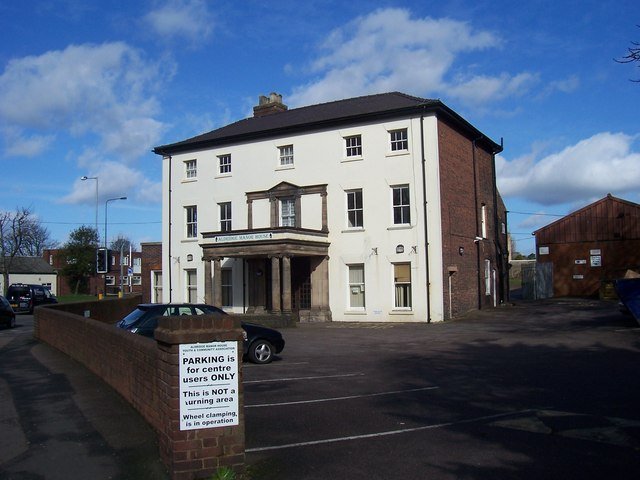
Basis: documented_manor_house — Aldridge Manor House, Little Aston Road, Aldridge, Walsall, WS9 8NJ. The location is identified in Walsall planning records and independently geolocated by the Geograph record for Aldridge Manor House.
Point confidence: high
Boundary status: representative_point_only
Boundary period:
Boundary confidence: none
Boundary basis: The available evidence confirms the manor-house location and demonstrates continuing manorial jurisdiction through court rolls, estreats, suit rolls, chief rents and related records. Historical sources state that Aldridge was formerly associated with Great Barr in a combined manor, but no authoritative mapped boundary, estate plan, rental map, tithe/enclosure plan explicitly defining the territorial extent of this exact Aldridge manor was located. The parish, conservation-area and modern administrative boundaries cannot safely be substituted for the historical manorial boundary.
Sources:
- The National Archives: Aldridge Manor, F256005: https://discovery.nationalarchives.gov.uk/details/c/F256005 — Registry record for the exact manor identity and TNA/MDR reference.
- Staffordshire and Stoke-on-Trent Archive Service: Aldridge Manor court roll, 1663: https://discovery.nationalarchives.gov.uk/details/r/N14723605 — Archive catalogue record for an Aldridge Manor court roll, reference 3005/219/1/1.
- Walsall Council: Aldridge in history: https://go.walsall.gov.uk/walsall-libraries/lichfield-street-hub/walsall-archives-services/research-resources/aldridge-0 — States that Aldridge was recorded as Alrewic in Domesday Book and that after the Norman Conquest the combined manor of Great Barr and Aldridge was granted to William son of Ansculf.
- Aldridge Conservation Area Character Appraisal: https://doczz.net/doc/4414596/aldridge-conservation-area-character-appraisal — Identifies the historic village pairing of the Manor House and St Mary's Church, records The Croft as part of the manor demesne, and discusses the Manor House and its historic setting.
- Walsall Council planning record: Aldridge Manor, Little Aston Road: https://planning.walsall.gov.uk/swift/apas/run/WPHAPPDETAIL.DisplayUrl?backURL=%253Ca%2520href%253Dwphappcriteria.display%253E%2520Search%2520Criteria%253C%252Fa%253E&theApnID=20%2F0127 — Gives the site address as ALDRIDGE MANOR, LITTLE ASTON ROAD, ALDRIDGE, WALSALL, WS9 8NJ.
- Geograph: Aldridge Manor House: https://commons.wikimedia.org/wiki/File%3AAldridge_Manor_House_-_geograph.org.uk_-_901074.jpg — Identifies Aldridge Manor House on Little Aston Road and provides the geolocation 52.603920, -1.913700.
- Birmingham Archives catalogue: Scott of Great Barr collection: https://calmview.birmingham.gov.uk/CalmView/TreeBrowse.aspx?field=RefNo&key=MS%203883%2F1%2F842&src=CalmView.Catalog — Includes court-roll and boundary-related records for the Manor of Great Barr and Aldridge, supporting the historical association but not supplying a sufficiently clear boundary for Aldridge Manor alone.
Warnings / uncertainty:
- The earlier combined Great Barr and Aldridge manor should not automatically be treated as the territorial extent of the later Aldridge Manor record.
- No historically defensible polygon was located; do not inject a parish, conservation-area, civil-parish or modern Walsall boundary as the manor boundary.
- The representative point denotes the surviving documented manor-house site, not the full historical extent of the manorial lands.
About the Manor
Aldridge, recorded as Alrewic in Domesday Book, was a small Staffordshire estate in the hundred of Offlow. In 1086 the estate was held by Robert, identified in the Domesday material as Robert d'Oilly, under William son of Ansculf, while the wider post-Conquest holding became associated with the combined manor of Great Barr and Aldridge. The two places were subsequently separated for manorial purposes, with Aldridge becoming the principal manor and Great Barr a subsidiary or associated manor. In the thirteenth century the Aldridge estate was associated with the de Alrewych family, especially Nicholas de Alrewych, who is described in local historical material as lord of the manor. Later medieval evidence links the estate or an interest in the combined manor to the Stapleton and Bermingham families. Sixteenth-century evidence links the manor of Aldridge to Simon Mountford and, after his death, to his widow Joyce Rugeley or Joyce Mountford. By the seventeenth century the lordship was associated with the Jordan family, and by the late eighteenth century it was in the hands of the Croxall family of Shustoke. Edward Croxall's claim to the lordship was expressly recognized during the Aldridge enclosure proceedings of 1795. The surviving public evidence consulted does not establish a complete, deed-by-deed descent from the medieval holders to the Croxalls, nor does it establish that the later building known as Aldridge Manor House was continuously identical with the entire manorial estate.
Ownership / Holder Account
The earliest secure evidence is Domesday Book in 1086, when Aldridge was held by Robert d'Oilly from William son of Ansculf; William was the tenant-in-chief and Robert the immediate lord. The estate was later combined administratively or tenurially with Great Barr, but Aldridge subsequently emerged as a separate inferior manor and eventually the principal manor in the combined name. Nicholas de Alrewych is described as lord of Aldridge in thirteenth-century local historical material. A fine of 1344-1345 concerning the advowson of Aldridge and the manor of Great Barr links Robert de Stapleton to the estate; later evidence places an interest in Aldridge and Great Barr in the hands of Sir Fulk Bermingham in the later fourteenth century, although the precise conveyance is not established. Secondary accounts place intervening interests with the Fenners, Hillary, Mountford and Jordan families, but the available online evidence does not provide a fully documented sequence for each transition. The surviving will evidence of Simon Mountford, proved in 1538, records a marriage settlement concerning the Manor of Aldridge with Nicholas Rugeley and indicates that the manor passed to Simon's widow Joyce on Simon's death. By the seventeenth century the Jordans were described as lords of the manor. By the late eighteenth century the lordship was held by the Croxalls of Shustoke. In the 1795 enclosure proceedings Edward Croxall was named as claimant to the manor and soil of Aldridge, and his claim was reportedly upheld at Quarter Sessions. This is the latest securely evidenced lordship claim located in the research undertaken. Later nineteenth-century references to individual Croxall-owned parcels in the parish are not treated as proof that the whole manor remained in the same ownership.
Manorial Rights & Privileges
Historic manorial rights / privileges (1)
Advowson of Aldridge
Provisional
A 1344-1345 fine concerned the advowson of Aldridge together with the manor of Great Barr.
Records & References
Sources and references mentioning this manor/title which are not necessarily conveyances or transfers.
28 records found · showing 1–8.
1770-1770: court roll
Held by: Staffordshire and Stoke-on-Trent Archive Service: Staffordshire County Record Office
1737-1737: accounts
Held by: Shakespeare Birthplace Trust
Further information: NRA 21856 Leigh
1734-1734: suit roll
Held by: Staffordshire and Stoke-on-Trent Archive Service: Staffordshire County Record Office
1734-1734: list of alienations and reliefs
Held by: Staffordshire and Stoke-on-Trent Archive Service: Staffordshire County Record Office
1734-1734: orders and pains
Held by: Staffordshire and Stoke-on-Trent Archive Service: Staffordshire County Record Office
1734-1734: chief rents
Held by: Staffordshire and Stoke-on-Trent Archive Service: Staffordshire County Record Office
1727-1727: court roll
Held by: Staffordshire and Stoke-on-Trent Archive Service: Staffordshire County Record Office
1727-1727: orders and pains
Held by: Staffordshire and Stoke-on-Trent Archive Service: Staffordshire County Record Office
Conveyance & Descent
First holder to present holder: blood proximity & distance travelled
First recorded holder: Robert d'Oilly
Present holder:
Recorded title journey: 7 holder entries in this manor's saved Conveyance & Descent history.
No recorded holder currently has a usable saved direct-blood or collateral-blood relationship path from which to calculate proximity percentages.
First recorded holder → present holder
A usable saved blood relationship path between the first recorded holder and the present holder has not yet been recorded, so that first-to-present genealogical distance cannot be calculated.
Robert d'Oilly, Immediate lord of Aldridge in 1086, held from William son of Ansculf, Norman baron, Domesday landholder, hereditary castellan of Oxford, Norman landholder, Domesday tenant-in-chief, builder and castellan of Oxford Castle
Transfer: Held as immediate lord in Domesday Book; the preceding transfer into his hands after the Norman Conquest is not documented in the sources consulted.
Shared holding: Immediate lord of the Aldridge estate in 1086
Previous holder: Two unnamed thegns in 1066, as reported by the Domesday entry
The Domesday entry for Aldridge, recorded as Alrewic, states that Robert was lord in 1086 and that William son of Ansculf was tenant-in-chief. The public Domesday transcription identifies Robert as Robert d'Oilly. This establishes a direct lordship link to Aldridge but does not prove the precise date or instrument by which he acquired it.
Source: Open Domesday, Aldridge entry, citing Domesday Book, Staffordshire 12,24 — source link
Robert de Stapleton, Associated with the advowson of Aldridge and the manor of Great Barr
Transfer: Appears in a fine concerning the advowson of Aldridge and the manor of Great Barr. The precise acquisition or transfer of the manorial interest is not established.
Holding arrangement: Other — Interest in the manor or associated estate; extent not stated
Shared holding: Stapleton family
Previous holder: Nicholas de Alrewych or an intervening holder; documentary connection not established
Robert de Stapleton was a party to a fine in 18 Edward III, 1344-1345, concerning the advowson of Aldridge and the manor of Great Barr. The source identifies this as evidence connecting him with the Aldridge and Great Barr estate. It does not establish whether he held the whole manor, a share, or an associated legal interest, so the entry is classified conservatively.
Source: Eyton, Staffordshire-derived Stapleton genealogy, quoting the fine in 18 Edward III and Shaw's History of Staffordshire — source link
Sir Fulk Bermingham, Held wholly or partly an interest in the Aldridge and Great Barr estate
Transfer: Later evidence places him in possession of all or part of the Aldridge and Great Barr estate, apparently following an earlier Stapleton settlement. The actual conveyance is not identified.
Holding arrangement: Other — Wholly or partly; source does not determine the extent
Shared holding: Bermingham family
Previous holder: Stapleton interest, possibly through an entail or settlement; exact legal route not established
The consulted historical account states that the settlement made by Sir Robert de Stapleton carried the Aldridge and Great Barr estates to Sir Fulk Bermingham, who was clearly seised wholly or partly of them in 1368 and 1372. Because the source does not establish whether the whole manor or only an interest passed, and because the underlying conveyance has not been examined, this is recorded as an evidenced later holding rather than as a fully proven transfer.
Source: Eyton, Staffordshire-derived Stapleton genealogy, discussing Shaw's History of Staffordshire and the 1368 and 1372 evidence — source link
Simon Mountford, Holder of a settlement interest in the Manor of Aldridge, formerly associated with the Mountford family of Warwickshire and Staffordshire
Transfer: The will of Simon Mountford records a marriage settlement concerning the Manor of Aldridge with Nicholas Rugeley. On Simon's death the manor passed to his widow, Joyce Rugeley or Joyce Mountford, according to the interpretation of the surviving will evidence.
Holding arrangement: Joint — Marriage-settlement interest; exact shares and legal form not stated
Shared holding: Mountford and Rugeley settlement
Previous holder: Nicholas Rugeley or an earlier Mountford or Rugeley interest; exact preceding conveyance not established
The surviving will evidence of Simon Mountford, proved in 1538 and dated to 1537, indicates that a marriage settlement concerning the Manor of Aldridge had been agreed between Simon Mountford and Nicholas Rugeley. This directly links Simon to the manor, but the source does not reproduce the settlement deed or establish its exact terms.
Source: Simon Mountford will, proved 30 November 1538, as summarized with reference to the surviving probate and local record evidence — source link
Joyce Rugeley, later Joyce Mountford, Widow and holder of the Manor of Aldridge after Simon Mountford's death
Transfer: Passed to her on the death of Simon Mountford under the marriage-settlement arrangement described in Simon's will; she thereafter exercised sole control according to the surviving will evidence.
Shared holding: Rugeley-Mountford
Previous holder: Simon Mountford and the associated Mountford-Rugeley settlement
The will evidence of Simon Mountford indicates that the Manor of Aldridge passed to his widow Joyce on his death in 1537. The source describes this as a marriage settlement with Nicholas Rugeley and states that the manor then came under Joyce's sole control. Joyce died in 1553. The later disposition of the manor is not established by the sources consulted.
Source: Joyce Rugeley of Moor Hall, summarizing the wills of Simon Mountford and Joyce Mountford and related record evidence — source link
Jordan family, Lords of the manor of Aldridge, according to the cited local history
Transfer: The manor is reported to have come into the hands of the Jordan family by the seventeenth century. The conveyance from the previous holder is not identified.
Shared holding: Jordan family
Previous holder: Joyce Rugeley or an intervening holder; documentary gap remains
A local historical account states that the Jordans, formerly minor landowners, had risen to the status of lords of the manor by the seventeenth century. This is a direct secondary assertion linking the family to the Aldridge manor, but no online deed, fine, inquisition or other primary conveyance establishing the transition was located.
Source: A. Stuart Williams, Saint Mary's in the Alder Village, local history account — source link
Edward Croxall of Shustoke, Lord or claimant of the manor and soil of Aldridge, member of the Croxall family of Shustoke
Transfer: The manor was reported to have come to the Croxall family through the Jordan family, but the precise conveyance is not established. Edward Croxall's claim to the manor and soil of Aldridge was upheld during the 1795 enclosure proceedings.
Shared holding: Croxall family of Shustoke
Previous holder: Jordan family or an intervening Croxall or related holder; exact transfer not established
By the late eighteenth century the Aldridge manor was in the hands of the Croxall family of Shustoke. During the Aldridge enclosure process, Edward Croxall and William Smallwood were both named as claimants of the manor and soil in February 1795. The local-history account states that Croxall's claim was upheld at Quarter Sessions. This is the latest securely evidenced lordship claim located, but the exact date of acquisition and any later descent are not established.
Source: James Gould, Men of Aldridge, account of the 1795 Aldridge enclosure and the dispute between Edward Croxall and William Smallwood — source link
Corrections / Challenges
Sign in to challenge or submit evidence against a recorded assertion.
JSON API
Machine-readable published manor data, including public images, mapped land areas, notes, rights, conveyances, relationships, records, source/document-library entries and public file links.
https://manorialregistry.com/index.php?rest_route=/mhr/v1/manor/aldridge-manorPublic API access is currently disabled. Authorised API clients must use a private X-MHR-API-Key; currently only administrator keys are enabled.
Private source files, pending edits, moderation/admin information, user API keys and non-public import identifiers are not returned.