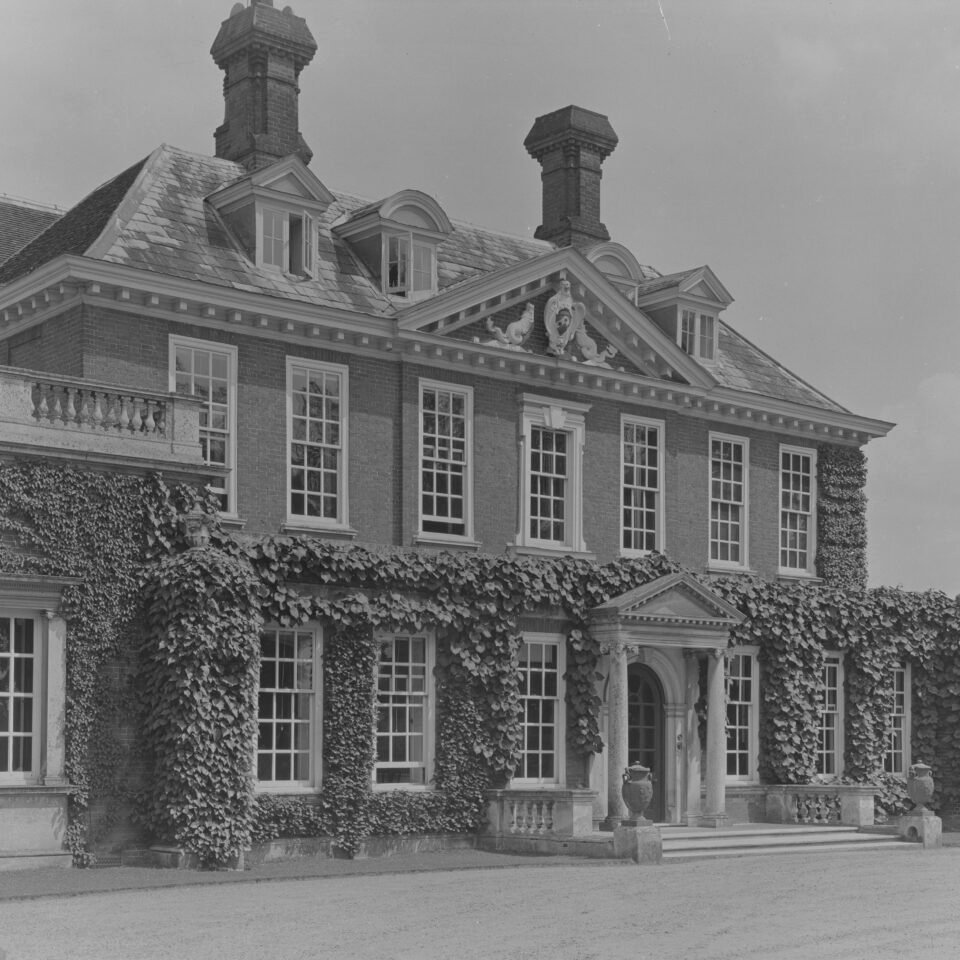



Location: Aldenham, Hertfordshire
Places / associated places: Aldenham, Hertfordshire
Listed in Domesday Book: Yes
Location & Extent
GPS Location & Recorded Land Areas
Representative GPS point: 51.656018, -0.3098525
Identity: confirmed — The registry record, authority GB/NNAF/M213818, TNA/MDR record F241896, and the associated medieval-to-modern custumals, extents, account rolls, rentals, terriers and court records consistently identify the Westminster Abbey manor of Aldenham in Hertfordshire. The historical evidence distinguishes this manor from subsidiary or associated estates such as Wall Hall, Penne's Place/Aldenham Hall and Wigbournes/Aldenham House.
Representative point: 51.656018, -0.30985254
Basis: supported_manorial_centre — Aldenham House is documented by Historic England as standing in the southern part of the manor of Aldenham, and its site corresponds to the mapped Aldenham House estate centre at OS grid reference TQ 17013 96600. It is used here as a defensible representative point for the manor, not as a claim that the present house is the medieval caput of the manor.
Point confidence: medium
Boundary status: representative_point_only
Boundary period: Medieval to post-medieval manor; extent changed through subinfeudation, leases, enclosure and later estate consolidation.
Boundary confidence: none
Boundary basis: The available evidence establishes a substantial territorial extent but does not provide a sufficiently clear, source-controlled perimeter for the manorial land itself. Historical descriptions indicate that Aldenham Manor occupied most of the western part of the later parish, with Watling Street forming its eastern boundary; the parish was approximately 6,000 acres. However, the surviving online evidence does not distinguish the manor boundary reliably from parish, submanor, copyhold, common and later estate boundaries. Historic England's approximately 140-hectare Aldenham House registered park is a later country-estate boundary and must not be substituted for the medieval manor.
Sources:
- The National Archives: Aldenham Manor TNA/MDR record F241896: https://discovery.nationalarchives.gov.uk/details/c/F241896 — Registry record for the exact Aldenham Manor entry and its archival identity.
- Historic England: Aldenham House, Aldenham, entry 1000902: https://historicengland.org.uk/listing/the-list/list-entry/1000902?section=official-list-entry — States that Aldenham House lies in the southern part of the manor of Aldenham; supplies the mapped point TQ 17013 96600 and describes the later estate boundaries. It also distinguishes Aldenham House, Wigbournes and Penn's Place/Aldenham Hall.
- Historic England: Penne's Place moated site, Aldenham, entry 1013001: https://historicengland.org.uk/listing/the-list/list-entry/1013001 — Documents the medieval moated site and interprets its interior as the site of Penne's Place manor house, providing important evidence for a manorial or submanorial centre but not a perimeter for Aldenham Manor itself.
- Heritage Gateway: Site of Penne's Place/Aldenham Hall, MHT11749: https://www.heritagegateway.org.uk/Gateway/Results_Single.aspx?resourceID=1008&uid=MHT11749 — Records the later manor-house site and explicitly refers to a related manorial site, while distinguishing the post-medieval house from the wider Aldenham Manor.
- A History of the County of Hertford: Volume 2, Victoria County History: https://www.british-history.ac.uk/vch/herts/vol2/pp149-161 — Authoritative county-history context for Aldenham parish, its medieval ownership and manorial development; used as a lead for the historical territorial context.
- Aldenham Manor historical description and archival list: https://feudaltitles.com/titles-index-a-b — Secondary summary citing the manor's Westminster Abbey ownership, its broad location in the western part of the later parish, Watling Street as an eastern boundary, an approximately 6,000-acre parish context, and the relevant archival classes. Used as corroborative contextual evidence only.
Warnings / uncertainty:
- No defensible historical polygon was located in the accessible evidence. Do not inject a parish, civil-parish, modern estate, registered-park or postcode boundary as the manor boundary.
- The representative point is an evidence-based manorial-centre proxy at Aldenham House; it is not asserted to be the exact medieval manor-house site.
- Penne's Place/Aldenham Hall and Aldenham House are historically associated properties in the southern part of the manor, but local historical evidence indicates that their relationship to the principal Aldenham Manor is complex and should not be treated as proof of the manor's full extent.
- Wall Hall was a separate manor documented from 1190 and only formed part of Aldenham Manor between 1619 and 1799, so its estate boundary is not a valid substitute for the Aldenham Manor boundary.
About the Manor
Aldenham was an ancient manor in Hertfordshire, recorded in Domesday Book in 1086 under the land of St Peter's Abbey, Westminster. The manor's early history involved a long dispute between Westminster Abbey and St Albans Abbey. A charter tradition associated the estate with an early grant by Wulfsinus or with a grant by Offa to Westminster, while St Albans claimed an original interest and is reported to have leased the manor to Westminster for a term after the Norman Conquest. The surviving Domesday evidence records Westminster Abbey as lord and tenant-in-chief in 1066 and 1086. After the Dissolution, the manor passed to the Crown and was granted to Ralph Stepney or Stepneth in 1547. It subsequently descended through the Cary, Harby, Holles, Pelham, Vandewall, Neate and Thellusson interests. The manor should not be conflated with individual country-house estates within the parish, including Penn's Place or Aldenham Hall, Wigbournes or Aldenham House, and Wall Hall or Aldenham Abbey, although some later accounts use Aldenham or the Aldenham estate loosely for estates containing parts of the manor.
Ownership / Holder Account
The securely evidenced descent begins with Westminster Abbey, recorded as lord and tenant-in-chief at Domesday in 1086. The early medieval relationship between Westminster and St Albans is disputed: St Albans claimed the original lordship and is said to have leased the manor to Westminster, but the Domesday record supports Westminster's possession at that date. The manor was surrendered or otherwise taken into Crown hands at the Dissolution in the 1530s and was granted by Henry VIII to Ralph Stepney or Stepneth and Joan in 1547. It was sold to Edward Cary in 1589, followed by Cary's son Henry, later 1st Viscount Falkland, and then Lucius Cary, 2nd Viscount Falkland. Lucius Cary sold the manor during the Civil War in 1642 to a member of the Harby family; sources differ between Sir John Harby and Sir Job Harby, so the first name is flagged as uncertain. The Harby interest was sold to Denzil Holles in 1664 or in the early 1660s. The manor then descended through Francis Holles and the younger Denzil Holles before passing into the hands of John Holles, later Duke of Newcastle, and Thomas Pelham-Holles, Duke of Newcastle. It was sold in 1754 to Samuel Vandewall, whose interest passed by will to his stepson Thomas Neate. The later transition from Neate to George Woodford Thellusson is reported as a sale in 1799. In 1805 George Woodford Thellusson sold the Aldenham property or estate to trustees of his father's will; the surviving public accounts do not always distinguish the manorial lordship from the Wall Hall or Aldenham estate at this point. A nineteenth-century county guide nevertheless identifies Frederick William Thellusson, 5th Baron Rendlesham, as lord of the manor. No later securely sourced manorial conveyance was located.
Records & References
Sources and references mentioning this manor/title which are not necessarily conveyances or transfers.
63 records found · showing 1–8.
1922-1924: correspondence rel variously to tenancy claims and administration of the manor
Held by: Suffolk Archives - Ipswich
Further information: NRA 36447 Thellusson
1919-1925: correspondence and papers rel. to enfranchisements
Held by: Suffolk Archives - Ipswich
Further information: NRA 36447 Thellusson
1917-1917: maps (with lists of copyhold tenants and admissions)
Held by: Suffolk Archives - Ipswich
Further information: NRA 36447 Thellusson
1917-1917: lists of copyhold tenants and admissions, with maps
Held by: Suffolk Archives - Ipswich
Further information: NRA 36447 Thellusson
1911-1911: list of copyhold tenants, incl dates of admissions and enfranchisements
Held by: Suffolk Archives - Ipswich
Further information: NRA 36447 Thellusson
1895-1895: list of copyhold tenants
Held by: Suffolk Archives - Ipswich
Further information: NRA 36447 Thellusson
1895-1895: deeds and awards of enfranchisement (2)
Held by: The National Archives
1881-1881: correspondence and papers rel. to enfranchisements
Held by: Suffolk Archives - Ipswich
Further information: NRA 36447 Thellusson
Conveyance & Descent
First holder to present holder: blood proximity & distance travelled
First recorded holder: Westminster Abbey, represented by the Abbot of Westminster
Present holder:
Recorded title journey: 15 holder entries in this manor's saved Conveyance & Descent history.
No recorded holder currently has a usable saved direct-blood or collateral-blood relationship path from which to calculate proximity percentages.
First recorded holder → present holder
A usable saved blood relationship path between the first recorded holder and the present holder has not yet been recorded, so that first-to-present genealogical distance cannot be calculated.
Westminster Abbey, represented by the Abbot of Westminster
Transfer: Held at Domesday and until the Dissolution; the precise date and legal form of the loss to the Crown require confirmation from the abbey and Crown records.
Shared holding: Westminster Abbey
Previous holder: Westminster Abbey is recorded as lord in 1066 and 1086; an earlier rival claim by St Albans Abbey is disputed.
Domesday evidence identifies Westminster Abbey as lord and tenant-in-chief of Aldenham in both 1066 and 1086. The early history is contested because St Albans Abbey claimed the manor and is reported to have leased it to Westminster after the Conquest, but the surviving Domesday entry supports Westminster's lordship at the date of the survey. Later local histories state that the manor remained with Westminster until the Dissolution.
Source: Domesday Book Online, Aldenham entry; PASE Domesday database, Hertfordshire 9,4; Regesta Regum Anglo-Normannorum, no. 53; Victoria County History, A History of the County of Hertford, volume 2, 'Parishes: Aldenham', pp. 149-161. — source link
Transfer: The manor was surrendered or taken into Crown hands at the Dissolution and subsequently granted by Henry VIII to Ralph Stepney or Stepneth and Joan.
Shared holding: Crown
Previous holder: Westminster Abbey
The public sources place the transfer from Westminster Abbey to the Crown at the Dissolution. The exact surrender date is variously described as 1538 or 1539, so the date is retained as uncertain.
Source: John Murray, Handbook for Hertfordshire, Bedfordshire, and Huntingdonshire, Aldenham section; Stephen Johnson, 'Lordship of the Manor of Aldenham, Hertfordshire'; Victoria County History, A History of the County of Hertford, volume 2, 'Parishes: Aldenham', pp. 149-161. — source link
Ralph Stepney or Stepneth and Joan, Gentleman, also styled Ralph Stepney, Stepnith or Stepneth
Transfer: Grant by Henry VIII or the Crown; the grant date is reported as 10 August 1547.
Holding arrangement: Joint — Joint grant to Ralph Stepney or Stepneth and Joan
Shared holding: Stepney or Stepneth family
A published study of the Ralph Stepney brass states that the manor of Aldenham was granted on 10 August 1547 to Ralph Stepney, also styled Stepnith or Stepneth, and Joan his wife. Other accounts give the grant as 1546 or simply 1547. The grant is therefore securely placed in 1547, with the variant year noted in the narrative.
Source: Transactions of the Monumental Brass Society, volume XV, part 4, biographical details for Ralph Stepney; John Murray, Handbook for Hertfordshire, Bedfordshire, and Huntingdonshire, Aldenham section. — source link
Edward Cary, Knight, Master and Treasurer of Queen Elizabeth I's jewels
Transfer: Sale of Aldenham Manor by the Stepney or Stepneth family to Edward Cary.
Shared holding: Cary family
Co-holders: Henry Cary, 1st Viscount Falkland, Lucius Cary, 2nd Viscount Falkland
Previous holder: Stepney or Stepneth family
The manor was sold in 1589 to Edward Cary, who was associated with the royal jewel office and later resided at Aldenham. The precise conveyance instrument was not located in the public search, but the manor-specific sale is consistently reported by the historical accounts consulted.
Source: Victoria County History, A History of the County of Hertford, volume 2, 'Parishes: Aldenham', pp. 149-161; Stephen Johnson, 'Lordship of the Manor of Aldenham, Hertfordshire'; John Murray, Handbook for Hertfordshire, Bedfordshire, and Huntingdonshire, Aldenham section. — source link
Henry Cary, 1st Viscount Falkland, 1st Viscount Falkland in the peerage of Scotland
Transfer: Succession to his father's Aldenham interest on the death of Edward Cary; the source describes the manor as passing to Henry Cary in 1617.
Shared holding: Cary family
Co-holders: Edward Cary, Lucius Cary, 2nd Viscount Falkland
Previous holder: Edward Cary, Knight, Master and Treasurer of Queen Elizabeth I's jewels
Henry Cary inherited the manor from Edward Cary in 1617. He was subsequently created Viscount Falkland. The inheritance is included because the source explicitly connects Henry Cary's succession to Aldenham Manor, rather than relying solely on a family pedigree.
Source: Victoria County History, A History of the County of Hertford, volume 2, 'Parishes: Aldenham', pp. 149-161; Stephen Johnson, 'Lordship of the Manor of Aldenham, Hertfordshire'. — source link
Lucius Cary, 2nd Viscount Falkland, royalist statesman and author
Transfer: Succession to his father's Aldenham interest on the death of Henry Cary, 1st Viscount Falkland.
Shared holding: Cary family
Co-holders: Edward Cary, Henry Cary, 1st Viscount Falkland
Previous holder: Henry Cary, 1st Viscount Falkland, 1st Viscount Falkland in the peerage of Scotland
Lucius Cary succeeded his father in 1633. The historical sources state that he sold Aldenham Manor in June or later in 1642, shortly before his death at the First Battle of Newbury in September 1643.
Source: Hertfordshire during the Great Civil War and the Long Parliament, passage concerning the sale of Aldenham Manor in June 1642; Victoria County History, A History of the County of Hertford, volume 2, 'Parishes: Aldenham', pp. 149-161. — source link
Sir John Harby or Sir Job Harby, Baronet, of Aldenham, Hertfordshire
Transfer: Sale by Lucius Cary, 2nd Viscount Falkland, to a Harby baronet. Sources conflict over whether the purchaser was Sir John Harby or Sir Job Harby.
Shared holding: Harby family
Previous holder: Lucius Cary, 2nd Viscount Falkland, royalist statesman and author
The manor was sold during 1642 to a member of the Harby family. A county civil-war history identifies the purchaser as Sir Job Harby, while another historical account identifies Sir John Harby. Because the manor connection is clear but the forename is not, both forms are preserved and no single identity is asserted.
Source: Hertfordshire during the Great Civil War and the Long Parliament, passage stating that Lucius Cary sold Aldenham Manor to Sir Job Harby in June 1642; Stephen Johnson, 'Lordship of the Manor of Aldenham, Hertfordshire', which gives Sir John Harby. — source link
Denzil Holles, 1st Baron Holles, 1st Baron Holles of Ifield, parliamentarian and author, English statesman, politician
Transfer: Purchase of Aldenham Manor from the Harby family.
Shared holding: Holles family
Co-holders: Francis Holles, 2nd Baron Holles, Denzil Holles, 3rd Baron Holles
Previous holder: Harby family
Denzil Holles acquired Aldenham Manor from the Harby family in 1664 according to the standard county account. A parliamentary history describes the sale as occurring in the early 1660s and records a later dispute in which Charles Fane complained that Holles had dispossessed him of the manor, while also noting that Fane was acting in relation to the Harby interest. The date is therefore retained as 1664 or early 1660s.
Source: History of Parliament Online, biography of Denzil Holles, 1598-1680; Victoria County History, A History of the County of Hertford, volume 2, 'Parishes: Aldenham', pp. 149-161. — source link
Francis Holles, 2nd Baron Holles, 2nd Baron Holles of Ifield
Transfer: Succession to his father's Aldenham estate on the death of Denzil Holles, 1st Baron Holles.
Shared holding: Holles family
Co-holders: Denzil Holles, 1st Baron Holles, Denzil Holles, 3rd Baron Holles
Previous holder: Denzil Holles, 1st Baron Holles, 1st Baron Holles of Ifield, parliamentarian and author, English statesman, politician
Francis Holles succeeded his father and lived at the Holles manor house in Aldenham. The direct manor connection is stated in his History of Parliament biography, which says that the first Baron Holles had purchased the manor in 1664 and that Francis later lived there.
Source: History of Parliament Online, biography of Francis Holles, 1627-1692. — source link
Denzil Holles, 3rd Baron Holles, 3rd Baron Holles of Ifield
Transfer: Succession to the Holles estate on the death of Francis Holles, 2nd Baron Holles.
Shared holding: Holles family
Co-holders: Denzil Holles, 1st Baron Holles, Francis Holles, 2nd Baron Holles
Previous holder: Francis Holles, 2nd Baron Holles, 2nd Baron Holles of Ifield
Denzil Holles succeeded his father Francis in July 1692 while still a minor. His History of Parliament entry associates him with Aldenham and states that his estate passed on his death in 1694 to his closest male Holles relation, John Holles, 4th Earl of Clare, later Duke of Newcastle.
Source: History of Parliament Online, biography of Denzil Holles, 1675-1694. — source link
John Holles, 4th Earl of Clare, later 1st Duke of Newcastle-upon-Tyne, 1st Earl of Clare, English nobleman
Transfer: Succession to the Holles estate on the death of Denzil Holles, 3rd Baron Holles.
Shared holding: Holles-Pelham family
Co-holder: Thomas Pelham-Holles, 1st Duke of Newcastle
Previous holder: Denzil Holles, 3rd Baron Holles, 3rd Baron Holles of Ifield
John Holles inherited the Holles estate after the death of Denzil Holles in 1694. The Aldenham manor was included in the wider Holles estate that passed to him. He was created Duke of Newcastle-upon-Tyne in 1694 and died in 1711.
Source: History of Parliament Online, biography of Denzil Holles, 1675-1694; John Murray, Handbook for Hertfordshire, Bedfordshire, and Huntingdonshire, Aldenham section. — source link
Thomas Pelham-Holles, 1st Duke of Newcastle, Prime Minister of Great Britain, 1st Duke of Newcastle-upon-Tyne, Marquess of Clare, Viscount Houghton, Baron Pelham of Laughton, British statesman and Prime Minister
Transfer: Succession to the Holles estates through inheritance after the death of John Holles, 1st Duke of Newcastle-upon-Tyne.
Shared holding: Holles-Pelham family
Co-holder: John Holles, 4th Earl of Clare, later 1st Duke of Newcastle-upon-Tyne
Previous holder: John Holles, 1st Duke of Newcastle-upon-Tyne
The Aldenham interest passed with the Holles estate to Thomas Pelham-Holles, who became Duke of Newcastle in 1715. The manor was sold in 1754, according to the principal local historical accounts.
Source: John Murray, Handbook for Hertfordshire, Bedfordshire, and Huntingdonshire, Aldenham section; Stephen Johnson, 'Lordship of the Manor of Aldenham, Hertfordshire'. — source link
Samuel Vandewall or Vanderwall, London merchant
Transfer: Purchase of Aldenham Manor or the Aldenham estate from the Pelham-Newcastle interest in 1754.
Shared holding: Vandewall family
The manor was sold in 1754 to Samuel Vandewall, also spelled Vanderwall. The date of his death and the exact date of the testamentary transfer to Thomas Neate were not established in the public sources consulted.
Source: John Murray, Handbook for Hertfordshire, Bedfordshire, and Huntingdonshire, Aldenham section; Stephen Johnson, 'Lordship of the Manor of Aldenham, Hertfordshire'. — source link
George Woodford Thellusson, Merchant banker, Member of Parliament, Merchant and politician
Transfer: Purchase of Aldenham or the associated Aldenham estate from Thomas Neate in 1799; sold in 1805 to trustees of his father's will.
Shared holding: Thellusson family
Co-holder: Frederick William Thellusson, 5th Baron Rendlesham
Previous holder: Thomas Neate
George Woodford Thellusson acquired Aldenham in 1799. The surviving evidence frequently describes the property through Wall Hall or Aldenham Abbey, so the exact boundary between the manorial lordship and the country-house estate should be checked against the title deeds. In 1805 he sold the property to trustees of his father's will.
Source: Sir John Soane's Museum Collection Online, Wall Hall, Hertfordshire: new entrance front and rooms for G. W. Thellusson; Stephen Johnson, 'Lordship of the Manor of Aldenham, Hertfordshire'. — source link
Frederick William Thellusson, 5th Baron Rendlesham
Transfer: Later Thellusson family succession; the precise intermediate conveyances and dates were not established.
Shared holding: Thellusson family
Co-holder: George Woodford Thellusson
Previous holder: Earlier Thellusson family or trust interests
The Handbook for Hertfordshire, published in the early twentieth century, explicitly states that Frederick Thellusson, 5th Baron Rendlesham, was the then lord of Aldenham Manor. A late nineteenth-century and early twentieth-century local description likewise identifies Lord Rendlesham as lord of the manor. No later public source securely identifying a successor to the manorial lordship was located.
Source: John Murray, Handbook for Hertfordshire, Bedfordshire, and Huntingdonshire, Aldenham section; Kelly's Directory of Hertfordshire, Aldenham entry. — source link
Corrections / Challenges
Sign in to challenge or submit evidence against a recorded assertion.
JSON API
Machine-readable published manor data, including public images, mapped land areas, notes, rights, conveyances, relationships, records, source/document-library entries and public file links.
https://manorialregistry.com/index.php?rest_route=/mhr/v1/manor/aldenham-manor-2Public API access is currently disabled. Authorised API clients must use a private X-MHR-API-Key; currently only administrator keys are enabled.
Private source files, pending edits, moderation/admin information, user API keys and non-public import identifiers are not returned.