


Historical names: Aldeclif; Audecliva
Location: Lancaster, Lancashire
Places / associated places: Lancaster, Lancashire
Listed in Domesday Book: Yes
Location & Extent
GPS Location & Recorded Land Areas
Representative GPS point: 54.0367, -2.8116
Identity: confirmed — The MDR/TNA record identifies ALDCLIFFE MANOR in Lancaster, Lancashire, and independent historical sources identify Aldcliffe as a medieval manor and estate centred on Aldcliffe Hall near the River Lune. The associated reference to Poulton is not sufficient evidence that Poulton formed part of this manor's territorial extent.
Representative point: 54.0367, -2.8116
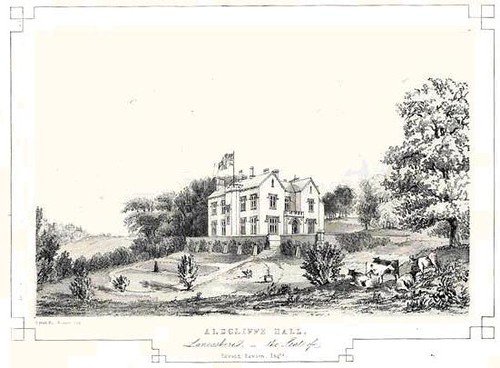
Basis: documented_manor_house — Former Aldcliffe Hall site, identified as the historic manor-house location. The surviving East Lodge is recorded at the same mapped location and was built for Aldcliffe Hall; the hall itself was demolished in 1960.
Point confidence: medium
Boundary status: representative_point_only
Boundary period:
Boundary confidence: none
Boundary basis: The available evidence establishes the manor's location at Aldcliffe Hall and indicates historical connections with Bulk and Lancaster Priory/Sées Abbey estates. A 1557-1558 grant describes messuages, tenements and hereditaments in Aldcliffe and Bulk, but no reliable manor map, survey, rental with mapped parcels, or explicit perimeter has been located. The Aldcliffe civil-parish or township boundary cannot safely be substituted for the historical manorial boundary.
Sources:
- The National Archives: Manorial Documents Register record F243291: https://discovery.nationalarchives.gov.uk/details/c/F243291 — Registry record supplied for Aldcliffe Manor, Lancaster, Lancashire; used to identify the exact MDR manor record.
- Lancaster City Council, Place-Names of the Lancaster District: Aldcliffe: https://www.lancaster.gov.uk/sites/museums/explore-online/local-history/place-names — Identifies Aldcliffe as a historic settlement linked with Bulk, records the medieval Aldcliffe Hall near the River Lune, and describes Aldcliffe and Bulk as paired estates associated with Lancaster Priory and later the Dalton family.
- Historic England, East Lodge to Former Aldcliffe Hall, List Entry 1194966: https://historicengland.org.uk/listing/the-list/list-entry/1194966 — Records the surviving East Lodge to the former Aldcliffe Hall at National Grid Reference SD 46941 60384, states that the lodge was built for Edward Dawson of Aldcliffe Hall, and confirms the hall is demolished.
- Victoria County History of Lancashire, Domesday Survey: https://en.wikisource.org/wiki/Page%3AVCH_Lancaster_1.djvu/380 — Places Aldcliffe among the vills belonging to Halton in the Domesday-era territorial structure, supporting the historical identification of Aldcliffe as a distinct landed unit while not supplying a later manor perimeter.
- Aldcliffe, Lancaster University transcript: https://www.lancaster.ac.uk/media/lancaster-university/content-assets/documents/rhc/Aldcliffetranscript.pdf — Transcribes the 1557-1558 grant to Robert Dalton of former Lancaster Priory possessions in Aldcliffe and Bulk, including all messuages, tenements and hereditaments in those places; this supports the estate context but does not define a complete boundary.
- The National Archives: Court roll SC 2/183/20: https://discovery.nationalarchives.gov.uk/details/r/N14306484 — Existing research lead for a 1530-1531 court roll associated with Aldcliffe and Poulton; the accessible catalogue lead does not provide a mapped extent or sufficient evidence to include Poulton within Aldcliffe Manor.
Warnings / uncertainty:
- The representative coordinate is suitable for locating the historic manor-house site but should not be treated as the centre of the entire manorial territory.
- No defensible historical manor polygon was found. Do not substitute the modern Aldcliffe-with-Stodday parish, former township, civil parish, or any modern estate boundary.
- The historical association between Aldcliffe and Bulk does not by itself prove that the two formed one continuous manor or that all Bulk land belonged to Aldcliffe Manor.
About the Manor
Aldcliffe Manor was the manorial estate at Aldcliffe, immediately south-west of Lancaster on the east bank of the River Lune, historically in the parish and hundred of Lonsdale, Lancashire. Aldcliffe is recorded as Aldeclif in Domesday and as Audecliva in 1094. In the foundation charter of Lancaster Priory dated 1094, Roger of Poitou granted the Priory of St Mary at Lancaster, dependent on the Benedictine Abbey of St Martin at Sées in Normandy, land at Aldcliffe including a mansio, indicating a manor house and associated manorial land. The estate later formed part of the Lancashire possessions administered by the Bridgettine Abbey of Syon. Aldcliffe courts were held there for the abbess's tenants, and the manor included free tenants, bondmen and tenants-at-will. After the Dissolution and the Crown's disposal of the former Syon and Lancaster Priory possessions, Aldcliffe was sold in 1557 to Robert Dalton of Thurnham. The Dalton estate was forfeited or sequestered in stages during the Civil War and after the 1715 rising because of the family's recusancy and political associations. By 1716 four-fifths had been acquired from the Crown by Richard Leigh, while the remaining fifth was first awarded to Robert Blackburn and then purchased by Benjamin Leigh in 1724. The consolidated estate passed by bequest in 1742 to Robert Dawson and Isobel Leigh and remained associated with the Dawson family through the nineteenth and early twentieth centuries. In the nineteenth century the estate was widely described as the Aldcliffe estate or the manor of Aldcliffe, and Edward Dawson and later Edward Bousfield Dawson were recorded as its principal freeholders and lords of the manor. By 1916 the estate was divided by trust and inheritance between the Dawson family members, and the evidence indicates that the historic estate was thereafter fragmented rather than remaining under one securely documented manor-wide owner.
Ownership / Holder Account
Aldcliffe was held by Roger of Poitou after the Norman Conquest and was granted in 1094, with the Aldcliffe manor house and lands, to Lancaster Priory, the dependent cell of the Abbey of St Martin at Sées. The priory retained the manorial interest while granting substantial leases, including leases of the manor itself to John de Ipre in 1360 and Peter de Bolron in 1384. Following the suppression of alien houses in 1414, Lancaster and its associated possessions were transferred or settled upon the Bridgettine Abbey of Syon; the final settlement was delayed until the death of the incumbent prior in 1428. Syon retained control of Aldcliffe, held a court there, and leased parts of its Lancashire possessions to local men. The Crown acquired the ecclesiastical estate at the Dissolution and sold the Aldcliffe and Bulk possessions to Robert Dalton in March 1557. A later Robert Dalton, his son, held the manor and associated estate; the property was occupied by and partly settled for his Catholic daughters. Two-thirds of the Dalton estate was sequestered during the Civil War period, and after the 1715 rising the remaining Dalton interests were forfeited or confiscated. Richard Leigh bought four-fifths from the Crown in 1716. Robert Blackburn received one-fifth as an informer and sold that share to Benjamin Leigh, who purchased it in 1724 and thereby consolidated the former Dalton holding. Benjamin Leigh bequeathed Aldcliffe to his daughter Isobel and her husband Robert Dawson in 1742. Robert Dawson managed the estate until his death in 1769, after which Isobel Leigh Dawson continued in possession and re-conveyed the hall, lands and related interests to her son Edward Dawson in 1814. Edward Dawson held the estate until his death in 1876, when it passed to his son Edward Bousfield Dawson. At his death in 1916, his will divided the estate: the bulk of the land went under trust to his eldest grandson Edward Dawson Gwion Harries, while the hall, gardens and immediate surrounding land were held in trust for his daughter Mary Philadelphia Dawson. She purchased the hall and just over forty acres from the trust in 1933 and remained owner until her death in 1945. Her nephew Eric Edward Dawson Hall inherited the hall and a much-reduced estate, but the available evidence does not establish that he held the whole historic manor. The post-1916 evidence therefore supports fragmentation of the former manor estate rather than a single continuous manor-wide title.
Manorial Rights & Privileges
Historic manorial rights / privileges (2)
Manorial court
Provisional
Aldcliffe courts were held for the abbess of Syon's tenants during the period of Syon ownership.
Freehold, customary and tenancy-at-will interests
Provisional
The manor included free tenants, bondmen and tenants-at-will.
Records & References
Sources and references mentioning this manor/title which are not necessarily conveyances or transfers.
1 record found · showing 1–1.
1530-1531: court roll, with Poulton
Held by: The National Archives
Conveyance & Descent
First holder to present holder: blood proximity & distance travelled
First recorded holder: Roger of Poitou
Present holder:
Recorded title journey: 19 holder entries in this manor's saved Conveyance & Descent history.
No recorded holder currently has a usable saved direct-blood or collateral-blood relationship path from which to calculate proximity percentages.
First recorded holder → present holder
A usable saved blood relationship path between the first recorded holder and the present holder has not yet been recorded, so that first-to-present genealogical distance cannot be calculated.
Transfer: Acquisition or possession after the Norman Conquest; the available local history states that Aldcliffe passed into Roger of Poitou's hands before his grant to Lancaster Priory.
This is the earliest securely identified post-Conquest lord associated with Aldcliffe. The source does not provide a precise acquisition instrument or date, so the start is retained as an approximate post-Conquest date.
Source: R. Bellis, Aldcliffe historical transcript, section on the early medieval period, pp. 10-11, stating that Aldcliffe passed to Roger of Poitou after 1066 and that he granted it in the 1094 foundation charter. — source link
Priory of St Mary, Lancaster, dependent on the Abbey of St Martin at Sées, Benedictine priory dependent on the Abbey of St Martin at Sées
Transfer: Granted by Roger of Poitou in the foundation charter of Lancaster Priory.
Shared holding: Lancaster Priory and its Norman mother house
The 1094 foundation charter included Aldcliffe and its manor house or mansio among the lands granted to the Lancaster religious house. The priory retained the manorial interest while later leasing the manor and parts of the estate.
Source: R. Bellis, Aldcliffe historical transcript, pp. 10-12; Lancaster City Council, Place Names of the Lancaster District, entry for Aldcliffe. — source link
Transfer: Sixty-year lease of Aldcliffe Manor from Peter Martin, Prior of Lancaster.
Holding arrangement: Other — Leasehold for a term of sixty years
Previous holder: Priory of St Mary, Lancaster
The indenture leased the manor of Aldcliffe together with the services of the free tenants, bondmen and tenants-at-will, at an annual rent of twenty pounds, subject to services due to the chief lords of the fee. This was a leasehold interest, not an independent overlordship or freehold conveyance.
Source: R. Bellis, Aldcliffe historical transcript, p. 17, quoting the 1360 indenture of lease from Peter Martin, Prior of Lancaster, to John de Ipre. — source link
Transfer: Sixty-year lease of Aldcliffe Manor from John Innocent, Prior of Lancaster.
Holding arrangement: Other — Leasehold for a term of sixty years
Previous holder: Priory of St Mary, Lancaster
The source records a 1384 lease of Aldcliffe Manor to Peter de Bolron at ten pounds a year. It also records that Thomas Bolron still held land in Aldcliffe in 1482, suggesting a later continuation or extension, but the relationship between the 1360 John de Ipre lease, the 1384 Bolron lease and the later Bolron holding is not fully established. No transfer between those lessees is inferred.
Source: R. Bellis, Aldcliffe historical transcript, p. 19, stating that Prior John Innocent leased Aldcliffe Manor to Peter de Bolron in 1384 for sixty years and that Thomas Bolron still held land there in 1482. — source link
Abbey of Syon, also known as Syon Priory or Syon Abbey, Bridgettine abbey, convent of Syon
Transfer: Ecclesiastical succession and final settlement of the Lancaster possessions after the suppression of the alien priory in 1414; settlement was delayed until the death of the incumbent prior in 1428.
Shared holding: Bridgettine Abbey of Syon
Previous holder: Priory of St Mary, Lancaster, dependent on the Abbey of St Martin at Sées, Benedictine priory dependent on the Abbey of St Martin at Sées
The published study of Syon's Lancashire lands states that the gift of Lancaster to Syon was supervised by the Bishops of Durham and York and that final settlement awaited the prior's death in 1428. Syon retained control of the Lancashire possessions and held its court at Aldcliffe; a 1511 survey records the abbess's court at Aldcliffe and her tenants appearing there. The end date is the Dissolution period; exact legal vesting of Aldcliffe in the Crown is not dated here.
Source: F. R. Johnston, The Lancashire Lands of Syon Abbey, Record Society of Lancashire and Cheshire, volume 107, pp. 49-50; R. Bellis, Aldcliffe historical transcript, pp. 19-22. — source link
John Gardiner of Ellel, Gentleman of Ellel, Lancaster benefactor
Transfer: Lease of Syon's Lancashire possessions, with Gardiner's 1472 will specifically referring to the remainder of his terms in Aldcliffe.
Holding arrangement: Other — Leasehold interest or term in Aldcliffe
Previous holder: Abbey of Syon
John Gardiner leased Syon lands in Lonsdale and Amounderness in 1462. His will dated 1472 expressly refers to the remainder of his terms in Aldcliffe and directs that the rents continue to be paid to the Abbess of Syon. This establishes an Aldcliffe leasehold interest but not freehold ownership or lordship.
Source: F. R. Johnston, The Lancashire Lands of Syon Abbey, pp. 49-50; R. Bellis, Aldcliffe historical transcript, p. 19, quoting Gardiner's 1472 will. — source link
Robert Dalton of Thurnham, Esquire of Thurnham, High Sheriff of Lancashire in 1577
Transfer: Purchase from the Crown of the former Lancaster Priory and Syon possessions, including Aldcliffe and Bulk, for a stated purchase price of £1,667 17s. 4d.; the tenure was stated to be by knight service.
Previous holder: The Crown, Crown of England
A copy of the Crown grant dated 21 March 1557 records Aldcliffe and Bulk among the former priory possessions sold to Robert Dalton. The grant included messuages, tenements and hereditaments in Aldcliffe and stated that the tenure was in chief by knight service. This is the first direct post-Dissolution freehold conveyance identified in the research.
Source: R. Bellis, Aldcliffe historical transcript, pp. 26-27, reproducing the 21 March 1557 grant and its terms. — source link
Robert Dalton of Thurnham, the younger, Esquire of Thurnham, member of the Dalton family of Aldcliffe
Transfer: Family succession from the first Robert Dalton is directly indicated by the Aldcliffe account; the exact date and instrument of succession are not identified.
Holding arrangement: Trust — Estate subsequently settled in portions for his daughters
Shared holding: Dalton family estate and daughters' portions
Previous holder: Robert Dalton of Thurnham, Esquire of Thurnham, High Sheriff of Lancashire in 1577
The younger Robert Dalton is directly associated with Aldcliffe through the Dalton estate, the family's residence at Aldcliffe Hall, the 1610 dispute concerning Aldcliffe Marsh, and records of his daughters living at the hall. After his death the estate was held or enjoyed in portions by his Catholic daughters. Two-thirds was sequestered during the Civil War period, and the remaining interests were forfeited or confiscated after the 1715 rising. The evidence does not support a simple single-date conveyance from the father to the son or from the son to each daughter.
Source: R. Bellis, Aldcliffe historical transcript, pp. 28-32; Dalton Databank, From Knights to Dreamers, chapter 1, describing Robert Dalton's settlement of Aldcliffe for his daughters. — source link
Transfer: Forfeiture and confiscation of the Dalton interests after the 1715 rising and associated inquiry; four-fifths of the former Dalton estate were then sold to Richard Leigh.
Holding arrangement: Other — Four-fifths of the former Dalton estate
Previous holder: Dalton family of Thurnham and Aldcliffe
The evidence describes the Crown's confiscation or forfeiture of the Dalton estate and specifically states that Richard Leigh purchased four-fifths from the Crown in 1716. This was Crown ownership or custody following forfeiture, not an ordinary private conveyance.
Source: R. Bellis, Aldcliffe historical transcript, p. 42, stating that after the inquiry and confiscation Richard Leigh bought the remaining four-fifths from the Crown in 1716. — source link
Richard Leigh of Newton-in-Bowland, Gentleman of Newton-in-Bowland
Transfer: Purchase from the Crown of four-fifths of the former Dalton Aldcliffe estate.
Holding arrangement: Share — Four-fifths
Shared holding: Leigh acquisition of the former Dalton estate
Previous holder: The Crown, Crown of England
Richard Leigh purchased four-fifths of the Aldcliffe estate from the Crown in 1716. The remaining fifth was separately held by Robert Blackburn, so Richard Leigh was not initially sole owner of the former Dalton holding.
Source: R. Bellis, Aldcliffe historical transcript, p. 42; accompanying family chart at p. 48. — source link
Transfer: Award of one-fifth of the former Dalton Aldcliffe estate as a reward for informing against the Daltons after the 1715 rising; the share was then sold to Benjamin Leigh.
Holding arrangement: Share — One-fifth
Previous holder: The Crown or forfeited Dalton estate
Robert Blackburn, a native of Aldcliffe, informed against the Daltons and was given one-fifth of their Aldcliffe estate. The source explicitly states that he sold this freehold share to Benjamin Leigh in 1724. This was a fractional holding and not the whole manor.
Source: R. Bellis, Aldcliffe historical transcript, pp. 42 and 48. — source link
Transfer: Purchase from Robert Blackburn of the remaining one-fifth share; Benjamin Leigh thereby consolidated the former four-fifths Leigh acquisition and became sole owner of the former Dalton holding.
Previous holder: Robert Blackburn, Aldcliffe informant and landholder
Benjamin Leigh's father Richard had acquired four-fifths from the Crown in 1716. Benjamin purchased Blackburn's remaining one-fifth in 1724 and is described in the local history as becoming sole owner of the former holding. In 1742 he bequeathed the estate to his daughter Isobel and her husband Robert Dawson.
Source: R. Bellis, Aldcliffe historical transcript, pp. 42 and 48. — source link
Robert Dawson and Isobel Leigh, Owners of Aldcliffe Hall and estate
Transfer: Bequest by Benjamin Leigh to his eldest daughter Isobel Leigh and her husband Robert Dawson, following their marriage on 29 September 1742.
Holding arrangement: Joint
Shared holding: Dawson-Leigh ownership
Previous holder: Benjamin Leigh, Lancashire landowner of Aldcliffe
Benjamin Leigh bequeathed the Aldcliffe estate to his daughter Isobel and her husband Robert Dawson. Robert settled at Aldcliffe Hall and managed the estate until his death in 1769. The source supports joint beneficial ownership or a marital settlement but does not specify the precise legal form.
Source: R. Bellis, Aldcliffe historical transcript, pp. 42 and 48-49. — source link
Isobel Leigh Dawson, Owner and occupier of Aldcliffe Hall
Transfer: Continued possession after the death of Robert Dawson in 1769; in August 1814 she re-conveyed the hall, lands and related interests to her son Edward Dawson.
Shared holding: Dawson family estate
Co-holder: Edward Dawson
Previous holder: Robert Dawson and Isobel Leigh, Owners of Aldcliffe Hall and estate
After Robert Dawson's death, Isobel continued to occupy and control Aldcliffe. The transcript records that she re-conveyed the hall, lands and other interests to Edward Dawson on 2 August 1814 and released her marriage dower on 10 August 1814. The evidence does not state whether her intervening interest was by survivorship, settlement or another legal mechanism.
Source: R. Bellis, Aldcliffe historical transcript, pp. 48-49 and 72-73. — source link
Edward Dawson, Owner of Aldcliffe Hall, lord of the manor in nineteenth-century local usage
Transfer: Re-conveyance from his mother Isobel Leigh Dawson, including the hall, lands and related interests; the transfer was accompanied by release of her marriage dower on 10 August 1814.
Shared holding: Dawson family estate
Co-holder: Isobel Leigh Dawson
Previous holder: Isobel Leigh Dawson, Owner and occupier of Aldcliffe Hall
Edward Dawson consolidated the Aldcliffe property after receiving the re-conveyance from his mother. He built the new Aldcliffe Hall in 1817, reclaimed approximately 160 acres of marshland, and by his death owned practically all of Aldcliffe, Stodday and additional surrounding estates. The later evidence explicitly identifies him as a freeholder of lands in the manor of Aldcliffe.
Source: R. Bellis, Aldcliffe historical transcript, pp. 72-73 and 91-92; the transcript records Edward Dawson as holding freehold lands in the manor of Aldcliffe and as owner of practically all Aldcliffe by 1876. — source link
Edward Bousfield Dawson, Barrister, magistrate and lord of the manor of Aldcliffe
Transfer: Inheritance from his father Edward Dawson.
Shared holding: Dawson estate
Previous holder: Edward Dawson, Owner of Aldcliffe Hall, lord of the manor in nineteenth-century local usage
Edward Bousfield Dawson succeeded his father in 1876. The Aldcliffe transcript identifies him as having been born to the position of lord of the manor and records that by 1886 he owned the whole of Aldcliffe except three Varley plots and one Eidsforth field. His 1907 will, proved in 1917, later divided the estate between his grandson and daughter.
Source: R. Bellis, Aldcliffe historical transcript, pp. 91-93 and 103-104; the transcript explicitly records his role as lord of the manor and the extent of his Aldcliffe ownership. — source link
Edward Dawson Gwion Harries, Heir to the bulk of the Dawson Aldcliffe estate
Transfer: Provision under the will of Edward Bousfield Dawson, proved in September 1917, granting the bulk of the land to his eldest grandson.
Holding arrangement: Share — Bulk of the Aldcliffe land estate
Shared holding: Post-1916 division of the Dawson estate
Previous holder: Edward Bousfield Dawson, Barrister, magistrate and lord of the manor of Aldcliffe
Edward Bousfield Dawson's will created trusts and left the bulk of his land to his eldest grandson, Edward Dawson Gwion Harries. This was a substantial share of the former estate, but the evidence does not establish that he acquired the entire historic manor or that the old manorial holding remained legally undivided.
Source: R. Bellis, Aldcliffe historical transcript, pp. 103-104, describing the 11 December 1907 will, its codicils and probate in September 1917. — source link
Mary Philadelphia Dawson, Owner of Aldcliffe Hall, member of the Dawson family
Transfer: Held the hall, gardens and immediate surroundings under the trust created by her father's will; purchased the hall and just over forty acres from the trust in April 1933.
Holding arrangement: Trust — Aldcliffe Hall, gardens and immediate surrounding land; later just over forty acres
Shared holding: Dawson testamentary trust
Previous holder: Edward Bousfield Dawson, Barrister, magistrate and lord of the manor of Aldcliffe
Edward Bousfield Dawson's will gave his daughter Mary Philadelphia the lesser portion consisting of the hall, gardens and immediate surroundings, held in trust after his death in 1916. In April 1933 she purchased the hall and just over forty acres from the trust, becoming owner of that surviving portion. She died at Aldcliffe in December 1945. This entry concerns the hall and residual estate, not proof of ownership of the entire historic manor.
Source: R. Bellis, Aldcliffe historical transcript, pp. 103-105, recording the testamentary trust, the 1933 purchase and her death in 1945. — source link
Eric Edward Dawson Hall, Mining engineer, later H.M. Inspector of Mines, owner of residual Aldcliffe Hall property
Transfer: Inheritance from his aunt Mary Philadelphia Dawson of Aldcliffe Hall and a much-reduced estate; he adopted the surname Dawson-Hall by deed poll in 1946.
Holding arrangement: Share — Aldcliffe Hall, pleasure grounds and gardens, Home Farm, West Lodge and Ivy Cottage, approximately forty acres
Shared holding: Residual Dawson-Hall property
Previous holder: Mary Philadelphia Dawson, Owner of Aldcliffe Hall, member of the Dawson family
Eric Edward Dawson Hall inherited the hall and reduced estate after Mary Philadelphia Dawson's death. In 1953 he sold the hall, gardens, Home Farm, West Lodge and Ivy Cottage, approximately forty acres, to Muriel Townley. The available evidence describes this as the residual hall property and does not establish that Eric held the whole historic manor, so no manor-wide conveyance beyond this fragmented estate is asserted.
Source: R. Bellis, Aldcliffe historical transcript, pp. 104-107, recording Eric Edward Dawson Hall's inheritance, 1946 deed poll and 1953 sale. — source link
Corrections / Challenges
Sign in to challenge or submit evidence against a recorded assertion.
JSON API
Machine-readable published manor data, including public images, mapped land areas, notes, rights, conveyances, relationships, records, source/document-library entries and public file links.
https://manorialregistry.com/index.php?rest_route=/mhr/v1/manor/aldcliffe-manorPublic API access is currently disabled. Authorised API clients must use a private X-MHR-API-Key; currently only administrator keys are enabled.
Private source files, pending edits, moderation/admin information, user API keys and non-public import identifiers are not returned.