


Historical names: Alconbury cum Weston; Wood Weston; Westune
Location: Alconbury Weston, Huntingdonshire
Places / associated places: Alconbury Weston, Huntingdonshire
Listed in Domesday Book: Yes
Location & Extent
GPS Location & Recorded Land Areas
Representative GPS point: 52.369948, -0.258962
Identity: confirmed — The record is securely identified with the historical Manor of Alconbury cum Weston, also styled Alconbury with Weston and Wood Weston. The National Archives record identifies Alconbury Weston in Huntingdonshire, while Huntingdonshire's historical account links the manor of Wood Weston or Alconbury Weston with the Alconbury estate and distinguishes it from the separate Rectory Manor. The surviving late-sixteenth-century building in Alconbury is explicitly described by Historic England as originally the manor house, making it the best documented surviving manorial centre for this combined manor.
Representative point: 52.369948, -0.258962
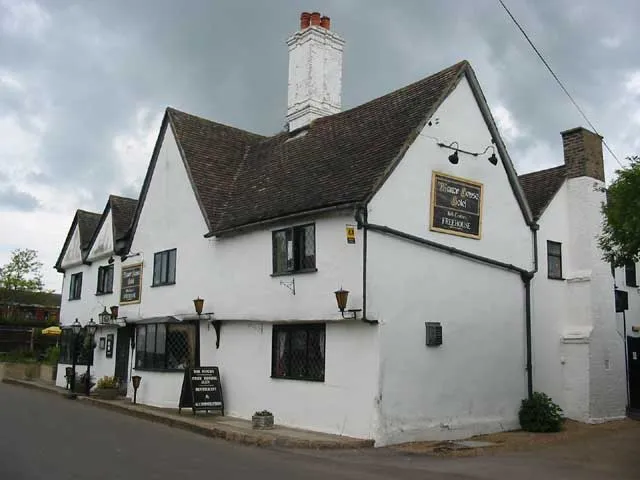
Basis: documented_manor_house — Manor House Hotel, 20 Chapel Street, Alconbury, National Grid Reference TL 18630 76080. Historic England describes it as originally the manor house, a sixteenth-century building. The site lies in Alconbury rather than Alconbury Weston, consistent with the historical manor's combined Alconbury-cum-Weston extent.
Point confidence: high
Boundary status: representative_point_only
Boundary period:
Boundary confidence: none
Boundary basis: The available evidence establishes the manor's historical identity and its principal surviving manor-house site, but does not provide a sufficiently accessible and verifiable perimeter for the manorial land. A 1791 Alconbury-cum-Weston inclosure map is catalogued, and manorial rentals, court rolls, valuations and quit-rent records survive, but the consulted public descriptions do not expose a map-derived boundary or enough explicit parcel-by-parcel boundary information to reconstruct one without speculation. The modern civil-parish boundaries cannot be substituted for the historical manor.
Sources:
- The National Archives: Manor record F271766, Alconbury with Weston Manor: https://discovery.nationalarchives.gov.uk/details/c/F271766 — Registry record for the exact manor and its authority/reference GB/NNAF/M289821.
- Historic England: Manor House Hotel, Alconbury, list entry 1130241: https://historicengland.org.uk/listing/the-list/list-entry/1130241 — Identifies the building at TL 18630 76080 as originally the manor house and supplies the authoritative geographic reference.
- Huntingdonshire District Council: Alconbury Conservation Area Character Statement: https://www.huntingdonshire.gov.uk/media/2317/alconbury-conservation-area-character-statement-adopted-july-1995.pdf — Records the manor's historical styles, including Wood Weston or Alconbury Weston, its association with the Alconbury estate, the later Rust ownership, and the distinction from the Rectory Manor.
- Cambridgeshire and Huntingdonshire Archives: Manor of Alconbury cum Weston inclosure map, 1791: https://calm.cambridgeshire.gov.uk/TreeBrowse.aspx?field=RefNo&key=KDMC%2F167&src=CalmView.Catalog — Catalogues the 1791 Alconbury-cum-Weston inclosure map, confirming the existence of relevant historical mapping while not exposing a usable perimeter in the consulted record.
- Cambridgeshire and Huntingdonshire Archives: Manor or Alconbury cum Weston, 1789: https://calm.cambridgeshire.gov.uk/Record.aspx?id=KHAC0%2F119%2F5%2F6&src=CalmView.Catalog — Particulars and conditions of sale for the Alconbury cum Weston estate with apportionment of rent, demonstrating estate-specific territorial records.
- Cambridgeshire and Huntingdonshire Archives: Manor of Alconbury with Weston collection: https://calm.cambridgeshire.gov.uk/TreeBrowse.aspx?field=RefNo&key=KHAC0%2F119%2F6&src=CalmView.Catalog — Archive catalogue grouping title deeds and Alconbury House tenancy material under the Manor of Alconbury with Weston.
Warnings / uncertainty:
- The representative point is the surviving documented manor house in Alconbury, not a settlement-centre proxy in Alconbury Weston.
- No historical manor polygon is returned. The 1791 inclosure map and surviving rentals may support a future archival reconstruction, but the publicly viewable catalogue evidence is insufficient to define a defensible perimeter.
- The manor's territorial extent should not be equated with the modern Alconbury Weston civil parish, the combined ecclesiastical parish, or any present-day administrative boundary.
About the Manor
Alconbury with Weston Manor was the principal secular manor associated with Alconbury Weston and the adjoining Alconbury estate in Huntingdonshire, historically also styled Alconbury cum Weston or Wood Weston. The estate has medieval origins. The Domesday evidence for the Alconbury Weston component records the place as Westune in 1086, with Eustace the sheriff as tenant-in-chief and Wulfbert as the local lord; the pre-Conquest lord was King Edward. A later local historical account states that the manor remained with the Crown until the twelfth century, passed through the Segrave, Pecche and de Grey connections, was sold in 1600 to Sir John Spencer of Althorp, and was conveyed to John Bedell in 1655. It subsequently passed through several incompletely identified private owners before reaching James Rust in 1840. The Rust family's tenure ended in 1922. The manor should not be confused with the Rectory Manor, which included Weybridge Forest and was held ecclesiastically by Merton Priory and later the Dean and Chapter of Westminster. No physical medieval manor house remains in Alconbury Weston according to the modern parish heritage statement.
Ownership / Holder Account
The secure public-source descent is necessarily incomplete. The earliest directly documented predecessor estate is the Domesday estate at Alconbury Weston, held in 1086 by Eustace the sheriff of Huntingdon, with Wulfbert as lord. A local authority historical account then describes Crown ownership until the twelfth century, a grant or association with John Lupus, a grant of land at Alconbury by King John to David, Earl of Huntingdon, and the later emergence of the Segrave family. The same account records a temporary seizure by Sir Reginald de Grey in 1264, restoration to Ida and Hugh Pecche by 1285, inheritance by John de Segrave in 1325, succession within the Segrave line during the fourteenth century, and a return to the de Grey family by marriage in 1428. After the death of John de Grey in 1476, the account associates the lordship with his heiress Anne and then with Elizabeth, Duchess of Norfolk, but the precise legal descent is not fully established by the sources located. The manor was sold in 1600 to Sir John Spencer of Althorp, passed to his daughter Elizabeth and then to a male Spencer descendant who died at Hopton Heath in 1643, and was conveyed to John Bedell in 1655. The intervening private owners between John Bedell and James Rust are not identified in the available public sources and have not been invented here. James Rust is reported as holder from 1840, while George John Rust is explicitly described as lord of the manor in Kelly's Directory in 1898. The Rust tenure is reported to have ended in 1922, but the later conveyance is not identified.
Records & References
Sources and references mentioning this manor/title which are not necessarily conveyances or transfers.
30 records found · showing 9–16.
1752-1752: list of copyhold tenants
Held by: Huntingdonshire Archives
Further information: NRA 9006 Cambs RO, Hunts
1747-1747: quit rental
Held by: Huntingdonshire Archives
Further information: NRA 9006 Cambs RO, Hunts
1710-1841: court books (4 vols)
Held by: Huntingdonshire Archives
Further information: NRA 9006 Cambs RO, Hunts
1708-1708: quit rental
Held by: Huntingdonshire Archives
Further information: NRA 9006 Cambs RO, Hunts
1707-1707: particulars and valuation
Held by: Huntingdonshire Archives
Further information: NRA 9006 Cambs RO, Hunts
1703-1711: steward's papers incl correspondence and notes on rents (46 items)
Held by: Huntingdonshire Archives
Further information: NRA 9006 Cambs RO, Hunts
1700-1940: steward's papers incl correspondence rel to extinguishment of manorial incidents
Held by: The Story Durham (formerly Durham County Record Office)
Further information: NRA 24753 Edleston
1677-1721: steward's papers inc surrenders and admissions, with Alconbury Rectory (1 rolled bundle)
Held by: Huntingdonshire Archives
Further information: NRA 9006 Cambs RO, Hunts
Conveyance & Descent
First holder to present holder: blood proximity & distance travelled
First recorded holder: Eustace the sheriff of Huntingdon
Present holder:
Recorded title journey: 20 holder entries in this manor's saved Conveyance & Descent history.
No recorded holder currently has a usable saved direct-blood or collateral-blood relationship path from which to calculate proximity percentages.
First recorded holder → present holder
A usable saved blood relationship path between the first recorded holder and the present holder has not yet been recorded, so that first-to-present genealogical distance cannot be calculated.
Eustace the sheriff of Huntingdon, tenant-in-chief in Domesday Book
Transfer: Domesday tenure; no later transfer identified in the source used.
Shared holding: Domesday tenant-in-chief
Previous holder: King Edward, as lord in 1066
The National Archives catalogue for the Great Domesday Book identifies Alconbury Weston as the Domesday place Westune. The associated Domesday data records Eustace the sheriff as tenant-in-chief in 1086, Wulfbert as lord in 1086, and King Edward as lord in 1066. This is the earliest securely evidenced predecessor estate for the imported manor, although Domesday terminology distinguishes tenant-in-chief from local lord.
Source: The National Archives, Great Domesday Book, E 31/2/2/77, Place name: Alconbury Weston, Huntingdonshire, folio 206r, dated 1086; corroborated by the Open Domesday entry for Alconbury Weston. — source link
Transfer: The local historical account states that the manor remained with the Crown until the twelfth century; the precise date and instrument of transfer are not supplied.
Shared holding: Royal holding
Previous holder: Eustace the sheriff of Huntingdon, tenant-in-chief in Domesday Book
This is a broad chronological statement rather than a dated conveyance. It is retained because the source expressly describes Crown possession of the manor, but the exact commencement after the Domesday tenure and the legal mechanism of the subsequent grant are unknown.
Source: Huntingdonshire District Council, Alconbury Conservation Area Character Statement, section 3.6, historical account of the manorial succession. — source link
John Lupus, Described by the local account as chamberlain of the Emperor of Germany
Transfer: Grant from the Crown according to the local historical account; the exact date, grantor's instrument and scope of the estate are not stated.
Shared holding: Twelfth-century grantee
Previous holder: Crown, Royal lordship
The source states that the manor was granted to John Lupus, described as chamberlain of the Emperor of Germany. The precise identity of John Lupus and the exact date of the grant remain uncertain. The entry is therefore retained with medium rather than high evidence strength.
Source: Huntingdonshire District Council, Alconbury Conservation Area Character Statement, section 3.6. — source link
Stephen de Segrave, Justiciar of England, lord of the Segrave baronial family
Transfer: The local historical account states that the overlordship was granted to Stephen de Segrave. This is recorded as overlordship rather than direct demesne possession.
Holding arrangement: Other
Shared holding: Overlordship
Previous holder: Crown or preceding superior lordship
The source specifically uses the term overlordship. It is therefore not treated as proof that Stephen de Segrave held every incident of direct manor ownership or occupation. Stephen died in 1241 according to the same account.
Source: Huntingdonshire District Council, Alconbury Conservation Area Character Statement, section 3.7. — source link
Transfer: The local historical account states that after Stephen de Segrave's death the manor was granted to his second wife Ida, who later married Sir Hugh Pecche.
Shared holding: Widow's or wife's holding
Previous holder: Stephen de Segrave, Justiciar of England, lord of the Segrave baronial family
The source names Ida as the recipient after Stephen de Segrave's death. Her personal identity and the legal character of the grant are not fully specified. Because the context may involve dower or a life interest, this should not automatically be interpreted as an unrestricted inheritable fee-simple conveyance.
Source: Huntingdonshire District Council, Alconbury Conservation Area Character Statement, section 3.7. — source link
Transfer: Ida later married Sir Hugh Pecche. The source associates the manor with them before its seizure by Sir Reginald de Grey in 1264; no separate deed of transfer to Hugh has been located.
Holding arrangement: Joint
Shared holding: Marital or dower-associated holding
Previous holder: Ida, Widow of Stephen de Segrave, later wife of Sir Hugh Pecche
The local account says that Ida later married Sir Hugh Pecche and that the manor was subsequently seized by Sir Reginald de Grey in 1264. Because marriage alone does not prove transfer of legal ownership, this entry records the source's association cautiously as a joint or marital holding rather than asserting a fee-simple conveyance to Hugh.
Source: Huntingdonshire District Council, Alconbury Conservation Area Character Statement, sections 3.7-3.8; corroborative contextual evidence for Hugh Pecche and Ida appears in medieval fine material concerning other estates but does not independently establish this manor. — source link
Transfer: Seizure of the manor, according to the local historical account; the source characterizes this as an interruption of possession rather than a completed conveyance.
Holding arrangement: Other
Shared holding: Seizure or disputed possession
Previous holder: Ida and Sir Hugh Pecche, Knight
The source states that the manor was seized by Sir Reginald de Grey in 1264, while Ida and Hugh Pecche had regained possession by 1285. This is recorded as disputed or temporary possession, not as a secure transfer of title.
Source: Huntingdonshire District Council, Alconbury Conservation Area Character Statement, section 3.8. — source link
Transfer: Inheritance within the Segrave family. The local source states that the manor was inherited by John de Segrave in 1325.
Shared holding: Segrave family
Co-holders: John de Segrave, later Earl of Nottingham, Thomas de Segrave
Previous holder: Segrave family predecessor; intervening legal descent not fully detailed
The local account states that the Segrave family had returned to royal favour and that the manor was inherited by John de Segrave in 1325. A surviving British Library feodary of John de Segrave's lands, dated 1338-1353, includes a rental of the manor of Alconbury Weston, providing independent near-primary evidence that the Segrave estate included this manor during the fourteenth century.
Source: Huntingdonshire District Council, Alconbury Conservation Area Character Statement, section 3.8; British Library, Add MS 37671, Feodary of the manors and lands of John de Segrave, 1338-1353, including the rental of Alconbury Weston. — source link
John de Segrave, later Earl of Nottingham, Segrave heir, Earl of Nottingham from 1377 according to the local account
Transfer: Succession from the preceding John de Segrave within the Segrave family; the local account states that his son succeeded in 1368.
Shared holding: Segrave family
Co-holders: John de Segrave, Thomas de Segrave
Previous holder: John de Segrave, predecessor
The local account states that the son of the preceding John de Segrave succeeded in 1368. The same account says that he was created Earl of Nottingham in 1377. The repeated personal name creates some identification risk, so the entry preserves the source's wording rather than assigning a modern ordinal with unwarranted certainty.
Source: Huntingdonshire District Council, Alconbury Conservation Area Character Statement, section 3.8; British Library, Add MS 37671, for the earlier Segrave connection to Alconbury Weston. — source link
Thomas de Segrave, Younger brother and successor within the Segrave family, titles described by the local source
Transfer: The local account states that the Segrave titles passed to the younger brother Thomas, who died in 1400.
Shared holding: Segrave family
Co-holders: John de Segrave, John de Segrave, later Earl of Nottingham
Previous holder: John de Segrave, Earl of Nottingham
The source explicitly includes the Alconbury manorial succession in its account of the Segrave titles and states that both titles passed to Thomas, the younger brother of the preceding John. The precise legal status of the manor after the extinction or alteration of the Segrave inheritance is not separately documented in the source.
Source: Huntingdonshire District Council, Alconbury Conservation Area Character Statement, section 3.8. — source link
Transfer: The lordship returned to the de Grey family by marriage in 1428, according to the local historical account. The specific marriage instrument and exact holder are not identified there.
Holding arrangement: Other
Shared holding: De Grey family by marriage
Previous holder: Segrave or successor interest after 1400
The source states that the lordship again came into the de Grey family by marriage in 1428. Because the source does not specify the exact spouse, conveyance instrument or whether the interest was inherited, dower-based or held jointly, this is recorded as a family holding by marriage rather than a fully identified sole conveyance.
Source: Huntingdonshire District Council, Alconbury Conservation Area Character Statement, section 3.9. — source link
John de Grey, Member of the de Grey noble family, Bishop of Norwich, Archbishop-elect of Canterbury
Transfer: The local account identifies John de Grey as the later holder of the lordship and states that he died in 1476, leaving his daughter Anne as heir.
Shared holding: De Grey family
Previous holder: de Grey family predecessor by marriage
The source states that when John de Grey died in 1476 his heir and daughter Anne was aged four. It does not provide a separate dated conveyance from the unnamed de Grey holder by marriage to John, so the start date is retained as approximate within the 1428 de Grey phase.
Source: Huntingdonshire District Council, Alconbury Conservation Area Character Statement, section 3.9. — source link
Transfer: Inheritance as daughter and heir of John de Grey, who died in 1476; the source states that Anne was aged four.
Shared holding: De Grey inheritance
Previous holder: John de Grey, Member of the de Grey noble family, Bishop of Norwich, Archbishop-elect of Canterbury
The source explicitly identifies Anne as John de Grey's heir. It further says that she was married to Richard, Duke of York, but marriage is not treated here as a conveyance of the manor. The later statement that the title passed to Anne's mother, Elizabeth, Duchess of Norfolk, is ambiguous and may reflect custody, dower or an interest associated with the minority of the heir rather than an outright transfer.
Source: Huntingdonshire District Council, Alconbury Conservation Area Character Statement, section 3.9. — source link
Sir John Spencer of Althorp, Knight, owner of Althorp, member of the Spencer family
Transfer: Purchase at the sale of the manor for £4,000, according to the local historical account.
Shared holding: Spencer family
Co-holders: Elizabeth Spencer, Spencer descendant of Elizabeth Spencer
Previous holder: Elizabeth, Duchess of Norfolk or her successor interest
The local source states that debts forced the sale of the manor in 1600 and that Sir John Spencer of Althorp purchased it for £4,000. The seller is not identified in the source, so the previous-holder field remains qualified.
Source: Huntingdonshire District Council, Alconbury Conservation Area Character Statement, section 3.10. — source link
Elizabeth Spencer, Daughter of Sir John Spencer of Althorp
Transfer: The local account states that the manor passed from Sir John Spencer to his daughter Elizabeth. No date or instrument is supplied.
Shared holding: Spencer family
Co-holders: Sir John Spencer of Althorp, Spencer descendant of Elizabeth Spencer
Previous holder: Sir John Spencer of Althorp, Knight, owner of Althorp, member of the Spencer family
The source names Elizabeth as Sir John Spencer's daughter and states that the manor passed to her. It does not identify whether this was by inheritance, settlement, gift or another conveyance, and therefore no more precise transfer is asserted.
Source: Huntingdonshire District Council, Alconbury Conservation Area Character Statement, section 3.10. — source link
Spencer descendant of Elizabeth Spencer, Member of the Spencer family, personal name not supplied by the source
Transfer: The local account states that the manor then passed to Elizabeth's son, identified only by the surname Spencer, who was killed fighting for the King at Hopton Heath in 1643.
Shared holding: Spencer family
Co-holders: Sir John Spencer of Althorp, Elizabeth Spencer
Previous holder: Elizabeth Spencer, Daughter of Sir John Spencer of Althorp
The source does not give the son's personal name. He is not expanded to a named historical person because doing so would require inference from genealogy rather than direct manor evidence. His death at Hopton Heath in 1643 is used only as the source's chronological marker.
Source: Huntingdonshire District Council, Alconbury Conservation Area Character Statement, section 3.10. — source link
John Bedell, Gentleman of Huntingdonshire in associated records, exact status in the 1655 conveyance not established here
Transfer: Conveyance of the manor to John Bedell in 1655, according to the local historical account.
Shared holding: Bedell family
Previous holder: Spencer family successor
The local account expressly states that the manor was conveyed to John Bedell in 1655. The grantor is not named. Independent archive material confirms that the Bedell family and lands in Alconbury and Weston appear in seventeenth-century legal records, but the specific 1655 manor conveyance should be checked in the underlying deed or fine.
Source: Huntingdonshire District Council, Alconbury Conservation Area Character Statement, section 3.11; supplementary archival context from the National Archives indexed Chancery proceedings involving payments due from lands in Alconbury, Weston and Woolley in 1663. — source link
Private individuals, names not identified
Transfer: The local historical account states only that the manor passed through a series of private individuals before reaching James Rust in 1840. No secure intervening names or dates were located.
Holding arrangement: Other
Shared holding: Unidentified private holders
Previous holder: John Bedell, Gentleman of Huntingdonshire in associated records, exact status in the 1655 conveyance not established here
This is a documentary-gap entry rather than a fabricated chain of title. The source explicitly indicates several private holders but does not name them. Individual names found in records concerning copyhold parcels, tenants, executors or unrelated property have not been promoted to manor holders.
Source: Huntingdonshire District Council, Alconbury Conservation Area Character Statement, section 3.11. — source link
Transfer: The local historical account states that the manor eventually passed to James Rust in 1840. The transferor and instrument are not identified.
Shared holding: Rust family
Co-holder: George John Rust
Previous holder: Private individuals, names not identified
James Rust is the first securely named holder after the unidentified private-owner sequence. The source says that he held 1,273 acres and that his family occupied Alconbury House. The acreage is estate evidence and should not be assumed to equal the complete legal extent of the manor.
Source: Huntingdonshire District Council, Alconbury Conservation Area Character Statement, section 3.11. — source link
George John Rust, Esquire, Deputy Lieutenant and Justice of the Peace according to the directory entry, lord of the manor in 1898
Transfer: Later holder explicitly described as lord of the manor in Kelly's Directory in 1898; the transfer from James Rust or another Rust family member is not identified.
Shared holding: Rust family
Co-holder: James Rust
Previous holder: James Rust or an unidentified Rust family successor
Kelly's Directory for 1898 describes George John Rust as lord of the manor and principal landowner in the parish. This independently confirms a named Rust holder in the late nineteenth century, but it does not establish the precise conveyance or the relationship between George John Rust and the James Rust who acquired the manor in 1840.
Source: Kelly's Directory of Huntingdonshire, 1898, entry for Alconbury; reproduced in the Forebears transcription of the directory entry. — source link
Corrections / Challenges
Sign in to challenge or submit evidence against a recorded assertion.
JSON API
Machine-readable published manor data, including public images, mapped land areas, notes, rights, conveyances, relationships, records, source/document-library entries and public file links.
https://manorialregistry.com/index.php?rest_route=/mhr/v1/manor/alconbury-with-weston-manorPublic API access is currently disabled. Authorised API clients must use a private X-MHR-API-Key; currently only administrator keys are enabled.
Private source files, pending edits, moderation/admin information, user API keys and non-public import identifiers are not returned.