


Historical names: AElmundestune; Agemundeston; Alhameston; Halchamston; Halghameston; Alcaneston; Alkamston; Alghamston
Location: Acton Scott, Shropshire
Places / associated places: Acton Scott, Shropshire
Listed in Domesday Book: Yes
Location & Extent
GPS Location & Recorded Land Areas
Representative GPS point: 52.4793, -2.8005
Identity: confirmed — The record matches the historically documented manor of Alcaston, also recorded as AElmundestune, Agemundeston, Alhameston, Halchamston, Halghameston, Alcaneston, Alkamston and Alghamston. Eyton identifies it as the Domesday manor in Lenteurde Hundred, later associated with the Rossall, Fitz Alan, Hopton and Arundel interests. Its location corresponds to Alcaston settlement in Acton Scott parish, and the surviving Grade II-listed Manor Farmhouse at Alcaston provides a documented manorial site.
Representative point: 52.4793, -2.8005
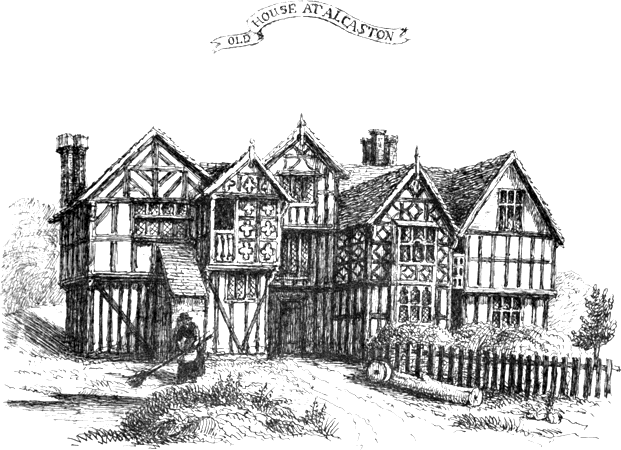
Basis: documented_manor_house — Manor Farmhouse, Alcaston, Acton Scott, at National Grid Reference SO 45731 87123, is the surviving late-sixteenth-century farmhouse identified with the manor site.
Point confidence: high
Boundary status: representative_point_only
Boundary period: Medieval manor, with Domesday evidence from 1086 and later medieval tenure evidence through the fourteenth century
Boundary confidence: none
Boundary basis: The sources establish the manor's location and describe its Domesday extent as one hide, later referring to lands and messuages in Alcaston and Wollerton. They do not provide a sufficiently explicit surveyed perimeter, estate map, parcel schedule, or other reliable evidence from which the historical manorial boundary can be reconstructed. The modern parish or settlement boundary must not be substituted for the manor extent.
Sources:
- Manor Farmhouse, Acton Scott - Historic England List Entry 1383216: https://historicengland.org.uk/listing/the-list/list-entry/1383216 — Identifies the Grade II Manor Farmhouse in Alcaston, Acton Scott, gives National Grid Reference SO 45731 87123, and dates the principal timber-framed building to circa 1581.
- Eyton's Antiquities of Shropshire, Volume XII: Alcaston: https://www.melocki.org.uk/eyton/Vol12.html — Provides the Domesday description, medieval name forms, one-hide extent, descent through Girros, Hopton, Rossall, Fitz Alan and Arundel interests, and references to Alcaston Chapel and lands in Alcaston and Wollerton.
- The National Archives Discovery: F245416: https://discovery.nationalarchives.gov.uk/details/c/F245416 — Registry authority record supplied for the exact manor identification, linking Alcaston Manor with Acton Scott, Shropshire.
- The Alcaston Estate, Historic England Archive Volume SC00858: https://historicengland.org.uk/images-books/photos/volume/SC00858 — Confirms the continuing association of Alcaston Manor Farm with the Alcaston estate in Acton Scott and records related farms, but does not expose a sufficiently clear historical manor boundary for polygon reconstruction.
- Place view: Alcaston, Mapping the Medieval Countryside: http://www.inquisitionspostmortem.ac.uk/view/place/865847 — Identifies Alcaston as a manor in the parish and vicinity of Acton Scott and relates it to nearby historical places including Wollerton, Affcot, Henley, Felhampton, Marsh and Strefford.
Warnings / uncertainty:
- No defensible historical manor polygon was located in the accessible evidence.
- The one-hide Domesday valuation is an extent statement, not a recoverable perimeter.
- The representative point marks the documented Manor Farmhouse/manorial site and should not be interpreted as the full historical extent of the manor.
About the Manor
Alcaston was a Domesday manor in the former Lenteurde Hundred, now the Alcaston settlement within the parish of Acton Scott, Shropshire. The Domesday entry records one hide, land for four ploughs, one plough in demesne, two servi and five villani, with a value falling from 20 shillings before the Conquest to 8 shillings at the survey. Medieval forms of the name include AElmundestune, Agemundeston, Alhameston, Halchamston, Halghameston, Alcaneston, Alkamston and Alghamston. A chapel belonging to or associated with the manor is documented in 1259 and 1349, although its site is now unknown. The surviving Manor Farmhouse at Alcaston is a timber-framed building dated principally to circa 1581; it is listed Grade II. Alcaston was historically distinct from the principal manor of Acton Scott, although later descriptions place it within the same parish and record the two estates in close relationship.
Ownership / Holder Account
The earliest recorded lord was Edric, whose estate was held by Helgot at the Domesday survey of 1086, immediately of the Norman Earl of Shrewsbury. Eyton states that the holding subsequently passed, by feoffment or inheritance among the relevant Domesday tenures, to the Girros family; Robert de Girros's manor of Agemundeston is recorded in the 1195 Pipe Roll material. About 1251 the Girros fief was divided between coheirs identified by Eyton as Hopton and Constantine, and Alcaston fell to the Hopton share as a mesne tenure. The Rossall family had already been enfeoffed in the manor: Thomas de Rossall appears as the senior feoffee, followed by his son Vivian, and Vivian's son Reymund was recorded as holding the manor in 1272 and as Reymund de Alcaston in 1284. The Fitz Alan interest and the Hopton mesne lordship continued alongside these Rossall holdings; Eyton records John fitz Alan's fee-simple interest, Walter de Hopton as suzerain, and Richard, Earl of Arundel, holding under Walter de Hopton in 1302. The documentary descent after the early fourteenth century is not securely continuous in the accessible sources. A modern VCH snippet reports a possible sale by John Lyttelton to Humphrey Ludlow between 1507 and 1532, but expressly treats the identification as uncertain and also records an interest in Alcaston and Henley sold by the Earl of Oxford to John Stringfellow in 1552. Those events are therefore retained only as qualified evidence. Later nineteenth-century directories explicitly identify J. Loxdale Warren as lord of the manor of Alcaston, but the intervening conveyance from the sixteenth-century interests to Warren has not been established here.
Conveyance & Descent
First holder to present holder: blood proximity & distance travelled
First recorded holder: Edric
Present holder:
Recorded title journey: 11 holder entries in this manor's saved Conveyance & Descent history.
No recorded holder currently has a usable saved direct-blood or collateral-blood relationship path from which to calculate proximity percentages.
First recorded holder → present holder
A usable saved blood relationship path between the first recorded holder and the present holder has not yet been recorded, so that first-to-present genealogical distance cannot be calculated.
Edric
Transfer: Pre-Conquest tenure; the Domesday entry states that Edric held the estate before Helgot.
Edric is named in the Domesday record as the predecessor who held AElmundestune before Helgot. The record does not provide a more precise date or explain the transfer.
Source: R. W. Eyton, Antiquities of Shropshire, vol. XII (1860), 'Alcaston', p. 1, quoting the Shropshire Domesday entry: 'Edricus tenuit'. — source link
Helgot, Tenant of the Norman Earl of Shrewsbury at Alcaston
Transfer: Held at the Domesday survey immediately of the Norman Earl of Shrewsbury; succeeded Edric, but the mechanism and date of succession are not stated.
Previous holder: Edric
Helgot held Alcaston at Domesday as a tenant of the Norman Earl of Shrewsbury. The entry describes the estate as one hide with land for four ploughs, one plough in demesne, two servi and five villani.
Source: R. W. Eyton, Antiquities of Shropshire, vol. XII (1860), 'Alcaston', p. 1, quoting Domesday Book, fol. 258b. — source link
Robert de Girros
Transfer: Alcaston is identified by Eyton as one of Helgot's Domesday tenures that passed to the Girros family. Robert de Girros was deceased by 1195, when the escheator accounted for receipts from his manor of Agemundeston.
Shared holding: Girros family
Previous holder: Helgot and the intervening Girros predecessors are not individually identified
This is the first securely dated post-Conquest appearance of Alcaston in the Girros family's hands. The source establishes the family connection but does not identify the precise conveyance from Helgot's tenure or name every intervening holder.
Source: R. W. Eyton, Antiquities of Shropshire, vol. XII (1860), 'Alcaston', p. 1; citing Pipe Roll, 7 Richard I, and the Schedule of Escheats, Shropshire. — source link
Hopton coheirs, represented by the Hopton share, Mesne tenants or coheirs of the Hopton share of the Girros fief
Transfer: Division of the Girros fief among coheirs identified by Eyton as Hopton and Constantine; Alcaston fell to the Hopton share. This was a mesne tenure rather than necessarily the immediate fee-simple estate.
Holding arrangement: Share — Hopton share of the divided Girros fief
Shared holding: Girros coheirs
Previous holder: Girros family
The Hopton interest was an overlord or mesne-tenure interest. Eyton expressly distinguishes it from the Rossall fee-simple or enfeoffed interest in the manor, so this entry should not be treated as an exclusive demesne ownership record.
Source: R. W. Eyton, Antiquities of Shropshire, vol. XII (1860), 'Alcaston', p. 1. — source link
Thomas de Rossall
Transfer: Already enfeoffed in the manor before the division of the Girros fief about 1251. The source does not state the date or instrument of his enfeoffment.
Shared holding: Rossall fee
Co-holders: Vivian de Rossall, Reymund de Rossall, later styled Reymund de Alcaston
Previous holder: Earlier lords of the fee are not individually identified
Thomas de Rossall held the enfeoffed manor under the superior Hopton interest. Eyton says that the first Thomas de Rossall seems to have sub-enfeoffed his eldest son Vivian, making this a documented feudal sub-enfeoffment rather than an inferred family succession.
Source: R. W. Eyton, Antiquities of Shropshire, vol. XII (1860), 'Alcaston', p. 1. — source link
Vivian de Rossall, Lord of Halchamston, Rossall feoffee at Alcaston
Transfer: Sub-enfeoffed by his father Thomas de Rossall; later recorded as lord of Halchamston in 1259. Eyton also states that within the following eight years Vivian seems to have transferred the fee-simple to John fitz Alan II, but later evidence shows a renewed or competing Rossall interest.
Shared holding: Rossall fee
Co-holders: Thomas de Rossall, Reymund de Rossall, later styled Reymund de Alcaston
Previous holder: Thomas de Rossall
Vivian is directly recorded as holding Alcaston in the Munslow Hundred Roll context and as lord of Halchamston in 1259. The subsequent Fitz Alan transaction is presented by Eyton as probable rather than fully documented, so no exact conveyance date is assigned.
Source: R. W. Eyton, Antiquities of Shropshire, vol. XII (1860), 'Alcaston', pp. 1-2; citing the Munslow Hundred Roll and 1259 assize evidence. — source link
John fitz Alan II, Lord of the Fitz Alan fee, medieval marcher lord
Transfer: Probable transfer of the fee-simple from Vivian de Rossall, according to Eyton's reconstruction; the source does not identify a surviving conveyance or exact date.
Shared holding: Fitz Alan interest
Previous holder: Vivian de Rossall, Lord of Halchamston, Rossall feoffee at Alcaston
Eyton says Vivian seems to have transferred the fee-simple to John fitz Alan II within the period after 1259. At the inquest after John fitz Alan's death in 1267, Walter de Hopton was recorded as his suzerain at Halchamston, showing the continuing mesne-tenure structure.
Source: R. W. Eyton, Antiquities of Shropshire, vol. XII (1860), 'Alcaston', pp. 2-3; citing the 1267 inquest after the death of John fitz Alan II. — source link
Reymund de Rossall, later styled Reymund de Alcaston, Tenant-in-fee of Alcaston
Transfer: Recorded as tenant-in-fee in 1272 and as holding Alcaneston under the heir of John fitz Alan in 1284. The precise transaction between Vivian, John fitz Alan and Reymund is not stated.
Shared holding: Rossall fee
Co-holders: Thomas de Rossall, Vivian de Rossall
Previous holder: Vivian de Rossall and/or the Fitz Alan interest
At the 1272 assizes the jurors reported that Reymund, son of Vivian, then held the manor. The 1284 Feodary recognized him as Reymund de Alcaston, holding under the heir of John fitz Alan for half a knight's fee. This records a direct manor holding but leaves the intervening legal arrangements unresolved.
Source: R. W. Eyton, Antiquities of Shropshire, vol. XII (1860), 'Alcaston', pp. 2-3; citing the 1272 assizes and the 1284 Feodary. — source link
Walter de Hopton, Mesne lord or suzerain of Alcaston, lord of Hopton, Holder associated with the Barony of Wem by marriage
Transfer: Superior or mesne lordship documented through the 1267 and 1302 inquests. This was not necessarily direct possession of the demesne manor.
Holding arrangement: Other — Mesne or seigneurial interest
Shared holding: Hopton mesne tenure
Previous holder: Hopton share of the Girros fief
Walter de Hopton is recorded as suzerain at Halchamston in 1267 and as the lord under whom Richard, Earl of Arundel, held Alkamston in 1302. The entry therefore represents overlordship or mesne tenure, not an exclusive claim to direct possession.
Source: R. W. Eyton, Antiquities of Shropshire, vol. XII (1860), 'Alcaston', pp. 2-3; citing the 1267 and 1302 inquisitions. — source link
Richard, Earl of Arundel
Transfer: Recorded by inquest as holding Alkamston under Walter de Hopton for a pair of gilt spurs. The source does not establish a later conveyance.
Holding arrangement: Other — Tenure under Walter de Hopton
Shared holding: Arundel tenure
Previous holder: Fitz Alan or Rossall interest; exact immediate predecessor uncertain
The 1302 inquest records the Earl of Arundel's tenure at Alkamston under Walter de Hopton. Because this is explicitly a subordinate tenure, the entry should not be interpreted as proof that the earl held the manor as an unencumbered sole owner.
Source: R. W. Eyton, Antiquities of Shropshire, vol. XII (1860), 'Alcaston', p. 3; citing Inquisitions, 30 Edward I, no. 30. — source link
J. Loxdale Warren, Esquire, J.P., lord of the manor of Alcaston
Transfer: No conveyance identified. Kelly's 1863 directory and Cassey's 1871 directory independently state that Loxdale Warren was lord of the manor of Alcaston.
Shared holding: Warren estate
Previous holder: Not securely established
Nineteenth-century directory evidence directly identifies Loxdale Warren as lord of the manor of Alcaston and owner of the soil. The route by which the manor passed from the sixteenth-century interests to Warren has not been established, so no intervening conveyances are inferred.
Source: Kelly's Directory of Gloucestershire, Herefordshire, Shropshire and the City of Bristol (1863), Acton Scott and Alcaston entry; Edward Cassey & Co., History, Gazetteer, and Directory of Shropshire (1871), Alcaston entry. — source link
Corrections / Challenges
Sign in to challenge or submit evidence against a recorded assertion.
JSON API
Machine-readable published manor data, including public images, mapped land areas, notes, rights, conveyances, relationships, records, source/document-library entries and public file links.
https://manorialregistry.com/index.php?rest_route=/mhr/v1/manor/alcaston-manorPublic API access is currently disabled. Authorised API clients must use a private X-MHR-API-Key; currently only administrator keys are enabled.
Private source files, pending edits, moderation/admin information, user API keys and non-public import identifiers are not returned.