


Historical names: Alberberie
Location: Alberbury with Cardeston, Shropshire
Places / associated places: Alberbury with Cardeston, Shropshire
Listed in Domesday Book: Yes
Location & Extent
GPS Location & Recorded Land Areas
Representative GPS point: 52.72344, -2.95199
Identity: confirmed — The supplied TNA/MDR record, authority reference, Alberbury location, and historical description identify the ancient secular manor of Alberbury in Alberbury with Cardeston, Shropshire. Historic evidence distinguishes this manor from Alberbury Priory's ecclesiastical possessions and from neighbouring or associated manors such as Rowton, Amaston, Bausley, Eyton and Stanford.
Representative point: 52.72344, -2.95199
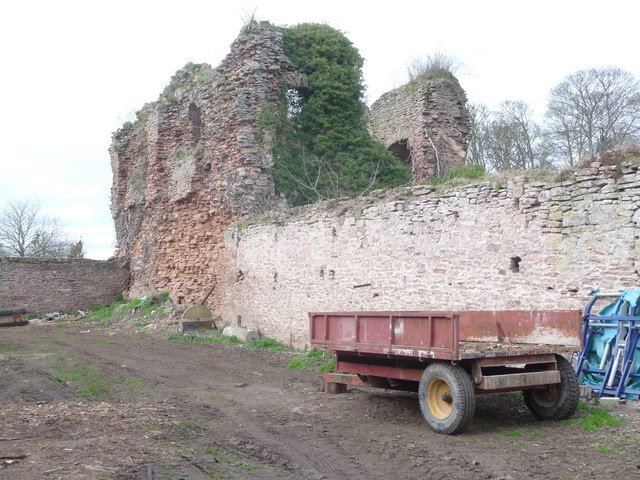
Basis: documented_manor_site — Alberbury Castle, immediately southwest of St Michael's Church, is identified by Historic England as probably built by Fulk Fitz Warin when it appears to have been the centre of the manor of Alberbury. The coordinates correspond approximately to OS grid SJ 3579 1440.
Point confidence: medium
Boundary status: representative_point_only
Boundary period: Medieval secular manor, with later Leighton lordship; precise territorial extent unresolved
Boundary confidence: none
Boundary basis: The surviving sources establish the manor's location and documentary identity but do not provide a sufficiently clear perimeter for the secular manor. Alberbury Castle and the later Loton Park estate are strong locational evidence, but Loton Park's designed parkland and the modern parish are not demonstrably identical to the historical manor. The Alberbury tithe material, court rolls and suit rolls are useful leads for future parcel-level reconstruction, but the accessible evidence reviewed here does not establish a complete manor boundary.
Sources:
- Historic England, Alberbury Castle: tower keep castle 70m south west of the Church of St Michael and All Angels, listing no. 1020662: https://historicengland.org.uk/listing/the-list/list-entry/1020662 — States that Alberbury Castle was probably built by Fulk Fitz Warin in the early thirteenth century when it appears to have been the centre of the manor of Alberbury; also records the later nearby Loton Park Hall and the obscured late-medieval descent.
- Robert William Eyton, Antiquities of Shropshire, Volume VII, Alberbury: https://www.melocki.org.uk/eyton/Vol07.html — Documents the medieval secular manor, the Fitz Warin and Fulk Glas succession, the 1292 dispute, and the 1320 quitclaim expressly excluding the advowson, abbey and Walcheria.
- Shropshire Historic Environment Record, Loton Park, Alberbury, PRN 13188: https://www.heritagegateway.org.uk/Gateway/Results_Single.aspx?resourceID=1015&uid=MSA7590 — Identifies Loton Park House in Alberbury with Cardeston at OS grid SJ 3567 1473 and records it as the Leighton family home and later manorial seat context.
- Shropshire Historic Environment Record, Loton Park designed landscape, PRN MSA4138: https://www.heritagegateway.org.uk/Gateway/Results_Single.aspx?resourceID=1015&uid=MSA4138 — Describes the later Loton Park and deer park, its approximate area and development, while treating it as a designed landscape rather than proving it to be the full historical manor extent.
- Loton Park official history: https://www.lotonpark.co.uk/history/ — Confirms Loton Park as the long-standing Leighton family seat in Alberbury and provides later estate context.
- The National Archives, TNA/MDR record F245414: https://discovery.nationalarchives.gov.uk/details/c/F245414 — Registry record supplied for the exact Alberbury Manor identity and authority reference GB/NNAF/M220404.
- Shropshire Archives research guide for Alberbury: https://www.shropshire.gov.uk/media/3177/alberbury.pdf — Identifies Alberbury tithe maps and apportionments, Ordnance Survey maps, and estate records as relevant sources; these were not sufficient in the accessible material to reconstruct the complete secular manor perimeter.
- The National Archives, Alberbury manor suit roll, D3651/G/9/18: https://discovery.nationalarchives.gov.uk/details/r/N14314304 — Existing registry lead for a 1775-1803 suit roll concerning Alberbury and other manors; confirms a later manorial record source but does not itself supply an accessible boundary.
- The National Archives, Alberbury manor court rolls, D3651/G/9/41: https://discovery.nationalarchives.gov.uk/details/r/N14267779 — Existing registry lead for two 1784 court rolls; relevant to later manorial jurisdiction but not an accessible mapped perimeter.
Warnings / uncertainty:
- Do not substitute the modern civil parish of Alberbury with Cardeston for the historical manor boundary.
- Do not merge Alberbury Manor with Alberbury Priory's lands, advowson, tithes or Walcheria.
- Do not automatically include Rowton, Amaston, Bausley, Eyton, Stanford or other associated places without parcel-level evidence tying them to the secular manor.
- The representative point marks the documented medieval manorial centre at Alberbury Castle, not the full territorial extent of the manor.
- The medieval-to-early-modern descent and the complete historical boundary remain incompletely documented in the publicly accessible sources reviewed.
About the Manor
Alberbury was an ancient manor in Shropshire, situated on the River Severn near the Welsh border. Domesday Book records it as Alberberie: King Edward the Confessor had held it before the Conquest, while in 1086 the Earl held it and Roger fitz Corbet held it of the Earl. The manor was associated with the Hundred of Ruesset, later Ford Hundred, and was described by Eyton as a small manor which had formerly possessed royal and hundredal importance. From the twelfth through the fourteenth centuries Alberbury was closely connected with the Fitz Warin family, who held it under the barony of Caus and founded Alberbury Priory, or New Abbey, for the Grandmontine order. The manor itself must be distinguished from the priory's ecclesiastical possessions, advowson, tithes, and lands. A documented dispute in the late thirteenth century concerned the secular manor apart from the advowson of the church and abbey and the Walcheria belonging to the manor. In 1320 Fulk fitz Warin of Whittington formally quitclaimed his residual right in the manor to Fulk Glas, excepting the advowson and Walcheria. The surviving public sources leave a substantial gap between the early fourteenth-century Fitz Warin/Glas evidence and the later Leighton lordship. By the nineteenth century the Alberbury manor was held by Sir Baldwin or Sir Baldwyn Leighton, whose seat was Loton Park; contemporary directories describe him as lord of the manor and principal landowner. The parish also contained the separate or related manorial interests of places such as Rowton, Amaston, Bausley, Eyton, and Stanford, which should not automatically be merged with Alberbury Manor.
Ownership / Holder Account
The earliest secure evidence identifies Alberbury as a pre-Conquest royal manor held by Edward the Confessor. In 1086 it was held by the Earl, with Roger fitz Corbet holding of him, apparently as a mesne tenant within the Earl's feudal structure. Eyton identifies Ralph Crassus as the first apparent feoffee of Alberbury in the reign of Stephen, with evidence between 1141 and 1155. Fulk fitz Warin subsequently held Alberbury under the barony of Caus, although Eyton expressly states that the precise basis of his succession from Ralph Crassus is unknown. The Fitz Warin connection is securely documented through disputes over the manor and its church rights. In about 1262 the senior Fulk fitz Warin conveyed Alberbury, excluding the advowson of the church and abbey and the Walcheria, to his younger brother, thereafter known as Fulk fitz Warin of Alberbury, Fulk fitz Warin Junior, Fulk de Leyham, or Fulk Glas. Fulk Glas's possession is evidenced in the 1290s, and his son Fulk Glas II was settled in the manor with Agnes his wife by a fine of 1311. In 1320 Fulk Glas II obtained a formal quitclaim from Fulk fitz Warin of Whittington. No secure public source located in this research establishes the intervening descent from the Glas family to the later Leighton family. A later Leighton will, discussed in the published Leighton parish history, records profits from the manor of Alberbury and associated places, demonstrating Leighton possession by the sixteenth century, but it does not by itself establish the precise conveyance by which the manor left the Fitz Warin/Glas line. Nineteenth-century directories identify Sir Baldwin or Sir Baldwyn Leighton as lord of Alberbury Manor. The historical descent is therefore secure in its broad sequence but incomplete across the medieval-to-early-modern documentary gap.
Manorial Rights & Privileges
Historic manorial rights / privileges (3)
Association with the Hundred of Ruesset, later Ford Hundred
Provisional
Alberbury was connected with this hundredal jurisdiction; the record describes it as having formerly possessed royal and hundredal importance.
Walcheria belonging to the manor
Provisional
The Walcheria was expressly distinguished from the secular manor in the medieval arrangements and was retained or excepted in the documented Fitz Warin transactions.
Advowson of the church and abbey
Provisional
The advowson was expressly excluded from the secular manor in the medieval conveyances and should not be treated as part of the manor itself.
Records & References
Sources and references mentioning this manor/title which are not necessarily conveyances or transfers.
2 records found · showing 1–2.
1784-1784: court rolls (2)
Held by: Shropshire Archives
Further information: NRA 11563 Shropshire
1775-1803: suit roll, with other manors
Held by: Shropshire Archives
Further information: NRA 11563 Shropshire
Conveyance & Descent
First holder to present holder: blood proximity & distance travelled
First recorded holder: Roger fitz Corbet
Present holder:
Recorded title journey: 9 holder entries in this manor's saved Conveyance & Descent history.
No recorded holder currently has a usable saved direct-blood or collateral-blood relationship path from which to calculate proximity percentages.
First recorded holder → present holder
A usable saved blood relationship path between the first recorded holder and the present holder has not yet been recorded, so that first-to-present genealogical distance cannot be calculated.
Roger fitz Corbet, Tenant of Alberbury under the Earl, associated with the Corbet baronial family
Previous holder: Edward the Confessor
Domesday Book records that the Earl held Alberberie and Roger held it of the Earl. Edward the Confessor had held the manor before the Norman Conquest. Roger's position was a feudal holding under the Earl rather than an independent allodial ownership claim.
Source: Domesday Book, folio 253b; reproduced and discussed in R. W. Eyton, Antiquities of Shropshire, volume VII, Alberbury. — source link
Ralph Crassus, or Ralph the Fat, Feoffee of Alberbury, donor of the church of Alberbury to Shrewsbury Abbey
Eyton identifies Ralph Crassus as the first apparent feoffee of Alberbury. He gave the church of Alberbury to Shrewsbury Abbey in a grant made between 1141 and 1155. The evidence establishes his connection with the Alberbury estate and church, but the precise conveyance by which he acquired the manor from the earlier Corbet/Earl holding is not known.
Source: R. W. Eyton, Antiquities of Shropshire, volume VII, Alberbury, pp. 67-68, citing the Shrewsbury Abbey chartulary and confirmations of 1141 and 1155. — source link
Fulk fitz Warin I, Fitz Warin family head, probable tenant of Alberbury under the barony of Caus
Shared holding: Fitz Warin family
Co-holder: Fulk fitz Warin II
Previous holder: Ralph Crassus
Eyton states that Fulk fitz Warin probably held Alberbury and Welbatch of the barony of Caus. The author expressly says that he cannot determine whether Fulk was heir to Ralph Crassus of Alberbury or had merely succeeded to a lapsed tenure. Fulk was alive at Michaelmas 1170 and dead by Michaelmas 1171. The manor link is therefore good but the succession from Ralph Crassus is uncertain.
Source: R. W. Eyton, Antiquities of Shropshire, volume VII, Alberbury, pp. 68-69. — source link
Fulk fitz Warin II, Fitz Warin landholder, claimant to the patronage of Alberbury Church
Transfer: Alberbury appears to have continued in the Fitz Warin interest after the death of Fulk fitz Warin I; no specific conveyance instrument for Alberbury has been located.
Shared holding: Fitz Warin family
Co-holder: Fulk fitz Warin I
Previous holder: Fulk fitz Warin I, Fitz Warin family head, probable tenant of Alberbury under the barony of Caus
Eyton identifies the Fulk fitz Warin involved in the dispute with Shrewsbury Abbey over the patronage of Alberbury Church as the successor generation. In about 1180, Fulk son of Fulk fitz Warin conceded land at Tadlow to Shrewsbury Abbey to settle the controversy. This directly links the Fitz Warin family to Alberbury rights, although the surviving evidence concerns the church patronage and associated settlement rather than a formal conveyance of the secular manor.
Source: R. W. Eyton, Antiquities of Shropshire, volume VII, Alberbury, pp. 69-70, citing the Shrewsbury Abbey chartulary, nos. 286 and 351. — source link
Fulk fitz Warin of Alberbury, also called Fulk fitz Warin Junior, Fulk de Leyham, or Fulk Glas I, Lord or holder of Alberbury, also styled Fulk fitz Warin Junior and Fulk Glas
Transfer: About 1262, the senior Fulk fitz Warin conveyed Alberbury, excluding the advowson of the church and abbey and the Walcheria of the manor, to his younger brother, who thereafter was identified as Fulk fitz Warin of Alberbury or Fulk Glas.
Shared holding: Fitz Warin/Glas branch
Previous holder: Fulk fitz Warin of the senior or Whittington line
Eyton states that about 1262 Alberbury was conveyed by the senior Fulk fitz Warin to his younger brother. The transfer terms excluded the advowson of the church and abbey and the Walcheria pertaining to the manor. Later litigation in 1292 concerned this arrangement, and Eyton concludes that Fulk Glas retained Alberbury. The aliases are important because the same holder appears under several descriptions in the records.
Source: R. W. Eyton, Antiquities of Shropshire, volume VII, Alberbury, pp. 82-85, especially the discussion of the 1292 assize and the later Fulk Glas identification. — source link
Fulk Glas II and Agnes his wife, Lord of Alberbury, man-at-arms, son of Fulk Glas I
Transfer: A fine of 9 February 1311 settled the manor of Alberbury on Fulk, son of Fulk Glas, and Agnes his wife, for their lives and the heirs of their bodies, with remainder to Fulk's right heirs.
Holding arrangement: Joint — Joint settlement for Fulk Glas II and Agnes, with limitation to the heirs of their bodies
Shared holding: Glas family
Co-holder: Fulk Glas II
Previous holder: Fulk Glas I
The 1311 fine provides direct evidence of the manorial settlement. Master John de Cherleton appears to have acted as a feoffee in trust. The settlement was not necessarily a simple sale; it was a formal family or settlement arrangement defining the beneficial succession and remainder.
Source: R. W. Eyton, Antiquities of Shropshire, volume VII, Alberbury, p. 86, citing Feet of Fines, 4 Edward II. — source link
Transfer: On 12 March 1320, Fulk fitz Warin of Whittington formally quitclaimed all his right in Alberbury Manor to Fulk, son of Fulk Glas, his heirs and assigns, while retaining the advowson of the abbey and church and the Walcheria of the manor.
Shared holding: Glas family
Co-holder: Fulk Glas II and Agnes his wife
Previous holder: Fulk fitz Warin of Whittington
This is the clearest surviving medieval conveyance of the secular manor. The quitclaim transferred or confirmed Fulk Glas II's title to the manor and demesne, but expressly excluded the ecclesiastical advowson and the Walcheria. The deed was witnessed by several prominent Shropshire knights and was later preserved in the possession of Sir Baldwin Leighton.
Source: Charter dated 12 March 1320, cited and transcribed in R. W. Eyton, Antiquities of Shropshire, volume VII, Alberbury, p. 86. — source link
Sir Thomas Leighton, Leighton family landholder, holder of the profits of Alberbury Manor
Shared holding: Leighton family
Co-holder: Sir Baldwin Leighton, Baronet
A published history of the Leighton family reports that Sir Thomas Leighton's will provided for his children's marriage portions and education from the profits of the manor of Alberbury and the townships of Cardeston, Loton, and the Hayes. This establishes that Sir Thomas possessed or controlled the profits of Alberbury Manor by the date of his will, but the source consulted does not provide a securely stated will date in the relevant passage or identify the conveyance by which the manor reached the Leightons. This entry is therefore separated from the medieval Fitz Warin/Glas sequence rather than connected by an invented transfer.
Source: Shropshire Parish Register Society, Leighton parish history, discussion of Sir Thomas Leighton's will and the profits of the manor of Alberbury. — source link
Sir Baldwin Leighton, Baronet, lord of Alberbury Manor, principal landowner, owner of Loton Park
Shared holding: Leighton family
Co-holder: Sir Thomas Leighton
Nineteenth-century county directories identify Sir Baldwin or Sir Baldwyn Leighton of Loton Park as lord of Alberbury Manor and principal landowner. The 1895 Kelly's Directory gives the same description for Alberbury with Cardeston. The consulted public sources do not establish the precise conveyance or succession from the earlier Leighton holder, so the gap is left explicit.
Source: Kelly's Directory of Shropshire, 1895, entry for Alberbury; Edward Cassey and Co., History, Gazetteer, and Directory of Shropshire, 1871, entry for Alberbury township. — source link
Corrections / Challenges
Sign in to challenge or submit evidence against a recorded assertion.
JSON API
Machine-readable published manor data, including public images, mapped land areas, notes, rights, conveyances, relationships, records, source/document-library entries and public file links.
https://manorialregistry.com/index.php?rest_route=/mhr/v1/manor/alberbury-manorPublic API access is currently disabled. Authorised API clients must use a private X-MHR-API-Key; currently only administrator keys are enabled.
Private source files, pending edits, moderation/admin information, user API keys and non-public import identifiers are not returned.