


Historical names: Asuluesbi
Location: Whitby, Yorkshire
Places / associated places: Whitby, Yorkshire
Listed in Domesday Book: Yes
Location & Extent
GPS Location & Recorded Land Areas
Representative GPS point: 54.465, -0.678056
Identity: confirmed — The National Archives Manorial Documents Register record F245882 identifies Aislaby Manor as the manor or lordship associated with Aislaby in the former Whitby parish, on the northern side of Eskdale approximately three miles south-west of Whitby. The historical references to Aislaby, its medieval lordship, manorial rights, wastes and later reputed manor are consistent with this exact Whitby-area manor and distinguish it from the separate Aislaby near Pickering and the Aislaby in County Durham.
Representative point: 54.465000, -0.678056
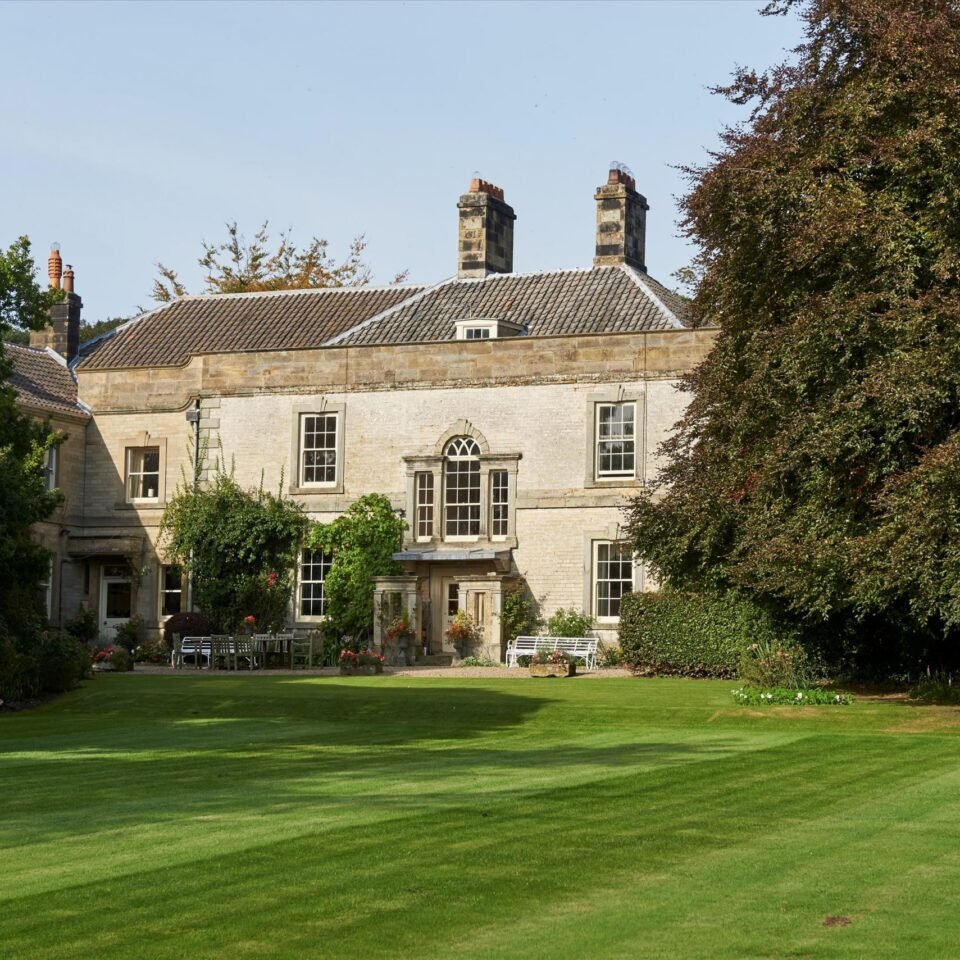
Basis: settlement_proxy — Representative centre of Aislaby village near Whitby. No securely identified surviving manor house or documented medieval manor-house site has been established. The point is appropriate as a locality proxy because the manor is explicitly associated with the settlement of Aislaby and its historical manorial rights and wastes were attached to that locality.
Point confidence: medium
Boundary status: representative_point_only
Boundary period: Medieval manor through early twentieth-century manorial rights; exact period-specific perimeter not established
Boundary confidence: none
Boundary basis: The evidence establishes the manor's association with Aislaby and indicates that its manorial rights included wastes and approximately 200 acres of moorland by 1911. Archive material also identifies an 1823 Aislaby estate plan of 543 acres and later plans concerning manorial waste, quay and fishery rights, but the available descriptions do not demonstrate that these areas constituted the whole historical manor. The 1823 estate plan cannot safely be substituted for a manor boundary, and the manor's descent and component lands are affected by unresolved conflicts between the Darcy/Strangways/Dacre account and the Cholmley account.
Sources:
- The National Archives, Manorial Documents Register: Aislaby Manor, F245882: https://discovery.nationalarchives.gov.uk/details/c/F245882 — Primary registry record identifying Aislaby Manor as the manor or lordship associated with Aislaby in Whitby parish, about three miles south-west of Whitby.
- The National Archives, Estreat roll relating to Aislaby, SC 2/211/1-2: https://discovery.nationalarchives.gov.uk/details/r/N14285958 — Existing registry research lead for medieval manorial documentation connected with Aislaby.
- Aislaby, Eskdale - Wikishire: https://wikishire.co.uk/wiki/Aislaby%2C_Eskdale — Provides the Whitby-area identification of Aislaby and the settlement grid reference NZ857086, corresponding to the representative locality point used here; also summarizes the medieval descent from the Brus, Rosels, Thweng and Meynell interests into the Percy, Darcy, Strangways and Dacre accounts.
- Yorkshire Gardens Trust, Woodlands historic report: https://www.yorkshiregardenstrust.org.uk/research/sites/woodlands — Discusses Aislaby near Whitby, the historical woodland and park context, the possibility of a medieval park and warren, the former Whitby Abbey lands, and the reported acquisition of the manor by Sir Hugh Cholmely in 1633. It supports the existence of historically extensive lands but not a complete manor polygon.
- Aislaby Moor and Gally Hill, Aislaby No. CL.51, commons-registration decision: https://acraew.org.uk/sites/default/files/uploads/North%20Yorkshire/AISLABY%20MOOR%20AND%20GALLY%20HILL%20-%20AISLABY%20NO.CL.51.pdf — Records evidence that Frederick Haight Pyman became entitled in 1911 to the Manor of Aislaby, including the wastes, and that approximately 200 acres of moorland were involved. The document concerns particular wastes and claimed land, not the complete historical manor boundary.
- Durham Record Office catalogue, Aislaby manor and estate records, D/El 1: https://durhamrecordoffice.org.uk/catalogue-item/?ImagesOnly=&ItemID=614010&ItemNum=50&PageNum=41&Variations= — Describes an Aislaby manor and estate acquired in 1830, including a 1823 plan of an estate of 543 acres and later legal opinions concerning the manor, waste and fishery rights. The catalogue does not establish that the mapped estate was identical to the full historical manor.
Warnings / uncertainty:
- No reliable source located supplies a complete, unambiguous polygon for the historical manorial extent.
- Do not substitute the modern civil parish, former township, Whitby parish, postcode area or any modern estate boundary for the manor boundary.
- The identity and location are secure, but the later title history is unresolved: one account traces the reputed manor through Darcy, Strangways and Dacre, while another reports Cholmely acquisition of the manor in 1633. This may reflect different components or descriptions of the Aislaby estate.
- Aislaby Hall references are potentially ambiguous because a separate Aislaby Hall near Pickering is a well-documented listed building; no evidence was found proving that either surviving hall was the medieval manor house of the Whitby-area Aislaby Manor.
- The representative point is therefore a locality proxy rather than a documented manor-house coordinate.
About the Manor
Aislaby Manor was the manor or lordship associated with Aislaby in Whitby parish, on the northern side of Eskdale about three miles south-west of Whitby. The settlement is recorded in Domesday Book as Asuluesbi, with two ploughlands, meadow and woodland. Medieval evidence places the manor within the descent of the Brus, Rosels, Thweng, Meynell, Percy and Darcy interests. An inquisitions post mortem record of 1411 expressly identifies two-thirds of the manor of Aislaby as held by John Darcy, Lord Darcy, of the heirs of Lucy de Thweng. Later published history states that the manor was associated with the Darcy and Strangways families before 1541 and with Lord Dacre thereafter, but this later medieval and early modern sequence conflicts with another local historical account stating that the Cholmley family acquired the former Whitby Abbey lands including Aislaby after the Dissolution and that Sir Hugh Cholmely acquired the manor of Aislaby in 1633. The apparent conflict may reflect different components of the Aislaby estate, a change in the identity of the reputed manor, or an error in one secondary account; it should not be resolved by inference. By the nineteenth century the manorial privileges or rights were held separately from most of the surrounding land. They were reported as belonging to members of the Noble family in the 1880s and to Mrs Hatt and Mrs Burnett in 1890. Frederick Haight Pyman was reported to have become entitled to the manor, including the wastes, in 1911 and was recorded as possessing the manorial rights in 1913.
Ownership / Holder Account
The earliest recorded lord in 1066 was Uhtred; in the Domesday survey of 1086 the estate was held by Richard of Sourdeval under Count Robert of Mortain. A published summary based on the Victoria County History states that the lordship subsequently descended to the Brus family during the reign of Henry I, then through the Rosels and Lucy de Thweng to Nicholas de Meynell. In 1320-21 John son of William de Rosels conveyed the manor of Aislaby to Nicholas de Meynell for life, with remainder to Nicholas's son by Lucy de Thweng. By the early fourteenth century the manor was described in secondary summaries as a mesne lordship of Arnald de Percy. In 1411, an authoritative inquisitions post mortem records two-thirds of the manor in the possession of John Darcy, Lord Darcy, held of the heirs of Lucy de Thweng. The later descent remains incompletely documented in the sources located. The Victoria County History summary reports Darcy and Strangways possession until 1541 and Lord Dacre possession from 1541 to 1685. Separately, a Yorkshire Gardens Trust report, citing the 1923 Victoria County History and local archive material, says that the Cholmley family acquired the former Whitby Abbey lands including Aislaby after the Dissolution and that Sir Hugh Cholmely acquired the manor of Aislaby in 1633. Because these accounts are not reconciled by a primary conveyance in the material located, the intervening title should be treated as a documented but unresolved gap. By 1857 Robert Noble was advertised as owner of the manor or lordship of Aislaby. In 1890 the manorial privileges were held by Mrs Hatt and Mrs Burnett, and in 1911 Frederick Haight Pyman was reported to have become entitled to the manor including the wastes. Kelly's Directory recorded him as possessing the manorial rights in 1913. The descent after 1913 has not been established from reliable public sources.
Manorial Rights & Privileges
Historic manorial rights / privileges (2)
Manorial privileges or manorial rights
Provisional
By the nineteenth and early twentieth centuries, the manorial privileges or rights were held separately from most of the surrounding land; they were reported in 1890 and 1913.
Rights in the wastes
Provisional
Frederick Haight Pyman was reported in 1911 as entitled to the manor including the wastes.
Records & References
Sources and references mentioning this manor/title which are not necessarily conveyances or transfers.
1 record found · showing 1–1.
1381-1399: estreat roll (2)
Held by: The National Archives
Conveyance & Descent
First holder to present holder: blood proximity & distance travelled
First recorded holder: Uhtred
Present holder:
Recorded title journey: 12 holder entries in this manor's saved Conveyance & Descent history.
No recorded holder currently has a usable saved direct-blood or collateral-blood relationship path from which to calculate proximity percentages.
First recorded holder → present holder
A usable saved blood relationship path between the first recorded holder and the present holder has not yet been recorded, so that first-to-present genealogical distance cannot be calculated.
Transfer: Holder recorded at the time of the Norman Conquest; no earlier transfer is identified.
Aislaby is summarized in Domesday-derived local histories as having Uhtred as its lord in 1066. The evidence identifies the lordship but does not provide a conveyance instrument or establish the precise legal extent of the manor at that date.
Source: Open Domesday, Aislaby, Yorkshire; corroborated by the historical summary for Aislaby, Scarborough, citing William Page, A History of the County of York: North Riding, volume 2, pp. 506-528. — source link
Richard of Sourdeval, Domesday holder or tenant-in-chief of Aislaby in 1086
Transfer: By the Norman reallocation of the estate after the Conquest; the precise grant or transfer is not identified in the source used.
Holding arrangement: Other — Whole Domesday holding, extent not separately stated
Shared holding: Tenant of Count Robert of Mortain
Previous holder: Uhtred, Lord of Aislaby in 1066, according to Domesday-derived summaries
Open Domesday records Aislaby in 1086 with Richard of Sourdeval as the tenant-in-chief or recorded holder and Count Robert of Mortain as the superior lord. The distinction between the Domesday tenant and the ultimate feudal overlord is retained here.
Source: Open Domesday, Aislaby, Yorkshire. — source link
Brus family
Transfer: The lordship is reported to have entered the Brus family during the reign of Henry I; the specific conveyance is not identified.
Shared holding: Brus family
Previous holder: Richard of Sourdeval, Domesday holder or tenant-in-chief of Aislaby in 1086
A published summary of the Aislaby history states that the lordship descended to the Brus family by the reign of Henry I. The source does not identify the particular Brus holder or give a precise transfer date, so the entry is retained at family and reign-level precision.
Source: Aislaby, Scarborough historical summary, citing William Page, A History of the County of York: North Riding, volume 2, pp. 506-528; contextual discussion of Brus landholding in Ruth M. Blakely, The Brus Family in England and Scotland 1100-c.1290. — source link
John son of William de Rosels, Holder or grantor of the manor of Aislaby in 1320-1321
Transfer: Conveyed the manor of Aislaby to Nicholas de Meynell for life, with remainder to Nicholas's son by Lucy de Thweng.
Previous holder: Rosels family or predecessor interest
The conveyance is expressly reported in the medieval evidence: John son of William de Rosels conveyed the manor of Aislaby to Nicholas de Meynell for life, with remainder to Nicholas's son by Lucy de Thweng. The entry does not assume that John inherited the manor merely from his father; it records only the title and conveyance described in the source.
Source: Cokayne, Complete Peerage, 2nd edition, volume VIII, pp. 627-630, and volume XIV, p. 472, as quoted in the Aislaby-related transcription; the summary identifies the transaction as occurring in 1320-1321. — source link
Nicholas de Meynell, Lord of Whorlton, life tenant of Aislaby under the 1320-1321 conveyance
Transfer: Received a life interest in the manor of Aislaby from John son of William de Rosels, with remainder to his son by Lucy de Thweng.
Holding arrangement: Other — Life interest; remainder to Nicholas de Meynell's son by Lucy de Thweng
Previous holder: John son of William de Rosels, Holder or grantor of the manor of Aislaby in 1320-1321
Nicholas de Meynell held Aislaby for life under the 1320-1321 conveyance. The remainder was limited to Nicholas's son by Lucy de Thweng. This was a life interest with a specified remainder, not an unrestricted fee-simple holding.
Source: Cokayne, Complete Peerage, 2nd edition, volume VIII, pp. 627-630, and volume XIV, p. 472, as quoted in the Aislaby-related transcription. — source link
John Darcy, Lord Darcy, holder of two-thirds of Aislaby Manor in 1411
Transfer: Held two-thirds of the manor at his death; the inquisition records the interest as coming into the king's hand because of his son's minority and wardship. The preceding conveyance into the Darcy family is not identified here.
Holding arrangement: Share — Two-thirds of the manor of Aislaby
Shared holding: Darcy family
Co-holder: Darcy family
Previous holder: Darcy family predecessor or the Meynell-Thweng interest
The 1411 inquisitions post mortem is direct evidence that John Darcy held two-thirds of the manor of Aislaby. It states that the two-thirds were held of the heirs of Lucy de Thweng, with the annual value above £10, and that the remaining third was held in dower by Margaret, widow of John Darcy. This is a shared or divided interest and should not be represented as an undivided sole holding.
Source: Inquisitions Post Mortem, E-CIPM 21-353, John Darcy, knight, TNA reference C 138/43/78, membranes 8-9. — source link
Darcy family
Transfer: The published Aislaby summary states that the manor was held by the Darcy family during this period, but does not provide a complete sequence of individual holders or a securely documented transfer into the family.
Holding arrangement: Other — Not stated; a two-thirds Darcy interest is directly documented in 1411
Shared holding: Darcy family
Co-holder: John Darcy, Lord Darcy
Previous holder: Meynell, Percy or related predecessor interest
The Darcy family is reported as holding Aislaby after the Percy period and before 1541. The 1411 inquisitions post mortem provides direct evidence for a substantial Darcy interest, but the family-level continuation to 1541 is based on the published secondary summary and is not fully reconstructed here.
Source: William Page, A History of the County of York: North Riding, volume 2, pp. 506-528, as summarized in the Aislaby historical entry. — source link
Transfer: The family is reported to have acquired former Whitby Abbey lands including Aislaby after the Dissolution; the precise conveyance of the manor itself is not identified and the account conflicts with the reported Dacre descent.
Holding arrangement: Other — Former Whitby Abbey lands including Aislaby; exact manor interest uncertain
Shared holding: Cholmley family
Previous holder: Whitby Abbey or Crown interest in former monastic lands
A local historical report states that the Cholmley family bought the Whitby Abbey lands, including Aislaby, after the Dissolution, with the acquisition described as occurring in the period 1536-1545. This evidence directly links the Cholmleys to Aislaby land, but it does not by itself prove that the whole manorial lordship was acquired at that time. It is retained because the same report separately states that Sir Hugh Cholmely acquired the manor in 1633.
Source: Yorkshire Gardens Trust, Woodlands, Early history of the site; the report cites the Victoria History of the County of York North Riding, volume 2, and North Yorkshire County Record Office material. — source link
Sir Hugh Cholmely, first baronet of Whitby, reported purchaser of Aislaby Manor in 1633
Transfer: Acquired the manor of Aislaby in 1633 according to a local historical report. The grant, purchase deed or preceding holder is not identified in the accessible source.
Previous holder: Cholmley family or unresolved predecessor interest
The Yorkshire Gardens Trust report expressly states that Sir Hugh Cholmely acquired the manor of Aislaby in 1633. This is a direct manor-holder statement, but it is not supported in the accessible report by a quoted deed or archival reference for the acquisition itself. It conflicts chronologically with the separate summary that places Aislaby in Lord Dacre's holdings until 1685; the conflict is recorded rather than resolved by assuming one account is correct.
Source: Yorkshire Gardens Trust, Woodlands, Early history of the site; report citing the Victoria History of the County of York North Riding, volume 2. — source link
Transfer: By 1857 he was advertised as owner of Aislaby Hall together with the manor or lordship of Aislaby. The preceding conveyance is not identified.
Previous holder: Unresolved earlier holder
An 1857 sale advertisement described the mansion called Aislaby Hall, its land, and the manor or lordship of Aislaby as the property of Robert Noble. This is direct evidence of a nineteenth-century reputed manor ownership claim, although it does not establish how Robert Noble acquired the lordship or whether all manorial rights were included in the sale being advertised.
Source: Country Life, report on Aislaby Hall quoting the Hull Packet and East Riding Times advertisement of January 1857. — source link
Mrs Hatt and Mrs Burnett, Holders of Aislaby manorial privileges in 1890
Transfer: By 1890 the manorial privileges were held by Mrs Hatt of Scarborough and Mrs Burnett of Whitby. The mechanism of succession or division from Robert Noble is not stated.
Holding arrangement: Joint — Shares not stated
Shared holding: Noble family interests
Previous holder: Robert Noble, Esquire, owner of Aislaby Hall and reputed manor or lordship of Aislaby by 1857
Bulmer's 1890 directory states that the manorial privileges of Aislaby were possessed by Mrs Hatt and Mrs Burnett, identifying them as the daughter and daughter-in-law of the late Robert Noble. This is evidence for possession of manorial privileges, not necessarily ownership of all manorial land, and the source does not specify their shares or the legal instrument by which the rights were transmitted.
Source: Bulmer's Directory of the North Riding of Yorkshire, 1890, entry for Aislaby, quoted in the Aislaby historical image record. — source link
Transfer: A 1987 commons decision records oral evidence that Frederick Haight Pyman became entitled to the Manor of Aislaby, including the wastes, in 1911. The transfer instrument and preceding holder are not identified.
Previous holder: Unresolved earlier holder, possibly interests reported in the Noble family
The manorial-history section of the Aislaby Moor and Gally Hill decision records evidence that F. H. Pyman became entitled to the Manor of Aislaby, including the wastes, in 1911. Kelly's Directory for 1913 independently records Frederick Haight Pyman of Dunsley House as possessing the manorial rights. The 1911 date is therefore retained, but no conveyance deed has been located and no transfer from the Noble family is inferred.
Source: Aislaby Moor and Gally Hill, Aislaby No. CL.51, decision of Commissioner Baden Fuller dated 4 February 1987, section headed Manorial History; Kelly's Directory of the North and East Ridings of Yorkshire, 1913. — source link
Corrections / Challenges
Sign in to challenge or submit evidence against a recorded assertion.
JSON API
Machine-readable published manor data, including public images, mapped land areas, notes, rights, conveyances, relationships, records, source/document-library entries and public file links.
https://manorialregistry.com/index.php?rest_route=/mhr/v1/manor/aislaby-manorPublic API access is currently disabled. Authorised API clients must use a private X-MHR-API-Key; currently only administrator keys are enabled.
Private source files, pending edits, moderation/admin information, user API keys and non-public import identifiers are not returned.