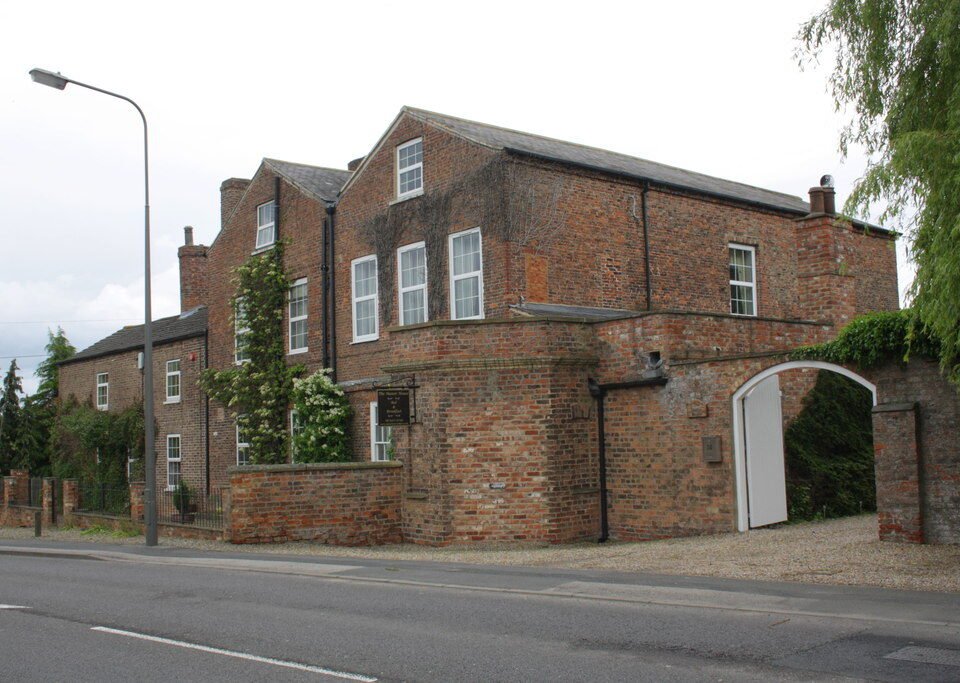



Historical names: Ascough (Manor)
Location: Bedale, Yorkshire
Places / associated places: Bedale, Yorkshire
Listed in Domesday Book: Yes
Location & Extent
GPS Location & Recorded Land Areas
Representative GPS point: 54.291852, -1.583017
Identity: confirmed — The registry record's Aiskew/Ascough identification is corroborated by the c.1772 estate-plan catalogue titled "A plan of the manors of Bedale and Ascough" and by the nineteenth-century description of the Manor House at Aiskew. The evidence places this manor within the Bedale lordship and estate complex, not as an unrelated same-named manor.
Representative point: 54.291852, -1.583017
Basis: documented_manor_house — The Manor House at Aiskew is identified in the 1890 description as the former Stapleton property sold by Lord Beaumont in 1871. The surviving building is identified at 30 Bedale Road, Aiskew; the mapped object location for that building is approximately 54.291852, -1.583017.
Point confidence: medium
Boundary status: representative_point_only
Boundary period: c.1772 estate-plan context
Boundary confidence: none
Boundary basis: A North Yorkshire estate map, ZBA 26/1/3, is catalogued as a plan of the manors of Bedale and Ascough, with coloured ownership boundaries and apparently near-complete tenement boundaries. However, the publicly accessible reproduction is only an index/coverage image and does not provide a sufficiently legible, georeferenced perimeter for the Aiskew/Ascough manorial extent. The 1838 tithe material and later estate references confirm landholding context but do not independently establish a complete manor boundary. A polygon would therefore risk substituting the township, parish or modern settlement boundary for the historical manor.
Sources:
- The National Archives: Aiskew Manor, TNA/MDR F242249: https://discovery.nationalarchives.gov.uk/details/c/F242249 — Registry identity, authority reference and historical association with Aiskew/Ascough and Bedale.
- Catalogue of British Town Maps: Yorks-Bedale-1772: https://townmaps.history.ac.uk/townmap/yorks-bedale-1772/ — Catalogues North Yorkshire Record Office ZBA 26/1/3 as an estate plan of the manors of Bedale and Ascough, showing ownership and tenement boundaries.
- North Yorkshire Tithes Project: Bedale: https://northyorkstithes.com/project/bedale/ — Provides the 1838 tithe-map context, including a distinct Aiskew section and the division of the Bedale-area landscape into historical townships.
- Bulmers' 1890 Directory: Bedale Parish: https://www.blunham.com/big/eng/YKS/NRY/Bedale/Bedale90.html — States that Aiskew was a township adjoining Bedale and identifies the Manor House at Aiskew as the former Stapleton property sold by Lord Beaumont to Sir Henry Beresford-Peirse in 1871.
- The Manor House, 30 Bedale Road, Aiskew: Wikimedia Commons / Geograph record: https://commons.wikimedia.org/wiki/File:The_Manor_House_(Bed_%5E_Breakfast),_%5E30_Bedale_Road_-_geograph.org.uk_-_3238861.jpg — Identifies the surviving building as The Manor House at 30 Bedale Road, Aiskew and supplies an object location of approximately 54.291852, -1.583017.
- Bedale Park historical research, Yorkshire Gardens Trust: https://www.yorkshiregardenstrust.org.uk/research/sites/bedale-park — Confirms the relevant Bedale and Aiskew estate-map references, including ZBA 26/1/3, and documents the difficulty of reconstructing historical estate and manor boundaries from surviving evidence.
Warnings / uncertainty:
- The manor's historical territorial extent was associated with the Bedale estate and could include divided moieties and dispersed tenements; it should not be equated automatically with the modern Aiskew civil parish or township.
- The publicly available evidence confirms the existence of a detailed c.1772 Bedale-and-Ascough estate plan but does not expose a sufficiently legible boundary for safe polygon reconstruction.
- The representative point is suitable for locating the documented Manor House, but it should not be interpreted as the centroid or full territorial centre of the medieval or later manor.
About the Manor
Aiskew Manor was the manor associated with Aiskew, historically written Ascough, Askue, Ayscough and similar forms, in the parish and later civil locality of Bedale in the North Riding of Yorkshire. Aiskew is recorded as Echescol in Domesday Book and as Ascough by the thirteenth century. The manor followed the descent of the neighbouring and closely connected manor of Bedale. Medieval evidence shows that the Bedale estate was divided into moieties after the death of Brian FitzAlan in 1306; sources separately mention two parts of the manor of Ayscugh and later describe the manors of Bedale and Ascough together. The Aiskew estate therefore should not be treated as an unrelated manor bearing a similar name, but as the Aiskew/Ascough component of the Bedale lordship and estate complex. By the sixteenth and seventeenth centuries the estate had passed through the Lovel, Crown, Digby, Jackson, Theakston and Peirse interests. The surviving nineteenth-century description refers to the Manor House at Aiskew as long the property of the Stapletons until its sale by Lord Beaumont in 1871 to Sir Henry Beresford-Peirse. No separate hereditary title styled Lord of Aiskew has been securely established in the sources consulted.
Ownership / Holder Account
The earliest securely relevant evidence is Domesday evidence for Bedale and Aiskew within the estates of Count Alan of Brittany, although the surviving summary does not distinguish the later legal manor from the wider Domesday holding. In the early fourteenth century Aiskew formed part of the inheritance associated with the FitzHugh family and was brought into the Bedale family through the marriage of Avice Marmion to John Grey. The Bedale estate was partitioned into moieties in 1317. By 1388 Sir Robert Grey was seised of two parts of the manor of Ayscugh and of a moiety of the manor of Bedale. That Grey interest descended through Joan Grey, the Deyncourt co-heirs, and the Lovel family. Francis, Lord Lovel, held the relevant Bedale interest until his attainder in 1487, after which the Crown took the forfeited estate. The Crown first placed the Bedale moiety in the receivership of Simon Digby in 1487 and granted it to Sir John Digby in 1498, with a further confirmation in 1514 expressly including possessions in Bedale and Aiscough. The Digby interest continued through John Digby and then Simon Digby, whose participation in the Rising of the North caused forfeiture in 1571. Elizabeth I granted the forfeited Bedale and Ascough estate to Ambrose Dudley, Earl of Warwick, who subsequently conveyed it to John Jackson. George Jackson later conveyed the Jackson moiety of Bedale to Richard Theakston in 1594. Theakston ownership and the identity of the estate as including Ascough are supported by a 1638 recovery concerning the manors of Bedall and Ascough and by seventeenth-century descriptions of the two Bedale manors. The Theakston estate was sequestrated during the Commonwealth period, temporarily sold by the Treason Trustees to John Keeble in 1653, and released to the minor Richard Theakston in 1654. John Peirse purchased the Theakston half of the manor of Bedale about 1657; a 1638 recovery already linked Richard Peirse with the manors of Bedall and Ascough. The Peirse family thereafter held the Peirse moiety through Richard Peirse, Henry Peirse of Bedale, and Henry Peirse the younger. The other moiety remained associated with the Stapleton line and was ultimately held by Lord Beaumont. In 1871 Lord Beaumont sold the Aiskew Manor House and the associated Stapleton interest to Sir Henry Beresford-Peirse. The Peirse and Beresford-Peirse interests were subsequently combined or represented in the Bedale and Aiskew estate, but the precise legal stages by which every separate Aiskew parcel and moiety was consolidated are not fully established by the public sources consulted.
Records & References
Sources and references mentioning this manor/title which are not necessarily conveyances or transfers.
21 records found · showing 17–21.
1584-1600: court rolls and books, with Bedale
Held by: North Yorkshire County Record Office
1570-1582: court rolls, with other manors
Held by: North Yorkshire County Record Office
1562: court roll, with Bedale
Held by: North Yorkshire County Record Office
1529-1550: court roll, with Bedale
Held by: North Yorkshire County Record Office
1525-1526: court roll, with Bedale
Held by: North Yorkshire County Record Office
Conveyance & Descent
First holder to present holder: blood proximity & distance travelled
First recorded holder: John Grey of Rotherfield and Avice Marmion
Present holder:
Recorded title journey: 22 holder entries in this manor's saved Conveyance & Descent history.
No recorded holder currently has a usable saved direct-blood or collateral-blood relationship path from which to calculate proximity percentages.
First recorded holder → present holder
A usable saved blood relationship path between the first recorded holder and the present holder has not yet been recorded, so that first-to-present genealogical distance cannot be calculated.
John Grey of Rotherfield and Avice Marmion, Lord of Rotherfield, holder of the Grey Bedale inheritance
Transfer: Aiskew formed part of the FitzHugh inheritance and appears to have been brought into the Bedale family through the marriage of Avice Marmion to John Grey of Rotherfield.
Holding arrangement: Joint
Shared holding: Grey marital acquisition associated with the Bedale estate
Previous holder: FitzHugh family of Tanfield
The source directly links the Aiskew inheritance to the FitzHugh and Grey families, but does not provide an exact conveyance date or specify whether the whole later manor or only lands in the township changed hands. The entry is therefore retained as a documented estate transition with qualified wording.
Source: McCall, The Early History of Bedale in the North Riding of Yorkshire, chapter on the history of Bedale and Aiskew, stating that Aiskew formed part of the FitzHugh inheritance and was brought by marriage to John Grey of Rotherfield. — source link
Agnes FitzAlan and Gilbert de Stapleton, Knight, holder of the Stapleton moiety of Bedale
Transfer: Partition of the FitzAlan inheritance after livery of the co-heirs; half the manor of Bedale was assigned to each sister, with Agnes's moiety passing through her marriage to Gilbert de Stapleton.
Holding arrangement: Share — One moiety of the Bedale estate; associated Aiskew interests are not separately quantified
Shared holding: Stapleton moiety
Previous holder: Brian FitzAlan and the Crown wardship administration
The source establishes the 1317 partition of the Bedale estate and the Stapleton descent from Agnes FitzAlan. It does not state that all Aiskew lands were in this moiety, so the Aiskew connection is recorded as part of the wider Bedale estate rather than as a precisely measured share.
Source: McCall, The Early History of Bedale, pp. 45-46, stating that in 1317 the properties were partitioned and half the manor of Bedale assigned to each FitzAlan sister. — source link
Sir Robert Grey, Knight, lord of the Grey moiety of Bedale, holder of two parts of Ayscugh
Transfer: Inherited or succeeded to the Grey moiety; at his death he was seised of two parts of the manor of Ayscugh and a moiety of the manor of Bedale.
Holding arrangement: Share — Two parts of the manor of Ayscugh and one moiety of the manor of Bedale
Shared holding: Grey Ayscugh and Bedale moiety
Previous holder: Grey descendants of John Grey of Rotherfield
This is the strongest medieval direct evidence for the Aiskew/Ascough manor identity. The 1388 inquisition states that Sir Robert Grey held two parts of the manor of Ayscugh together with a moiety of Bedale.
Source: Inquisition cited by McCall, The Early History of Bedale, p. 59, stating that Sir Robert Grey died seised of a moiety of Bedale and two parts of the manor of Ayscugh. — source link
Joan Grey and John Deyncourt, Heiress of the Grey moiety of Bedale
Transfer: Joan Grey, heiress of Sir Robert Grey, married John, Lord Deyncourt; a 1408 deed records Joan releasing rights in the manor of Bedale and related manors, and their son William Deyncourt succeeded to the inheritance.
Holding arrangement: Share — Grey moiety of the Bedale estate, with the associated Ayscugh interest
Shared holding: Deyncourt succession to the Grey moiety
Previous holder: Sir Robert Grey, Knight, lord of the Grey moiety of Bedale, holder of two parts of Ayscugh
The cited evidence directly establishes the succession of the Grey Bedale interest and refers to the related Ayscugh holding through the preceding 1388 inquisition. It does not provide a separate 1408 description of the Ayscugh parcels.
Source: McCall, The Early History of Bedale, pp. 59-60, citing a 1408 deed and the succession of Joan Grey and William Deyncourt. — source link
William Deyncourt's co-heirs: Alice Deyncourt and Margaret Deyncourt, Co-heir of the Deyncourt Bedale inheritance, later Lady Lovel
Transfer: William Deyncourt died under age in 1422, and the inheritance descended to his two daughters, Alice and Margaret, as co-heirs and tenants in common.
Holding arrangement: Joint — The former Grey/Deyncourt moiety, subdivided between two co-heirs
Shared holding: Deyncourt co-heirs
Previous holder: William Deyncourt
The source states that the Bedale moiety was divided between the two sisters as tenants in common. The connection to Ayscugh is through the documented Grey moiety rather than a separately described Ayscugh conveyance.
Source: McCall, The Early History of Bedale, pp. 60-61, describing the Deyncourt co-heirs and subdivision of the Bedale moiety. — source link
Alice, Lady Lovel and John, Lord Lovel, Viscount Lovel, lord of the Lovel Bedale moiety, 5th Baron Lovel, royal counsellor and diplomat
Transfer: On Margaret Deyncourt's death without descendants in 1454, her share vested in her sister Alice; Alice died in 1474 and was succeeded by her son John, Lord Lovel.
Holding arrangement: Share — The Grey/Deyncourt moiety of the Bedale estate, including the associated Ayscugh interest
Shared holding: Lovel succession
Previous holder: Margaret Deyncourt and Alice Deyncourt as co-heirs
The source explicitly describes this as the succession of the Bedale moiety. The Aiskew/Ascough connection is maintained because the preceding direct record places two parts of Ayscugh in the Grey moiety.
Source: McCall, The Early History of Bedale, pp. 60-61, describing the vesting of Margaret's share in Alice and the succession of John Lovel. — source link
Transfer: Succeeded his father John Lovel in the Lovel Bedale interest; the estate was forfeited to the Crown following his attainder in 1487.
Holding arrangement: Share — Lovel moiety of the Bedale estate, associated with the Ayscugh interest
Shared holding: Lovel moiety before Crown forfeiture
Previous holder: John, Lord Lovel
Francis Lovel is described as lord of Bedale. His lands and honours were forfeited by attainder in 1487. The cited source does not separately list Ayscugh in the attainder passage, but the Ayscugh interest is part of the documented Grey/Lovel moiety descent.
Source: McCall, The Early History of Bedale, pp. 60-63, describing Francis Lovel as lord of Bedale and the 1487 attainder. — source link
The Crown, Royal receiver of the forfeited Lovel Bedale moiety
Transfer: The forfeited Lovel moiety was taken into royal hands after Francis Lovel's attainder; the Crown placed its receivership in Simon Digby.
Holding arrangement: Other — Forfeited Lovel moiety
Shared holding: Crown custody and receivership
Previous holder: Francis, Lord Lovel, Viscount Lovel, lord of Bedale
Simon Digby's role in 1487 was expressly described as receivership, not necessarily full beneficial ownership. The distinction is preserved here.
Source: McCall, The Early History of Bedale, pp. 63-64, describing the Crown's custody and Simon Digby's receivership of the Bedale moiety. — source link
Sir John Digby, Knight, Marshal of the King's Household, grantee of the forfeited Bedale and Aiscough possessions
Transfer: After Simon Digby's death, Henry VII granted the forfeited Bedale estate to his brother Sir John Digby in tail male. A further grant confirmed in 1514 expressly included possessions in Bedale, Aiscough, Little Leeming and North Lees.
Holding arrangement: Share — The forfeited Lovel moiety and associated possessions in Bedale and Aiscough
Shared holding: Digby royal grant
Previous holder: The Crown and Simon Digby as royal receiver
This is a direct and strong link to Aiscough: the 1514 confirmation explicitly names possessions in Aiscough. The original 1498 grant is described in the source as a grant of Bedale, with the 1514 confirmation expanding or confirming the relevant possessions.
Source: McCall, The Early History of Bedale, pp. 63-64, citing the 1498 grant and 1514 confirmation including Aiscough. — source link
John Digby, Holder of the Digby Bedale estate, Sheriff of Warwickshire and Leicestershire
Transfer: Had livery of Bedale and related lands as kinsman and heir of Sir John Digby; the later Digby succession led to Simon Digby's possession before the 1569 rebellion.
Holding arrangement: Share — Digby interest in Bedale and Aiscough
Shared holding: Digby hereditary succession
Previous holder: Sir John Digby, Knight, Marshal of the King's Household, grantee of the forfeited Bedale and Aiscough possessions
The source records John's livery of Bedale and related property in 1535. It states that William Digby was a minor in 1550-51 and that Simon Digby, apparently his younger brother, succeeded before the 1569 rebellion. The exact intermediate dates are not fully stated.
Source: McCall, The Early History of Bedale, pp. 64-65, citing the 1535 livery and the Digby succession. — source link
Transfer: Held the Digby Bedale and Aiscough interest until forfeiture after his participation in the Rising of the North; his attainder was confirmed by Parliament in 1571.
Holding arrangement: Share — Digby interest in Bedale and Aiscough
Shared holding: Digby interest before attainder
Previous holder: John or William Digby
Simon Digby is directly associated with Askue and the Bedale estate. His estate was forfeited after the 1569 rebellion. The source identifies the attainder as applying to Simon Digby of Askue in Yorkshire.
Source: McCall, The Early History of Bedale, pp. 65-66, describing Simon Digby of Askue, the Rising of 1569 and the 1571 attainder. — source link
Ambrose Dudley, Earl of Warwick, royal commander in the suppression of the Rising of the North
Transfer: Elizabeth I granted the forfeited Bedale and Ascough estate to Ambrose Dudley, Earl of Warwick, who later conveyed it to John Jackson of Cowling.
Holding arrangement: Share — Forfeited Bedale and Ascough estate
Shared holding: Elizabethan Crown grant
Previous holder: The Crown after Simon Digby's attainder
The source explicitly states that Elizabeth gave the Bedale of the rebel Digby to Ambrose, Earl of Warwick, and that he did not retain it long before conveying the estate to John Jackson.
Source: McCall, The Early History of Bedale, pp. 66-67, describing the grant after Simon Digby's forfeiture and the subsequent conveyance to John Jackson. — source link
John Jackson of Cowling, Esquire, holder of the Jackson Bedale interest
Transfer: Acquired the Bedale estate from Ambrose Dudley, Earl of Warwick; after his death, his son George Jackson succeeded to the relevant half and conveyed it to Richard Theakston in 1594.
Holding arrangement: Share — Jackson interest in Bedale and associated Aiskew/Ascough property
Shared holding: Jackson holding
Previous holder: Ambrose Dudley, Earl of Warwick, royal commander in the suppression of the Rising of the North
The conveyance date from Warwick to John Jackson is not stated in the source, but it occurred before John's death and burial at Bedale in October 1583. A local estate chronology also records Jackson and Stapleton interests in Bedale and Aiskew in 1586.
Source: McCall, The Early History of Bedale, pp. 66-67, stating that the Earl of Warwick conveyed the estate to John Jackson and that George Jackson succeeded his father; Bedale Hall historical chronology, entries for 1586 and 1594. — source link
Richard Theakston, Gentleman, holder of the Theakston moiety of Bedale
Transfer: George Jackson, who had succeeded his father in half the manor of Bedale, conveyed that half to Richard Theakston at Hilary 1594.
Holding arrangement: Share — One half of the manor of Bedale, with associated Ascough interests evidenced by the later 1638 recovery
Shared holding: Theakston moiety
Previous holder: George Jackson
The 1594 conveyance is directly stated for half the manor of Bedale. The connection to Aiskew/Ascough is supported by a 1638 recovery concerning the manors of Bedall and Ascough and by later evidence that the Theakston family held the relevant Aiskew Manor House and estate. The precise division of the Aiskew parcels in 1594 is not stated.
Source: McCall, The Early History of Bedale, pp. 66-67, stating that George Jackson conveyed half the manor of Bedale to Richard Theakston at Hilary 1594; McCall, p. 70, recording the 1638 recovery of Bedall and Ascough. — source link
William Theakston and Dorothy Theakston, Knight, voucher in the recovery of the manors of Bedall and Ascough
Transfer: Richard Peirse was plaintiff in a recovery of the manors of Bedall and Ascough at Michaelmas 1638, with William Theakston and Dorothy his wife as vouchers. The Theakston interest was later sequestrated during the Commonwealth period and released to Richard Theakston in 1654.
Holding arrangement: Share — Theakston interest in the manors of Bedall and Ascough
Shared holding: Theakston legal title and Commonwealth sequestration
Previous holder: Richard Theakston and the Theakston family
The 1638 recovery proves a direct legal connection between the Theakston family, the manors of Bedall and Ascough, and Richard Peirse. The source treats the Theakston property as a moiety of the Bedale estate. During the Commonwealth the estate was temporarily sold to John Keeble in 1653, but the infant Richard Theakston successfully obtained release of the property in 1654.
Source: McCall, The Early History of Bedale, pp. 68-70, describing the 1638 recovery of the manors of Bedall and Ascough and the 1653-1654 sequestration and release. — source link
John Keeble, Purchaser from the Commonwealth Treason Trustees
Transfer: The Treason Trustees sold the sequestrated Bedale estate to John Keeble during the Commonwealth, but the sale was superseded when the property was released to Richard Theakston in April 1654.
Holding arrangement: Other — Temporary Commonwealth sale of the sequestrated estate
Shared holding: Temporary Commonwealth purchaser
Previous holder: Theakston family under Commonwealth sequestration
John Keeble's interest was a temporary Commonwealth sale, not a stable descent of the manor. The source states that the property was released to Richard Theakston in 1654 after the circumstances of the sequestration were reviewed.
Source: McCall, The Early History of Bedale, pp. 68-69, citing the Commonwealth Committee and Treason Trustees sale and subsequent release. — source link
Transfer: Purchased half the manor of Bedale from the Theakston family about 1657; a 1638 recovery had already linked the Peirse family with the manors of Bedall and Ascough.
Holding arrangement: Share — One half of the manor of Bedale, with associated Ascough property
Shared holding: Peirse acquisition of the Theakston moiety
Previous holder: Richard Theakston and the Theakston family
McCall gives the approximate date and identifies the transaction as a purchase of half the manor of Bedale. The Aiskew/Ascough link is direct in the 1638 recovery of the manors of Bedall and Ascough, but the source does not itemize the precise Aiskew acreage included in the c.1657 purchase.
Source: McCall, The Early History of Bedale, pp. 70-71, stating that John Peirse purchased half the manor of Bedale from the Theakston family about 1657 and recording the 1638 recovery of Bedall and Ascough. — source link
Transfer: Succeeded his father John Peirse in the Peirse moiety of the Bedale estate, including the associated Ascough interest.
Holding arrangement: Share — Peirse moiety of the Bedale and Ascough estate
Shared holding: Peirse succession
Previous holder: John Peirse, Esquire, purchaser of half the manor of Bedale
The source states that Richard Peirse succeeded his father in Bedale and was also lord of Lazenby and Hutton Bonville. The connection to Ascough derives from the 1638 recovery and the family's acquisition of the Theakston moiety.
Source: McCall, The Early History of Bedale, pp. 70-71, describing Richard Peirse's succession after John Peirse's death and the prior 1638 Bedall and Ascough recovery. — source link
Henry Peirse of Bedale, Member of Parliament for Northallerton, landed proprietor of Bedale
Transfer: Inherited the Peirse Bedale estate from his grandfather Richard Peirse and made Bedale Hall his seat about 1716.
Holding arrangement: Share — Peirse moiety of the Bedale and associated Aiskew estate
Shared holding: Peirse estate at Bedale
Previous holder: Richard Peirse, Lord of Bedale, Lazenby and Hutton Bonville
The source identifies Henry Peirse as heir of his grandfather and grand-uncle and later states that he made Bedale Hall his seat about 1716. The Aiskew estate connection is supported by the documented Bedale and Aiskew estate and later title deeds.
Source: McCall, The Early History of Bedale, pp. 71-72; Yorkshire Gardens Trust, Bedale Park report, identifying Henry Peirse I as a principal owner from about 1716. — source link
Henry Peirse of Bedale, the younger, Member of Parliament for Northallerton, landed proprietor of Bedale
Transfer: Succeeded his father Henry Peirse in the Peirse estate at Bedale and continued as its principal owner.
Holding arrangement: Share — Peirse moiety of the Bedale and associated Aiskew estate
Shared holding: Later Peirse estate
Previous holder: Henry Peirse of Bedale, Member of Parliament for Northallerton, landed proprietor of Bedale
The source states that Henry Peirse the younger succeeded his father in 1759 and remained the principal Peirse owner until his death in 1824. A 1764 estate agreement expressly concerns lands in Bedale and Aiskew held by the Stapleton and Peirse parties.
Source: McCall, The Early History of Bedale, pp. 71-72; Bedale Hall historical title chronology, 1764 agreement concerning estates in Bedale and Aiskew; Yorkshire Gardens Trust, Bedale Park report. — source link
Henry William de la Poer Beresford-Peirse, Landed proprietor of Bedale, assumed the Peirse surname and arms
Transfer: Inherited the Peirse manors of Bedale and Hutton Bonville through his aunt after the death of Henry Peirse the younger.
Holding arrangement: Share — Peirse moiety of the Bedale and associated Aiskew estate
Shared holding: Beresford-Peirse succession
Previous holder: Henry Peirse of Bedale, Member of Parliament for Northallerton, landed proprietor of Bedale
McCall states that Henry William de la Poer Beresford-Peirse assumed the additional surname and arms of Peirse on succeeding his aunt in the manors of Bedale and Hutton Bonville. The associated Aiskew interest is supported by the continuing Bedale and Aiskew estate references.
Source: McCall, The Early History of Bedale, p. 72, stating that Henry William de la Poer Beresford-Peirse succeeded in the manors of Bedale and Hutton Bonville. — source link
Sir Henry Monson de la Poer Beresford-Peirse, 3rd Baronet, landed proprietor of Bedale and Aiskew
Transfer: Succeeded his father Henry William in the Beresford-Peirse Bedale estate. In 1871 Lord Beaumont sold the Stapleton-associated Aiskew Manor House and estate interest to Sir Henry Beresford-Peirse, thereby bringing the previously separate interests into the Beresford-Peirse holding.
Holding arrangement: Joint — By 1871 the formerly separate Peirse and Stapleton interests were associated with the Beresford-Peirse estate; exact legal shares are not fully stated
Shared holding: Beresford-Peirse consolidation of Bedale and Aiskew interests
Previous holder: Henry William de la Poer Beresford-Peirse for the Peirse interest; Lord Beaumont for the Stapleton interest
The 1890 Bulmer account states that the Manor House at Aiskew had long been the property of the Stapletons until sold by Lord Beaumont in 1871 to Sir Henry Beresford-Peirse. McCall records Sir Henry's succession to the Beresford-Peirse estate in 1859. The sources support a 1871 transfer of the Stapleton-associated Aiskew property but do not prove that every legal component of the historic Aiskew manor was transferred on that date.
Source: Bulmer's Directory of Yorkshire, Bedale parish entry, 1890, stating that Aiskew Manor House was long the property of the Stapletons until sold by Lord Beaumont in 1871 to Sir Henry Beresford-Peirse; McCall, The Early History of Bedale, pp. 72 and 79, recording Sir Henry's succession and the Stapleton sale of Bedale lands. — source link
Corrections / Challenges
Sign in to challenge or submit evidence against a recorded assertion.
JSON API
Machine-readable published manor data, including public images, mapped land areas, notes, rights, conveyances, relationships, records, source/document-library entries and public file links.
https://manorialregistry.com/index.php?rest_route=/mhr/v1/manor/aiskew-manorPublic API access is currently disabled. Authorised API clients must use a private X-MHR-API-Key; currently only administrator keys are enabled.
Private source files, pending edits, moderation/admin information, user API keys and non-public import identifiers are not returned.