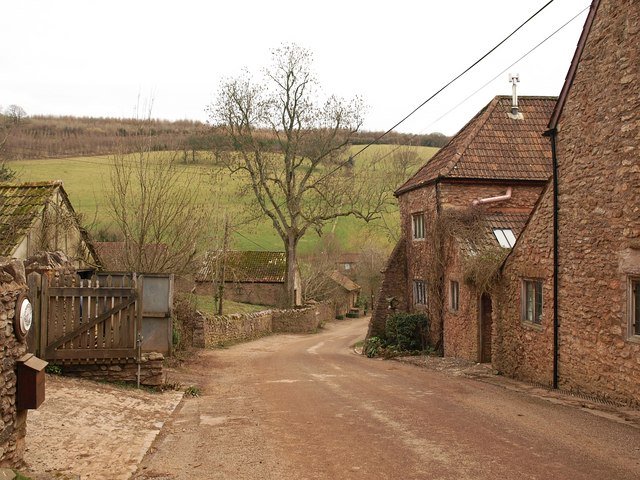



Historical names: Asholt
Location: Aisholt, Somerset
Places / associated places: Aisholt, Somerset
Listed in Domesday Book: Yes
Location & Extent
GPS Location & Recorded Land Areas
Representative GPS point: 51.1094, -3.1437
Identity: confirmed — The registry record, Somerset location, historical form Asholt, Domesday identification as terra Olta, and the medieval reference to Aisholt Manor held by John Hill all identify the Aisholt manor in the ancient parish of Aisholt, Somerset, rather than another same-named place.
Representative point: 51.1094, -3.1437
Basis: documented_manor_house — Lower Aisholt Farmhouse, National Heritage List entry 1060146, is explicitly said to be the manor house of Aisholt. The listed building is principally sixteenth-century and is said to replace or incorporate a post-fourteenth-century building. Coordinates are derived from its precise National Grid Reference ST 20028 35078.
Point confidence: high
Boundary status: representative_point_only
Boundary period: Medieval and later; precise manorial extent not established
Boundary confidence: none
Boundary basis: The sources confirm the manor's location and document its holders, but no publicly accessible manor-specific map, survey, rental plan, enclosure record, tithe reconstruction, or other reliable evidence was found that defines the perimeter of Aisholt Manor. The published acreage of the ancient parish of Aisholt is not used as a proxy for the manor, and no modern parish or civil boundary has been substituted.
Sources:
- Historic England, Lower Aisholt Farmhouse, List Entry 1060146: https://historicengland.org.uk/listing/the-list/list-entry/1060146 — Gives National Grid Reference ST 20028 35078 and states that Lower Aisholt Farmhouse is said to be the manor house of Aisholt; describes the building as principally sixteenth-century and possibly replacing a post-fourteenth-century structure.
- The National Archives, Manorial Documents Register: Aisholt Manor, F253511: https://discovery.nationalarchives.gov.uk/details/c/F253511 — Registry identity and authority reference GB/NNAF/M271548 for Aisholt Manor in Aisholt, Somerset.
- Mapping the Medieval Countryside, Inquisition Post Mortem 1435, Somerset: https://inquisitionspostmortem.ac.uk/view/inquisition/24-355/357.html — Records Aisholt as a manor held by John Hill and held of Robert, Lord Poynings; also records the 1430 feoffment and 1435 inquisition context.
- Victoria County History of Somerset, Volume 6 index: https://www.medievalgenealogy.org.uk/vch/somerset.shtml — Identifies the authoritative VCH treatment of Aisholt in Volume 6, within the Cannington Hundred material.
- Somerset Archaeological and Natural History Society, paper containing the de Reyny reference: https://sanhs.org/wp-content/uploads/2020/08/12Lyte-1.pdf — States that William de Reyny was lord of Aisholt and Aley, supporting the manor's medieval identification and territorial context.
Warnings / uncertainty:
- No defensible historical polygon was located in the publicly accessible evidence.
- The ancient parish extent, including the commonly cited 1,252 acres, must not be treated as the manorial extent without manor-specific proof.
- The representative point is suitable for locating the manor house/site, but it should not be interpreted as the centroid of the complete medieval or later manor.
About the Manor
Aisholt Manor was the manor of Aisholt, also historically written Asholt, in Somerset. The place is recorded in Domesday Book as terra Olta, with Robert holding it from Roger de Courseulles in 1086. Medieval evidence later associates the manor with the de Reyny or de Reigny family, and a 1435 Somerset inquisition records Aisholt Manor among the estates of John Hill of Spaxton. The manor was held of superior lords at different periods, including Robert, Lord Poynings, in the fifteenth century. Lower Aisholt Farmhouse is traditionally identified as the manor house of Aisholt; the present building is principally sixteenth-century but is said to incorporate or replace a post-fourteenth-century building. By the early twentieth century Aisholt was under the lordship of Edward Arthur Vesey Stanley, who was described in Kelly's Directory of 1911 as lord of the manor and principal landowner. The medieval and later descent remains incomplete because the surviving publicly accessible sources do not provide a continuous chain of conveyances between all identified holders.
Ownership / Holder Account
The earliest located evidence is Domesday evidence for terra Olta in 1086, when Robert held the estate from Roger de Courseulles. The intermediate descent is not securely established. In the thirteenth century William de Reyny is explicitly identified in authoritative antiquarian research as lord of Aisholt. By 1430 John Hill of Spaxton was seised of Aisholt Manor, which he transferred temporarily to feoffees who re-enfeoffed him and Cecily his wife; John died seised in 1434. The manor was held of Robert, Lord Poynings, as superior lord. A later antiquarian source lists John II, Earl of Egmont, as lord of Asholt among a group of Somerset estates, but the date and precise legal basis of that holding are not fully stated. A separate later source states that Asholt was included among the group of estates known as the Ten Manors by 1726, but its published account does not establish a complete Asholt-specific succession and should not be used to bridge the gap. Edward Arthur Vesey Stanley is directly recorded as lord of the manor and principal landowner in 1911. The transfers between William de Reyny, John Hill, the later eighteenth-century interests, and Edward Arthur Vesey Stanley remain undocumented in the sources presently located.
Records & References
Sources and references mentioning this manor/title which are not necessarily conveyances or transfers.
3 records found · showing 1–3.
1696-1696: survey, with other manors
Held by: Somerset Heritage Centre (South West Heritage Trust)
Further information: NRA 28621
1587-1605: court rolls, with other manors (5)
Held by: Somerset Heritage Centre (South West Heritage Trust)
Further information: NRA 28621
1579-1580: court roll, with other manors
Held by: Somerset Heritage Centre (South West Heritage Trust)
Further information: NRA 28621
Conveyance & Descent
First holder to present holder: blood proximity & distance travelled
First recorded holder: Roger de Courseulles
Present holder:
Recorded title journey: 9 holder entries in this manor's saved Conveyance & Descent history.
No recorded holder currently has a usable saved direct-blood or collateral-blood relationship path from which to calculate proximity percentages.
First recorded holder → present holder
A usable saved blood relationship path between the first recorded holder and the present holder has not yet been recorded, so that first-to-present genealogical distance cannot be calculated.
Transfer: Domesday record; no conveyance identified
Holding arrangement: Other
Roger de Courseulles is identified as the person from whom Robert held terra Olta in 1086. This is evidence of an overlordship or superior tenurial interest, not necessarily of direct occupation or demesne possession by Roger.
Source: Domesday Book Online, Somerset A-B, entry for Aisholt: terra Olta, Robert from Roger de Courseulles. — source link
Transfer: Domesday record; no conveyance identified
Holding arrangement: Other
Previous holder: Roger de Courseulles, Norman landholder and Domesday tenant-in-chief in Somerset
Robert is recorded in the Domesday entry for Aisholt as holding terra Olta from Roger de Courseulles. He is therefore a securely evidenced Domesday tenant of the Aisholt estate, but the source does not establish that he was the independent lord of the manor.
Source: Domesday Book Online, Somerset A-B, entry for Aisholt: terra Olta, Robert from Roger de Courseulles. — source link
Transfer: Intermediate acquisition not identified
William de Reyny is explicitly described in a study of the Curci inheritance as lord of Aisholt and Aley in Over Stowey. The source places this evidence in the context of the thirteenth-century feudal settlement, but does not provide a dated conveyance into his possession or a complete descent from the Domesday holding.
Source: Sir Henry C. Maxwell Lyte, 'Curci', Proceedings of the Somersetshire Archaeological and Natural History Society, citing Feudal Aids, vol. IV, p. 281; passage identifying William de Reyny as lord of Aisholt. — source link
John Hill of Spaxton, Esquire, Member of Parliament for Somerset, 1429-1430
Transfer: Granted Aisholt Manor and associated rights to Edward Cullyford, John Southwode, John Passeware, and William Bochell, on condition that they re-enfeoff John Hill and Cecily his wife
The 1435 inquisition states that John Hill, son and heir of Robert Hill and Isabel his wife, granted Aisholt and other manors by an indenture dated 10 January 1430 to four feoffees. The feoffees were then required to re-enfeoff John Hill and Cecily his wife by an indenture dated 24 January 1430. John was seised in his demesne as of fee and Cecily in her demesne as of free tenement. The arrangement is a documented feoffment and re-enfeoffment, not an inferred inheritance.
Source: E-CIPM 24-355, Somerset inquisition at Ilchester, 22 January 1435, TNA reference C 139/71/36 mm.7-8. — source link
Edward Cullyford, John Southwode, John Passeware, and William Bochell, Feoffees, John Southwode was rector of Spaxton
Transfer: Received Aisholt Manor and associated rights as feoffees and then re-enfeoffed John Hill and Cecily his wife
Holding arrangement: Trust
Shared holding: Feoffees of John Hill of Spaxton
Previous holder: John Hill of Spaxton, Esquire, Member of Parliament for Somerset, 1429-1430
The four named persons were temporary feoffees. They received the manor under the 10 January 1430 charter and, pursuant to the stated condition, granted it back to John Hill and Cecily his wife under the 24 January 1430 charter. Their holding was fiduciary or transactional rather than beneficial ownership in the ordinary sense.
Source: E-CIPM 24-355, Somerset inquisition at Ilchester, 22 January 1435, TNA reference C 139/71/36 mm.7-8. — source link
John Hill of Spaxton and Cecily Hill, John Hill: esquire, Cecily: free tenant in her own right under the 1430 re-enfeoffment
Transfer: Re-enfeoffed by Edward Cullyford, John Southwode, John Passeware, and William Bochell under the 24 January 1430 charter; John later died seised
Holding arrangement: Joint — John held the fee; Cecily held a free tenement
Previous holder: Edward Cullyford, John Southwode, John Passeware, and William Bochell, Feoffees, John Southwode was rector of Spaxton
The feoffees re-enfeoffed John Hill and Cecily his wife to hold of the chief lords by due service. John was seised in his demesne as of fee and Cecily was seised in her demesne as of free tenement. John died seised of the estate on 21 October 1434. The inquisition records Aisholt as held of Robert, Lord Poynings, service unknown.
Source: E-CIPM 24-355, Somerset inquisition at Ilchester, 22 January 1435, TNA reference C 139/71/36 mm.7-8. — source link
Transfer: Superior lordship recorded in the inquisition; no conveyance of Aisholt to him identified
Holding arrangement: Other
Shared holding: Overlordship
The 1435 inquisition states that Aisholt Manor was held of Robert, Lord Poynings, service unknown. This identifies Poynings as the superior lord or overlord of the fee, not necessarily as the immediate possessor or resident lord of Aisholt Manor.
Source: E-CIPM 24-355, Somerset inquisition at Ilchester, 22 January 1435, TNA reference C 139/71/36 mm.7-8. — source link
Transfer: Later lordship asserted in an antiquarian account; precise conveyance and date not identified
A published account of the Somersetshire Archaeological and Natural History Society states that John II, Earl of Egmont, appeared as lord of a group of Somerset estates including Asholt. The passage provides a direct Asholt association but does not give a date for the relevant list or explain the conveyance into Egmont's possession. It should therefore be treated as a later, medium-confidence holding record rather than as a securely dated link in the descent.
Source: Proceedings of the Somersetshire Archaeological and Natural History Society, vol. 43, passage listing John II, Earl of Egmont, as lord of Asholt and associated Somerset estates. — source link
Transfer: Recorded as lord of the manor and principal landowner in Kelly's Directory; preceding conveyance not identified
Kelly's Directory for Somerset, published in 1911, identifies Edward Arthur Vesey Stanley of Quantock Lodge, Over Stowey, as lord of Aisholt Manor and principal landowner. This is the latest direct historical holder evidence located for the manor. The source does not explain how the estate passed to Stanley or whether all manorial rights and lands remained unified.
Source: Kelly's Directory of Somersetshire, 1911, entry for Aisholt or Asholt, identifying Edward Arthur Vesey Stanley as lord of the manor and principal landowner. — source link
Corrections / Challenges
Sign in to challenge or submit evidence against a recorded assertion.
JSON API
Machine-readable published manor data, including public images, mapped land areas, notes, rights, conveyances, relationships, records, source/document-library entries and public file links.
https://manorialregistry.com/index.php?rest_route=/mhr/v1/manor/aisholt-manorPublic API access is currently disabled. Authorised API clients must use a private X-MHR-API-Key; currently only administrator keys are enabled.
Private source files, pending edits, moderation/admin information, user API keys and non-public import identifiers are not returned.