


Historical names: Manor of Armin; Manor of Armyn
Location: Snaith, Yorkshire
Places / associated places: Snaith, Yorkshire
Location & Extent
GPS Location & Recorded Land Areas
Representative GPS point: 53.7204, -0.9026
Identity: confirmed — The record is securely identified with the manor historically styled Armin or Armyn, centred on Airmyn in the former township and chapelry of Snaith, Yorkshire. The documented descent from St Mary's Abbey, York, through the Crown, Sir Gervase Clifton, the Smithson family and the Percy/Heber-Percy estates matches the supplied registry description and the Airmyn estate archival references.
Representative point: 53.7204, -0.9026
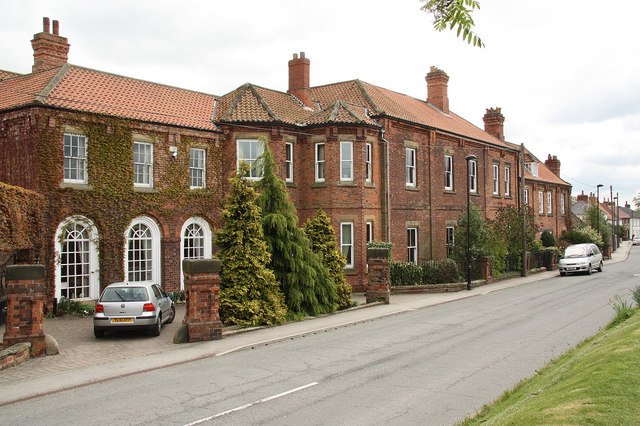
Basis: documented_estate_centre — Airmyn Hall, 29, 31 and 31A High Street, is the surviving principal country house of the later Airmyn estate. Historic England identifies the building at National Grid Reference SE 72514 25451, corresponding approximately to 53.7204, -0.9026.
Point confidence: high
Boundary status: representative_point_only
Boundary period: No single securely documented historical manor boundary established from the accessible sources; the later Airmyn estate is documented mainly through its 1919 sale particulars.
Boundary confidence: none
Boundary basis: The accessible evidence establishes the manor's location at Airmyn and documents a substantial later estate extending across numerous farms and properties in Airmyn, Boothferry, Old Goole and Newland, with three sale plans held by the East Riding of Yorkshire Archives. However, those sources do not provide an accessible, unambiguous polygon for the historical manorial land, and the later estate should not automatically be equated with the medieval or early-modern manor. The approximately 4,000-acre figure associated with the nineteenth-century estate is insufficient by itself to reconstruct a legally or historically reliable perimeter.
Sources:
- Airmyn Hall, Airmyn - National Heritage List for England entry 1274967: https://historicengland.org.uk/listing/the-list/list-entry/1274967 — Authoritative identification of Airmyn Hall at High Street, Airmyn, with National Grid Reference SE 72514 25451; describes the surviving early-eighteenth-century country house associated with the estate.
- Airmyn Estate sales particulars: https://calmview.eastriding.gov.uk/CalmView/Record.aspx/Overview.aspx?q=PlaceCode%3ANA6291&src=CalmView.Catalog — East Riding Archives catalogue record for the 1919 Airmyn Estate sale. It lists Airmyn Hall and grounds and numerous farms and properties in Airmyn, Boothferry, Old Goole and Newland, and states that three plans show the estate and sale lots.
- History of Airmyn: https://www.airmynparishcouncil.org.uk/index.php/about/history — Local institutional history identifies Airmyn Hall as the surviving hall associated with the Smithson purchase of the Manor of Airmyn and records the later Heber-Percy ownership and division of the estate into farms and smaller properties around 1920.
- Airmyn's church - past and present - St David: https://www.achurchnearyou.com/church/17572/page/32093/view/ — States that Anthony Smithson was Lord of the Manor of Airmyn in 1676 and refers to the later 4,000-acre Airmyn Estate managed for the Percy and Heber-Percy owners.
- Airmyn, West Riding: historical description and map context: https://www.visionofbritain.org.uk/place/11102 — Provides historical geographical context, placing Airmyn as a chapelry in Snaith parish at the confluence of the Aire and Ouse, and records a nineteenth-century area of 3,660 acres for the chapelry.
- TNA/MDR record F244639: https://discovery.nationalarchives.gov.uk/details/c/F244639 — Registry record supplied for the exact manor identity, authority/reference GB/NNAF/M170292, primary name Airmyn Manor and location Snaith, Yorkshire.
Warnings / uncertainty:
- The representative point is the surviving Airmyn Hall, a documented later estate centre, not proof that the present building occupies the precise medieval manor-house site.
- No historical manor boundary polygon is returned because the accessible evidence does not distinguish a defensible manorial perimeter from the later Percy/Heber-Percy estate, parish, township or sale-lot boundaries.
- The 1919 sale-plan catalogue entry is evidence that detailed plans exist, but the accessible catalogue text does not expose their geometry; obtaining and examining the original plans would be necessary for a supported boundary reconstruction.
About the Manor
Airmyn Manor, historically also styled the Manor of Armin or Armyn, was the principal manorial estate associated with Airmyn, a settlement at the confluence of the River Aire and the River Ouse in the former township and chapelry of Snaith, Yorkshire. Airmyn formed part of an endowment made by Henry I to the monks of St Mary's Abbey, York, and a settlement was developed there during the medieval period. Following the Dissolution, the manor was sold by the Crown in 1540 to Sir Gervase Clifton. It was acquired by Hugh Smithson in 1656 and subsequently became associated with the Smithson, Percy and Heber-Percy estates. Airmyn Hall was the principal country house of the later estate and remains a surviving built feature, although the former estate was divided and sold in lots in the early twentieth century.
Ownership / Holder Account
The earliest securely identified lordship is the holding of Airmyn by St Mary's Abbey, York, after Henry I granted the area to that religious house during his reign, conventionally dated 1100–1135. A 1253 dispute records the men of Airmyn treating the abbot of St Mary's as their landlord. The abbey was dissolved in 1539 and its estates passed to the Crown. In 1540 the Crown sold the Manor of Armin to Sir Gervase Clifton. The subsequent descent is incompletely documented in the publicly accessible sources. Hugh Smithson of Hull is recorded as having bought Airmyn in 1656. Anthony Smithson was Lord of the Manor by 1676, but the precise conveyance from Hugh to Anthony is not established. By about 1740 the estate was held by another Hugh Smithson, described as of Tottenham and Armin; he made his younger cousin, Sir Hugh Smithson, 4th Baronet, his heir, and the younger Sir Hugh and his wife Elizabeth subsequently acquired the Airmyn estate. Following the Smithson inheritance of the Percy property, Airmyn became part of the Percy Yorkshire estates. The estate was separated for Algernon Percy, 1st Earl of Beverley, in or around 1790, and passed to his son George Percy, 2nd Earl of Beverley, in 1830. In 1865, after George Percy succeeded to the dukedom of Northumberland, the Airmyn estate passed to his nephew Algernon Charles Heber-Percy of Hodnet Hall. The Heber-Percy ownership continued until the estate was offered for sale and broken up in 1919–1920. The sources do not establish a complete legal descent after the estate sale or whether a distinct manorial title continued in the hands of any one purchaser.
Records & References
Sources and references mentioning this manor/title which are not necessarily conveyances or transfers.
14 records found · showing 9–14.
1610-1656: rental
Held by: West Yorkshire Archive Service, Leeds
Further information: NRA 7398 Meynell-Ingram
1607: presentment
Held by: West Yorkshire Archive Service, Leeds
Further information: NRA 7398 Meynell-Ingram
1606-1608: rentals (3)
Held by: West Yorkshire Archive Service, Leeds
Further information: NRA 7398 Meynell-Ingram
1606: rental
Held by: West Yorkshire Archive Service, Leeds
Further information: NRA 7398 Meynell-Ingram
1500- 1600: survey (lists acreage and value of lands)
Held by: West Yorkshire Archive Service, Leeds
Further information: NRA 7398 Meynell-Ingram
1500- 1600: survey (description of lands and annual value)
Held by: West Yorkshire Archive Service, Leeds
Further information: NRA 7398 Meynell-Ingram
Conveyance & Descent
First holder to present holder: blood proximity & distance travelled
First recorded holder: St Mary's Abbey, York
Present holder:
Recorded title journey: 11 holder entries in this manor's saved Conveyance & Descent history.
No recorded holder currently has a usable saved direct-blood or collateral-blood relationship path from which to calculate proximity percentages.
First recorded holder → present holder
A usable saved blood relationship path between the first recorded holder and the present holder has not yet been recorded, so that first-to-present genealogical distance cannot be calculated.
St Mary's Abbey, York, Benedictine abbey
Transfer: Granted by Henry I to the monks of St Mary's Abbey, York; the precise grant date is not established.
Shared holding: Religious house
Airmyn was included in the endowment described as extending from Ousefleet to Airmyn. In 1253 the men of Airmyn complained of exploitation by St Mary's, York, and the abbot asserted the abbey's lordship and its role in founding the town. The holding ended when the abbey was dissolved in 1539.
Source: Goole-on-the-Web, Airmyn, lines 28, 33–34, 42; local historical account citing the medieval dispute and Dissolution history. — source link
Transfer: The estates of St Mary's Abbey passed to the Crown on the abbey's dissolution; the Manor of Armin was then sold by the Crown in 1540.
Shared holding: Crown ownership after Dissolution
Previous holder: St Mary's Abbey, York, Benedictine abbey
The Crown's holding is a short transitional period inferred directly from the statement that St Mary's estates went to the Crown in 1539 and that the Manor of Armin was purchased from the Crown in 1540. No separate Crown grant or conveyance has been located in the accessible sources.
Source: Goole-on-the-Web, Airmyn, line 42. — source link
Sir Gervase Clifton
Transfer: Purchased the Manor of Armin from the Crown in 1540.
Previous holder: The Crown, Crown ownership following monastic dissolution
The accessible local history expressly states that the Manor of Armin was purchased from the Crown by Sir Gervase Clifton in 1540. The date or instrument by which the manor left Clifton's hands has not been established; the next securely reported purchaser is Hugh Smithson in 1656.
Source: Goole-on-the-Web, Airmyn, line 42. — source link
Hugh Smithson of Hull
Transfer: Bought Airmyn in 1656; the later change to Anthony Smithson is not documented by a located conveyance.
Shared holding: Smithson family
Co-holders: Anthony Smithson, Hugh Smithson of Tottenham and Armin, Sir Hugh Smithson, 4th Baronet
Previous holder: Sir Gervase Clifton
Hugh Smithson of Hull is expressly recorded as having bought Airmyn in 1656. A separate source identifies Anthony Smithson as Lord of the Manor in 1676, but the exact date and legal form of the intervening transfer are unknown and have not been inferred.
Source: Goole-on-the-Web, Airmyn, lines 46–47; Airmyn church history, line 74. — source link
Anthony Smithson, Lord of the Manor of Airmyn by 1676
Transfer: The exact transfer is unknown; Anthony Smithson is identified as Lord of the Manor of Airmyn when the present church nave was built or dated in 1676.
Shared holding: Smithson family
Co-holders: Hugh Smithson of Hull, Hugh Smithson of Tottenham and Armin, Sir Hugh Smithson, 4th Baronet
Previous holder: Hugh Smithson of Hull
Airmyn's church history identifies Anthony Smithson as Lord of the Manor in connection with the 1676 rebuilding of the church. The source describes him as the son of the first Sir Hugh, but does not provide a deed or other direct evidence for the conveyance from Hugh Smithson of Hull. The end date is bounded only by the later evidence for Hugh Smithson of Tottenham and Armin around 1740.
Source: Airmyn's church – past and present – St David, lines 73–76; Goole-on-the-Web, Airmyn, lines 50 and 53–55. — source link
Hugh Smithson of Tottenham and Armin
Transfer: His acquisition or inheritance of Airmyn is not documented in the located sources. He made his younger cousin, Sir Hugh Smithson, 4th Baronet, his heir and died shortly thereafter according to the local historical account.
Shared holding: Smithson family
Co-holders: Hugh Smithson of Hull, Anthony Smithson, Sir Hugh Smithson, 4th Baronet
Previous holder: Anthony Smithson, Lord of the Manor of Airmyn by 1676
The local history describes an elderly and childless Hugh Smithson, of Tottenham and Armin, as having inherited the Airmyn estate by the time his young cousin visited him in 1740. He then made that cousin his heir. This entry records the direct Airmyn connection stated by the source but does not assert an undocumented conveyance from Anthony Smithson.
Source: Goole-on-the-Web, Airmyn, lines 53–55. — source link
Sir Hugh Smithson, 4th Baronet, later Earl and Duke of Northumberland
Transfer: Inherited or otherwise acquired the Airmyn estate from his older cousin Hugh Smithson of Tottenham and Armin after the latter made him heir.
Shared holding: Smithson family
Co-holders: Hugh Smithson of Hull, Anthony Smithson, Hugh Smithson of Tottenham and Armin
Previous holder: Hugh Smithson of Tottenham and Armin
The local account states that the newly married Sir Hugh Smithson and Elizabeth Seymour acquired the Airmyn estates after the elderly Hugh Smithson made Sir Hugh his heir and died. The source does not specify whether the legal ownership was vested solely in Sir Hugh, jointly in the couple, or through a settlement; this entry therefore records Sir Hugh as the principal identified holder while preserving the uncertainty in the narrative.
Source: Goole-on-the-Web, Airmyn, lines 53–57. — source link
Transfer: Airmyn became part of the Percy Yorkshire estates following the Smithson-Percy inheritance; the estate was later separated for a younger son of the first duke.
Shared holding: Percy Yorkshire estates
Co-holders: Algernon Percy, 1st Earl of Beverley, George Percy, 2nd Earl of Beverley
Previous holder: Sir Hugh Smithson, 4th Baronet, later Earl and Duke of Northumberland
The source states that by the completion of the inheritance in 1766 Airmyn had become part of the Percy Yorkshire estates associated with Sir Hugh Smithson, who had become the first Duke of Northumberland. The precise legal date and instrument of the change in the Airmyn manor holding are not given.
Source: Goole-on-the-Web, Airmyn, lines 56–58. — source link
Algernon Percy, 1st Earl of Beverley
Transfer: The Percy Yorkshire estates, including Airmyn, were separated for a younger son of the first Duke of Northumberland, who was created Earl of Beverley in 1790.
Shared holding: Percy Yorkshire estates
Co-holders: Hugh Smithson, 1st Duke of Northumberland, George Percy, 2nd Earl of Beverley
Previous holder: Hugh Smithson, 1st Duke of Northumberland, formerly Sir Hugh Smithson, 4th Baronet
The source does not describe a sale but a family and estate arrangement by which Airmyn and other Yorkshire estates were assigned to the younger son of the first Duke of Northumberland. He was created Earl of Beverley in 1790 and held the estate until his death in 1830.
Source: Goole-on-the-Web, Airmyn, line 58. — source link
Transfer: Inherited the title and estates, including Airmyn, from his father Algernon Percy, 1st Earl of Beverley, after the latter's death in 1830.
Shared holding: Percy Yorkshire estates
Co-holders: Hugh Smithson, 1st Duke of Northumberland, Algernon Percy, 1st Earl of Beverley
Previous holder: Algernon Percy, 1st Earl of Beverley
George Percy inherited the Airmyn estate in 1830 and is expressly described as Lord of the Manor of Airmyn. In 1865 he succeeded to the dukedom of Northumberland; the Airmyn estate then passed to Algernon Charles Heber-Percy under a family arrangement.
Source: Goole-on-the-Web, Airmyn, lines 58 and 61; Airmyn church history, lines 74–76. — source link
Transfer: The Airmyn estate passed to him after George Percy, 2nd Earl of Beverley, succeeded to the dukedom of Northumberland in 1865; the exact legal instrument is not identified.
Shared holding: Heber-Percy family estate
Previous holder: George Percy, 2nd Earl of Beverley, 5th Duke of Northumberland from 1865, Lord of the Manor of Airmyn
Contemporary directory material identifies Algernon Charles Heber-Percy as lord of the manor and principal landowner at Airmyn. The church history says that the Airmyn estate was managed first for George Percy until 1865 and thereafter for Algernon Heber-Percy of Hodnet Hall. The Heber-Percy estate was subsequently offered for sale and broken up in 1919–1920. The sources do not establish a later single holder of the manor.
Source: Kelly's Directory of the West Riding of Yorkshire, 1881, reproduced by Forebears; Airmyn church history, lines 74–78; East Riding Archives, Airmyn Estate sales particulars, 1919. — source link
Corrections / Challenges
Sign in to challenge or submit evidence against a recorded assertion.
JSON API
Machine-readable published manor data, including public images, mapped land areas, notes, rights, conveyances, relationships, records, source/document-library entries and public file links.
https://manorialregistry.com/index.php?rest_route=/mhr/v1/manor/airmyn-manorPublic API access is currently disabled. Authorised API clients must use a private X-MHR-API-Key; currently only administrator keys are enabled.
Private source files, pending edits, moderation/admin information, user API keys and non-public import identifiers are not returned.