


Historical names: Adwick; Athewyk
Location: Adwick le Street, Yorkshire
Places / associated places: Adwick le Street, Yorkshire
Listed in Domesday Book: Yes
Location & Extent
GPS Location & Recorded Land Areas
Representative GPS point: 53.57244, -1.18232
Identity: confirmed — The registry record, TNA reference F246438, location at Adwick le Street, and the documented FitzWilliam/Washington manorial history identify the manor as the historical manor of Adwick le Street in the former West Riding of Yorkshire. The documented Adwick Hall and associated medieval moated manor site are consistent with this exact manor rather than a same-named place elsewhere.
Representative point: 53.57244, -1.18232
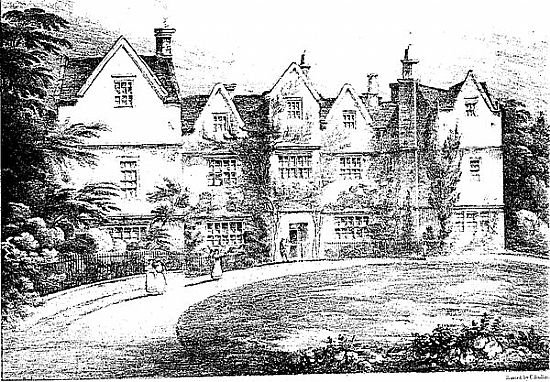
Basis: documented_manor_house — The point corresponds to OS grid reference SE54240873, recorded as the site of the Adwick Hall manor house, moat and garden. The site is identified as a likely medieval manorial centre and is shown on the 1844 tithe map; later Adwick Hall was built nearby in 1673 and demolished in 1866.
Point confidence: medium
Boundary status: representative_point_only
Boundary period: Not established
Boundary confidence: none
Boundary basis: The available evidence establishes the manor-house/manorial centre and indicates that the historical estate was extensive but divided among multiple interests by the late eighteenth and nineteenth centuries. The 1844 tithe material records 1,614 acres for the township and several major proprietors, but the available online evidence does not provide a reliable perimeter for the medieval or later manorial land. The township, parish, tithe district, or modern administrative area cannot safely be substituted for the historical manorial boundary.
Sources:
- The National Archives: Adwick le Street Manor, TNA/MDR record F246438: https://discovery.nationalarchives.gov.uk/details/c/F246438 — Registry record identifying the exact manor and its surviving manorial record group, including court papers and a 1574 survey.
- Adwick Hall, The Gatehouse Gazetteer: https://www.gatehouse-gazetteer.info/English%20sites/5211.html — Gives OS grid reference SE54240873 and coordinates 53.57244, -1.18232; identifies the location as the site of the moat, manor house and garden, with the moat shown on the 1844 tithe map.
- Archaeological Investigations at North Ridge Community School, Woodlands, Adwick-le-Street, Archaeology Data Service: https://archaeologydataservice.ac.uk/archiveDS/archiveDownload?t=arch-908-1%2Fdissemination%2Fpdf%2Farcus2-52541_1.pdf — States that a medieval moated seigneurial site may have been near Mill Bridge, that Adwick Hall was built in 1673, demolished in 1866, and that the later hall may have replaced the medieval moated site.
- The Park, Adwick-le-Street Historic Park & Garden, South Yorkshire Local Heritage List: https://local-heritage-list.org.uk/south-yorkshire/asset/1216 — Identifies The Park as the original grounds of Adwick Hall, describes the hall as the Washington family home, records the estate's later division, and describes the surviving historic park and garden features.
- History of Adwick le Street, University of Portsmouth / Vision of Britain: https://www.visionofbritain.org.uk/place/1302 — Reports the 1870-1872 gazetteer statement that the manor belonged to S. A. Thellusson and gives the contemporary township and parish acreages.
- Doncaster Council Archive Place Name Index: https://apps.doncaster.gov.uk/apni/Home/Browse?page=16&sortOrder=category_desc — Lists archival tithe material for Adwick le Street, including the 1844 award, schedule and map copies, confirming that relevant mapped land records survive in archive collections but are not available here as a verified manor polygon.
Warnings / uncertainty:
- The representative point is suitable for locating the documented manor-house/manorial centre, not for asserting the full territorial extent of the manor.
- No defensible historical manor polygon was found in the consulted online evidence. The 1,614-acre township/parish figures and the 1844 proprietor acreages must not be treated as the manor boundary.
- The medieval moated site and the later 1673 Adwick Hall were nearby but not necessarily identical sites; the supplied coordinate is the published coordinate for the documented manor-house/moated site.
- The estate was divided or fragmented, so later estate, hall, leasehold and ownership references do not necessarily represent the whole manorial lordship.
About the Manor
Adwick le Street was a manor and parish township in the historic West Riding of Yorkshire, situated near the Roman road later reflected in the place-name suffix “le Street”. Domesday Book records two separate holdings at Adwick: one held of Roger de Bully by Fulco of Lisors (Fulk de Lizours), and another held of Count Robert of Mortain by Nigel Fossard. The later medieval manor is securely associated with the FitzWilliam family and subsequently with the Washington family. The surviving manorial record group identified by The National Archives includes court papers from the reign of Henry V through 1591, a 1574 survey and copy, a 1679 court roll, and later court papers dated 1798–1871. The manor and its associated estate were divided or fragmented at various periods, so references to an “estate”, “hall”, “lands”, or a leasehold interest are not automatically equivalent to sole manorial lordship. By 1870–1872, a contemporary gazetteer stated that the manor belonged to S. A. Thellusson, apparently Charles Sabine Augustus Thellusson of the Brodsworth family. The exact subsequent descent of the manorial lordship has not been established from the sources consulted.
Ownership / Holder Account
The earliest evidence is the Domesday Survey of 1086, which records two Adwick holdings rather than one undifferentiated estate. The larger holding was held by Fulco of Lisors of Roger de Bully; a separate two-bovate holding was held by Nigel Fossard of Count Robert of Mortain. Medieval evidence records Alice Lund holding the lordship of Adwick of Payne Tibbet as one knight’s fee in 1303 or 1304, followed shortly by references to John de Tibetot and John de Tours, and then Stephen de Evers or Evre in the early fourteenth century. The precise legal relationship of these early holders to the later FitzWilliam interest is not fully resolved; some may have held subordinate, leased, or divided interests rather than the entire manor. By 1368 the manor is reported as divided into two moieties held by Peter Evans and John FitzWilliam. The FitzWilliam connection is securely attested in the fifteenth and early sixteenth centuries: Nicholas Fitzwilliam of Adwick was associated with the manor in the fifteenth century, and the manor of Adwick was the subject of a reversionary transaction involving Sir William FitzWilliam in 1515–1518 and a twenty-year lease granted by him to Richard Fletcher in 1535. These documents demonstrate that Sir William FitzWilliam held a substantial manorial interest, while Richard Fletcher was a lessee and should not be treated as sole lord. A mid-sixteenth-century transfer from the FitzWilliam interest to James Washington is reported by local and antiquarian sources, with James Washington recorded as lord of the manor by 1577 and commemorated at Adwick in 1580. The Washington family retained the manor or principal manorial estate for roughly the next century and a half. The descent within the family is reported as passing from James to Richard Washington, then to Darcy Washington, and subsequently to another Richard Washington. A sale or disposition to Sir George Cooke occurred in the early eighteenth century; a surviving local account dates a sale of Washington land to Sir George Cooke to 9 January 1712, while other accounts place the sale of the manor around 1712 or before 1719. Sir George Cooke’s Adwick interest passed to his nephew Anthony Eyre, who is directly documented by the University of Nottingham as having bought an Adwick estate from his uncle in 1733. Anthony Eyre’s son, also Anthony Eyre, succeeded to the family estate and is reported to have sold Adwick to Charles Duncombe in 1762. Charles Duncombe or the Duncombe family held the estate until its sale to Thomas Bradford, generally dated 1790 or approximately 1789. Bradford sold the mansion and part of the estate to George Wroughton in 1791 and divided or sold other portions separately; this transaction should not be treated as proof that Wroughton acquired the entire manorial lordship. By 1844, the estate at Adwick was divided among several proprietors, including Thellusson trustees, Diana Wroughton, William Workman, and Ann Waterton. Nevertheless, the Imperial Gazetteer for 1870–1872 expressly stated that the manor belonged to S. A. Thellusson. The route by which the manorial lordship or remaining manorial interest passed from the Bradford, Wroughton, or other nineteenth-century interests to Charles Sabine Augustus Thellusson has not been established from a sufficiently direct source.
Manorial Rights & Privileges
Historic manorial rights / privileges (1)
Manorial court jurisdiction and associated court records
Provisional
The surviving manorial record group includes court papers from the reign of Henry V through 1591, a court roll of 1679, and later court papers dated 1798–1871, evidencing historical manorial court functions.
Records & References
Sources and references mentioning this manor/title which are not necessarily conveyances or transfers.
2 records found · showing 1–2.
1759: agreement for stinting the common
Held by: Sheffield City Archives
1405: rental
Held by: Sheffield City Archives
Further information: NRA 9996
Conveyance & Descent
First holder to present holder: blood proximity & distance travelled
First recorded holder: Roger de Bully
Present holder:
Recorded title journey: 22 holder entries in this manor's saved Conveyance & Descent history.
No recorded holder currently has a usable saved direct-blood or collateral-blood relationship path from which to calculate proximity percentages.
First recorded holder → present holder
A usable saved blood relationship path between the first recorded holder and the present holder has not yet been recorded, so that first-to-present genealogical distance cannot be calculated.
Roger de Bully, Norman tenant-in-chief in Yorkshire
Transfer: Domesday tenure; predecessor before the Norman Conquest not identified in the source as a conveyance to Roger de Bully
Shared holding: Larger Domesday holding
Co-holder: Fulco of Lisors (Fulk de Lizours)
Previous holder: Swain, Gluniairnn, and Arnketil are recorded as pre-Conquest holders of the larger Adwick holding
Domesday Book records the larger Adwick holding as belonging to Roger de Bully, with Fulco of Lisors holding it under him. This establishes a feudal superior and subtenant, not necessarily modern-style sole ownership of every later component of Adwick le Street Manor.
Source: Domesday Book entry for Adwick [le Street], Land of Roger of Bully; Open Domesday, Phillimore reference Yorkshire 10W39. — source link
Fulco of Lisors (Fulk de Lizours), Domesday subtenant of Roger de Bully at Adwick
Transfer: Subtenancy recorded in Domesday Book; no later transfer located in the consulted sources
Holding arrangement: Other — Subtenant or local lord of the larger Domesday holding
Shared holding: Larger Domesday holding
Co-holder: Roger de Bully
Previous holder: Roger de Bully, Norman tenant-in-chief in Yorkshire
Fulco of Lisors is explicitly named in Domesday Book as holding the larger Adwick estate of Roger de Bully. Later local histories describe the interest of the de Lisors or de Lizours family as descending to an heiress and passing into the FitzWilliam family, but the precise conveyance and identification of the heiress have not been sufficiently established here.
Source: Domesday Book entry for Adwick [le Street], Land of Roger of Bully; Open Domesday, Phillimore reference Yorkshire 10W39. — source link
Count Robert of Mortain, Count of Mortain, Domesday tenant-in-chief
Transfer: Domesday tenure; predecessor before the Norman Conquest was Ulfkil or Ulfkil, and the later transfer is not established
Shared holding: Separate two-bovate Domesday holding
Co-holder: Nigel Fossard
Previous holder: Ulfkil
Domesday Book records a separate two-bovate holding at Adwick belonging to Count Robert of Mortain, with Nigel Fossard as the local lord in 1086. It is not assumed that this separate holding formed part of the later manor without additional evidence.
Source: Domesday Book entry for Adwick [le Street], Land of Count Robert of Mortain; Open Domesday, Phillimore reference Yorkshire 5W31. — source link
Nigel Fossard, Domesday local lord under Count Robert of Mortain, Feudal baron of Mulgrave, tenant-in-chief
Transfer: Subtenancy recorded in Domesday Book; no later transfer located
Holding arrangement: Other — Local lord or subtenant of the separate two-bovate holding
Shared holding: Separate two-bovate Domesday holding
Co-holder: Count Robert of Mortain
Previous holder: Count Robert of Mortain, Count of Mortain, Domesday tenant-in-chief
Nigel Fossard is recorded in Domesday Book as lord of the separate two-bovate Adwick holding under Count Robert of Mortain. The later relationship, if any, between this holding and the principal Adwick manor is unresolved.
Source: Domesday Book entry for Adwick [le Street], Land of Count Robert of Mortain; Open Domesday, Phillimore reference Yorkshire 5W31. — source link
Alice Lund, Holder of the lordship of Adwick under Payne Tibbet, Holder of Adwick as one knight’s fee
Transfer: Documented holding of the lordship of Adwick of Payne Tibbet or Tibetot as one knight’s fee; subsequent disposition not identified
Holding arrangement: Other — Lordship held of Payne Tibbet as one knight’s fee
Shared holding: Early fourteenth-century Adwick lordship
Co-holders: John de Tibetot and John de Tours, Stephen de Evers or Evre
Previous holder: Payne Tibbet or Tibetot was the feudal superior named in the record
A record cited in the published Yorkshire inquisitions and later local histories states that Alice Lund held the lordship of Adwick of Payne Tibbet as one knight’s fee, with suit at the court of Bentley. The evidence establishes her holding but does not establish whether she held the entire later manor or a defined medieval component.
Source: William Brown, Yorkshire Inquisitions, published Yorkshire Archaeological Society Record Series material, with the Adwick evidence discussed in local summaries of the medieval manor. — source link
John de Tibetot and John de Tours, Reported lords of Adwick
Transfer: The two men are returned as lords of Adwick in the early fourteenth-century evidence; the instrument of transfer from the preceding interest is unknown
Holding arrangement: Joint — Joint or otherwise shared lordship is reported; precise shares unknown
Shared holding: Early fourteenth-century Adwick lordship
Co-holders: Alice Lund, Stephen de Evers or Evre
Previous holder: Alice Lund, or another holder not identified by the source
Local historical accounts based on medieval evidence report John de Tibetot of Bentley and John de Tours as lords of Adwick in 1309. The exact legal nature of their interests is unclear, and the source cautions that names such as Tours and Evers may represent related or interchangeable designations. This entry therefore records a reported joint or shared lordship rather than sole ownership.
Source: Local history summary of medieval Adwick evidence, citing Hunter’s South Yorkshire and related medieval records; corroborated by the discussion of John de Tours and John de Tibetot in the Adwick history page. — source link
Stephen de Evers or Evre, Reported holder of Adwick
Transfer: The manor or an Adwick interest is reported as held by Stephen de Evers or Evre; subsequent division into moieties is reported by later local history
Shared holding: Early fourteenth-century Adwick lordship
Co-holders: Alice Lund, John de Tibetot and John de Tours
Previous holder: John de Tibetot and John de Tours, or another holder not identified
A local historical account states that in 1316 or 1317 the manor was held by Stephen de Evers or Evre. The same account notes that the names Tours and Evers may be interchangeable, so this may represent continuity or a change in designation rather than a clearly documented sale.
Source: Carcroft and District Local History Society, “Lords of the Manor of Adwick le Street,” summarising Hunter and medieval records. — source link
Peter Evans and John FitzWilliam, Reported holders of the two moieties of Adwick
Transfer: Reported division of Adwick into two moieties; the deed or judicial instrument effecting the division has not been located
Holding arrangement: Share — Two moieties; individual allocation of the moieties is not specified in the consulted source
Shared holding: Divided medieval manor
Previous holder: Stephen de Evers or Evre, or an intermediate holder not identified
A local history account states that by 1368 Adwick was divided into two moieties held by Peter Evans and John FitzWilliam. This is important evidence that the medieval manor was not necessarily held as an undivided sole estate at this date. The documentary basis and precise shares should be checked against the underlying medieval records before treating the two men as owners of the whole manor.
Source: Carcroft and District Local History Society, “Lords of the Manor of Adwick le Street,” citing local historical and medieval evidence. — source link
Nicholas Fitzwilliam, Yorkshire gentleman, associated with Adwick le Street
Transfer: FitzWilliam possession is evidenced by a 1459 licence associated with Nicholas Fitzwilliam and by contemporary references placing him at Adwick; later transfer not identified
Shared holding: FitzWilliam of Adwick
Previous holder: Earlier FitzWilliam or divided medieval interests; exact predecessor unknown
Nicholas Fitzwilliam is associated directly with Adwick in 1459. A licence from the Archbishop permitted an oratory at his house at Adwick, and modern historical scholarship identifies Nicholas Fitzwilliam of Adwick as a local Yorkshire gentleman. This establishes a FitzWilliam manorial or estate connection but does not by itself prove that Nicholas held every component of the manor in sole ownership.
Source: Historical discussion of Nicholas Fitzwilliam of Adwick in the University of York thesis Government and Political Society in the West Riding, together with the local account of the 1459 oratory licence. — source link
Sir William FitzWilliam, Knight, FitzWilliam landholder of Sprotborough and Adwick
Transfer: The reversion of the manor of Adwick and messuages and land there was the subject of Fitzwilliam v Reresby, involving feoffees to uses; in 1535 Sir William granted a twenty-year lease of the manor of Athewyk to Richard Fletcher
Shared holding: FitzWilliam manorial interest and lease
Previous holder: Earlier FitzWilliam holder or successor interest; exact immediate predecessor not identified
A Court of Chancery record for 1515–1518 concerns the manor of Adwick and associated land, with Ralph Reresby and John Anne acting as feoffees to uses after acquiring the reversion from William FitzWilliam of Sprotborough. In 1535 Sir William FitzWilliam granted Richard Fletcher a twenty-year lease of the manor of Athewyk, excepting specified manorial incidents. Sir William is therefore recorded as the holder of the relevant manorial interest, while Reresby, Anne, and Fletcher held feoffee or leasehold positions rather than necessarily being lords in fee simple.
Source: The National Archives, C 1/408/7, Fitzwilliam v Reresby, concerning the manor of Adwick, 1515–1518; and Nottinghamshire Archives, DD/FJ/7/36/11, counterpart lease of the manor of Athewyk, 8 February 1535. — source link
Richard Fletcher, Leaseholder of the manor of Athewyk
Transfer: Twenty-year lease of the manor of Athewyk granted by Sir William FitzWilliam; leasehold tenure, not sole lordship
Holding arrangement: Other — Twenty-year lease; rent stated in the archival summary as £22 per annum
Shared holding: Leasehold interest under FitzWilliam ownership
Previous holder: Sir William FitzWilliam, Knight, FitzWilliam landholder of Sprotborough and Adwick
Richard Fletcher, described as Sir William FitzWilliam’s servant, received a twenty-year lease of the manor of Athewyk on 8 February 1535. The lease excluded specified manorial incidents, including wards, marriages, and mines, showing that Fletcher was a lessee and not necessarily the lord of the manor in fee simple.
Source: Nottinghamshire Archives, DD/FJ/7/36/11, counterpart lease of the manor of Athewyk from Sir William FitzWilliam to Richard Fletcher, 8 February 1535. — source link
James Washington, Esquire, lord of the manor of Adwick le Street
Transfer: Acquisition from the FitzWilliam interest is reported as occurring in the mid-sixteenth century, but the conveyance deed and exact date have not been located
Shared holding: Washington of Adwick
Co-holders: Richard Washington, Darcy Washington
Previous holder: FitzWilliam interest; the intervening conveyance is unknown
James Washington is recorded as owning or holding the manor of Adwick le Street by 1577 and is commemorated in the church as “Dominus Jacobus Washington, armiger, de Adwycke,” with a tomb dated 1579 or associated with his death in 1580. Local accounts say that he acquired the manor soon after inheriting Hampole Priory estates in 1555, but no direct conveyance has been located. The transfer from the FitzWilliam interest is therefore recorded as unknown rather than inferred from family succession.
Source: Sparks-derived historical account recording James Washington as owner of the manor in 1577; local history account of the Washington family at Adwick; Ella Armitage, A Key to English Antiquities, as cited in the local account. — source link
Richard Washington, Reported final Washington holder of Adwick
Transfer: Family succession from James Washington is reported by local history; no separate succession deed has been located
Shared holding: Washington of Adwick
Co-holders: James Washington, Darcy Washington
Previous holder: James Washington, Esquire, lord of the manor of Adwick le Street
Local historical accounts state that Richard Washington inherited James Washington’s Adwick estates and succeeded him as the family holder. The source also describes Richard as holding office as treasurer for lame soldiers during the reign of James I. Because the available evidence is secondary and the exact legal instrument is not identified, the entry is retained with medium strength.
Source: Carcroft and District Local History Society, “Lords of the Manor of Adwick le Street,” and Washington family history for Adwick. — source link
Darcy Washington, Yorkshire landowner, reported holder of the Adwick estate
Transfer: Family succession within the Washington estate; no separate manorial conveyance located
Shared holding: Washington of Adwick
Co-holders: James Washington, Richard Washington
Previous holder: Richard Washington, Reported final Washington holder of Adwick
Local history states that Darcy Washington inherited the Adwick estates from Richard Washington and held them during the Civil War period. The source reports that the family supported the Royalist cause and that the estate was confiscated after the fighting before being recovered. The confiscation and recovery should be distinguished from an ordinary private conveyance.
Source: Carcroft and District Local History Society, “Lords of the Manor of Adwick le Street,” and Washington family history for Adwick. — source link
Richard Washington, Reported final Washington holder of Adwick
Transfer: Succession within the Washington family followed by sale or disposition to Sir George Cooke; a local source dates a sale of Washington land to Cooke to 9 January 1712, while the full manor sale date is uncertain
Shared holding: Final Washington tenure and sale to Cooke
Previous holder: Darcy Washington, Yorkshire landowner, reported holder of the Adwick estate
The later Richard Washington is reported to have inherited the Adwick estate and to have been the last Washington to live at Adwick. Local evidence states that he sold land to Sir George Cooke on 9 January 1712, while other accounts say that he sold the manor to Cooke before his death in 1719. Because the evidence does not establish whether the 1712 transaction conveyed the whole manor or only part of the estate, the sale is recorded with a date range and qualification.
Source: Carcroft and District Local History Society, “Lords of the Manor of Adwick le Street,” including the reported 9 January 1712 sale; Washington family history for Adwick. — source link
Sir George Cooke, Baronet, landowner of Wheatley and Owston
Transfer: Acquired the Washington Adwick interest; the exact instrument and whether the entire manor passed are not established
Shared holding: Cooke of Wheatley and Owston
Previous holder: Richard Washington, Reported final Washington holder of Adwick
Sir George Cooke is reported to have acquired the Adwick manor or principal estate from Richard Washington in the early eighteenth century. A local account cites a sale of Washington land dated 9 January 1712, but the surviving evidence consulted does not prove that this date conveyed the entire manor. Sir George’s ownership or control of an Adwick estate is corroborated by the later direct record of its sale to his nephew Anthony Eyre in 1733.
Source: University of Nottingham, Biography of Anthony Eyre (c.1691–1748), stating that Anthony bought an estate at Adwick le Street from his uncle Sir George Cooke in 1733; local Washington family history for the earlier sale. — source link
Anthony Eyre, Landowner and Member of Parliament for Boroughbridge
Transfer: Purchased an Adwick estate from his uncle Sir George Cooke in 1733
Shared holding: Eyre of Adwick
Previous holder: Sir George Cooke, Baronet, landowner of Wheatley and Owston
The University of Nottingham’s biographical account directly states that Anthony Eyre bought an estate at Adwick le Street from his uncle Sir George Cooke in 1733 and lived there until his death. Local histories describe this as the manor, but the authoritative biographical source uses the more cautious term “estate”; the entry therefore preserves that qualification.
Source: University of Nottingham, Biography of Anthony Eyre (c.1691–1748), Eyre Family biographies. — source link
Anthony Eyre, Landowner and Member of Parliament for Boroughbridge
Transfer: Inherited the Adwick estate from his father Anthony Eyre; later sale to Charles Duncombe is reported in local history as occurring in 1762
Shared holding: Eyre of Adwick
Previous holder: Anthony Eyre, father
The younger Anthony Eyre succeeded to his father’s estates on the latter’s death in 1748. Local historical accounts state that this Anthony later sold the Adwick manor or estate to Charles Duncombe in 1762. The direct evidence securely establishes the father’s Adwick ownership and the son’s succession to the family estates; the 1762 sale is supported by local history but not by a conveyance located in the present search.
Source: University of Nottingham, Biography of Anthony Eyre (c.1691–1748), for the family succession; Carcroft and District Local History Society, “Lords of the Manor of Adwick le Street,” for the reported 1762 sale. — source link
Charles Duncombe, London banker and Yorkshire landowner
Transfer: Purchased the Adwick manor or estate from Anthony Eyre, according to local historical accounts
Shared holding: Duncombe of Adwick
Previous holder: Anthony Eyre, Landowner and Member of Parliament for Boroughbridge
Local historical accounts state that Charles Duncombe acquired the Adwick manor or estate from Anthony Eyre in 1762. Duncombe ownership is also supported by the later history of the Duncombe family’s Yorkshire properties and by local references to the Duncombe occupation or ownership of the Adwick estate. The exact conveyance date and legal extent remain to be verified against the Duncombe estate papers.
Source: Carcroft and District Local History Society, “Lords of the Manor of Adwick le Street”; North Yorkshire County Record Office, Introduction to the Feversham (Duncombe) Collection, identifying Adwick among the Duncombe family properties. — source link
Thomas Bradford, Doncaster merchant, property developer, and landowner
Transfer: Purchased the extensive Adwick estate from Charles Duncombe and subsequently divided or sold portions; the manor-wide extent of the purchase is uncertain
Shared holding: Bradford acquisition and subdivision
Previous holder: Charles Duncombe, London banker and Yorkshire landowner
Local and civic-history sources state that Thomas Bradford acquired the extensive Adwick estate around 1789 or 1790. In 1791 he sold the mansion and part of the estate to George Wroughton and disposed of other land separately. Because the sources describe an estate transaction and subdivision rather than a clearly identified transfer of the entire manorial lordship, Bradford is recorded as purchaser of the principal estate interest, not unqualifiedly as sole lord of every manorial component.
Source: Doncaster Civic Trust, Trust Topics newsletter, reporting the Bradford acquisition and 1791 sale of the mansion and part of the estate; Carcroft and District Local History Society, Adwick history. — source link
George Wroughton, Former East India merchant and landowner
Transfer: Purchased Adwick Hall and part of the estate from Thomas Bradford in 1791
Shared holding: Wroughton estate at Adwick
Previous holder: Thomas Bradford, Doncaster merchant, property developer, and landowner
George Wroughton acquired Adwick Hall and part of the Adwick estate from Thomas Bradford in 1791. His widow Diana Wroughton remained connected with the property after his death, and by 1821 she leased the Hall to a school proprietor. The source evidence concerns the hall and part of the estate, not necessarily the whole manor.
Source: Doncaster Civic Trust, Trust Topics newsletter; Carcroft and District Local History Society, Adwick history and Adwick Old Hall account. — source link
Charles Sabine Augustus Thellusson, Yorkshire landowner of Brodsworth
Transfer: Later acquisition or consolidation of the manorial interest is not established; the Imperial Gazetteer explicitly states that the manor belonged to S. A. Thellusson
Shared holding: Thellusson of Brodsworth
Previous holder: Unknown; the estate was divided among several proprietors in the nineteenth century
John Marius Wilson’s Imperial Gazetteer of England and Wales, published in the 1870–1872 period, states that the manor of Adwick le Street belonged to S. A. Thellusson. The initials are consistent with Charles Sabine Augustus Thellusson, a member of the Thellusson family of Brodsworth, whose principal landholdings included Adwick le Street. The route by which the manorial interest passed to him has not been established, so no invented conveyance is supplied.
Source: John Marius Wilson, Imperial Gazetteer of England and Wales, 1870–1872, entry for Adwick le Street, reproduced by GB Historical GIS and Vision of Britain; English Heritage, Brodsworth Hall family and landholding material. — source link
Corrections / Challenges
Sign in to challenge or submit evidence against a recorded assertion.
JSON API
Machine-readable published manor data, including public images, mapped land areas, notes, rights, conveyances, relationships, records, source/document-library entries and public file links.
https://manorialregistry.com/index.php?rest_route=/mhr/v1/manor/adwick-le-street-manorPublic API access is currently disabled. Authorised API clients must use a private X-MHR-API-Key; currently only administrator keys are enabled.
Private source files, pending edits, moderation/admin information, user API keys and non-public import identifiers are not returned.