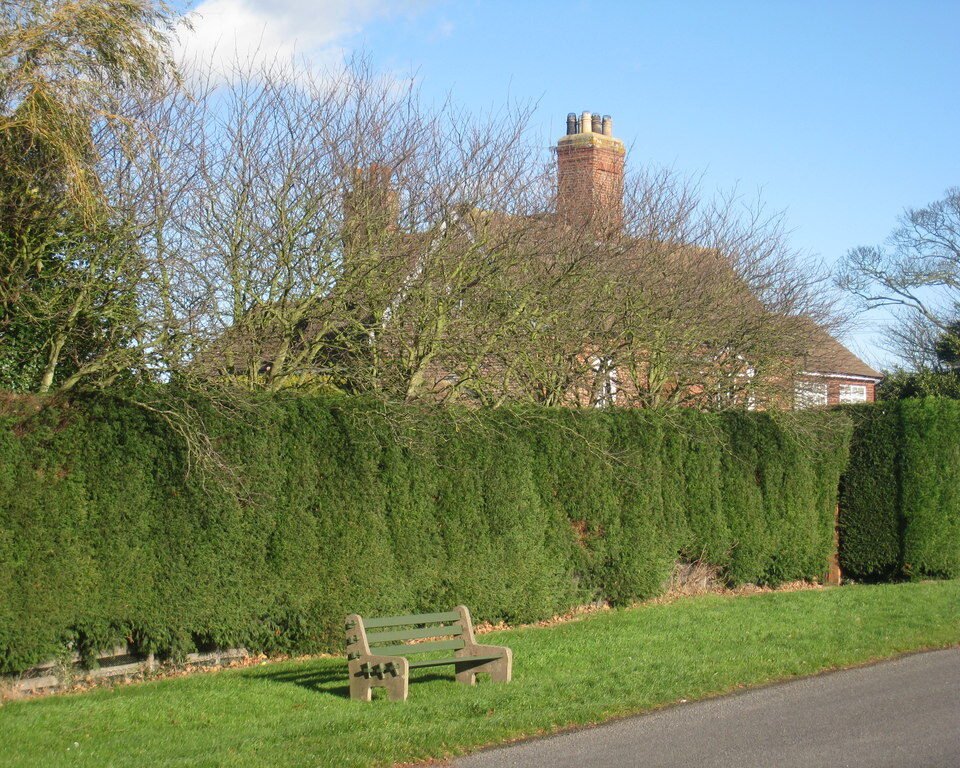



Historical names: Addlethorp (Manor) | Ingoldmells cum Addlethorpe (Manor) | Ingoldmells with Addlethorpe (Manor)
Location: Ingoldmells, Lincolnshire
Places / associated places: Ingoldmells, Lincolnshire
Location & Extent
GPS Location & Recorded Land Areas
Representative GPS point: 53.1855, 0.322
Identity: confirmed — The supplied Addlethorpe Manor record is identified with the manor consistently recorded in earlier sources as the Manor of Ingoldmells and later as Ingoldmells-cum-Addlethorpe. Massingberd states that its jurisdiction covered the greater part of Ingoldmells and Addlethorpe, substantial parts of Skegness, and smaller portions of Burgh, Great Steeping and Partney. This matches the registry description and the supplied historical names.
Representative point: 53.1855, 0.3220
Basis: supported_manorial_centre — Manor Farm, also identified as Slate House Farm, Addlethorpe, is a documented mid-seventeenth-century farmstead whose heritage record describes it as 'Manor Farm (Slate House Farm), Addlethorpe'. Its location is centred at OS grid reference TF 5560 6834. The evidence does not prove that the surviving farmhouse is the medieval lord's principal hall, but it is the best documented manorial or estate-centre candidate located within the core Addlethorpe-Ingoldmells area.
Point confidence: medium
Boundary status: representative_point_only
Boundary period: Medieval to early modern manorial jurisdiction, as evidenced principally by medieval and sixteenth-century court-roll material and the 1902 published introduction
Boundary confidence: none
Boundary basis: The published court-roll introduction explicitly places the manor's jurisdiction over parts of six parishes: the greater part of Ingoldmells and Addlethorpe; the greater part of Skegness; part of Burgh, including Skalfl ete common; a small part of Great Steeping; and a small part of Partney. It also records jurisdiction over Skegness banks, dikes, port and seashore. However, the source states that no complete survey of the manor was available and provides no mapped perimeter or sufficient parcel-by-parcel boundary data. A historical polygon would therefore risk substituting parish boundaries or inventing a perimeter.
Sources:
- The National Archives: Addlethorpe Manor, record F291846: https://discovery.nationalarchives.gov.uk/details/c/F291846 — Registry authority record and exact manor identification supplied for the research target.
- W. O. Massingberd, Court Rolls of the Manor of Ingoldmells in the County of Lincoln, Introduction: https://en.wikisource.org/wiki/Court_Rolls_of_the_Manor_of_Ingoldmells_in_the_County_of_Lincoln/Introduction — Primary historical synthesis identifying the manor as Ingoldmells or Ingoldmells-cum-Addlethorpe, describing its descent, jurisdiction and component places. It states that the jurisdiction covered parts of six parishes and specifically identifies Ingoldmells, Addlethorpe, Skegness, Burgh, Great Steeping and Partney.
- Lincolnshire Heritage Explorer: Slate House Farm, Addlethorpe, MLI93276: https://heritage-explorer.lincolnshire.gov.uk/Monument/MLI93276 — Authoritative heritage record for the documented Manor Farm/Slate House Farm site, described as a partially extant seventeenth-century farmstead, centred at OS grid reference TF 5560 6834.
- Lincolnshire Heritage Explorer: Settlement of Ingoldmells, MLI87060: https://heritage-explorer.lincolnshire.gov.uk/Monument/MLI87060 — Confirms the historical settlement context of Ingoldmells and its Domesday and Lindsey Survey associations; centred at TF 5595 6883.
- The National Archives: 1651 parliamentary survey with Ingoldmells, ref. 1-MM/8/196/1: https://discovery.nationalarchives.gov.uk/details/r/N17767632 — Archive lead for a potentially relevant manorial survey held by Lincolnshire Archives; the catalogue entry establishes the existence of the survey but does not expose a boundary map online.
Warnings / uncertainty:
- The Domesday identification of Herdertorp with Addlethorpe and the Ingoldmells soke is a reasoned historical identification, not an entirely certain identification.
- The representative point is based on the best documented surviving Manor Farm/manorial-centre candidate, not on a securely identified medieval manor house.
- The evidence establishes a dispersed manorial jurisdiction rather than a single compact territorial block.
- No defensible historical manor boundary polygon was found in the accessible sources; modern parish, civil or settlement boundaries were not substituted.
About the Manor
Addlethorpe Manor is the manor historically known principally as the manor of Ingoldmells and, from the later sixteenth century or thereafter, as Ingoldmells-cum-Addlethorpe. Its medieval jurisdiction extended over the greater part of Ingoldmells and Addlethorpe and also included substantial jurisdiction in Skegness, together with parts of Burgh-le-Marsh, Great Steeping and Partney. Earlier records usually name the manor Ingoldmells rather than Addlethorpe; Addlethorpe church was described as the West Church of Ingoldmells and was also styled Ardelthorp in Ingoldmels. The identification of the Domesday place-name Herdertorp with Addlethorpe and the later Ingoldmells-cum-Addlethorpe manor is argued by Massingberd through comparison with the Domesday soke and Testa de Nevill, but the Domesday identification should be treated as a reasoned historical identification rather than an entirely unqualified certainty. The manor possessed extensive manorial jurisdiction, including a court, view of frankpledge, the assize of bread and ale, rights of warren, waifs and estrays, wreck and royal fish, and the right of gallows, as described in the published court-roll introduction.
Ownership / Holder Account
The estate appears in Domesday Book under Robert le Despenser, probably in the entry for Herdertorp, which Massingberd identifies with Addlethorpe and the Ingoldmells soke. Before 1093-1100 Urso de Abitot held Ingoldmells and exchanged it with Robert de Lacy. The estate subsequently descended through the Lacy interest and the Honor of Pontefract, with Hugh de la Val and Guy de la Val recorded in the twelfth century, and then returned to the Lacy line through Roger de Lacy and his successors. By about 1212 Roger de Lacy's widow held the property; John de Lacy, earl of Lincoln, held it by the early thirteenth century, followed after his death by his widow Margaret and her second husband Walter Marshal, earl of Pembroke. The estate then passed through Edmund de Lacy and Henry de Lacy, earl of Lincoln. Henry's settlement and death in 1311 brought the manor to Thomas, earl of Lancaster, and Alice de Lacy, followed after Thomas's death by Ebulo le Strange in right of Alice. Alice's death without issue in 1348 caused the remainder to fall to Henry, earl of Lancaster. Through Henry's daughters and Blanche's marriage to John of Gaunt, the manor became part of the Lancastrian inheritance and was absorbed into the Crown when Henry of Bolingbroke became Henry IV in 1399. It remained Crown property until its sale in or about September 1632 to named trustees for the City of London. The City trustees later conveyed it to John Stone, Nathaniel Manton and Methuselah Turnor, who sold it in an indenture enrolled on 23 February 1657 to Francis Purley as trustee for Sir Drayner Massingberd. Purley released the manor to Sir Drayner on 26 April 1658. The published source does not provide a complete intervening descent from Sir Drayner to Charles Burrell Massingberd, who was lord of the manor by 1835. After Charles Burrell's death without male issue in 1835, the manor descended to his only daughter and heiress Harriet Massingberd, wife of Charles Godfrey Mundy, and by 1902 their grandson Charles Francis Massingberd-Mundy was lord of Ingoldmells-cum-Addlethorpe.
Manorial Rights & Privileges
Historic manorial rights / privileges (7)
Manorial court
Provisional
The manor possessed a court exercising jurisdiction over its customary manorial business.
View of frankpledge
Provisional
The manor historically exercised the jurisdiction known as view of frankpledge.
Assize of bread and ale
Provisional
The manor possessed the assize regulating bread and ale.
Warren
Provisional
The manor held rights of warren.
Waifs and estrays
Provisional
The manor possessed rights in waifs and estrays.
Wreck and royal fish
Provisional
The manor's recorded jurisdiction included rights of wreck and royal fish.
Gallows
Provisional
The manor possessed the right of gallows, indicating an extensive criminal jurisdiction.
Records & References
Sources and references mentioning this manor/title which are not necessarily conveyances or transfers.
9 records found · showing 1–8.
1903-1925: file of evidence relating to enfrachisement of copyhold land
Held by: The National Archives
1895-1895: draft surrender, with Ingoldmells
Held by: Lincolnshire Archives
1872-1879: copy court roll, with other manors
Held by: Lincolnshire Archives
1841-1841: copy court roll, with other manors
Held by: Lincolnshire Archives
1675-1941: court books (8), with other manors
Held by: Lincolnshire Archives
Further information: NRA 13779 Thimbleby
1651-1651: parliamentary survey with Ingoldmells
Held by: Lincolnshire Archives
1601-1604: court rolls, with other manors (4)
Held by: The National Archives
1600-1700: customs, with other manors
Held by: Leicestershire, Leicester and Rutland, Record Office for
Further information: NRA 874 Shirley
Conveyance & Descent
First holder to present holder: blood proximity & distance travelled
First recorded holder: Robert le Despenser
Present holder:
Recorded title journey: 22 holder entries in this manor's saved Conveyance & Descent history.
No recorded holder currently has a usable saved direct-blood or collateral-blood relationship path from which to calculate proximity percentages.
First recorded holder → present holder
A usable saved blood relationship path between the first recorded holder and the present holder has not yet been recorded, so that first-to-present genealogical distance cannot be calculated.
Robert le Despenser, Robertus Dispensator, Domesday tenant-in-chief
Transfer: Domesday holder of the estate identified by Massingberd with Herdertorp, later Addlethorpe, and the Ingoldmells soke. The place-name identification is argued rather than absolutely certain.
Previous holder: Wiglac
Domesday Book records the manor of Herdertorp under the land of Robert le Despenser, with a soke in Guldelsmere. Massingberd identifies Herdertorp with Addlethorpe and Guldelsmere with Ingoldmells, thereby treating this as the earliest documentary appearance of the later Ingoldmells-cum-Addlethorpe manor. Wiglac is recorded as the pre-Conquest holder in the Domesday entry, but the source does not document the precise transfer from Wiglac to Robert le Despenser.
Source: W. O. Massingberd, Court Rolls of the Manor of Ingoldmells in the County of Lincoln, 1902, Introduction, pp. viii-x; discussion of the Domesday Book entry for Herdertorp and Guldelsmere. — source link
Urso de Abitot, Hereditary sheriff of Worcestershire
Transfer: Held the manor before the exchange recorded in a royal charter dated palaeographically and politically between 1093 and 1100, by which Urso de Abitot exchanged Ingolnesmera with Robert de Lacy.
Previous holder: Robert le Despenser, Robertus Dispensator, Domesday tenant-in-chief
A Duchy of Lancaster charter records an exchange of Ingolnesmera, identified with Ingoldmells, between Urso de Abitot and Robert de Lacy. Massingberd explains Urso's possession as probably arising from his relationship to Robert le Despenser, but the family-succession explanation is not itself treated as the conveyance; the documented conveyance is the exchange with Robert de Lacy.
Source: W. O. Massingberd, Court Rolls of the Manor of Ingoldmells in the County of Lincoln, 1902, Introduction, pp. x-xi; quotation and discussion of Duchy of Lancaster, Royal Charters, no. 1. — source link
Robert de Lacy, Robert de Laceio, Lacy landholder
Transfer: Acquired Ingoldmells through the documented exchange with Urso de Abitot. The subsequent descent within the Lacy and Honor of Pontefract interests is not fully documented in the cited source for every intermediate holder.
Previous holder: Urso de Abitot, Hereditary sheriff of Worcestershire
Robert de Lacy received Ingoldmells in the exchange recorded by the Duchy of Lancaster charter. The later Lacy descent is supported by the discussion of the Lacy family and by the appearance of Roger de Lacy and his widow in the historical account, but the source does not provide a continuous instrument-by-instrument descent from Robert de Lacy to every later Lacy holder.
Source: W. O. Massingberd, Court Rolls of the Manor of Ingoldmells in the County of Lincoln, 1902, Introduction, pp. x-xii; Duchy of Lancaster, Royal Charters, no. 1. — source link
Roger de Lacy's widow, Widow of Roger de Lacy
Transfer: Held the Ingoldmells property as recorded in Testa de Nevill after Roger de Lacy's death; the source does not name her in the excerpt.
Holding arrangement: Other
Previous holder: Roger de Lacy
Massingberd states that Roger de Lacy's widow held the Ingoldmells property circa 1212. This is a documented holding, but the cited excerpt does not name the widow or specify the legal form of her interest beyond the record's statement that she held the property.
Source: W. O. Massingberd, Court Rolls of the Manor of Ingoldmells in the County of Lincoln, 1902, Introduction, p. xi, citing Testa de Nevill, pp. 334, 348. — source link
John de Lacy, earl of Lincoln from 23 November 1232
Transfer: Inherited or succeeded to the Lacy interest before becoming earl of Lincoln; the source explicitly identifies him as the son and heir of Roger de Lacy.
Previous holder: Roger de Lacy
John de Lacy is identified as Roger de Lacy's son and heir and as the holder of the Ingoldmells property before his death in 1240. The source links him directly to the manor through the Lacy descent and the later record of the property in his widow's right.
Source: W. O. Massingberd, Court Rolls of the Manor of Ingoldmells in the County of Lincoln, 1902, Introduction, pp. xi-xii. — source link
Transfer: Held the manor after John de Lacy's death; after her remarriage, Walter Marshal held the Ingoldmells property in her right.
Holding arrangement: Other
Previous holder: John de Lacy, earl of Lincoln from 23 November 1232
After John de Lacy died in 1240, his widow Margaret is identified in the source as the woman through whom Walter Marshal held the Ingoldmells property. The source does not set out a separate conveyance to Margaret beyond her widowhood and the Lacy succession.
Source: W. O. Massingberd, Court Rolls of the Manor of Ingoldmells in the County of Lincoln, 1902, Introduction, pp. xi-xii. — source link
Transfer: Held the Ingoldmells property in right of his wife Margaret, widow of John de Lacy.
Holding arrangement: Other
Shared holding: Walter Marshal in right of Margaret de Quincy
Previous holder: Margaret de Quincy, widow of John de Lacy, daughter and heir of Robert de Quincy
After marrying Margaret de Quincy about 6 January 1243, Walter Marshal, fifth earl of Pembroke, held the Ingoldmells property in her right. Testa de Nevill also records Walter Marshal as holding Ingoldmells, Partney, Burgh, Steeping and Skegness of the king in chief of the Honor of Peverel or Peverfrey, as transcribed by Massingberd.
Source: W. O. Massingberd, Court Rolls of the Manor of Ingoldmells in the County of Lincoln, 1902, Introduction, p. xii, citing Testa de Nevill, p. 329. — source link
Transfer: Succeeded as son and heir of John and Margaret after the death of Walter Marshal; the cited source does not narrate a separate conveyance instrument.
Previous holder: Walter Marshal, 5th earl of Pembroke
The source states that Edmund de Lacy was the son of John and Margaret and that he died in 1258 before his mother. His position in the Lacy succession places the Ingoldmells property in the Lacy line, but the cited excerpt does not give a separate conveyance document.
Source: W. O. Massingberd, Court Rolls of the Manor of Ingoldmells in the County of Lincoln, 1902, Introduction, p. xii. — source link
Transfer: Succeeded Edmund de Lacy as his son and heir and was lord of Ingoldmells by the time of the earliest surviving court rolls.
Previous holder: Edmund de Lacy, Son and heir of John de Lacy and Margaret de Quincy, Lord of Swillington, Baron of Pontefract
Henry de Lacy, earl of Lincoln, is explicitly described as lord of Ingoldmells when the earliest surviving court rolls were written. He also held free warren in Ingoldmells in 1276. In 1292 he granted the Honor of Pontefract to the king, but a later entail settled the relevant castles and manors, including Ingoldmells, on Thomas, earl of Lancaster, and Alice, with remainder to Thomas's heirs.
Source: W. O. Massingberd, Court Rolls of the Manor of Ingoldmells in the County of Lincoln, 1902, Introduction, pp. xii-xiii. — source link
Thomas Plantagenet, 2nd earl of Lancaster, earl of Leicester and Derby
Transfer: Became possessed of the manor with his wife Alice de Lacy after Henry de Lacy's death, pursuant to the entail of the Lacy estates.
Holding arrangement: Joint
Shared holding: Thomas, earl of Lancaster, and Alice de Lacy
Previous holder: Henry de Lacy, 3rd earl of Lincoln, 5th Baron of Pontefract, prominent baron under Edward I, lord of Elland, lord of Swillington
After Henry de Lacy died on 5 February 1311, Thomas, earl of Lancaster, and Alice, daughter and heir of the earl of Lincoln, became possessed of Ingoldmells. The manor was held under an entail to Thomas and Alice and the heirs of their bodies, with remainder to Thomas's right heirs. The manor court rolls state that Thomas held it for life only.
Source: W. O. Massingberd, Court Rolls of the Manor of Ingoldmells in the County of Lincoln, 1902, Introduction, pp. xiii-xiv; cited Chancery and court-roll evidence. — source link
Transfer: Held the manor in right of his wife Alice de Lacy after the death of her first husband, Thomas, earl of Lancaster.
Holding arrangement: Other
Shared holding: Ebulo le Strange in right of Alice de Lacy
Previous holder: Thomas Plantagenet and Alice de Lacy
After Thomas, earl of Lancaster, died in 1322, the court rolls record Ebulo le Strange in possession of the manor in right of his wife Alice. This was a rights-through-wife holding, not an independently documented absolute acquisition by Ebulo.
Source: W. O. Massingberd, Court Rolls of the Manor of Ingoldmells in the County of Lincoln, 1902, Introduction, pp. xiii-xiv. — source link
Transfer: Became heir to Alice de Lacy's interest under the entail after her death without issue in 1348.
Previous holder: Alice de Lacy and Ebulo le Strange
An inquisition taken at Bolingbroke on 15 October 1348 found that Alice held Ingoldmells jointly with her former husband Thomas, with remainder to Thomas's right heirs, and that after Alice's death the manor belonged to Henry, earl of Lancaster, kinsman and heir of Thomas. Henry was later earl of Lincoln and duke of Lancaster.
Source: W. O. Massingberd, Court Rolls of the Manor of Ingoldmells in the County of Lincoln, 1902, Introduction, pp. xiii-xiv, citing Chancery Inquisition post mortem, 22 Edward III, first numbers, no. 34. — source link
John of Gaunt, 1st duke of Lancaster, 1st duke of Aquitaine
Transfer: Inherited the Lancaster estates through his marriage to Blanche, daughter and coheir of Henry of Grosmont; the manor rolls explicitly name him lord of Ingoldmells in the 38th year of Edward III.
Henry of Grosmont died leaving two daughters, Matilda and Blanche. Blanche married John of Gaunt, and the court rolls explicitly mention John as lord of Ingoldmells in 38 Edward III, approximately 1364. The source does not provide a separate deed for the transfer but directly links John to the manor through the recorded lordship.
Source: W. O. Massingberd, Court Rolls of the Manor of Ingoldmells in the County of Lincoln, 1902, Introduction, pp. xiv-xv. — source link
Henry of Bolingbroke, Henry IV, king of England from 1399
Transfer: Obtained John of Gaunt's inheritance on his father's death and became Henry IV; the manor then merged in the Crown.
Previous holder: John of Gaunt, 1st duke of Lancaster, 1st duke of Aquitaine
On John of Gaunt's death in 1399, his son Henry of Bolingbroke obtained the Lancaster inheritance. After Henry became king, the Ingoldmells court held on 5 November in the first regnal year of Henry IV was described as the court of Henry, king of England, showing the manor's absorption into the Crown.
Source: W. O. Massingberd, Court Rolls of the Manor of Ingoldmells in the County of Lincoln, 1902, Introduction, p. xiv. — source link
The Crown, Crown proprietor
Transfer: The manor remained Crown property from the accession of Henry IV until its sale by letters patent under the great seal and Duchy seal in or about the fourth regnal year of Charles I.
Previous holder: Henry IV
The published court-roll introduction states that the manor continued as Crown property after its absorption into the Crown in 1399. It was sold on or about 9 September in the fourth year of Charles I, corresponding to 1632.
Source: W. O. Massingberd, Court Rolls of the Manor of Ingoldmells in the County of Lincoln, 1902, Introduction, p. xiv. — source link
Edward Ditchfield, John Heighlord, Humphrey Clarke and Francis Moss, London citizens and trustees
Transfer: Purchased the manor from Charles I by letters patent under the great seal and Duchy seal as trustees for the mayor, aldermen and commoners of the City of London.
Holding arrangement: Trust
Shared holding: Trustees for the City of London
Previous holder: The Crown of England
The king sold the manor on or about 9 September 1632 to Edward Ditchfield, John Heighlord, Humphrey Clarke and Francis Moss, who took it and their heirs as trustees for the mayor, aldermen and commoners of the City of London. The exact date of the subsequent City conveyance is not supplied in the cited source.
Source: W. O. Massingberd, Court Rolls of the Manor of Ingoldmells in the County of Lincoln, 1902, Introduction, p. xiv, discussion of the letters patent under the great seal and Duchy seal. — source link
John Stone, Nathaniel Manton and Methuselah Turnor, Trustees or assigns under City of London authority
Transfer: Received the manor from the City of London trustees pursuant to several Acts of Common Council; they later sold it by an indenture enrolled in Chancery on 23 February 1657.
Holding arrangement: Trust
Shared holding: City-appointed trustees and assigns
Previous holder: Edward Ditchfield, John Heighlord, Humphrey Clarke and Francis Moss, London citizens and trustees
The City trustees conveyed the manor to John Stone, Nathaniel Manton and Methuselah Turnor, their heirs and assigns, under authority of several City Common Council Acts. The source does not give the date of that conveyance, but records their later sale by an indenture enrolled in the Court of Chancery on 23 February 1657.
Source: W. O. Massingberd, Court Rolls of the Manor of Ingoldmells in the County of Lincoln, 1902, Introduction, p. xiv. — source link
Francis Purley, Gentleman of the Inner Temple, London, trustee
Transfer: Purchased the manor from John Stone, Nathaniel Manton and Methuselah Turnor by an indenture enrolled in the Court of Chancery on 23 February 1657; he held as trustee for Sir Drayner Massingberd and released it to him on 26 April 1658.
Holding arrangement: Trust
Shared holding: Trustee for Sir Drayner Massingberd
Previous holder: John Stone, Nathaniel Manton and Methuselah Turnor, Trustees or assigns under City of London authority
Francis Purley of the Inner Temple, London, gentleman, purchased the manor in an indenture enrolled on 23 February 1657. The source expressly states that he was trustee for Sir Drayner Massingberd and that, in performance of the trust, he granted and released the manor to Massingberd on 26 April 1658.
Source: W. O. Massingberd, Court Rolls of the Manor of Ingoldmells in the County of Lincoln, 1902, Introduction, p. xiv. — source link
Sir Drayner Massingberd, knight
Transfer: Received the manor by release from his trustee Francis Purley on 26 April 1658. The cited source does not document the complete intervening descent to Charles Burrell Massingberd.
Previous holder: Francis Purley, Gentleman of the Inner Temple, London, trustee
Sir Drayner Massingberd became the beneficial holder when Francis Purley released the manor to him on 26 April 1658. The published source identifies Charles Burrell Massingberd as his great-grandson and lord of the manor by 1835, but does not supply all intermediate conveyances or succession steps.
Source: W. O. Massingberd, Court Rolls of the Manor of Ingoldmells in the County of Lincoln, 1902, Introduction, pp. xiv-xv. — source link
Charles Burrell Massingberd, Esquire of South Ormsby
Transfer: Held the manor as a descendant of Sir Drayner Massingberd and died without male issue in 1835. His only daughter Harriet was his heiress.
Previous holder: Sir Drayner Massingberd, knight
The source states that Sir Drayner Massingberd's great-grandson, Charles Burrell Massingberd, died without male issue in 1835, leaving an only daughter and heiress, Harriet. The intervening descent from Sir Drayner to Charles Burrell is not set out in the published account.
Source: W. O. Massingberd, Court Rolls of the Manor of Ingoldmells in the County of Lincoln, 1902, Introduction, p. xiv. — source link
Transfer: Inherited as the only daughter and heiress of Charles Burrell Massingberd after his death in 1835. The source states that she was the wife of Charles Godfrey Mundy and that their grandson later held the manor.
Previous holder: Charles Burrell Massingberd, Esquire of South Ormsby
Harriet Massingberd succeeded as the only daughter and heiress of Charles Burrell Massingberd. Her marriage to Charles Godfrey Mundy is recorded as family context, but the cited source does not state that her husband held the manor in his own right; therefore he is not entered as a separate manor holder.
Source: W. O. Massingberd, Court Rolls of the Manor of Ingoldmells in the County of Lincoln, 1902, Introduction, p. xiv. — source link
Transfer: Identified in the dedication and introduction to the 1902 published court rolls as lord of the manor of Ingoldmells-cum-Addlethorpe and as the grandson of Harriet Massingberd and Charles Godfrey Mundy. The precise conveyance or succession date is not stated.
Previous holder: Harriet Massingberd, Only daughter and heiress of Charles Burrell Massingberd
Charles Francis Massingberd-Mundy is explicitly identified as lord of the manor of Ingoldmells-cum-Addlethorpe in the 1902 publication of the court rolls. The source describes him as the grandson of Harriet Massingberd and Charles Godfrey Mundy, but does not document the exact legal instrument or date by which the manor passed to him. No later secure historical holder has been added from the sources reviewed.
Source: W. O. Massingberd, Court Rolls of the Manor of Ingoldmells in the County of Lincoln, 1902, dedication and Introduction, p. xiv. — source link
Corrections / Challenges
Sign in to challenge or submit evidence against a recorded assertion.
JSON API
Machine-readable published manor data, including public images, mapped land areas, notes, rights, conveyances, relationships, records, source/document-library entries and public file links.
https://manorialregistry.com/index.php?rest_route=/mhr/v1/manor/addlethorpe-manorPublic API access is currently disabled. Authorised API clients must use a private X-MHR-API-Key; currently only administrator keys are enabled.
Private source files, pending edits, moderation/admin information, user API keys and non-public import identifiers are not returned.