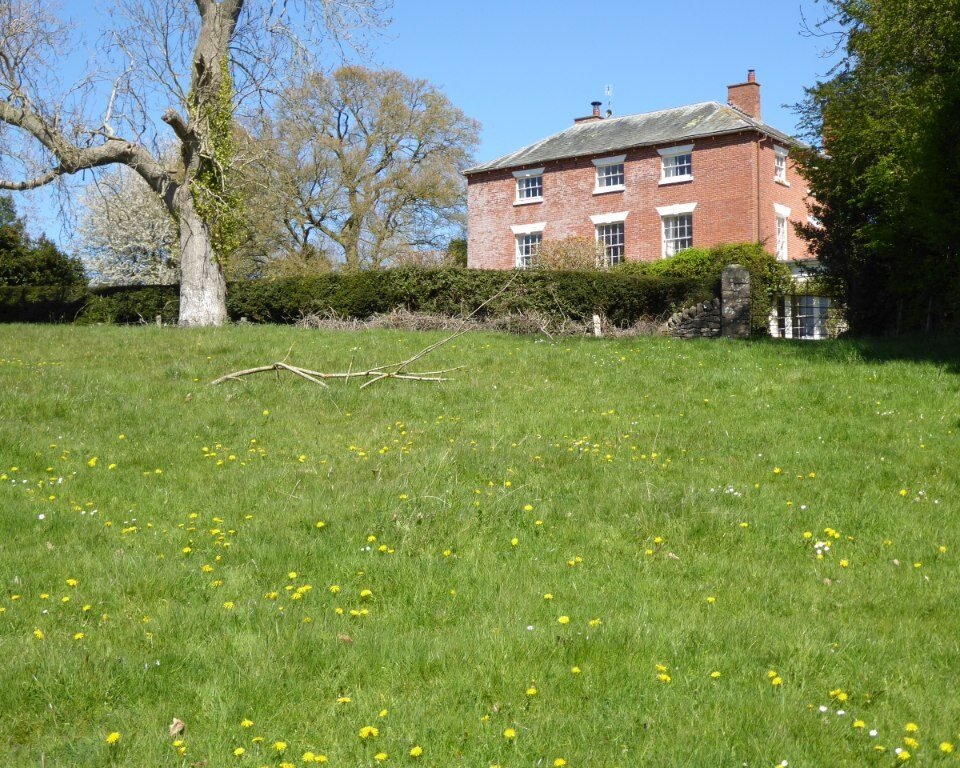



Associated title (legacy text): Lord of the Manor of Acton Beauchamp
Historical names: Actune
Location: Acton Beauchamp, Herefordshire
Places / associated places: Acton Beauchamp, Herefordshire
Listed in Domesday Book: Yes
Location & Extent
GPS Location & Recorded Land Areas
Representative GPS point: 52.1509, -2.47004
Identity: confirmed — The supplied TNA/MDR record, authority reference GB/NNAF/M303198, location, and historical description identify the single manor of Acton Beauchamp in the former Worcestershire parish now located in Herefordshire. The 1594 manorial survey explicitly identifies the principal holding as “MANOR (=CHURCH HOUSE FARM),” and describes it as the capital messuage of the manor.
Representative point: 52.1509, -2.47004
Basis: documented_manor_house — Church House Farm is identified in the 1594 survey interpretation as the manor holding and the site of the former capital messuage/manor house, located north of St Giles' Church. The present Church House Farm occupies the documented manor-house site, although the building was rebuilt in 1804.
Point confidence: high
Boundary status: representative_point_only
Boundary period: Medieval manor; documented particularly by the 1594 survey and 1598 legal extent
Boundary confidence: none
Boundary basis: The evidence establishes Acton Beauchamp as a single manorial estate whose lands broadly corresponded with the historic parish. The 1594 survey maps numerous named manor holdings, open fields, customary land and waste across the parish, while the 1598 legal document records 20 messuages, 20 cottages, 600 acres of land, 200 acres of meadow, 300 acres of pasture, 6 acres of wood, and 100 acres of furze and wood. However, the accessible sources do not provide a sufficiently recoverable, coordinate-defined perimeter of the manorial land. The modern parish boundary cannot safely be substituted for the historical manor boundary, particularly because parts of the estate were sold and broken up after 1602.
Sources:
- An Interpretation of a Tudor Manorial Survey of Acton Beauchamp, with reference to the History of the Landscape, C. W. M. Pratt, Transactions of the Woolhope Naturalists' Field Club, volume 50, 2001: https://www.woolhopeclub.org.uk/system/files/documents/transaction/woolhope-club-transactions-volume-l-2001-part-ii.pdf — Identifies Acton as a single estate; discusses the 1594 survey, the 1598 legal extent, the mapped holdings and fields, the manor holding as Church House Farm, and the later piecemeal sale of the estate.
- Herefordshire Through Time: An Interpretation of a Tudor Manorial Survey of Acton Beauchamp: https://htt.herefordshire.gov.uk/her-search/sources/search/source?ID=SHE16037 — County archaeological record linking Pratt's study to Church House Farm and numerous named medieval or Tudor holdings in Acton Beauchamp.
- Church House Farmhouse, Acton Beauchamp: https://mapcarta.com/W183829964 — Provides the mapped location of the present Church House Farmhouse at approximately 52.1509, -2.47004.
- Acton Beauchamp Church and Church House Farm, Geograph: https://commons.wikimedia.org/wiki/File%3AActon_Beauchamp_Church_and_Church_House_Farm_-_geograph.org.uk_-_107000.jpg — Places Church House Farm immediately beside and north-west of St Giles' Church and supplies geotagged coordinates for the manor-house site area.
- TNA Manorial Documents Register: Acton Beauchamp, F279990: https://discovery.nationalarchives.gov.uk/details/c/F279990 — Registry record and authority context for the exact Acton Beauchamp manor.
Warnings / uncertainty:
- The representative point is suitable for identifying the historical manor-house site, not for defining the full manorial estate.
- No polygon is returned because the available evidence does not provide a sufficiently precise, coordinate-recoverable historical manor perimeter.
- The manor estate was gradually broken up after the 1602 sale, so later ownership parcels and modern administrative boundaries should not be treated as the medieval or Tudor manor extent.
About the Manor
Acton Beauchamp was a single manorial estate corresponding broadly with the parish of Acton Beauchamp, historically in Worcestershire and since 1897 in Herefordshire. The estate is recorded in Domesday Book as Actune. In the reign of Edward the Confessor it had belonged to Evesham Abbey; after the Conquest it was held by Urse d'Abitot of the fee of Odo, Bishop of Bayeux. The estate expanded substantially before 1086 through assarting and included demesne, customary land, open fields, woodland waste, tenants, a water-mill and later a capital messuage and dove-cote. By the late thirteenth and early fourteenth centuries it was held by the Beauchamp family, later represented among the earls of Warwick. A manorial survey of 1594 records the estate under the Madresfield interest and was apparently prepared in the context of its subsequent alienation. A legal document of 12 June 1598 described the estate as including 20 messuages, 20 cottages, 3 dove-cotes, 600 acres of land, 200 acres of meadow, 300 acres of pasture, 6 acres of wood, and 100 acres of furze and wood. Most of the estate was sold by William Lygon to Rowland Berkeley in 1602. It subsequently passed to the Berkeleys of Cotheridge and was gradually broken up and sold in separate portions. The evidence does not establish a continuous chain of individual lords after the Berkeley period, although W. M. Sparrow was recorded as lord of the manor and principal landowner in 1879.
Ownership / Holder Account
The earliest securely identified institutional interest is Evesham Abbey, whose ownership is stated in the Domesday account for the time of King Edward the Confessor. After the Norman Conquest, Urse d'Abitot held Acton of Odo, Bishop of Bayeux. The estate remained associated with the d'Abitot family into the later thirteenth century, but the precise descent and conveyance into the Beauchamp family are not established by the sources consulted. By 1280 James Beauchamp was described as lord of the manor and resident at the manor-house. William Beauchamp, Earl of Warwick, was the relevant lord at his death in 1298, and Guy de Beauchamp, Earl of Warwick, was the relevant lord at his death in 1315/16. The later medieval descent through the Beauchamp earls of Warwick is stated in secondary sources but is not reconstructed here person by person without direct Acton Beauchamp evidence. By 1594 the estate was associated with William Lygon of Madresfield; a 1598 sale document and the 1602 sale to Rowland Berkeley document the transition from the Lygon interest to the Berkeley family. William Berkeley inherited Acton Beauchamp from his father in 1611. The estate later passed among the Berkeleys of Cotheridge and was sold piecemeal. The precise conveyances between the Berkeley family and later owners are not established in the sources consulted. W. M. Sparrow was recorded as lord of the manor in 1879, but the conveyance by which the lordship reached him is unknown.
Records & References
Sources and references mentioning this manor/title which are not necessarily conveyances or transfers.
13 records found.
1855-1855: steward's papers, incl calculations and memoranda on rents, admittances and tenancies
Held by: Herefordshire Archive and Records Centre
Further information: NRA 14843 Hereford misc
1855-1855: precepts
Held by: Herefordshire Archive and Records Centre
Further information: NRA 14843 Hereford misc
1829-1847: court book (draft)
Held by: Herefordshire Archive and Records Centre
Further information: NRA 14843 Hereford misc
1829-1855: court book
Held by: Herefordshire Archive and Records Centre
Further information: NRA 14843 Hereford misc
1816-1890: court book (mainly extracts rel to admissions)
Held by: Herefordshire Archive and Records Centre
Further information: NRA 14843 Hereford misc
1757-1757: lists of chief rents due
Held by: Herefordshire Archive and Records Centre
Further information: NRA 14843 Hereford misc
1750-1850: rent roll
Held by: Herefordshire Archive and Records Centre
Further information: NRA 14843 Hereford misc
1674-1741: surrenders and admissions
Held by: Madresfield Court
Further information: NRA 5234 Lygon
1594-1594: "view or survey" (extent), with other manors
Held by: Madresfield Court
Further information: NRA 5234 Lygon
1589-1599: court book, with other manors
Held by: Madresfield Court
Further information: NRA 5234 Lygon
1567-1567: court roll, with other manors
Held by: Madresfield Court
Further information: NRA 5234 Lygon
1555-1555: estreat
Held by: Madresfield Court
Further information: NRA 5234 Lygon
1425-1425: court roll
Held by: Madresfield Court
Further information: NRA 5234 Lygon
Conveyance & Descent
First holder to present holder: blood proximity & distance travelled
First recorded holder: St Mary's Abbey, Evesham, also described as Evesham Abbey
Present holder:
Recorded title journey: 11 holder entries in this manor's saved Conveyance & Descent history.
No recorded holder currently has a usable saved direct-blood or collateral-blood relationship path from which to calculate proximity percentages.
First recorded holder → present holder
A usable saved blood relationship path between the first recorded holder and the present holder has not yet been recorded, so that first-to-present genealogical distance cannot be calculated.
St Mary's Abbey, Evesham, also described as Evesham Abbey, Abbey of St Mary
Transfer: Domesday states that Acton had belonged to Evesham Abbey in the time of King Edward the Confessor. The later disposition is described as an exchange involving Urse d'Abitot, but the precise legal form and date are not established here.
Shared holding: Evesham Abbey
Previous holder: Not established; the Domesday statement concerns the estate's status in the Confessor's reign.
This is an institutional ownership or lordship reference, not merely an overlordship reference. Domesday records Acton as having belonged to Evesham Abbey before the Conquest. Other local historical accounts mention earlier claims involving Pershore, but the Domesday evidence specifically identifies Evesham for the Confessor's reign.
Source: Victoria County History, Worcestershire, volume I, discussion of the Worcestershire Domesday Survey; C. W. M. Pratt, 'An Interpretation of a Tudor Manorial Survey of Acton Beauchamp,' Transactions of the Woolhope Naturalists' Field Club, volume 50, 2001, pp. 185 and 215-220. — source link
Urse d'Abitot, Sheriff of Worcestershire, Norman tenant-in-chief or substantial tenant under Odo, Bishop of Bayeux
Transfer: According to Domesday, Urse d'Abitot had received Acton from the abbot of Evesham in exchange for other land and in 1086 held it of the fee of Odo, Bishop of Bayeux.
Shared holding: Urse d'Abitot under the fee of Odo
Previous holder: St Mary's Abbey, Evesham
Urse was the tenant or holder of Acton in 1086, while Odo, Bishop of Bayeux, was the mesne lord or overlord under whom Urse held. This distinction is important: the source supports Urse as the Domesday holder in possession, but Odo should not be treated as the direct resident lord of the manor without qualification.
Source: Domesday evidence as discussed in Victoria County History, Worcestershire, volume I; C. W. M. Pratt, 'An Interpretation of a Tudor Manorial Survey of Acton Beauchamp,' Transactions of the Woolhope Naturalists' Field Club, volume 50, 2001, pp. 215-216. — source link
D'Abitot family, Worcestershire landholding family
Transfer: The estate is reported to have continued in the d'Abitot family after Urse d'Abitot. The transfer from that family to the Beauchamp family is not established by a sufficiently direct source in the material consulted.
Shared holding: D'Abitot family
Previous holder: Urse d'Abitot, Sheriff of Worcestershire, Norman tenant-in-chief or substantial tenant under Odo, Bishop of Bayeux
This is a family-level holding supported by the modern scholarly interpretation of the Domesday and later evidence. No individual d'Abitot successor has been entered because the available source does not provide a secure person-by-person descent for Acton Beauchamp.
Source: C. W. M. Pratt, 'An Interpretation of a Tudor Manorial Survey of Acton Beauchamp,' Transactions of the Woolhope Naturalists' Field Club, volume 50, 2001, pp. 215-216. — source link
James Beauchamp, Lord of Acton Beauchamp, brother of William de Beauchamp, Earl of Warwick
Transfer: By the time of the Lay Subsidy Roll of 1280, the manor had passed to the Beauchamp family and James Beauchamp was described as lord of the manor. The precise conveyance from the d'Abitot interest is unknown.
Shared holding: Beauchamp family
Previous holder: D'Abitot family, Worcestershire landholding family
James Beauchamp is directly linked to this manor by the 1280 evidence. The source also says that he bought up existing freeholders and land still held by the d'Abitot family, but the evidence does not provide a formal conveyance date for the lordship itself.
Source: C. W. M. Pratt, 'An Interpretation of a Tudor Manorial Survey of Acton Beauchamp,' Transactions of the Woolhope Naturalists' Field Club, volume 50, 2001, p. 215, citing the Lay Subsidy Roll of 1280 and Hilton 1967. — source link
William de Beauchamp, Earl of Warwick, lord of Acton Beauchamp
Transfer: The valuation or memorandum of 1298 was made after the death of William de Beauchamp, Earl of Warwick, and identifies him as the lord of Acton Beauchamp.
Shared holding: Beauchamp, earls of Warwick
Co-holder: Guy de Beauchamp, Earl of Warwick
Previous holder: James Beauchamp or another member of the Beauchamp family; the immediate transfer is not established
The 1298 memorandum is an inquisition or valuation after the death of the lord, rather than a conveyance deed. It directly links William de Beauchamp, Earl of Warwick, to Acton Beauchamp. The source describes the manor's demesne, water-mill, meadow, wood and customary tenants.
Source: Inquisition post mortem or manorial valuation of 1298 as discussed by C. W. M. Pratt, 'An Interpretation of a Tudor Manorial Survey of Acton Beauchamp,' Transactions of the Woolhope Naturalists' Field Club, volume 50, 2001, pp. 215-216. — source link
Guy de Beauchamp, Earl of Warwick, lord of Acton Beauchamp, 10th Earl of Warwick, English nobleman, baron and feudal overlord
Transfer: The inquisition post mortem taken after Guy de Beauchamp's death records Acton Beauchamp as part of his estate and describes its capital messuage, demesne, tenants and value.
Shared holding: Beauchamp, earls of Warwick
Co-holder: William de Beauchamp, Earl of Warwick
Previous holder: William de Beauchamp, Earl of Warwick, or another Beauchamp successor; the immediate transfer is not established
The 1315/16 inquisition is direct evidence that Guy de Beauchamp, Earl of Warwick, held Acton Beauchamp. It is the first cited record in which the manor is expressly called Acton Beauchamp. The extent describes a capital messuage, dove-cote, demesne, meadow, free tenants and villeins.
Source: Inquisition post mortem of Guy de Beauchamp, Earl of Warwick, 1315/16, as analysed by C. W. M. Pratt, 'An Interpretation of a Tudor Manorial Survey of Acton Beauchamp,' Transactions of the Woolhope Naturalists' Field Club, volume 50, 2001, pp. 215-216. — source link
Sir William Lygon, Member of Parliament for Worcestershire, owner of the Madresfield estate and Acton Beauchamp property
Transfer: The 1594 manorial survey was associated with the Madresfield estate, and William Lygon sold most of the Acton Beauchamp estate in 1602 to Rowland Berkeley to settle debts.
Shared holding: Lygon family of Madresfield
Previous holder: Later Beauchamp or Warwick interest; the intervening medieval and early Tudor conveyances are not securely reconstructed
The evidence supports William Lygon as holder of the Madresfield-associated Acton Beauchamp estate by 1594 and as seller of most of it in 1602. A legal document dated 12 June 1598 also relates to an intended or earlier sale of the estate for £400. Because the 1598 document indicates that more than 300 acres were retained, the 1602 transaction should be described as a sale of most of the estate rather than necessarily the entire manorial interest.
Source: C. W. M. Pratt, 'An Interpretation of a Tudor Manorial Survey of Acton Beauchamp,' Transactions of the Woolhope Naturalists' Field Club, volume 50, 2001, pp. 185 and 219-220; Madresfield Calendar Rolls, Kingsford 708, for the 12 June 1598 legal document. — source link
Rowland Berkeley, Worcestershire landowner of Spetchley, purchaser of most of Acton Beauchamp in 1602
Transfer: William Lygon sold most of the Acton Beauchamp estate to Rowland Berkeley of Spetchley in 1602.
Shared holding: Berkeley family of Spetchley
Previous holder: Sir William Lygon, Member of Parliament for Worcestershire, owner of the Madresfield estate and Acton Beauchamp property
This is a directly reported sale of most of the Acton Beauchamp estate. The source does not establish whether every residual manorial right was included, and the 1598 evidence suggests that some property was retained or excluded.
Source: C. W. M. Pratt, 'An Interpretation of a Tudor Manorial Survey of Acton Beauchamp,' Transactions of the Woolhope Naturalists' Field Club, volume 50, 2001, pp. 185 and 219-220. — source link
William Berkeley, Worcestershire landowner, High Sheriff of Worcestershire, 1617-1618, holder of Acton Beauchamp
Transfer: William Berkeley inherited Acton Beauchamp from his father, Rowland Berkeley, in 1611.
Shared holding: Berkeley family of Spetchley and Cotheridge
Previous holder: Rowland Berkeley, Worcestershire landowner of Spetchley, purchaser of most of Acton Beauchamp in 1602
The Berkeley family history states specifically that William Berkeley inherited the manors of Cowleigh and Acton Beauchamp from his father in 1611. This is direct evidence for the manor link, although the later source describes Acton as part of an estate that subsequently became associated with the Berkeleys of Cotheridge.
Source: Berkeley family of Cotheridge Court, landedfamilies.blogspot.com, section on William Berkeley (1583-1658), citing the Berkeley family descent and estate history; corroborated by C. W. M. Pratt, 2001. — source link
Berkeleys of Cotheridge, Worcestershire landholding family
Transfer: After the 1602 acquisition and William Berkeley's 1611 inheritance, the Acton Beauchamp estate later passed to the Berkeleys of Cotheridge. The precise transfer and the identity of each intervening Berkeley holder are not established in the sources consulted.
Shared holding: Berkeleys of Cotheridge
Previous holder: William Berkeley, Worcestershire landowner, High Sheriff of Worcestershire, 1617-1618, holder of Acton Beauchamp
This is a documented family-level continuation, not an inferred succession through genealogy alone. The source states that Acton Beauchamp later passed to the Berkeleys of Cotheridge and that the estate was subsequently sold piecemeal. Specific individual conveyances have not been entered where the evidence does not identify them as holders of this manor.
Source: C. W. M. Pratt, 'An Interpretation of a Tudor Manorial Survey of Acton Beauchamp,' Transactions of the Woolhope Naturalists' Field Club, volume 50, 2001, pp. 219-220. — source link
W. M. Sparrow, Esquire, lord of the manor and principal landowner of Acton Beauchamp in 1879
Transfer: The 1879 Worcestershire directory records W. M. Sparrow as lord of the manor and principal landowner of Acton Beauchamp. The conveyance by which the lordship reached Sparrow is unknown.
Shared holding: Sparrow family
Previous holder: Berkeleys of Cotheridge or another later owner; the intervening transfer is not established
This is the latest securely evidenced historical lord found in the consulted public sources. The directory explicitly calls W. M. Sparrow lord of the manor and principal landowner. It should not be assumed that he acquired the whole historic estate, because the earlier evidence records piecemeal sales and does not supply a later conveyance or extent.
Source: Littlebury's Worcestershire Directory, 1879, entry for Acton Beauchamp. — source link
Lordship / Title Associations
Associations are recorded by period so changes in estate composition do not imply that every manor remained attached to the same title indefinitely.
Historically associated · by 1280 – after 1879; exact end date unknown · Provisional
Corrections / Challenges
Sign in to challenge or submit evidence against a recorded assertion.
JSON API
Machine-readable published manor data, including public images, mapped land areas, notes, rights, conveyances, relationships, records, source/document-library entries and public file links.
https://manorialregistry.com/index.php?rest_route=/mhr/v1/manor/acton-beauchampPublic API access is currently disabled. Authorised API clients must use a private X-MHR-API-Key; currently only administrator keys are enabled.
Private source files, pending edits, moderation/admin information, user API keys and non-public import identifiers are not returned.