


Historical names: Aitone; Attone; Ackton; Acton; Aikton
Location: Featherstone, Yorkshire
Places / associated places: Featherstone, Yorkshire
Listed in Domesday Book: Yes
Location & Extent
GPS Location & Recorded Land Areas
Representative GPS point: 53.678788, -1.362236
Identity: confirmed — The TNA/MDR record F244376 identifies Ackton Manor in Featherstone, Yorkshire. The associated historical evidence independently identifies Ackton Hall and the manor of Ackton alias Aikton, while the Yorkshire Archaeological and Historical Society catalogue records a fifteenth-century extent specifically for the manor of Ackton. Variant forms Aitone, Attone, Ackton, Acton and Aikton refer to the same Featherstone locality.
Representative point: 53.678788, -1.362236
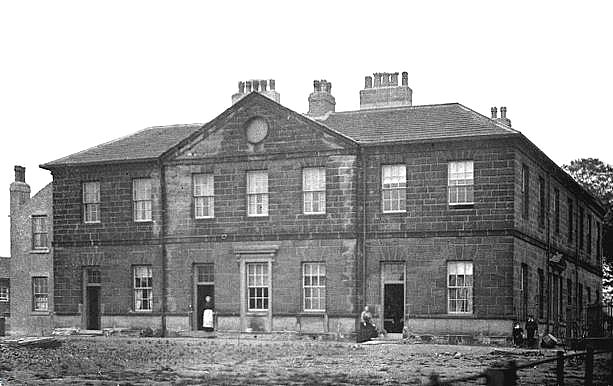
Basis: documented_estate_centre — Ackton Hall was the focal point and principal seat of the Ackton estate. The recorded Ackton Hall site is at OS grid reference SE 4223 2045, now associated with the former Ackton Hall/Featherstone Manor colliery site; the hall itself was demolished in the twentieth century.
Point confidence: medium
Boundary status: representative_point_only
Boundary period: Medieval to early modern manor; later Ackton Hall estate evidence extends into the nineteenth century
Boundary confidence: none
Boundary basis: The sources establish the manor's association with Ackton and neighbouring parts of Featherstone and record a fifteenth-century extent, but the accessible evidence does not provide the extent's mapped perimeter or enough explicit boundary descriptions to reconstruct the historical manorial territory reliably. The later reported estate acreage and mining estate cannot safely be treated as the legal manor boundary.
Sources:
- The National Archives Discovery: Ackton Manor, F244376: https://discovery.nationalarchives.gov.uk/details/c/F244376 — Registry record for Ackton Manor and authority reference GB/NNAF/M170153.
- Yorkshire Archaeological and Historical Society Collections Guide: https://www.yas.org.uk/Portals/0/Collections%20Guide%2010Feb2018.pdf — Lists MS765 as an extent of the manor of Ackton, undated but assigned to the fifteenth century.
- Ackton Hall, Buddlepit Mine Database: https://buddlepit.co.uk/mine-explorer/Database/MineDetails.html?id=wgZRxK8mEHiTgj_XE4uGvw%3D%3D — Identifies the Ackton Hall/Featherstone Manor site at 53.678788, -1.362236 and OS grid reference SE 4223 2045.
- Featherstone Hall historical account: https://www.fairfieldliving.co.uk/projects/featherstone-hall — Describes Ackton Hall as the focal point of the estate, its descent through the Sunderland, Winn, Heywood and Bradley families, and its later sale with the wider Ackton Hall estate.
- Geographical and Historical Information for Featherstone, 1868: https://www.blunham.com/big/eng/YKS/WRY/Featherstone/Featherstone68.html — Identifies Ackton/Aikton as a township in Featherstone parish and records the Manor House and Featherstone Hall among the principal residences.
- Keele University Meysey-Thompson handlist: https://www.keele.ac.uk/media/k-web/k-central-services/libraries/specialcollections/pdfs/meyseythompsonhandlist.pdf — Records seventeenth-century deeds concerning the manor of Ackton alias Aikton and Ackton Hall.
Warnings / uncertainty:
- The representative coordinate is a documented Ackton Hall estate/manorial-centre location, not a surviving manor-house building.
- Ackton Hall was demolished, and the modern site is associated with the former colliery and later redevelopment.
- No historical manor polygon is returned because the available sources do not expose or describe a sufficiently recoverable perimeter.
- The later Ackton Hall estate, mineral rights and freehold parcels should not be assumed to equal the separate legal extent of Ackton Manor.
About the Manor
Ackton Manor was the manorial and landed estate associated with Ackton, a township in the parish of Featherstone, historically in the West Riding of Yorkshire and now in West Yorkshire. Medieval and early-modern sources use variant forms including Aitone, Attone, Ackton, Acton and Aikton. Domesday evidence places Ackton in the fee of Ilbert de Lacy in 1086, with William recorded as his subtenant. The later estate was centred on Ackton Hall and included land and closes in Ackton and neighbouring parts of Featherstone. The surviving evidence is uneven: a fifteenth-century extent of the manor is recorded in the Yorkshire Archaeological and Historical Society collections, while a group of seventeenth-century deeds explicitly concerns the manor of Ackton alias Aikton, Ackton Hall and associated lands. The later Ackton Hall estate became a substantial landed and mining estate, but the sources found do not always distinguish the legal lordship of the manor from freehold estate ownership, mineral rights, residence at Ackton Hall, or ownership of particular parcels. The descent below therefore preserves those distinctions and identifies documentary gaps rather than assuming that every later estate owner held the manorial title.
Ownership / Holder Account
In 1086 Ackton was held by William from Ilbert de Lacy; the Domesday material also records Ligulf as the pre-Conquest holder in 1066, although the intervening transfer is not documented in the sources consulted. The medieval descent is incompletely established. Later antiquarian and genealogical material places the Ackton estate with the Featherstone family and subsequently with the Frost family, but the publicly accessible evidence located here is not sufficient to reconstruct every medieval conveyance securely. By the late sixteenth and early seventeenth centuries, Thomas Beckwith of Ackton is securely associated with the estate, and the Beckwith family held Ackton until the mid-seventeenth century. A 1655 archival deed records Langdale Sunderland's grant of Ackton Hall and lands in Ackton to trustees for his own use during life and for his wife Elizabeth after his death; a related archival handlist identifies the 1650-1680 group as deeds concerning the manor of Ackton alias Aikton. Langdale Sunderland later sold Ackton to Edmund Winn, probably before 1678, but the exact sale date has not been established. The Winn family held the Ackton estate through the eighteenth and early nineteenth centuries. Edmund Winn of Ackton was followed by his brother Thomas Winn, and the estate subsequently passed to Sir Edmund Mark Winn, who died in 1833. The estate then passed to his nieces and their families, including Mary Du Roure and Arthur Heywood. In 1865 George Bradley acquired the Ackton estate. Following Bradley's financial failure, Samuel Cunliffe Lister acquired most of the Ackton Hall estate, including the colliery and mineral rights, in 1890. The sources found do not conclusively demonstrate whether all of these later estate transactions conveyed the separate legal lordship of Ackton Manor, as opposed to the Ackton Hall estate or particular freehold and mineral interests.
Records & References
Sources and references mentioning this manor/title which are not necessarily conveyances or transfers.
1 record found · showing 1–1.
1400- 1500: extent
Held by: Yorkshire Archaeological and Historical Society
Conveyance & Descent
First holder to present holder: blood proximity & distance travelled
First recorded holder: Ligulf
Present holder:
Recorded title journey: 10 holder entries in this manor's saved Conveyance & Descent history.
No recorded holder currently has a usable saved direct-blood or collateral-blood relationship path from which to calculate proximity percentages.
First recorded holder → present holder
A usable saved blood relationship path between the first recorded holder and the present holder has not yet been recorded, so that first-to-present genealogical distance cannot be calculated.
Ligulf, Recorded as lord of Ackton in 1066
Transfer: The Domesday evidence records Ligulf as the holder of Ackton in 1066 and William as holder in 1086. The intervening transfer is unknown.
This is a pre-Conquest lordship entry rather than a documented conveyance. Ackton is identified as the Yorkshire settlement in the Agbrigg area. The source records Ligulf as lord in 1066 but does not provide the instrument or circumstances by which the holding passed to the Norman fee.
Source: The British Place Names Website, Ackton, Wakefield, Domesday summary: Lord of the Manor in 1066, Ligulf. — source link
Transfer: By 1086 Ackton was held by William from Ilbert de Lacy. The transfer from the pre-Conquest holder Ligulf is not documented in the sources consulted.
Shared holding: Subinfeudated holding under Ilbert de Lacy
Previous holder: Ligulf, Recorded as lord of Ackton in 1066
The Domesday entry identifies William as the immediate holder or subtenant of Ackton in 1086, holding from Ilbert de Lacy. Ilbert de Lacy was the tenant-in-chief, while William was the local lord recorded under him. This should not be treated as evidence that William held the fee in chief.
Source: The Domesday Book Online, Yorkshire: West Riding A-B, entry for Ackton: Aitone or Attone, William from Ilbert de Lacy. — source link
Thomas Beckwith of Ackton, Esquire of Ackton, associated with the Beckwith pedigree of Ackton
Transfer: The Beckwith family held Ackton before the 1650s. The precise date and legal form of Thomas Beckwith's acquisition are not established by the sources consulted. The estate was later conveyed or sold to Langdale Sunderland after the Civil War period; the exact sale instrument and date remain uncertain.
Shared holding: Beckwith family of Ackton
Previous holder: Frost family of Ackton, descent incompletely documented
Thomas Beckwith of Ackton is directly attested by the Yorkshire visitation material and by biographical and genealogical sources identifying him as the holder or inheritor of Ackton. The same material connects the Beckwith family with the Frost family through the marriage of Thomas Beckwith to Frances, daughter and heir of William Frost of Ackton. Because the accessible evidence does not provide a complete title chain or a specific manor conveyance, this entry is a good secondary identification of the Ackton estate holder rather than a fully proven legal transfer of the manorial lordship.
Source: Joseph Foster, edition of Dugdale's Visitation of Yorkshire, pedigree of Beckwith of Ackton; corroborated by the entry for Thomas Beckwith of Ackton in Venn's Biographical History of Gonville and Caius College. — source link
captain Langdale Sunderland, Of Ackton or Aikton, Royalist officer during the English Civil War
Transfer: Acquired Ackton from the Beckwith family after the Civil War period; the exact sale date and instrument are not established. On 10 November 1655 he granted Ackton Hall and lands in Ackton to trustees for his own use during life and for his wife Elizabeth after his death.
Holding arrangement: Trust
Shared holding: Sunderland family of Ackton
Previous holder: Thomas, Isabella and Barbara Beckwith, or the wider Beckwith family of Ackton
The archival evidence is direct for Langdale Sunderland's connection with Ackton Hall and lands in Ackton. The Yorkshire Archaeological and Historical Society catalogue describes the 10 November 1655 document as a grant by Langdale Sunderland to Sir John Armitage and John Thornhill of Fixby, to hold Ackton Hall and lands in Ackton for Langdale during his life and for his wife Elizabeth after his death. A related Keele University handlist identifies a 1650-1680 group as seventeen deeds concerning the manor of Ackton alias Aikton and lands in Ackton, and names Thomas, Isabella and Barbara Beckwith and Langdale Sunderland among the parties. The deed therefore establishes Sunderland's beneficial and estate interest, but its trust structure should not be confused with an outright conveyance to the trustees.
Source: Yorkshire Archaeological and Historical Society, DD12/II/24/44, 10 November 1655, Trust grant by Langdale Sunderland of Ackton Hall and lands in Ackton; Keele University, Meysey Thompson Muniments, MT 1-17, deeds concerning the manor of Ackton alias Aikton. — source link
Edmund Winn of Ackton, Esquire of Ackton
Transfer: Purchased Ackton from the Sunderland family. The exact date and conveyance have not been located; the visitation material records the purchase but provides no precise year.
Shared holding: Winn family of Ackton
Co-holders: Thomas Winn of Ackton, Sir Edmund Mark Winn, 7th Baronet
Previous holder: captain Langdale Sunderland, Of Ackton or Aikton, Royalist officer during the English Civil War
The visitation material states that Edmund Winn of Ackton bought the property from the Sunderland family. This is the first source located that explicitly records the Winn acquisition. The date is bounded only by the fact that Edmund Winn was recorded as of Ackton in the later seventeenth and early eighteenth-century pedigree material; it should not be converted into an exact year.
Source: Joseph Foster, edition of Dugdale's Visitation of Yorkshire, pedigree of Winn of Ackton: Edmund Winn of Ackton bought Ackton from the Sunderland family. — source link
Thomas Winn of Ackton, Esquire of Ackton
Transfer: Inherited Ackton from his elder brother Edmund Winn. The source records Thomas as heir to his brother; the underlying probate or conveyance record was not located.
Shared holding: Winn family of Ackton
Co-holders: Edmund Winn of Ackton, Sir Edmund Mark Winn, 7th Baronet
Previous holder: Edmund Winn of Ackton, Esquire of Ackton
The Winn pedigree identifies Thomas Winn of Ackton as heir to his brother Edmund. This establishes the family succession to the Ackton estate, although the precise legal mechanism and date of the transfer are not supplied. Thomas was the son of Edmund Winn who had purchased Ackton from the Sunderland family.
Source: Joseph Foster, edition of Dugdale's Visitation of Yorkshire, pedigree of Winn of Ackton: Thomas Winn of Ackton, heir to his brother. — source link
Sir Edmund Mark Winn, 7th Baronet, Seventh Baronet, of Ackton
Transfer: Succeeded to the Ackton estate after the death of his father Thomas Winn in 1780. The source describes him as of Ackton and records his death without issue in 1833.
Shared holding: Winn family of Ackton
Co-holders: Edmund Winn of Ackton, Thomas Winn of Ackton
Previous holder: Thomas Winn of Ackton, Esquire of Ackton
Edmund Mark Winn inherited the Ackton estate from his father Thomas Winn and resided at Ackton. He became the seventh baronet in 1805 after the death of his cousin Sir Rowland Winn. Later local and antiquarian accounts describe him as owning much of the land in Featherstone and as associated with the Ackton Hall estate. The evidence supports his ownership of the estate centred on Ackton Hall, but does not by itself prove that every component, including the separate manorial lordship, was held in exactly the same legal capacity.
Source: Joseph Foster, edition of Dugdale's Visitation of Yorkshire, pedigree of Winn of Ackton; Yorkshire Archaeological and Historical Society, collections guide, MS765 reference to a fifteenth-century extent of Ackton and published local accounts identifying Sir Edmund Mark Winn as of Ackton. — source link
Mary Du Roure and Arthur Heywood, heiress of part of the Ackton estate, her husband
Transfer: The Ackton estate passed after Sir Edmund Mark Winn's death to his nieces, including Mary Du Roure; Mary and her husband Arthur Heywood occupied Ackton Hall. The exact division of the estate between the co-heirs and the date of any legal manorial conveyance are not established.
Holding arrangement: Joint — Unspecified interest in the inherited estate
Shared holding: Du Roure and Heywood family interests
Previous holder: Sir Edmund Mark Winn, 7th Baronet, Seventh Baronet, of Ackton
The accessible sources describe the post-1833 succession as an inheritance by Sir Edmund Mark Winn's nieces. Mary Du Roure married Arthur Heywood and made Ackton Hall their home. A 1857 trade-directory summary is reported to describe Mrs Heywood as lady of the manor, while William Leatham was described as chief landowner. Because the primary succession instrument was not located and the estate may have been divided among co-heirs, this entry is retained as a cautious estate succession rather than a definitive sole transfer of the manorial title.
Source: Fairfield Homes, Featherstone Hall historical account, summarising the succession after Sir Edmund Mark Winn's death and identifying Mary Du Roure and Arthur Heywood at Ackton Hall; the account also cites a 1857 trade-directory description of Mrs Heywood as lady of the manor. — source link
Transfer: Purchased the Ackton estate from members or descendants of the Heywood and Du Roure family interests in 1865. The exact deed and the extent to which the legal lordship of the manor was included have not been established.
Shared holding: Ackton Hall estate
Previous holder: Mary Du Roure and related Heywood and Du Roure family interests
George Bradley acquired the Ackton estate in 1865 and lived at Ackton Hall. Later accounts describe him as owner of Ackton Hall and much of the land in Featherstone, and archival research cited by those accounts identifies a 1866 purchase from descendants of the Heywood family. The estate included Ackton Hall, farms and later mining interests. This is secure for the Ackton Hall estate but should not be read as an exact legal conveyance of every manorial right without inspection of the 1865-1866 deeds.
Source: Fairfield Homes, Featherstone Hall historical account, reporting George Bradley's 1865 purchase of the Ackton estate and citing a deed held by West Yorkshire Archive Service; corroborated by local historical accounts of Ackton Hall. — source link
Transfer: Acquired approximately 1,200 acres of the Ackton Hall estate, including the Ackton or Manor Colliery and mineral rights, after George Bradley's financial failure. Contemporary sale details and the precise legal components of the purchase should be checked against the sale and insolvency records.
Shared holding: Lister or Masham Ackton estate
Previous holder: George Bradley, Owner of Ackton Hall estate, colliery proprietor
In 1890 Samuel Cunliffe Lister acquired most of George Bradley's Ackton Hall estate in a private purchase following Bradley's financial difficulties. The acquisition included the colliery and mineral rights and was associated with Ackton Hall, also known locally as Featherstone Manor in the mining context. The sources located establish ownership of the estate and mineral interests, but do not conclusively prove that the separate lordship of Ackton Manor was conveyed in the same transaction.
Source: House and Heritage, Yorkshire account of the 1890 acquisition of the Ackton Hall estate by Samuel Cunliffe Lister; Featherstone local-history account of the purchase of Bradley's former holdings. — source link
Corrections / Challenges
Sign in to challenge or submit evidence against a recorded assertion.
JSON API
Machine-readable published manor data, including public images, mapped land areas, notes, rights, conveyances, relationships, records, source/document-library entries and public file links.
https://manorialregistry.com/index.php?rest_route=/mhr/v1/manor/ackton-manorPublic API access is currently disabled. Authorised API clients must use a private X-MHR-API-Key; currently only administrator keys are enabled.
Private source files, pending edits, moderation/admin information, user API keys and non-public import identifiers are not returned.