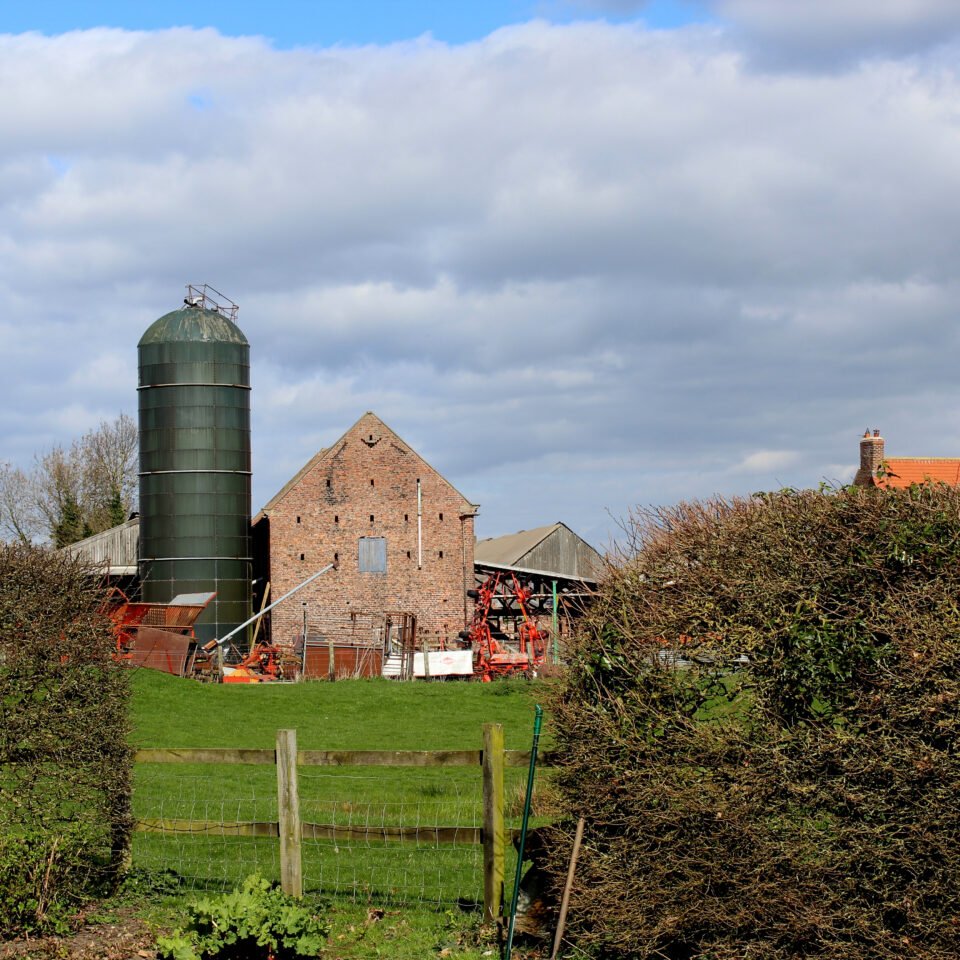



Manor & Lordship
- Manor / site
- Unknown
- Associated lordship
- Lord of the Manor of Acaster Selby Associated
- Lordship status
- Unknown
Historical names: Nether Acaster
Location: Stillingfleet, Yorkshire
Places / associated places: Stillingfleet, Yorkshire
Location & Extent
GPS Location & Recorded Land Areas
Representative GPS point: 53.8643, -1.1282
Identity: confirmed — The TNA/MDR record F245336 and authority reference GB/NNAF/M170356 identify Acaster Selby Manor in the Acaster Selby/Stillingfleet locality. The historical form Nether Acaster, Selby Abbey associations, surviving manor court records, and the documented former Acaster Hall at Manor Farm are geographically and historically consistent with the same manor record, rather than another Acaster or same-named manor.
Representative point: 53.8643, -1.1282
Basis: documented_manor_house — Manor Farm on Back Lane is officially recorded by Historic England as formerly Acaster Hall. Its National Grid Reference is SE5742941262, corresponding to approximately 53.8643, -1.1282 WGS84. This is the best surviving documented manorial-house location.
Point confidence: high
Boundary status: representative_point_only
Boundary period: Late nineteenth century context; earlier territorial extent unresolved
Boundary confidence: none
Boundary basis: Bulmer's 1890 account states that the township of Acaster Selby comprised 1,523 acres and was solely the property of Sir Frederick George Milner, who was also lord of the manor. This strongly establishes the manor's historical setting within Acaster Selby township, but does not provide a surveyed manor perimeter or prove that the legal manor boundary exactly coincided with the township boundary. The available sources establish location and broad extent only; no authoritative manor map, rental map, enclosure map, or reconstructed historical perimeter was located that would justify polygon injection. The 40-acre estate associated with St Andrew's College is a separate endowed foundation and must not be substituted for the whole manor.
Sources:
- The National Archives Discovery: Acaster Selby Manor, F245336: https://discovery.nationalarchives.gov.uk/details/c/F245336 — Registry record identifying the exact manor and authority reference GB/NNAF/M170356.
- The National Archives Discovery: Acaster Selby manor/1: https://discovery.nationalarchives.gov.uk/details/r/N14271408 — 1568-1575 court book for Acaster Selby manor, confirming the existence of a distinct manor record in the locality.
- The National Archives Discovery: Acaster Selby manor/3: https://discovery.nationalarchives.gov.uk/details/r/N14375669 — 1602 precept associated with Acaster Selby manor.
- The National Archives Discovery: Acaster Selby manor/2: https://discovery.nationalarchives.gov.uk/details/r/N14321673 — 1647-1673 court book associated with Acaster Selby manor.
- Historic England: Manor Farm, Acaster Selby, list entry 1148410: https://historicengland.org.uk/listing/the-list/list-entry/1148410 — Officially records Manor Farm, Back Lane, formerly Acaster Hall, with NGR SE5742941262; provides the documented manorial-house location used for the representative point.
- Acaster Selby with Appleton Roebuck, Bulmer's 1890: https://www.blunham.com/big/eng/YKS/ARY/AcasterSelbyWithAppletonRoebuck/AcasterSelbyWithAppletonRoebuck90.html — States that Acaster Selby township comprised 1,523 acres and was solely the property of Sir F. G. Milner, who was lord of the manor; also identifies its former inclusion in Stillingfleet parish.
- Historic England: St Andrew's College and moat, list entry 1017457: https://historicengland.org.uk/listing/the-list/list-entry/1017457 — Locates the separate late-medieval college site at NGR SE5785841817 and states that its endowed estate was 40 acres in Nether Acaster, supporting the distinction between the college estate and the whole manor.
- University of York Borthwick Institute: Selby Abbey catalogue: https://www.york.ac.uk/media/borthwick/documents/catalogues/pr/s-parishes/Selby%20Abbey%20updated.pdf — Records the 1315 grant of five acres of wood in Acaster held of Selby Abbey, supporting the medieval Selby Abbey landholding context without defining the complete manor boundary.
- South Ainsty Archaeological Society: Acaster Selby: https://southainstyvillages.org/archive/location/acaster-selby — Provides the locality context on the west bank of the River Ouse, opposite Stillingfleet, and identifies the former St Andrew's College site north-east of the settlement.
Warnings / uncertainty:
- The historical evidence does not securely reconstruct the complete legal boundary of Acaster Selby Manor.
- The 1,523-acre figure is explicitly the area of the township and cannot automatically be treated as a documented manor polygon.
- Selby Abbey's medieval interest, St Andrew's College's 40-acre endowment, and the later Milner ownership are not interchangeable descriptions of the manor's full territorial extent.
- The representative point identifies the surviving former Acaster Hall at Manor Farm, not the geometric centre of all historical manorial lands.
About the Manor
Acaster Selby Manor was the manor associated with Acaster Selby, also known historically as Nether Acaster, in the former West Riding of Yorkshire and within the ancient parish of Stillingfleet. Acaster Selby lies on the west bank of the River Ouse, opposite Stillingfleet. Medieval landholding in the township was divided among religious institutions, with Selby Abbey holding the largest recorded portion. A separate late-medieval collegiate foundation, St Andrew's College, was established at Nether Acaster by Robert Stillington in 1470 or shortly thereafter; its endowed lands should not be confused with the whole manor. The surviving Manor Farm was formerly Acaster Hall and is a late-seventeenth-century building associated with the local manorial estate. By the late nineteenth century, contemporary directories explicitly described Sir Frederick George Milner, Baronet, as lord of the manor and stated that the whole township was his property. The documentary descent between the Dissolution of Selby Abbey and the appearance of the manor in Milner ownership remains incompletely established from the public sources located.
Ownership / Holder Account
The earliest securely located evidence connects land at Acaster Selby with Selby Abbey. A nineteenth-century historical description states that Acaster Selby belonged anciently to the abbey of Selby, while a surviving 1315 royal confirmation records Thomas de Acastre granting five acres of wood in Acaster, held of Selby Abbey, to the abbey. These records demonstrate substantial Selby Abbey lordship or estate interest in Acaster, although the precise legal extent of the manor and the complete medieval descent have not been reconstructed. Selby Abbey surrendered its possessions to the Crown on 6 December 1539. The subsequent conveyance history is currently a documentary gap. The late nineteenth-century evidence is clear: by 1881 Sir Frederick George Milner, 7th Baronet, was described as lord of the manor, and the 1890 account states that the 1,523-acre township of Acaster Selby was solely his property. No secure public evidence was located establishing each intervening owner or the exact instrument by which the manor passed from the Crown or another post-Dissolution holder to the Milner family.
Records & References
Sources and references mentioning this manor/title which are not necessarily conveyances or transfers.
3 records found.
1647-1673: court book
Held by: John Goodchild Collection
1602: precept
Held by: John Goodchild Collection
1568-1575: court book, with other manors
Held by: John Goodchild Collection
Conveyance & Descent
First holder to present holder: blood proximity & distance travelled
First recorded holder: Selby Abbey
Present holder:
Recorded title journey: 2 holder entries in this manor's saved Conveyance & Descent history.
No recorded holder currently has a usable saved direct-blood or collateral-blood relationship path from which to calculate proximity percentages.
First recorded holder → present holder
A usable saved blood relationship path between the first recorded holder and the present holder has not yet been recorded, so that first-to-present genealogical distance cannot be calculated.
Selby Abbey, Benedictine abbey of St Germanus
Transfer: Ancient possession or acquisition; the precise original conveyance into Selby Abbey's hands is not established by the sources located. A 1315 royal confirmation records land in Acaster held of Selby Abbey and granted to the abbey.
Shared holding: Selby Abbey
Previous holder: Not established
Historical descriptions state that Acaster Selby belonged anciently to Selby Abbey. The Borthwick Institute catalogue records a royal confirmation dated 25 January 1315 under which Thomas de Acastre was permitted to give Selby Abbey five acres of wood in Acaster that he held of the abbey. This is direct evidence of Selby Abbey's medieval estate interest and feudal relationship at Acaster, but it does not by itself prove that every parcel in the township formed one undivided manor. Selby Abbey surrendered its possessions to the Crown on 6 December 1539. The later recipient or purchaser of the manor is not established here.
Source: Borthwick Institute for Archives, University of York, Selby Abbey parish records catalogue, item 355: royal confirmation to Selby Abbey concerning five acres of wood in Acaster, Westminster, 25 January 1315; corroborated by the historical description of Acaster Selby in the Comprehensive Gazetteer of England and Wales. — source link
Sir Frederick George Milner, 7th Baronet, Conservative politician, lord of the manor of Acaster Selby by 1881
Transfer: Unknown; the manor and the whole township appear in Milner ownership by 1881. The intervening conveyance from the post-Dissolution holder is not established.
Shared holding: Milner family of Nun Appleton
Previous holder: Unknown
Kelly's Directory of the West Riding of Yorkshire for 1881 states that the whole of Acaster Selby's land belonged to Sir Frederick George Milner, Baronet, who was also lord of the manor. The 1890 account similarly describes the township as solely the property of Sir F. G. Milner and identifies him as lord of the manor. Sir Frederick succeeded his brother as seventh baronet on 14 April 1880, but succession to the baronetcy is not itself treated as proof of a manor conveyance. The exact date and legal instrument by which the Acaster Selby manor or estate came into the Milner family's hands remain unknown.
Source: Kelly's Directory of the West Riding of Yorkshire, 1881, entry for Acaster Selby; corroborated by Bulmer's Directory of Yorkshire, 1890, entry for Acaster Selby with Appleton Roebuck. — source link
Lordship / Title Associations
Associations are recorded by period so changes in estate composition do not imply that every manor remained attached to the same title indefinitely.
Corrections / Challenges
Sign in to challenge or submit evidence against a recorded assertion.
JSON API
Machine-readable published manor data, including public images, mapped land areas, notes, rights, conveyances, relationships, records, source/document-library entries and public file links.
https://manorialregistry.com/index.php?rest_route=/mhr/v1/manor/acaster-selby-manorPublic API access is currently disabled. Authorised API clients must use a private X-MHR-API-Key; currently only administrator keys are enabled.
Private source files, pending edits, moderation/admin information, user API keys and non-public import identifiers are not returned.