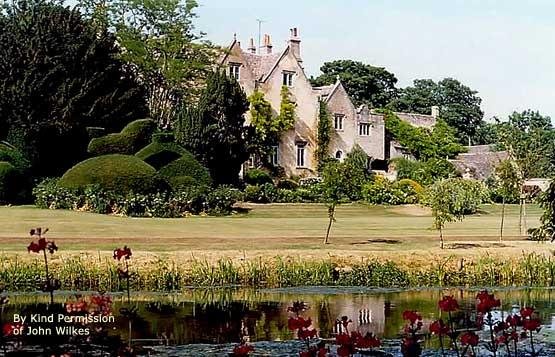



Historical names: Ablyngton (Manor)
Location: Bibury, Gloucestershire
Places / associated places: Bibury, Gloucestershire
Location & Extent
GPS Location & Recorded Land Areas
Representative GPS point: 51.7666, -1.85007
Identity: confirmed — The registry identity matches the documented medieval manor of Ablington (also Ablyngton) in the hamlet of Ablington, within Bibury parish, Gloucestershire. The surviving Grade I-listed manor house at Ablington is explicitly identified as the 1590 house built for John Coxwell on the manor site, confirming the record's location and distinguishing it from other manors named Ablington.
Representative point: 51.76660, -1.85007
Basis: documented_manor_house — Historic England identifies Ablington Manor at National Grid Reference SP 10359 07607; the corresponding mapped position is approximately 51.76660, -1.85007. The site is the surviving manor house and the documented location of the historic manor centre.
Point confidence: high
Boundary status: representative_point_only
Boundary period:
Boundary confidence: none
Boundary basis: The sources establish the manor house and immediate historic estate setting beside the River Coln, and a 1914 sale-particulars volume identifies associated properties including Manor Farm, Lower Farm, the mill, bridge and other estate buildings. However, no publicly accessible source located in this research supplies a sufficiently clear, manor-specific polygon or explicit perimeter for the medieval or early-modern manorial land. The 1769 map reference located in the sources is an estate map of the Manor of Bibury, not demonstrably the boundary of Ablington Manor, and must not be substituted for the Ablington manorial extent.
Sources:
- Historic England: Ablington Manor, Bibury — List Entry 1341833: https://historicengland.org.uk/listing/the-list/list-entry/1341833 — Identifies the Grade I-listed Ablington Manor in Bibury parish at National Grid Reference SP 10359 07607 and dates the surviving manor house to 1590, built for John Coxwell.
- Parks & Gardens: Ablington Manor: https://www.parksandgardens.org/places/ablington-manor — Places Ablington Manor in the hamlet of Ablington on the River Coln about one mile upstream from Bibury; records its Gloucester Abbey origin, Howse lease, Coxwell acquisition in 1574, 1590 house and later estate history; supplies a locality coordinate and references the Victoria County History.
- Historic England Archive: Ablington, Cirencester, Estate Sales Particulars, 11 May 1914, SC00372: https://historicengland.org.uk/images-books/photos/volume/SC00372 — Catalogues the 1914 Ablington estate sale particulars and lists the manor house, bridge, mill, Mill House, Lower Farm, Manor Farm and associated barns as locations within the estate sale material.
- Acanthus Clews Architects, Ablington Manor Heritage Assessment: https://docs.planning.org.uk/20240103/123/S58Q2KFIG5G00/5j8czyd0qklle1hj.pdf — Provides contextual historical evidence for the manor, the 1574 acquisition by John Coxwell, the surviving 1590 house and the 1914 break-up of the Ablington estate.
- The National Archives: Ablington Manor MDR record F246174: https://discovery.nationalarchives.gov.uk/details/c/F246174 — Registry authority record for the exact manor, supporting the identification of Ablington Manor and its associated manorial documents.
- Gloucestershire Historical Studies: reference to the 1769 Bibury Manor estate map and Ablington enclosure material: https://glosdocs.org.uk/sites/ghs/ghs09all.pdf — Confirms the existence of a 1769 estate map of the Manor of Bibury and separate 1779 Ablington Field enclosure material; these are useful archival leads but do not themselves establish a recoverable Ablington Manor boundary polygon.
Warnings / uncertainty:
- The representative point is suitable for the manor's documented house/site, not proof that the entire medieval manorial territory was confined to the house grounds.
- Do not substitute the modern Bibury parish, Ablington hamlet, civil parish or the 1769 Bibury Manor estate-map area for the historical Ablington Manor boundary.
- The 1914 estate sale evidence concerns the later Coxwell-Rogers estate and may not correspond exactly to the medieval manor's territorial extent.
- A manor-specific polygon would require examination of the Gloucestershire Archives survey, rental, court rolls, enclosure material and any surviving estate plans, especially D269B/M1, D269B/E/14 and related Ablington deeds or maps.
About the Manor
Ablington Manor was an ancient manor in the hamlet of Ablington, within the parish of Bibury, Gloucestershire, approximately one mile upstream from Bibury on the River Coln. Medieval evidence identifies Ablington, also recorded as Ablyngton, as an established manor and as a member of the wider Bibury manorial complex. The manor was originally held by Gloucester Abbey. After the Dissolution of the Monasteries it was leased to the Howse family and was acquired by John Coxwell in 1574. Coxwell constructed the surviving principal manor house, dated 1590, on or beside the earlier manor site. The house is a substantial limestone Elizabethan building with later seventeenth-, eighteenth- and nineteenth-century alterations and is listed at Grade I. The estate remained associated with the Coxwell and later Coxwell-Rogers family for several centuries. In the early twentieth century the estate was broken up: Richard Hugh Coxwell Rogers began the break-up in 1914, and the estate was sold and divided in 1918. The surviving manor house and associated land subsequently passed through separate ownerships. The present architectural building should not be treated as identical in date to the origin of the manor, which is medieval.
Ownership / Holder Account
The secure public-source descent is incomplete. Ablington was originally a possession of Gloucester Abbey, but the precise medieval descent and the identities of all lords recorded before the sixteenth century require consultation of the relevant medieval deeds, inquisitions, fines, court rolls and the detailed manorial material cited by the Victoria County History. A late medieval feet-of-fines abstract records a sixth part of the manor of Ablyngton in 1413, but that fractional interest belongs to a larger transaction involving William Palton and Elizabeth his wife and should not be treated as the whole manor without further investigation. A local historical account also states that in the time of King John a moiety of Ablington was purchased by Ralph de Willington and Olympia, his wife; this is useful evidence that interests in the manor existed in the early thirteenth century, but it does not establish a complete descent of the whole manor. After the Dissolution, the Howse family held the property by lease rather than as proven freehold lords. John Coxwell acquired the manor in 1574. Directly documented later Coxwell-family associations include John Coxwell as lord in 1727, Charles Coxwell as lord around 1780, and Richard Rogers Coxwell/Coxwell-Rogers in the nineteenth century. The Coxwell-Rogers family remained associated with the estate until Richard Hugh Coxwell Rogers initiated its break-up in 1914; the estate was sold and divided in 1918. The intervening transfers and the precise legal descent between the named Coxwell holders remain insufficiently documented in the sources located.
Records & References
Sources and references mentioning this manor/title which are not necessarily conveyances or transfers.
29 records found · showing 1–8.
1737-1737: court roll, draft
Held by: Gloucestershire Archives
1731-1731: court roll, draft
Held by: Gloucestershire Archives
1720-1724: court rolls, draft (2)
Held by: Gloucestershire Archives
1714-1715: rental of chief rents, with other manors (1 membrane)
Held by: Gloucestershire Archives
1700-1700: rent roll, with other manors
Held by: Gloucestershire Archives
1692-1709: court rolls (4 membranes)
Held by: Gloucestershire Archives
1670-1670: court roll
Held by: Gloucestershire Archives
1652-1672: court rolls, draft (10 membranes)
Held by: Gloucestershire Archives
Conveyance & Descent
First holder to present holder: blood proximity & distance travelled
First recorded holder: Gloucester Abbey, also known as the Abbey of St Peter at Gloucester
Present holder:
Recorded title journey: 7 holder entries in this manor's saved Conveyance & Descent history.
No recorded holder currently has a usable saved direct-blood or collateral-blood relationship path from which to calculate proximity percentages.
First recorded holder → present holder
A usable saved blood relationship path between the first recorded holder and the present holder has not yet been recorded, so that first-to-present genealogical distance cannot be calculated.
Gloucester Abbey, also known as the Abbey of St Peter at Gloucester, Benedictine abbey, later site and cathedral foundation of Gloucester
Transfer: Original institutional holding; the manor later passed out of monastic possession in the course of the Dissolution of the Monasteries. The precise date and instrument by which Ablington itself was transferred are not established by the sources located.
Shared holding: Gloucester Abbey
Public historical descriptions identify Ablington Manor as originally the property of Gloucester Abbey. Gloucester Abbey was surrendered or dissolved in the late 1530s, with the abbey and its possessions passing into Crown control. This entry records the institutional lordship described by the sources, not a reconstruction of the precise medieval title chain.
Source: Parks & Gardens, “Ablington Manor,” citing N. M. Herbert, Victoria County History: Gloucester, Volume 7, 1981, p. 30; corroborated by the historical account of Gloucester Abbey’s dissolution in 1539–1540. — source link
Howse family
Transfer: Leasehold occupation or tenure after the Dissolution; the exact lease, term and legal grant have not been located.
Holding arrangement: Other — Not established
Shared holding: Howse family
Previous holder: Gloucester Abbey or Crown following dissolution
Sources state that after the Dissolution Ablington Manor was leased to the Howse family until John Coxwell acquired it in 1574. This is recorded as a tenancy or leasehold association, not as proven ownership or lordship. No conveyance into or out of the Howse family has been entered because the lease instrument was not located.
Source: Parks & Gardens, “Ablington Manor”; Historic England, List Entry 1341833; Acanthus Clews Architects and Richard K. Morriss, Ablington Manor Heritage Assessment. — source link
John Coxwell of Ablington, Lord of Ablington Manor
Transfer: Acquired Ablington Manor from the preceding interest; the precise deed or Crown grant has not been located in the sources searched.
Shared holding: Coxwell family of Ablington
Co-holder: Charles Coxwell of Ablington
Previous holder: Howse family as leaseholders; ultimate post-Dissolution title not established
John Coxwell, a wealthy Cirencester clothier who made his fortune in the wool trade, acquired Ablington Manor in 1574. He built the surviving Elizabethan manor house, dated 1590, although one local museum account gives 1580 for construction of a manor house and the architectural evidence and Historic England listing support 1590 for the present principal house. Coxwell is the first securely identified post-Dissolution freeholder or lord in the available public sources. The precise conveyance instrument and the legal route from the Crown or another intermediate owner remain unlocated.
Source: Historic England, List Entry 1341833, “Ablington Manor”; Acanthus Clews Architects and Richard K. Morriss, Ablington Manor Heritage Assessment; Corinium Museum, “John Coxwell 1516–1618.” — source link
John Coxwell of Ablington, Lord of Ablington Manor
Transfer: No conveyance identified. The date stone “1727 JC” at the Ablington Manor barn is interpreted by historical and heritage sources as identifying John Coxwell as lord of the manor at that time.
Shared holding: Coxwell family of Ablington
Co-holder: Charles Coxwell of Ablington
Previous holder: Earlier Coxwell-family holder; intervening transfer not documented
The surviving barn at Ablington bears the date stone “1727 JC.” Heritage accounts identify the initials as John Coxwell and state that he was lord of Ablington Manor at that time. This is direct evidence of the manor association in 1727, but it does not by itself establish whether this John Coxwell succeeded by inheritance, settlement, purchase or another legal mechanism.
Source: Historic England, List Entry 1341835, “Manor Farmhouse”; Wikishire, “Ablington Manor,” citing the dated barn and local historical material. — source link
Reverend Charles Coxwell of Ablington, magistrate, squire and lord of Ablington Manor
Transfer: No conveyance identified. His lordship is evidenced by the 1780 datestone at Manor Farmhouse and by a Gloucestershire historical account stating that he was lord of Ablington Manor’s house and estate.
Shared holding: Coxwell family of Ablington
Co-holder: John Coxwell of Ablington
Previous holder: Earlier Coxwell-family holder; intervening transfer not documented
Historic England records a datestone “C C / 1780” at Manor Farmhouse and identifies Charles Coxwell as lord of Ablington Manor at that time. A Gloucestershire Historical Society account states that the Reverend Charles Coxwell, who lived from 1740 to 1829, was born at Ablington where his father John was lord of the manor. The exact legal transition from the earlier John Coxwell to Charles Coxwell is not documented in the sources located.
Source: Historic England, List Entry 1341835, “Manor Farmhouse”; Marjorie Joy, “Charles Coxwell of Ablington,” Gloucestershire Historical Studies, reprinted from Gloucestershire in the 18th Century, 1966. — source link
Richard Rogers Coxwell, later Coxwell-Rogers, Justice of the Peace, Deputy Lieutenant, Fellow of the Society of Antiquaries, landowner of Ablington and Dowdeswell
Transfer: No conveyance identified. His direct association is evidenced by the 1860 datestone “R.R.C.” on the Ablington Manor stables and by biographical sources recording that he lived at Ablington Manor.
Shared holding: Coxwell-Rogers family of Ablington and Dowdeswell
Previous holder: Earlier Coxwell holder; intervening legal transfer not documented
The Ablington Manor stables bear the initials “R.R.C.” and the date 1860, interpreted by Historic England as probably referring to Richard Rogers Coxwell. Biographical material records Richard Rogers Coxwell-Rogers as living at Ablington Manor and identifies him as a member of the Coxwell-Rogers family of Ablington and Dowdeswell. The evidence securely establishes his estate association but does not disclose the precise conveyance from the preceding Coxwell holder.
Source: Historic England, List Entry 1155109, “Stables at Ablington Manor”; The Peerage, person entry for Richard Rogers Coxwell-Rogers, citing Burke’s Irish Family Records, 1976; Stirnet, Coxwell family of Ablington pedigree. — source link
Richard Hugh Coxwell Rogers, Coxwell-Rogers landowner of Ablington
Transfer: Initiated the break-up and sale of the Ablington estate. The available heritage assessment records estate sales beginning in 1914 and states that the estate was sold and divided in 1918; individual purchasers and the legal details of each sale are not established.
Shared holding: Coxwell-Rogers family of Ablington
Previous holder: Coxwell-Rogers family
A heritage assessment states that Richard Hugh Coxwell Rogers began the break-up of the Ablington estate in 1914. Sale advertisements described the manor house, stabling and pleasure grounds, and the estate was sold and split in 1918. This entry records the documented owner responsible for the break-up, not the subsequent purchasers, who have not been securely identified in the sources located.
Source: Acanthus Clews Architects and Richard K. Morriss, Ablington Manor Heritage Assessment, section discussing the 1914 estate sale and 1918 subdivision. — source link
Corrections / Challenges
Sign in to challenge or submit evidence against a recorded assertion.
JSON API
Machine-readable published manor data, including public images, mapped land areas, notes, rights, conveyances, relationships, records, source/document-library entries and public file links.
https://manorialregistry.com/index.php?rest_route=/mhr/v1/manor/ablington-manorPublic API access is currently disabled. Authorised API clients must use a private X-MHR-API-Key; currently only administrator keys are enabled.
Private source files, pending edits, moderation/admin information, user API keys and non-public import identifiers are not returned.