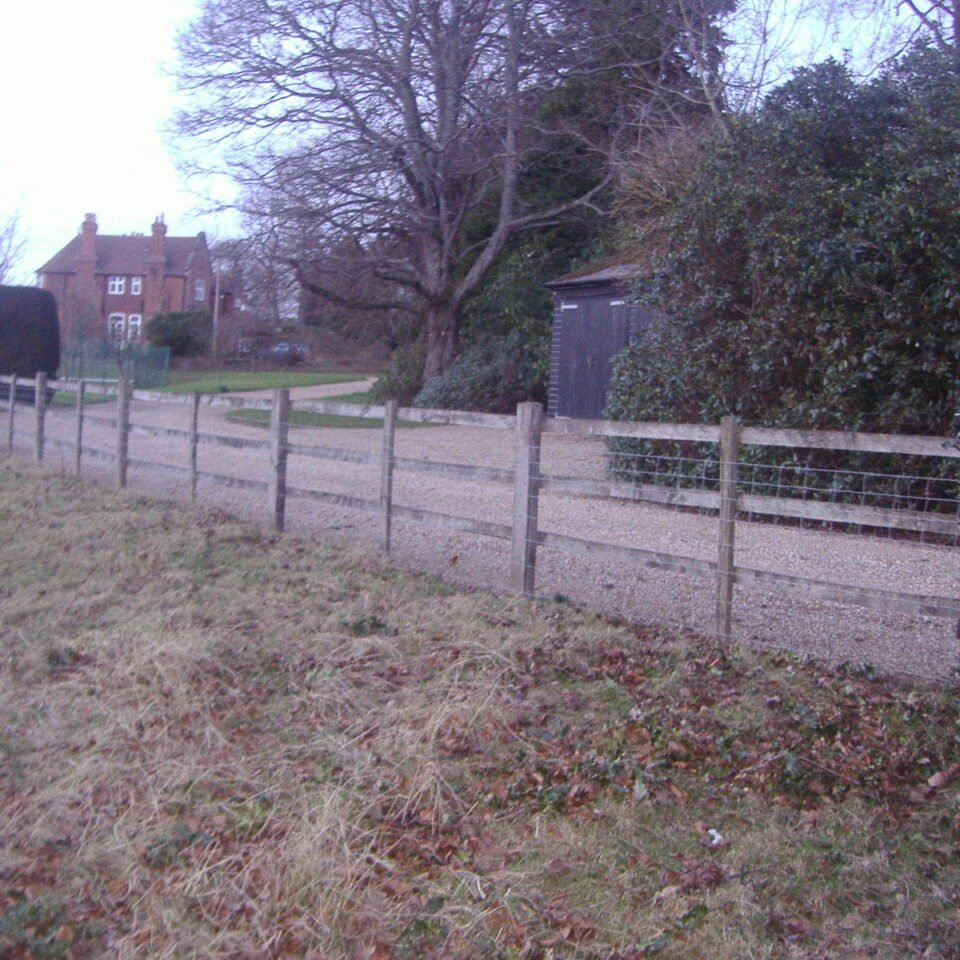



Location: Abinger, Surrey
Places / associated places: Abinger, Surrey
Listed in Domesday Book: Yes
Location & Extent
GPS Location & Recorded Land Areas
Representative GPS point: 51.20187, -0.40697
Identity: confirmed — The registry record, Surrey location, historical ownership narrative, surviving manor house, moated site and associated Norman motte all identify the principal manor of Abinger parish, centred at Abinger Manor on Sutton Lane near Abinger Common.
Representative point: 51.20187, -0.40697
Basis: documented_manor_house — The surviving listed Abinger Manor house on Sutton Lane, National Grid Reference TQ 11388 45940, is the documented historic manor house. The decimal point is centred on the listed building location.
Point confidence: high
Boundary status: representative_point_only
Boundary period: Medieval manor to early twentieth-century manor; exact perimeter undetermined
Boundary confidence: none
Boundary basis: The evidence confirms the manor's principal house and historic association with Abinger parish, but does not provide a surveyed or mapped perimeter for the manorial land. The surviving references include rentals, court rolls, quit rentals, terriers and estate papers, but the accessible evidence does not establish which parcels constituted the complete manor at a defined date. The modern parish cannot be substituted because its boundaries were enlarged in 1879-1883. References to Abinger Manor Farm, manorial wastes at Forest Green and Hammer Marsh, and Evelyn estate holdings demonstrate components or associated rights but do not define the whole manor.
Sources:
- Historic England: Abinger Manor, NHLE 1028827: https://historicengland.org.uk/listing/the-list/list-entry/1028827 — Identifies Abinger Manor, Sutton Lane, Abinger, Surrey; gives National Grid Reference TQ 11388 45940; states that the house was originally built by John Evelyn in 1688, rebuilt in 1872-1873, and is set in a moated site.
- Historic England: Motte castle at Abinger Manor, NHLE 1012579: https://historicengland.org.uk/listing/the-list/list-entry/1012579 — Identifies the adjacent Norman motte and moat at TQ 11395 45975 and describes the site as adjacent to the later Manor House, supporting the location of the historic manorial centre.
- Victoria County History of Surrey, volume 3, Abinger: https://en.wikisource.org/wiki/Page%3AThe_Victoria_History_of_the_County_of_Surrey_Volume_3.djvu/179 — Records Abinger's Domesday context, historic place-names and the fact that the parish boundaries were altered and enlarged in 1879-1883, demonstrating why the modern parish is not a reliable proxy for the manor's medieval extent.
- The National Archives Discovery: Abinger Manor record F237088: https://discovery.nationalarchives.gov.uk/details/c/F237088 — Registry authority record for the exact manor, describing Abinger Manor as the principal manor of Abinger parish and documenting its ownership history and surviving manor house.
- St James's Church, Abinger: chronology: https://www.stjameschurchabinger.org/chronology/ — Provides local historical context for the manor, including the Jarpenville and Evelyn ownership sequence, the 1349 reference to the manor house, and later Evelyn manorial rights including Forest Green and Hammer Marsh.
- Surrey Archaeological Society: Landscape investigation on the Surrey greensand: https://d10.surreyarchaeology.org.uk/sites/surreyarchaeology.org.uk/files/Abinger-Holmbury_1985-9_0.pdf — Identifies relevant Surrey History Centre estate-map and estate-paper references, including Wotton Estate maps and maps of Paddington and Mill Farms in Abinger, but does not itself supply a complete Abinger Manor boundary.
Warnings / uncertainty:
- No defensible historical polygon was found in the accessible evidence.
- The modern civil or ecclesiastical parish of Abinger must not be used as the manor boundary; the parish was enlarged by boundary changes in 1879-1883.
- The listed building and adjacent motte identify the manorial centre, not the full territorial extent of the manor.
- A complete boundary reconstruction would require examination of the Surrey History Centre rentals, terrier, court rolls, quit rentals, tithe material and Evelyn estate maps, especially the records cited under Surrey History Centre references 6330, 329 and 1974.
About the Manor
Abinger Manor was the principal manor of Abinger parish in Surrey. In Domesday Book in 1086 the estate was held by William Fitz Ansculf, whose overlordship descended with the honour of Dudley through the Pagenels to the Somery family. The immediate lordship is recorded from the thirteenth century in the Jarpenvill family. The manor subsequently passed through the Aylesbury, Stafford, Guldeford, Jermigan, Elrington, Morgan, Hill, Leigh and Evelyn interests. From the late sixteenth and early seventeenth centuries it was reunited in the Evelyn family of Wotton, whose descendants continued to be identified as lords of Abinger in nineteenth- and early twentieth-century sources. The historic manor house stands on a moated site near Abinger Common and incorporates a house originally built in 1688 by John Evelyn; the building was substantially rebuilt in 1872-1873 by Alfred Waterhouse using some earlier materials. The medieval earthworks at the site include the associated motte and moat.
Ownership / Holder Account
In 1086 Abinger was held by William Fitz Ansculf as tenant-in-chief, with the overlordship later passing with the honour of Dudley through the Pagenels to the Somery family. The recorded immediate manor-holders begin with Geoffrey de Jarpenvill, who held a knight's fee in Abinger, and David de Jarpenvill, who was holding Abinger Manor in 1273. After David's death in 1293, his brother Thomas obtained possession and in 1295 settled the manor on himself with remainder to his son Roger and Roger's wife Nora. Roger was holding by 1322. A further settlement was made in 1332 on Roger's son Thomas and Thomas's wife Avice, but the title was challenged in 1348 by descendants of David de Jarpenvill's daughters and again in 1360 by Sir John de Aylesbury. Releases by descendants of the claimants subsequently established Sir John de Aylesbury's interest, and he died seised of Abinger in 1409. The manor descended through Thomas, John and Hugh de Aylesbury; after Hugh's death it was divided between his aunts Isabel, wife of Sir Thomas Chaworth, and Eleanor Aylesbury, with Abinger falling to Eleanor's share and passing through her marriage into the Stafford family. Following Humphrey Stafford's attainder and execution in 1486, the Crown granted the manor to Sir John Guldeford and later, in 1511, to Sir Richard Jermigan. By 1546 it had returned to the Stafford family. In 1551 Sir William Stafford and Dorothy his wife, together with Sir Humphrey Stafford and Elizabeth his wife, sold the manor to Thomas and Edward Elrington. The Elringtons alienated the manor in two moieties in 1578 and 1580. One moiety went to Richard Brown, acting in trust for Richard or Edmund Hill, and the other to William Morgan. Morgan's moiety descended through John Morgan and Anne Morgan's marriage to Edward Randyll, who conveyed it to Richard Evelyn in 1622. The other moiety passed through the Hill and Leigh interests and was acquired by George Evelyn in 1595. The whole manor was therefore reunited in the Evelyn family by 1622 and remained associated with the Evelyn estate of Wotton. J. H. C. Evelyn was identified as lord of the manor in 1913. The public evidence located does not establish a later conveyance or a current owner of the manor itself.
Manorial Rights & Privileges
Historic manorial rights / privileges (1)
Manorial court
Provisional
A court was held in the names of Richard Hill and William Morgan in 1586, evidencing the exercise of manorial court jurisdiction over the two moieties.
Records & References
Sources and references mentioning this manor/title which are not necessarily conveyances or transfers.
29 records found · showing 17–24.
1582-1718: court roll extracts
Held by: Surrey History Centre
1582-1593: court roll, with Paddington Bray
Held by: Surrey History Centre
1580: rental
Held by: Surrey History Centre
1580: court roll, with Paddington Bray
Held by: Surrey History Centre
1557-1574: court roll
Held by: Surrey History Centre
1544: rental
Held by: Surrey History Centre
1526-1552: court roll
Held by: Surrey History Centre
1521-1525: bailiff's accounts, with other manors
Held by: Surrey History Centre
Conveyance & Descent
First holder to present holder: blood proximity & distance travelled
First recorded holder: William Fitz Ansculf
Present holder:
Recorded title journey: 28 holder entries in this manor's saved Conveyance & Descent history.
No recorded holder currently has a usable saved direct-blood or collateral-blood relationship path from which to calculate proximity percentages.
First recorded holder → present holder
A usable saved blood relationship path between the first recorded holder and the present holder has not yet been recorded, so that first-to-present genealogical distance cannot be calculated.
William Fitz Ansculf, Tenant-in-chief, holder of the honour of Dudley, Norman landholder, Domesday tenant-in-chief, holder of the barony of Dudley
Transfer: Held at the time of the Domesday Survey as tenant-in-chief; the source describes the later descent of the overlordship with the honour of Dudley.
Holding arrangement: Other
Shared holding: Domesday tenant-in-chief and overlord
Previous holder: A huscarle who had held Abinger of King Edward the Confessor
This is evidence of superior lordship or overlordship rather than necessarily the immediate resident lord. William Fitz Ansculf also held the honour of Dudley. The later overlordship evidently passed with Dudley through the Pagenels to the Somery family.
Source: Victoria County History, A History of the County of Surrey, Volume 3, Abinger, section Manors, citing Domesday evidence and the descent of the honour of Dudley. — source link
Transfer: Held a knight's fee in Abinger; the source places the Jarpenvill family in the immediate history of the manor before David de Jarpenvill's recorded tenure.
Shared holding: Jarpenvill family
Co-holders: David de Jarpenvill, Thomas de Jarpenvill, Roger de Jarpenvill
The evidence directly links Geoffrey de Jarpenvill with a knight's fee in Abinger, but does not give an exact date or expressly call him lord of the whole manor. He is included as an early Jarpenvill holder associated with the estate, with that qualification preserved.
Source: Victoria County History, A History of the County of Surrey, Volume 3, Abinger, section Manors. — source link
Transfer: Recorded as holding Abinger Manor in 1273; he died in 1293.
Shared holding: Jarpenvill family
Co-holders: Geoffrey de Jarpenvill, Thomas de Jarpenvill, Roger de Jarpenvill
Previous holder: Geoffrey de Jarpenvill
David de Jarpenvill is the earliest person explicitly described in the principal source as holding Abinger Manor itself.
Source: Victoria County History, A History of the County of Surrey, Volume 3, Abinger, section Manors, stating that David de Jarpenvill was holding Abinger Manor in 1273 and died in 1293. — source link
Transfer: Obtained possession after the death of his brother David de Jarpenvill and in 1295 settled the manor on himself, with remainder to his son Roger and Roger's wife Nora.
Shared holding: Jarpenvill family
Co-holders: Geoffrey de Jarpenvill, David de Jarpenvill, Roger de Jarpenvill
Previous holder: David de Jarpenvill
The source expressly states that after David's death the manor fell into the hands of his brother Thomas. The 1295 settlement created a remainder in Roger and Nora but does not by itself prove that Roger immediately entered possession.
Source: Victoria County History, A History of the County of Surrey, Volume 3, Abinger, section Manors. — source link
Transfer: Succeeded his father Thomas de Jarpenvill before 1316 and was holding the manor in 1322; in 1332 he settled it on his son Thomas and Thomas's wife Avice.
Shared holding: Jarpenvill family
Co-holders: Geoffrey de Jarpenvill, David de Jarpenvill, Thomas de Jarpenvill
Previous holder: Thomas de Jarpenvill
Roger's succession is inferred by the source from his appearance in a dispute concerning Abinger church before 1316 and his recorded holding of the manor in 1322. The 1332 settlement is a documented disposition but its intended effect was later challenged.
Source: Victoria County History, A History of the County of Surrey, Volume 3, Abinger, section Manors. — source link
Transfer: Received the manor under a 1332 settlement by his father Roger, with Avice, daughter of William de Latimer, as his wife; the settlement was challenged in 1348.
Holding arrangement: Other
Shared holding: Jarpenvill settlement
Previous holder: Roger de Jarpenvill
This entry records a settlement beneficiary and apparent holder, not an uncontested conveyance. In 1348 Margaret wife of Henry de la Marlere and Margery wife of William de Harpesbourne, descendants of Joan daughter of David de Jarpenvill, brought suit against Thomas. The source says the claimants apparently succeeded in ousting him.
Source: Victoria County History, A History of the County of Surrey, Volume 3, Abinger, section Manors. — source link
Sir John de Aylesbury, Knight, high sheriff of Buckinghamshire
Transfer: Acquired the interest in Abinger Manor after claims by descendants of David de Jarpenvill; Hugh son of Margaret de la Marlere and Margery Franklin released their rights to him.
Shared holding: Aylesbury family
Co-holders: Thomas de Aylesbury, John de Aylesbury, Hugh de Aylesbury
Previous holder: Thomas de Jarpenvill and claimants descended from David de Jarpenvill
The precise completion date of the transfer is not stated. The source records Sir John de Aylesbury's claim in 1360 and subsequent releases of rights to him, and states that he died seised of Abinger Manor in 1409.
Source: Victoria County History, A History of the County of Surrey, Volume 3, Abinger, section Manors. — source link
Transfer: Succeeded his father Sir John de Aylesbury and held until his death in 1418.
Shared holding: Aylesbury family
Co-holders: Sir John de Aylesbury, John de Aylesbury, Hugh de Aylesbury
Previous holder: Sir John de Aylesbury, Knight, high sheriff of Buckinghamshire
The source states that Thomas succeeded Sir John and held the manor until his death in 1418.
Source: Victoria County History, A History of the County of Surrey, Volume 3, Abinger, section Manors. — source link
Transfer: Succeeded his father Thomas de Aylesbury while a minor and died in 1422.
Shared holding: Aylesbury family
Co-holders: Sir John de Aylesbury, Thomas de Aylesbury, Hugh de Aylesbury
Previous holder: Thomas de Aylesbury
The source identifies John as son and heir of Thomas and records that he died in 1422, leaving his son Hugh as heir.
Source: Victoria County History, A History of the County of Surrey, Volume 3, Abinger, section Manors. — source link
Transfer: Inherited from his father John de Aylesbury as an infant and survived him by only about a year.
Shared holding: Aylesbury family
Co-holders: Sir John de Aylesbury, Thomas de Aylesbury, John de Aylesbury
Previous holder: John de Aylesbury
Hugh was the infant son and heir of John. The source records that he died approximately a year after his father, after which the inheritance passed to his two paternal aunts.
Source: Victoria County History, A History of the County of Surrey, Volume 3, Abinger, section Manors. — source link
Eleanor Aylesbury and Sir Humphrey Stafford, Sir Humphrey Stafford was a knight
Transfer: After Hugh de Aylesbury's death the inheritance was divided between his aunts Isabel, wife of Sir Thomas Chaworth, and Eleanor Aylesbury; Abinger fell to Eleanor's share and passed through her marriage to Sir Humphrey Stafford.
Holding arrangement: Share — Eleanor's share of the divided Aylesbury inheritance; the source does not quantify the share
Shared holding: Aylesbury and Stafford families
Previous holder: Hugh de Aylesbury
The source expressly states that Abinger fell to Eleanor's share in the ensuing division and passed through her marriage into the Stafford family. The exact date of Eleanor's acquisition and the precise legal form of her joint or marital holding are not given.
Source: Victoria County History, A History of the County of Surrey, Volume 3, Abinger, section Manors. — source link
Transfer: Following Humphrey Stafford's attainder and execution in 1486, the Crown granted his lands, including Abinger Manor, to Sir John Guldeford.
Shared holding: Crown grant
Co-holder: Sir Richard Jermigan
Previous holder: Humphrey Stafford
This was a Crown grant following forfeiture or attainder. The source does not state whether Sir John Guldeford retained the manor continuously until the 1511 grant to Sir Richard Jermigan, but it records no intervening holder.
Source: Victoria County History, A History of the County of Surrey, Volume 3, Abinger, section Manors. — source link
Transfer: Received a further Crown grant of Abinger Manor in 1511.
Shared holding: Crown grant
Co-holder: Sir John Guldeford
Previous holder: Sir John Guldeford, Knight
The source records a grant to Sir Richard Jermigan in 1511. It does not specify the exact date or legal mechanism by which the manor returned to the Stafford family before 1546.
Source: Victoria County History, A History of the County of Surrey, Volume 3, Abinger, section Manors. — source link
Transfer: The manor had returned to the Stafford family before 1546; Humphrey Stafford died in possession in 1546.
Shared holding: Stafford family
Co-holder: Sir William Stafford, Dorothy Stafford, Sir Humphrey Stafford and Elizabeth Stafford
Previous holder: Sir Richard Jermigan; intervening transfer not identified
The source expressly states that Abinger had passed again into the possession of the Staffords before 1546, but does not identify the conveyance or grant that caused the return.
Source: Victoria County History, A History of the County of Surrey, Volume 3, Abinger, section Manors. — source link
Transfer: Succeeded his father Humphrey Stafford as son and heir; died two years later.
Shared holding: Stafford family
Co-holder: Sir William Stafford, Dorothy Stafford, Sir Humphrey Stafford and Elizabeth Stafford
Previous holder: Humphrey Stafford
The source identifies this younger Humphrey as the son and heir of the Humphrey who died in 1546 and records his death two years later.
Source: Victoria County History, A History of the County of Surrey, Volume 3, Abinger, section Manors. — source link
Sir William Stafford, Dorothy Stafford, Sir Humphrey Stafford and Elizabeth Stafford, Sir William Stafford and Sir Humphrey Stafford were knights
Transfer: Sold Abinger Manor to Thomas and Edward Elrington in 1551.
Holding arrangement: Joint
Shared holding: Stafford family
Co-holder: Humphrey Stafford
Previous holder: Humphrey Stafford
The four named Stafford parties joined in the sale of the manor to Thomas and Edward Elrington. The 1551 date is given by the Victoria County History; an antiquarian account gives 1552, so the date should be treated as 1551-1552 rather than as wholly certain.
Source: Victoria County History, A History of the County of Surrey, Volume 3, Abinger, section Manors; compare Topographical History of Surrey for the alternative 1552 dating. — source link
Transfer: Purchased Abinger Manor from the Stafford parties; the manor was later alienated by the Elringtons in two moieties in 1578 and 1580.
Holding arrangement: Joint
Shared holding: Elrington family
Previous holder: Sir William Stafford, Dorothy Stafford, Sir Humphrey Stafford and Elizabeth Stafford, Sir William Stafford and Sir Humphrey Stafford were knights
Thomas Elrington held a court at Abinger in 1563, providing corroborating evidence of the Elringtons' manorial lordship. Edward Elrington's 1574 lease of the manor house and lands is also preserved in the Surrey estate evidence.
Source: Victoria County History, A History of the County of Surrey, Volume 3, Abinger, section Manors; Surrey County Council, More than just dry parchment. — source link
Transfer: Received one moiety from Thomas and Edward Elrington in 1578; the source describes Brown as trustee for Richard Hill. The interest was later conveyed through Richard Browne to Sir Oliph Leigh in 1595 and acquired by George Evelyn in the same year.
Holding arrangement: Trust — One moiety
Shared holding: Hill moiety
Co-holder: Richard Hill
Previous holder: Thomas Elrington and Edward Elrington
This was a trust holding rather than an outright beneficial ownership by Richard Brown. The source uses both Brown and Browne in describing the trustee and his son; the spelling variation is retained in the historical narrative but the parties are treated as the same documented interest only where the source makes the succession explicit.
Source: Victoria County History, A History of the County of Surrey, Volume 3, Abinger, section Manors. — source link
Transfer: Received the other moiety from Thomas and Edward Elrington in 1580; in 1589 he settled it on his son John.
Holding arrangement: Share — One moiety
Shared holding: Morgan moiety
Co-holder: John Morgan
Previous holder: Thomas Elrington and Edward Elrington
William Morgan of Chilworth held one of the two moieties created by the Elrington alienation. Morgan and Richard Hill held a court as joint lords in 1586, demonstrating the parallel manorial status of the two moiety-holders.
Source: Victoria County History, A History of the County of Surrey, Volume 3, Abinger, section Manors. — source link
Transfer: Held and exercised the lordship of the two moieties jointly; a court was held in their names in 1586.
Holding arrangement: Joint — Two separate moieties held jointly in the names of the respective moiety interests
Shared holding: Joint moiety lords
Previous holder: Richard Brown, trustee for Richard Hill, and William Morgan
This entry records the documented exercise of manorial lordship, not a new conveyance. Richard Hill's moiety was held through the trustee Richard Brown, while William Morgan held the other moiety.
Source: Victoria County History, A History of the County of Surrey, Volume 3, Abinger, section Manors. — source link
Transfer: Received William Morgan's moiety under the 1589 settlement and settled it on his daughter Anne on her marriage to Edward Randyll in 1602.
Holding arrangement: Share — One moiety
Shared holding: Morgan moiety
Co-holder: William Morgan
Previous holder: William Morgan, Esquire of Chilworth
The source records the 1589 settlement on John and the later 1602 settlement on Anne. This is the documented descent of the Morgan moiety and should not be read as a transfer of the separate Hill moiety.
Source: Victoria County History, A History of the County of Surrey, Volume 3, Abinger, section Manors. — source link
Anne Morgan and Edward Randyll, Edward Randyll was later knighted
Transfer: The Morgan moiety was settled on Anne Morgan at her marriage to Edward Randyll in 1602; Edward Randyll conveyed it to Richard Evelyn in 1622.
Holding arrangement: Share — One moiety
Shared holding: Morgan-Randyll moiety
Previous holder: John Morgan
Edward Randyll's 1622 conveyance is the documented transfer by which the Morgan moiety entered the Evelyn estate.
Source: Victoria County History, A History of the County of Surrey, Volume 3, Abinger, section Manors. — source link
Transfer: Beneficial interest in one moiety was represented by Richard Brown as trustee for Richard Hill; the moiety was conveyed in 1595 through Richard Browne to Sir Oliph Leigh and acquired by George Evelyn in the same year.
Holding arrangement: Trust — One moiety
Shared holding: Hill moiety
Co-holder: Richard Brown, trustee for Richard Hill
Previous holder: Thomas Elrington and Edward Elrington
The source identifies Richard Hill as the beneficiary for whom Richard Brown held the moiety in trust. Because the evidence concerns a trust arrangement, Richard Hill is not treated as an undisputed sole legal holder during the whole period.
Source: Victoria County History, A History of the County of Surrey, Volume 3, Abinger, section Manors. — source link
Transfer: Richard Browne conveyed the Hill-associated moiety to Sir Oliph Leigh in 1595, apparently to avoid selling lands of his more ancient inheritance; the same source says the interest was probably held in trust and was acquired by George Evelyn in the same year.
Holding arrangement: Trust — One moiety
Shared holding: Intermediate Leigh holding
Previous holder: Richard Browne, trustee for the Hill interest
The Victoria County History expressly treats this conveyance as probably in trust. Sir Oliph Leigh is therefore recorded as an intermediate legal or nominal holder rather than as the certain beneficial owner.
Source: Victoria County History, A History of the County of Surrey, Volume 3, Abinger, section Manors. — source link
Transfer: Acquired the Hill-associated moiety from the intermediate Leigh transaction in 1595 and held it until the manor was reunited under Richard Evelyn's acquisition of the other moiety in 1622.
Holding arrangement: Share — One moiety
Shared holding: Evelyn moiety
Previous holder: Sir Oliph Leigh, of Addington
The source states that the moiety conveyed to Sir Oliph Leigh in 1595 was acquired by George Evelyn in the same year. This was the second moiety to enter the Evelyn family; the other moiety was acquired by Richard Evelyn in 1622.
Source: Victoria County History, A History of the County of Surrey, Volume 3, Abinger, section Manors. — source link
Transfer: Acquired the Morgan-Randyll moiety from Edward Randyll in 1622, thereby reuniting Abinger Manor with the moiety already held by George Evelyn and the Evelyn family.
Shared holding: Evelyn family
Co-holder: J. H. C. Evelyn
Previous holder: Edward Randyll
The 1622 conveyance is the key reunification transaction. The Victoria County History states that the whole manor was thereafter in the possession of the Evelyn family. A separate antiquarian guide gives 1625 and names Edward Radford, but the Victoria County History provides the more detailed moiety-by-moiety account and is preferred here.
Source: Victoria County History, A History of the County of Surrey, Volume 3, Abinger, section Manors; corroborated by Papers on Abinger Church, 1938. — source link
Evelyn family of Wotton, Lords of Abinger, members of the Wotton estate family
Transfer: The whole manor remained in the Evelyn family after Richard Evelyn's acquisition of the second moiety; the family is identified in later sources as continuing lords of Abinger.
Shared holding: Evelyn estate
Previous holder: Richard Evelyn, Esquire of Wotton
The 1911 Victoria County History states that the whole manor was still in the possession of the Evelyn family. The British Library catalogue confirms that Evelyn estate papers for the manor and parish of Abinger survive for 1486-1862, including papers predating the Evelyn acquisition. A 1913 local historical account identifies J. H. C. Evelyn as lord of the manor. The individual conveyances between Richard Evelyn and J. H. C. Evelyn have not been reconstructed here because the sources located do not provide them securely.
Source: Victoria County History, A History of the County of Surrey, Volume 3, Abinger, section Manors; British Library, Evelyn Papers, Add MS 78586-78587; Surrey in the Great War, Abinger page reporting J. H. C. Evelyn as lord of the manor in 1913. — source link
Transfer: Identified in a 1913 account as lord of the manor of Abinger; the conveyance or succession by which he acquired the manor is not established in the sources located.
Shared holding: Evelyn family
Co-holder: Richard Evelyn
Previous holder: Evelyn family of Wotton, Lords of Abinger, members of the Wotton estate family
This is the latest securely dated identification of a historical lord of Abinger Manor found in the public sources searched. The source does not establish whether J. H. C. Evelyn held the legal freehold of every element of the former manor, nor does it provide a later transfer. No relationship to any current holder is inferred.
Source: Surrey in the Great War, Abinger parish page, citing the 1913 local context and identifying J. H. C. Evelyn as lord of the manor. — source link
Corrections / Challenges
Sign in to challenge or submit evidence against a recorded assertion.
JSON API
Machine-readable published manor data, including public images, mapped land areas, notes, rights, conveyances, relationships, records, source/document-library entries and public file links.
https://manorialregistry.com/index.php?rest_route=/mhr/v1/manor/abinger-manorPublic API access is currently disabled. Authorised API clients must use a private X-MHR-API-Key; currently only administrator keys are enabled.
Private source files, pending edits, moderation/admin information, user API keys and non-public import identifiers are not returned.