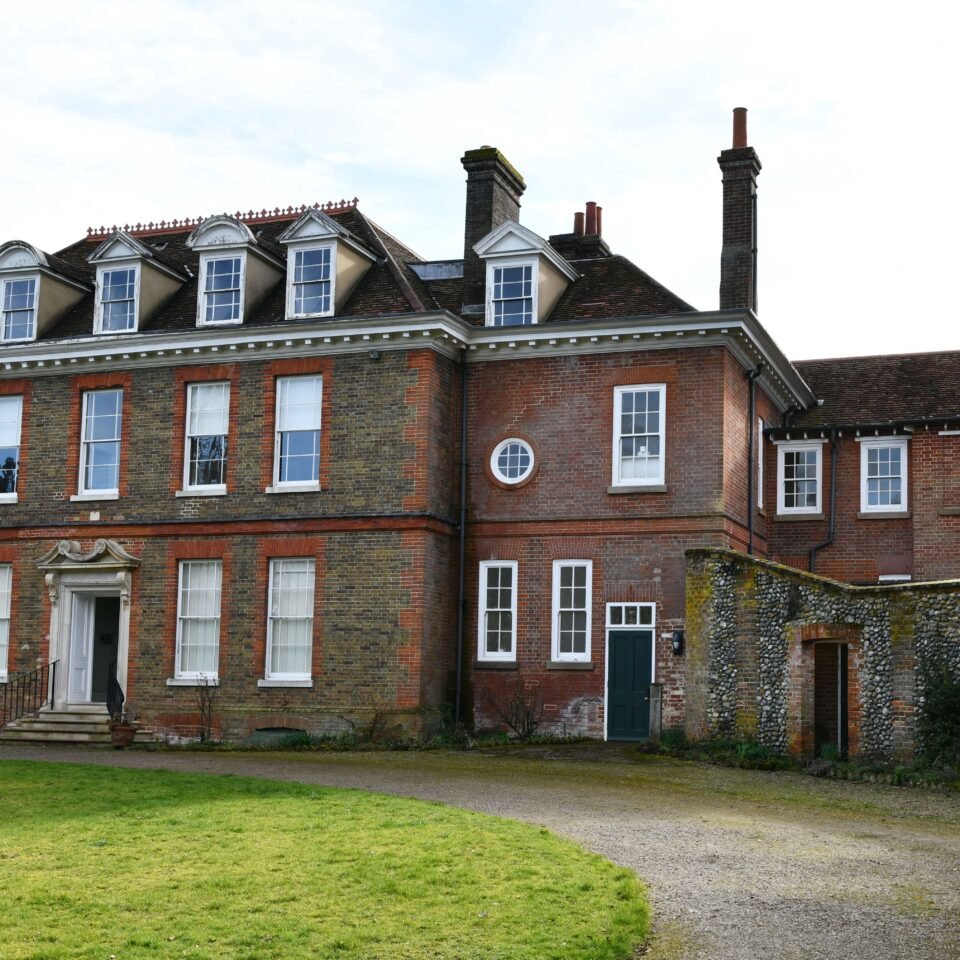



Manor & Lordship
- Manor / site
- Unknown
- Associated lordship
- Stowmarket Manor Associated
- Lordship status
- Unknown
Historical names: Stowmarket (Manor)
Location: Stowmarket, Suffolk
Places / associated places: Stowmarket, Suffolk
Location & Extent
GPS Location & Recorded Land Areas
Representative GPS point: 52.1861, 0.994
Identity: confirmed — The registry record identifies Abbotts Hall Manor as the manor of Stowmarket, also recorded as Stowmarket otherwise Abbots Hall, Abbot's Hall, and Stow Hall. The surviving Abbot's Hall site in Crowe Street is documented as the former grange or manorial centre of the Abbey of St Osyth and is distinct from other Stowmarket manors such as Thorney and Thorney Hall.
Representative point: 52.1861, 0.9940
Basis: documented_manor_house — Abbot's Hall, now part of the Food Museum, occupies the documented site of the former St Osyth monastic grange and later manor house. Historic England identifies the house at National Grid Reference TM0476858430; the supplied decimal point is appropriately rounded from that documented location.
Point confidence: high
Boundary status: representative_point_only
Boundary period: Not established from the publicly available evidence reviewed
Boundary confidence: none
Boundary basis: The sources establish the manor's location and its association with the Stowmarket estate, market, fairs, tithes, copyholds and manorial rights, but do not provide a recoverable polygon or explicit perimeter for the historical manorial land. The 1839 tithe map and later estate descriptions document parts of the Abbot's Hall estate, including the hall, camping ground, gardens, farm buildings, ponds and agricultural land, but they do not by themselves establish the full boundary of the medieval or later manor. The modern parish, town, museum estate and registered garden boundaries have therefore not been substituted for the manorial extent.
Sources:
- The National Archives: Abbotts Hall Manor, Stowmarket, Suffolk, F250331: https://discovery.nationalarchives.gov.uk/details/c/F250331 — Registry identity, alternative names and authority reference for the exact manor record.
- Historic England: Abbot's Hall, Stowmarket, List Entry 1195859: https://historicengland.org.uk/listing/the-list/list-entry/1195859 — Documents the surviving Queen Anne manor house dated 1709 at Crowe Street and gives National Grid Reference TM0476858430.
- Historic England: Abbot's Hall, Stowmarket, Registered Park and Garden, List Entry 1486027: https://historicengland.org.uk/listing/the-list/list-entry/1486027 — States that the grounds occupy the site of the former St Osyth monastic grange; describes the historical camping ground, tithe barn, ponds, gardens, agricultural land and the 1839 tithe map. It also cautions that the registered gardens are a pleasure-ground area, not necessarily the full historic manor.
- Suffolk Heritage Explorer: SKT 062, Farmstead: Abbot's Hall: https://heritage.suffolk.gov.uk/Monument/MSF25376 — Identifies Abbot's Hall as a 14th-century farmstead and tithe barn associated with the grange of the Abbot of St Osyth; cites the 1839 Stowmarket tithe map and apportionment.
- Suffolk Heritage Explorer: Stowmarket historic environment summary: https://heritage.suffolk.gov.uk/media/pdfs/stowmarket.pdf — Summarises the separate Stowmarket/Abbot's Hall manor, its medieval and post-Dissolution ownership history, and distinguishes it from the Thorney and other manors.
- Catalogue of British Town Maps: Stowmarket 1839 Tithe Map: https://townmaps.history.ac.uk/townmap/suffolk-stowmarket-1839/ — Confirms the existence, date, repository reference and fragmentary coverage of the 1839 Stowmarket tithe map, including the Camping Ground.
Warnings / uncertainty:
- The representative point is safe for locating the manor's documented manorial centre, but it should not be interpreted as the boundary of all historical manorial lands.
- No historically defensible full manor polygon was found in the publicly accessible sources reviewed.
- The documented 1839 tithe and later estate evidence concerns the physical Abbot's Hall estate and selected associated parcels, while the lordship/manorial interest was legally distinct and later copyhold property was progressively enfranchised.
About the Manor
Abbotts Hall Manor was the manor of Stowmarket, Suffolk, also recorded as Stowmarket otherwise Abbots Hall, Abbot's Hall, and Stow Hall. The manor was associated with the monastic grange of the Abbey of St Osyth in Essex. The church of St Peter and St Paul at Stowmarket was granted to the Abbot of St Osyth by Henry I sometime before 1135, and Henry II granted the manor to the abbey in the later twelfth century. Abbot's Hall occupies the site of the abbey's former grange; the present Queen Anne house dates from 1709 and is now part of the Food Museum. The medieval manor was an income-producing estate, with land rentals, tithes, markets, fairs, and other manorial rights. The manor and the physical estate should be distinguished: later records show that parts of the estate were occupied by tenants, while the lordship remained a separate manorial interest. Much of the copyhold property was eventually enfranchised.
Ownership / Holder Account
The manor was held by the Abbot and convent of St Osyth from the twelfth century until the Dissolution. In 1538 it was recorded in the hands of Sir Thomas Darcy. It had passed to John Howe by 1557 and to Richard Broke by 1610. It was later held by Edward Lynch in the seventeenth century, followed by members of the Blackerly family and then by Edward Lynch again in 1718 according to the later manorial-court account. The same account records William Wollaston by 1765, the Reverend Frederick Wollaston, Christopher Hildyard by 1802, John Marriott by 1820, the Reverend Richard Danie, and John Frederick Robinson by 1860. The Suffolk Heritage summary records John Edgar Rust as owner by 1836; a separate title-evidence report states that Abbot's Hall and its land were sold to Rust in 1803, but that evidence does not by itself establish the precise conveyance of the lordship. Joseph Beaumont acquired the lordship from John Frederick Robinson and held his first court in 1881. After Joseph Beaumont's death in 1889, the lordship passed to his eldest son and steward, George Frederick Beaumont, under the joint effect of Joseph's will and his widow's deed of disclaimer. George Frederick Beaumont remained lord of the manor until his death in 1928. The lordship was included in the Beaumont Collection auction of 1954, but the publicly available material located does not identify the purchaser and therefore no later holder is entered.
Manorial Rights & Privileges
Historic manorial rights / privileges (5)
Land rentals
Provisional
The manor is described as an income-producing estate with land rentals.
Tithes
Provisional
Tithes are identified in the supplied description among the manor's historic income and rights.
Markets
Provisional
Market rights are identified in the supplied description as historic manorial rights.
Fairs
Provisional
Fair rights are identified in the supplied description as historic manorial rights.
Other manorial rights
Provisional
The supplied description records other unspecified manorial rights associated with the manor.
Records & References
Sources and references mentioning this manor/title which are not necessarily conveyances or transfers.
13 records found.
1892-1892: forms incl details of customs and records, with other manors
Held by: Essex Record Office
1875-1875: deed and award of enfranchisement of copyhold land
Held by: The National Archives
1866-1866: deeds and awards of enfranchisement of copyhold land (6)
Held by: The National Archives
1853-1853: rental
Held by: Norfolk Record Office
1840-1900: file of evidence rel to enfranchisement of copyhold land
Held by: The National Archives
1758-1847: admissions (12)
Held by: Suffolk Archives - Ipswich
1728-1794: court books (duplicate) (2, indexed)
Held by: Suffolk Archives - Ipswich
1700-1800: rental
Held by: Suffolk Archives - Ipswich
1688-1809: court extracts of admissions
Held by: Suffolk Archives - Ipswich
1647-1928: court books (6, indexed)
Held by: Suffolk Archives - Ipswich
1618-1618: rental
Held by: Hadleigh Archive
Further information: NRA 767 Hadleigh Charity
1523-1524: rental, with other manors
Held by: Suffolk Archives - Ipswich
Further information: NRA 36447 Thellusson
1500-1600: survey
Held by: Hadleigh Archive
Further information: NRA 767 Hadleigh Charity
Conveyance & Descent
First holder to present holder: blood proximity & distance travelled
First recorded holder: Abbot and convent of St Osyth
Present holder:
Recorded title journey: 12 holder entries in this manor's saved Conveyance & Descent history.
No recorded holder currently has a usable saved direct-blood or collateral-blood relationship path from which to calculate proximity percentages.
First recorded holder → present holder
A usable saved blood relationship path between the first recorded holder and the present holder has not yet been recorded, so that first-to-present genealogical distance cannot be calculated.
Abbot and convent of St Osyth, Religious corporation
Transfer: Grant by Henry I of the church and later grant by Henry II of the manor to the Abbey of St Osyth; the precise date and instrument of the manor grant are uncertain in the consulted sources.
Shared holding: Abbey of St Osyth
Previous holder: The Crown or pre-existing royal and ecclesiastical interests; the sources do not provide a complete earlier descent for the manor itself.
The medieval manor of Stowmarket, identified with Abbotts Hall or Stow Hall, was held by the Abbey of St Osyth. The church was granted by Henry I sometime before 1135, while the manor is described as having been granted by Henry II in the later twelfth century. A later antiquarian tradition gives other dates, including 1220 and 1405, but the archaeological report treats the later-twelfth-century grant as the relevant manor grant and notes that the 1405 charter may have confirmed earlier rights.
Source: Oxford Archaeology, The Regal Theatre, Stowmarket, Suffolk, Written Scheme of Investigation, 2019, section 3.5.1; Suffolk Heritage Explorer, Stowmarket parish summary, manorial chronology. — source link
Sir Thomas Darcy, associated in the source with Shimpling and Cavenham
Transfer: The manor was recorded in Darcy's ownership in 1538 following the Dissolution of the Monasteries. The precise grant or conveyance from the Crown is not identified in the consulted sources.
Previous holder: Abbot and convent of St Osyth, Religious corporation
Suffolk manorial summaries state that in 1538 the manor of Stowmarket otherwise Abbots Hall was owned by Sir Thomas Darcy. This is the first post-Dissolution holder securely identified in the consulted material; the documentary instrument by which Darcy obtained it has not been located.
Source: Suffolk Heritage Explorer, Stowmarket parish summary, manorial chronology; W. A. Copinger, The Manors of Suffolk, volume 6, 1910, p. 231, as summarized in the archaeological assessment. — source link
John Howe, Wealthy clothier of Stowmarket, according to the Beaumont Collection account
Transfer: The manor was recorded in the ownership of John Howe by 1557. The transfer from Sir Thomas Darcy is not specified.
Previous holder: Sir Thomas Darcy, associated in the source with Shimpling and Cavenham
The Suffolk manorial chronology records John Howe as owner by 1557. It describes him as one of the wealthy clothiers of Stowmarket in the later manorial account, but the conveyance from Darcy has not been identified.
Source: Suffolk Heritage Explorer, Stowmarket parish summary, manorial chronology; Beaumont Collection catalogue, Lot 22, Manor of Stowmarket or Abbots Hall. — source link
Richard Broke, High Sheriff of Suffolk in 1623, according to the Beaumont Collection account
Transfer: The manor was recorded in the ownership of Richard Broke by 1610. The transfer from John Howe is not specified.
Previous holder: John Howe, Wealthy clothier of Stowmarket, according to the Beaumont Collection account
Richard Broke is recorded as owner in 1610. The Suffolk summary links him with Bucklesham, Nacton, Blythburgh, and Creeting St Peter. The source does not identify the conveyance from Howe or the exact date when Broke's holding ended.
Source: Suffolk Heritage Explorer, Stowmarket parish summary, manorial chronology; Beaumont Collection catalogue, Lot 22, Manor of Stowmarket or Abbots Hall. — source link
Transfer: The manor was later recorded in the hands of Edward Lynch. The transfer from Richard Broke and the exact date are not specified.
Previous holder: Richard Broke, High Sheriff of Suffolk in 1623, according to the Beaumont Collection account
The Suffolk manorial chronology places Edward Lynch as owner in approximately the seventeenth century. The Beaumont Collection account also lists Edward Lynch in 1718 after referring to Thomas Blackerly, Sir Thomas Blackerly, and Samuel and Nathaniel Blackerly. The sequence indicates later possession but does not provide all conveyances or dates.
Source: Suffolk Heritage Explorer, Stowmarket parish summary, manorial chronology; Beaumont Collection catalogue, Lot 22, Manor of Stowmarket or Abbots Hall. — source link
Transfer: The manor was recorded as possessed by William Wollaston by 1765. The conveyance from the preceding Blackerly or Lynch interests is not specified.
Previous holder: Edward Lynch and/or the Blackerly family
The later manorial-court account lists William Wollaston as possessing the manor in 1765. The precise date and instrument of acquisition are not given.
Source: Beaumont Collection catalogue, Lot 22, Manor of Stowmarket or Abbots Hall. — source link
Transfer: The manor was recorded as possessed by Christopher Hildyard in 1802. The conveyance from the Wollaston interests is not specified.
Previous holder: The Reverend Frederick Wollaston
The Beaumont Collection account lists Christopher Hildyard among the successive possessors of the manor and attaches the date 1802 to his holding. The source does not identify the transfer instrument.
Source: Beaumont Collection catalogue, Lot 22, Manor of Stowmarket or Abbots Hall. — source link
Transfer: The manor was recorded as possessed by John Marriott in 1820. The conveyance from Christopher Hildyard is not specified.
Previous holder: Christopher Hildyard
The later manorial-court account lists John Marriott as possessing the manor by 1820. No conveyance has been located for the transition from Hildyard.
Source: Beaumont Collection catalogue, Lot 22, Manor of Stowmarket or Abbots Hall. — source link
John Edgar Rust, Stowmarket owner and occupier of Abbot's Hall
Transfer: Abbot's Hall and its land were sold to John Edgar Rust in 1803 according to title evidence cited by an archaeological assessment. The Suffolk manorial summary records Rust as owner by 1836. Whether the 1803 sale conveyed the lordship in full or primarily the house and estate is not completely clear from the published evidence.
Previous holder: The preceding holder or holders are not securely identified in the consulted title evidence.
John Edgar Rust is listed by the Suffolk Heritage summary as owner of Stowmarket or Abbotts Hall in 1836. Historic England states that John Edgar Rust died in March 1840 and that the 1840 Tithe Apportionment recorded his widow Ann Sarah Rust as occupier of Abbot's Hall. A separate archaeological title review reports a 1803 sale of Abbot's Hall and its land to Rust, but cautions that the public evidence does not establish every earlier title step.
Source: Suffolk Heritage Explorer, Stowmarket parish summary; Historic England, Abbot's Hall, Stowmarket, list entry 1486027; Cotswold Archaeology, Land west of Thorney Green Road, Stowupland, post-excavation assessment, discussion of Abbot's Hall title evidence. — source link
John Frederick Robinson, Lord of the manor of Stowmarket or Abbotts Hall by 1860
Transfer: The manor was recorded as possessed by John Frederick Robinson in 1860. Joseph Beaumont subsequently acquired the lordship from Robinson and held his first court in 1881; the conveyance date and instrument are not otherwise specified in the consulted source.
Previous holder: The Reverend Richard Danie
The later manorial-court account lists John Frederick Robinson as a holder by 1860. The same account states that Joseph Beaumont acquired the lordship from the last-mentioned holder, making Robinson the immediate predecessor in the documented late nineteenth-century descent.
Source: Suffolk Heritage Explorer, Stowmarket parish summary; Beaumont Collection catalogue, Lot 22, Manor of Stowmarket or Abbots Hall. — source link
Transfer: Conveyance from the Reverend F. L. Hayward and others to Joseph Beaumont dated 16 March 1881 is reported in the Beaumont Collection index material; the associated text states that Beaumont acquired the lordship from John Frederick Robinson and held his first court in 1881.
Shared holding: Beaumont family
Co-holder: George Frederick Beaumont
Previous holder: John Frederick Robinson, Lord of the manor of Stowmarket or Abbotts Hall by 1860
Joseph Beaumont acquired the lordship of Stowmarket or Abbotts Hall in 1881. His first court was held on 12 January 1881 according to one account, while the detailed Beaumont Collection index reports a conveyance dated 16 March 1881 and a first court on 30 March 1881. The discrepancy should be preserved rather than reconciled without consulting the original court book and conveyance.
Source: Beaumont Collection catalogue, Lot 22, Manor of Stowmarket or Abbots Hall; Beaumont Collection index, manorial devolution entry for Stowmarket or Abbots Hall. — source link
George Frederick Beaumont, Lord of the manor of Stowmarket or Abbotts Hall, F.S.A., of The Lawn, Coggeshall, Essex
Transfer: After Joseph Beaumont died on 18 July 1889, the joint effect of his will and a deed of disclaimer by his widow, Eliza Beaumont, vested the lordship in his eldest son, George Frederick Beaumont.
Shared holding: Beaumont family
Co-holder: Joseph Beaumont
George Frederick Beaumont succeeded his father Joseph Beaumont as lord of the manor after 1889. The Beaumont Collection index expressly attributes the succession to Joseph's will and his widow's deed of disclaimer. George Frederick Beaumont died on 1 June 1928. The Suffolk manorial summary records him as owner in 1910, and contemporary directory evidence describes him as lord of the manor while the property was largely enfranchised.
Source: Beaumont Collection index, manorial devolution entry for Stowmarket or Abbots Hall; Suffolk Heritage Explorer, Stowmarket parish summary; Kelly's Directory of Suffolk, 1912, Stowmarket entry. — source link
Lordship / Title Associations
Associations are recorded by period so changes in estate composition do not imply that every manor remained attached to the same title indefinitely.
Corrections / Challenges
Sign in to challenge or submit evidence against a recorded assertion.
JSON API
Machine-readable published manor data, including public images, mapped land areas, notes, rights, conveyances, relationships, records, source/document-library entries and public file links.
https://manorialregistry.com/index.php?rest_route=/mhr/v1/manor/abbotts-hall-manor-2Public API access is currently disabled. Authorised API clients must use a private X-MHR-API-Key; currently only administrator keys are enabled.
Private source files, pending edits, moderation/admin information, user API keys and non-public import identifiers are not returned.