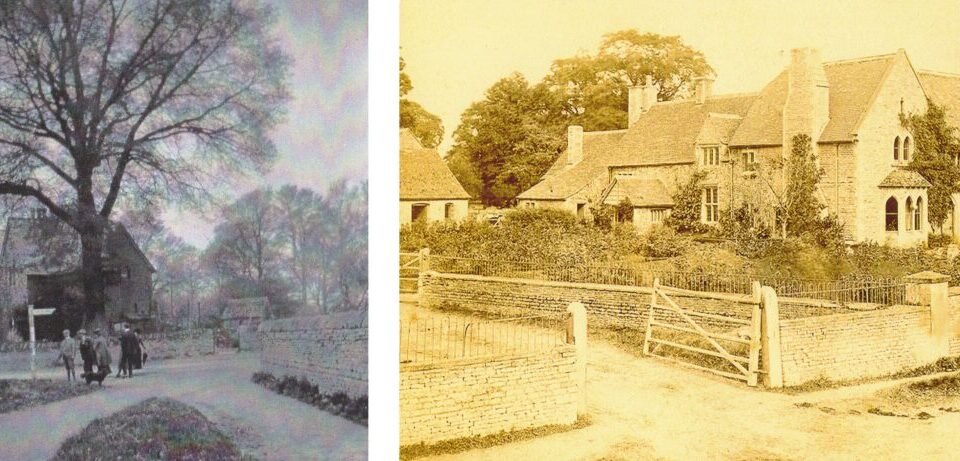



Historical names: Burton Abbots
Location: Black Bourton, Oxfordshire
Places / associated places: Black Bourton, Oxfordshire
Location & Extent
GPS Location & Recorded Land Areas
Representative GPS point: 51.7333, -1.584
Identity: confirmed — The supplied registry record identifies Abbot's Bourton as the Oseney Abbey manor and estate in Black Bourton, also known as Burton Abbots. Independent local-history evidence distinguishes this Oseney/Christ Church manor from the separate Hungerford Bourton Place or Bourton Winslow estate. The surviving Manor Farm complex is the best documented physical centre of the Oseney/Abbot's Bourton estate.
Representative point: 51.73330, -1.58400
Basis: documented_manor_house — Manor Farmhouse, Bampton Road, Black Bourton, is a documented medieval-origin farmhouse and the surviving centre of the former Oseney Abbey/Christ Church Manor Farm estate. Historic England gives National Grid Reference SP2882503928, corresponding approximately to 51.73330, -1.58400.
Point confidence: high
Boundary status: representative_point_only
Boundary period: Medieval to nineteenth century; extent not precisely reconstructed
Boundary confidence: none
Boundary basis: The available evidence establishes that the Oseney/Abbot's Bourton estate occupied the southern part of Black Bourton parish and was later represented by the Christ Church Manor Farm estate. Publicly accessible sources found do not provide a sufficiently explicit manor map, parcel schedule, or legally defined perimeter for the historical manorial land. The modern parish boundary and the whole parish cannot safely be substituted for the manor boundary, particularly because Black Bourton contained multiple separate manorial estates.
Sources:
- Manor Farmhouse, Black Bourton - Historic England NHLE 1199270: https://historicengland.org.uk/listing/the-list/list-entry/1199270 — Identifies Manor Farmhouse on Bampton Road in Black Bourton, gives National Grid Reference SP2882503928, and describes the building as C15 in origin with later alterations. This supplies the defensible manor-house representative point.
- Village history - Black Bourton Village: https://blackbourton.org.uk/village-history/ — States that the Augustinian canons of Osney Abbey owned Abbots Bourton manor, distinguishes the Hungerford Bourton Place manor, and records that Christ Church's estate included and refurbished Manor Farm in the southern part of the village.
- Short History - Black Bourton: https://blackbourtonox18.tripod.com/hist.htm — States that Oseney owned the southern manor, identified with Manor Farm, until the Dissolution, after which Christ Church succeeded to the Abbey lands; it also distinguishes the Hungerford estate.
- Christ Church Archive Catalogue: Treasury guide: https://archive-cat.chch.ox.ac.uk/guides/treasury — Lists Black Bourton as a Christ Church foundation estate consisting of manor and profits received from Oseney Abbey, supporting the documented ownership descent.
- Oxfordshire History Centre Tithe Handlist: https://www.oxfordshirehistory.org.uk/public/catalogues/tithe_handlist_accessible.pdf — Confirms the existence of Black Bourton tithe award and map material, including the 1848 map and award. These are relevant boundary evidence leads, but the publicly accessible handlist itself does not reproduce a manor-specific perimeter.
- The National Archives: Abbot's Bourton Manor, record F285658: https://discovery.nationalarchives.gov.uk/details/c/F285658 — Registry record supplied for the exact manor identity and authority reference GB/NNAF/M309692.
Warnings / uncertainty:
- Representative point is based on the documented Manor Farmhouse/Manor Farm centre, not a modern settlement centroid.
- No historically defensible polygon was found in the publicly accessible evidence consulted.
- Do not substitute the modern Black Bourton civil-parish boundary: the parish contained more than one manorial estate, including the separate Hungerford Bourton Place/Bourton Winslow estate.
- The Oxfordshire tithe-map and award records are promising primary evidence leads for future parcel-level reconstruction, but they were not sufficiently accessible here to justify injecting a boundary polygon.
About the Manor
Abbot's Bourton was the Oseney Abbey estate and manor in Black Bourton, Oxfordshire. The place was also known as Burton Abbots, and the prefix 'Abbot's' refers to the Augustinian canons of Oseney Abbey, who owned the estate. Black Bourton contained more than one manorial estate: the Oseney or Abbot's Bourton estate should not be conflated with the Hungerford family's separate Bourton Winslow or Bourton Place estate. The Oseney estate included the later Manor Farm estate in the southern part of the parish. Following the Dissolution of the Monasteries, the former Oseney property passed to Christ Church, Oxford, whose Dean and Chapter remained lords of the manor in the nineteenth century and continued to hold the Manor Farm estate. The exact medieval acquisition date and the precise legal instruments by which the estate passed at the Dissolution have not been established from the publicly accessible sources consulted.
Ownership / Holder Account
The securely evidenced descent is from Oseney Abbey, whose canons owned Abbot's Bourton in the medieval period, to the post-Dissolution Christ Church foundation at Oxford. A local history account states that Oseney continued to own the southern manor until the Dissolution under Henry VIII, after which Christ Church succeeded to the Abbey lands and continued to own Manor Farm. A nineteenth-century directory identifies the Dean and Chapter of Christ Church, Oxford, as lords of the manor. The Hungerford family were lords of a different Black Bourton manor and are excluded from this descent unless specifically linked to Abbot's Bourton by a direct conveyance.
Records & References
Sources and references mentioning this manor/title which are not necessarily conveyances or transfers.
15 records found · showing 1–8.
1753-1769: court book
Held by: Oxford University: Christ Church Archives
Further information: NRA 4222 Oxford Christ Church
1751-1860: court rolls, with other manors
Held by: Exeter Cathedral Library and Archives
1741-1769: court rolls (draft)
Held by: Oxford University: Christ Church Archives
Further information: NRA 4222 Oxford Christ Church
1662-1742: court book
Held by: Oxford University: Christ Church Archives
Further information: NRA 4222 Oxford Christ Church
1535-1537: court rolls, with other manors
Held by: The National Archives
1512-1512: court roll, with other manors
Held by: Northamptonshire Archives Service
Further information: NRA 21333
1511-1519: court rolls, with other manors
Held by: The National Archives
1494-1494: court roll
Held by: Oxford University: Bodleian Library, Special Collections
Conveyance & Descent
First holder to present holder: blood proximity & distance travelled
First recorded holder: Christ Church, Oxford
Present holder:
Recorded title journey: 1 holder entry in this manor's saved Conveyance & Descent history.
No recorded holder currently has a usable saved direct-blood or collateral-blood relationship path from which to calculate proximity percentages.
First recorded holder → present holder
A usable saved blood relationship path between the first recorded holder and the present holder has not yet been recorded, so that first-to-present genealogical distance cannot be calculated.
Transfer: The former Oseney Abbey estate passed to Christ Church, Oxford, after the Dissolution; the precise legal instrument is unknown.
Holding arrangement: Other
Previous holder: Oseney Abbey
Post-Dissolution succession from the Oseney Abbey estate to the Christ Church foundation at Oxford, which continued to hold the Manor Farm estate.
Corrections / Challenges
Sign in to challenge or submit evidence against a recorded assertion.
JSON API
Machine-readable published manor data, including public images, mapped land areas, notes, rights, conveyances, relationships, records, source/document-library entries and public file links.
https://manorialregistry.com/index.php?rest_route=/mhr/v1/manor/abbots-bourton-manorPublic API access is currently disabled. Authorised API clients must use a private X-MHR-API-Key; currently only administrator keys are enabled.
Private source files, pending edits, moderation/admin information, user API keys and non-public import identifiers are not returned.